Coming Tomorrow: Tasting In Stereo!

29 08 2011

It’s been one of those gruelling, soul-crushing Mondays, and yet I remain upbeat and excited about the week.  There are two reasons for this:  (1) I’m going on vacation in three days, and (2) tomorrow I get the honour of being co-host to a pan-Canadian wine tasting adventure of the kind that only the Internet makes possible.  If you’ve ever read a PnP wine review and immediately wished you had an expert second opinion (and don’t lie — I’m sure there are those times), tomorrow your voice of sober second thought will come in the form of Tyler Philp, an Ontario-based wine blogger and tasting group leader who owns and operates North of 9 Fine Wine just beyond the clutches of Toronto.  Tyler has written on a number of vinous topics and has a clear passion for the world of wine, so he’s an ideal counterpart for this tasting experiment.

My Tasting In Stereo counterpart -- check him out at northof9finewine.blogspot.com.

Tomorrow night Tyler and I will each crack the same bottle, taste it independently, and then simultaneously post our notes, thoughts and impressions on our respective sites at a set time.  You’ll find out at the same time as us whether we felt the same way about the wine or whether we’ll need to have a few words offscreen about it…  🙂  You get two perspectives for the price of one (or, I guess, for the price of a million, since it’s all free), and I get a chance to compare tasting notes with a writer whose thoughts and palate I respect quite a bit.  We’ve picked a bottle that’s easy to find and under $20, so if one or both of us like it, you’ll be able to track it down.  Tasting In Stereo debuts tomorrow — see you then!


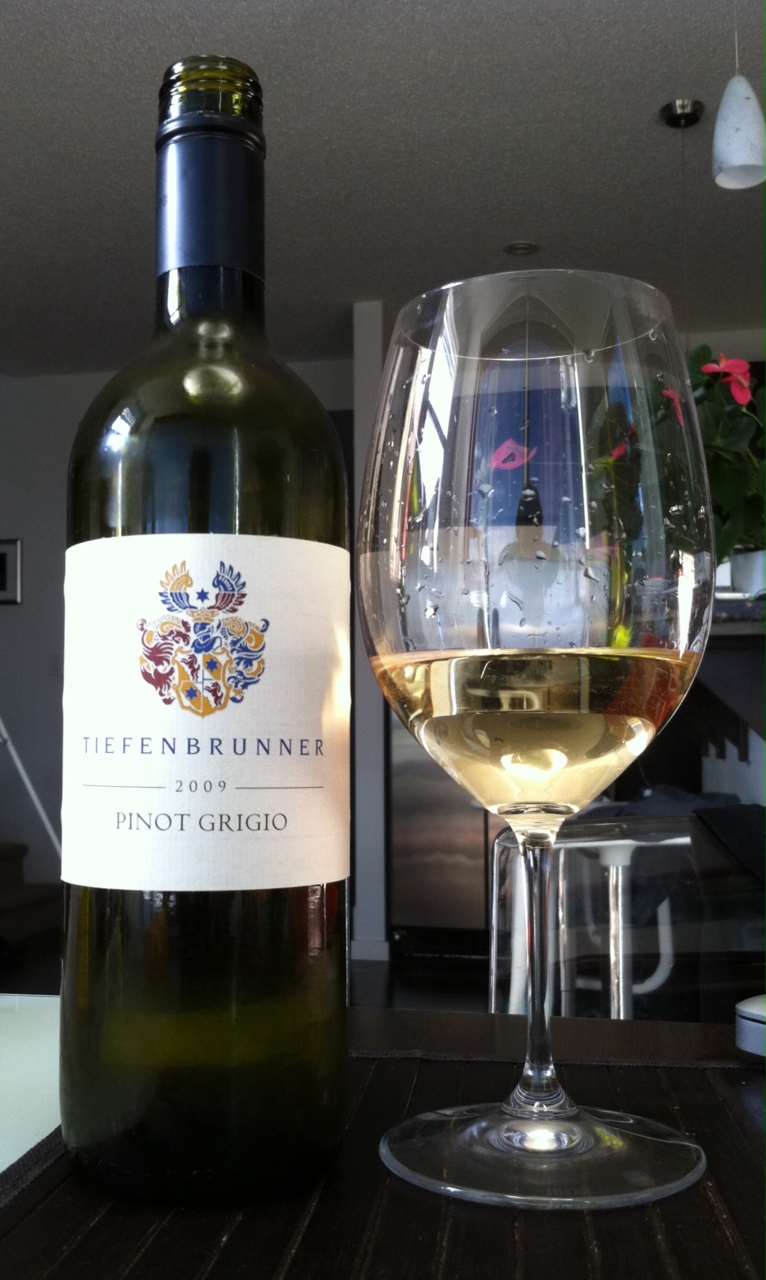
Wine Review: 2009 Tiefenbrunner Pinot Grigio delle Venezie

27 08 2011

Time to quit you, Pinot Grigio. Tiefenbrunner, this isn't your fault.

Dear Pinot Grigio,

I’m sorry.  I try hard to keep an open mind, accept that wine comes in many forms, and expose myself to as many of the world’s different and unique grapes and regions as I can.  But I just can’t do it anymore.  You don’t need me anyway:  you’re enormously popular, synonymous with patios and summer, one of the most successful wine exports to North America of all time, an A-list (well, maybe B-list) grape.  But you’re just so…well, BORING.  When people try to describe you to PG newbies, they inevitably fall back on words like “neutral”, “crisp” and “refreshing”.  You know what else is neutral, crisp and refreshing?  Water.  And it doesn’t cost $20 a bottle.  I had held out hope that you had something of intrigue to offer, that I just hadn’t found the right bottle that would expose me to your inner wonders, but now I don’t think that bottle exists.  I think you are what you are, which is part of your allure — your devotees always know what they’re getting — but is also your greatest shortcoming.  When I can’t bring myself to get excited about opening a bottle of wine, there’s a problem, and in this case that problem is you.  I think I’m moving on. Read the rest of this entry »


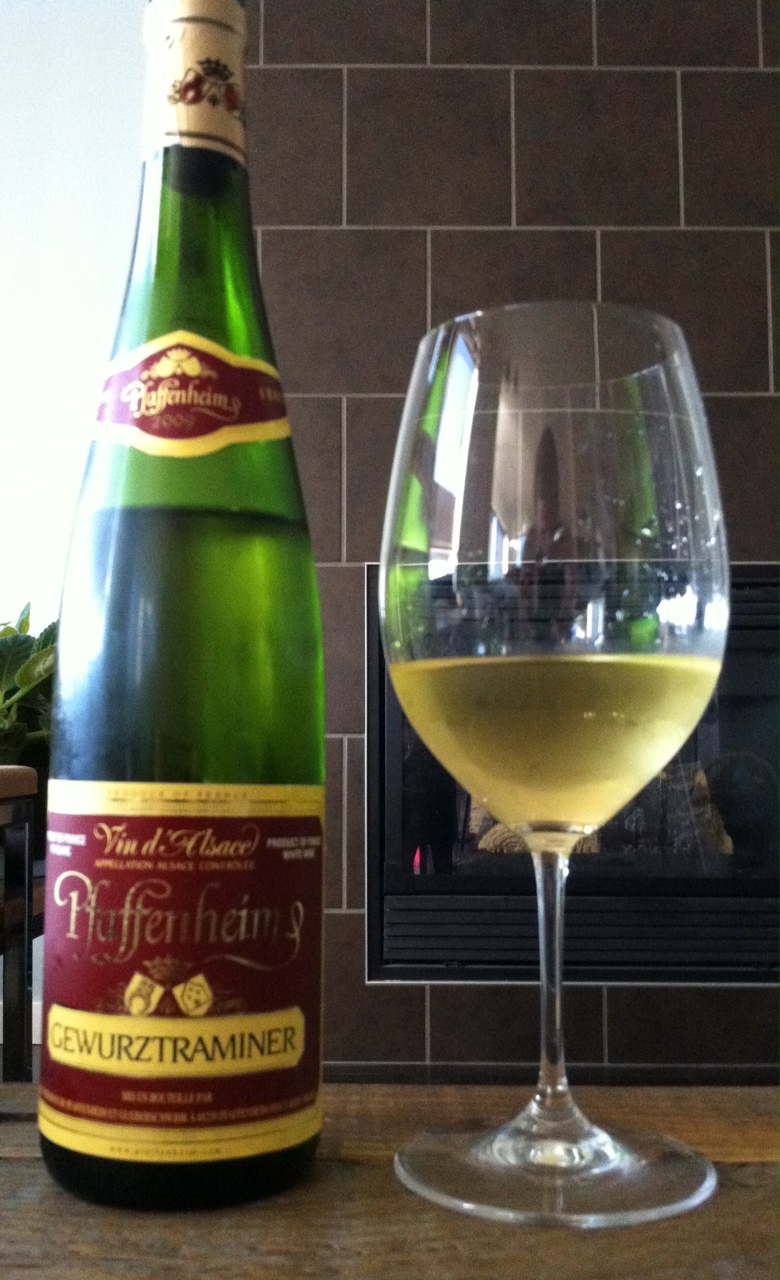
Wine Review: 2009 Pfaffenheim Gewurztraminer (Alsace)

25 08 2011

Pfaffenheim Gewurztraminer -- most Teutonic non-German producer/grape combo ever?

Two points of order before I start.  First, PnP cleared 6,000 hits sometime this afternoon — thanks again for your continued support of this site!  Second, this is post #95 for Pop & Pour, which means you have five more posts to cast your vote for the wine I should review for the PnP 100th Post Celebration Gala (n0te:  no actual Gala will be organized).  Click here to go to the poll and vote for your favourite; if you’ve already voted, vote again!  Currently it’s a dead heat between the 2008 Caymus Napa Cab and the 2006 Gaja Brunello, so help me break the tie…there has to be a defined winner before the 100th post review can take place.

Now, to tonight, and Gewurztraminer.  To me Gewurz is the ultimate love/hate grape:  most people either adore its bold, assertive, unique flavours and rich texture or they despise its lushness, its spiciness, its high alcohol and almost suffocating intensity.  There aren’t too many in between (although, strangely, I’m one of them, which might cast some doubt on my theory); a grape this individual almost forces you to take sides.  It’s not a casual patio sipper or a light crisp refresher that pairs with a ton of foods, and it doesn’t really resemble any of the more well-known varietals like Chardonnay or Sauvignon Blanc or Riesling, so there’s no real way to ease into it.  What it is is a high-octane, enormously-perfumed flavour powerhouse that can be both entrancing and overwhelming. Read the rest of this entry »


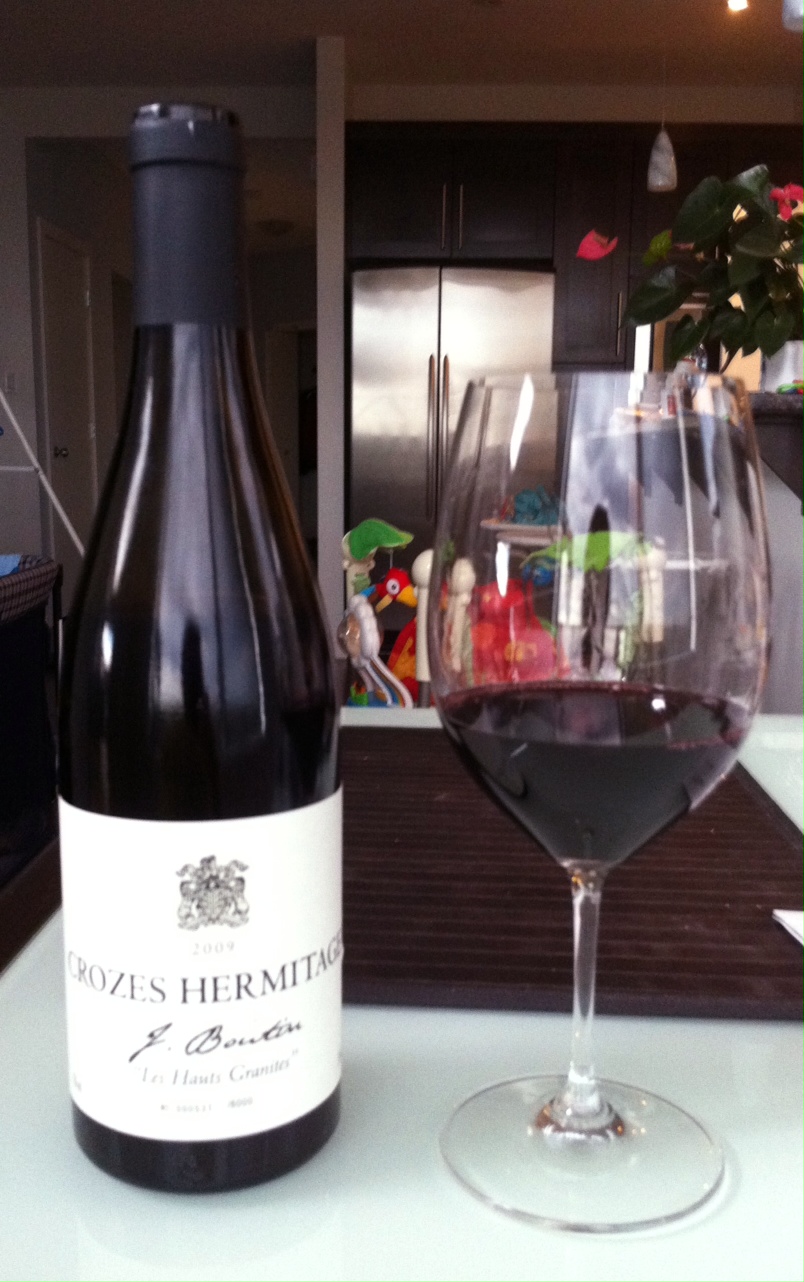
Wine Review: 2009 Jeannine Boutin Crozes-Hermitage “Les Hauts Granites”

22 08 2011

Just ignore the Baby Rainforest Bouncer in the background.

After pounding out 1500+ words about five German Rieslings in my last post, I’m going to try to be a little (OK, a lot) more concise tonight.  While Riesling has always been my favourite white grape, my current favourite red has got to be Syrah, a full-bodied, powerful grape capable of many different expressions and often melding fruity and savoury notes in a way that no other varietal can.  Most of the Syrahs that have found their way onto PnP so far have been New World examples, mainly from Washington State or California with the occasional Aussie Shiraz (same grape, different name) thrown in.  Tonight, however, I’m going back to the grape’s roots in the northern Rhone Valley in France, Syrah’s ancestral homeland and (maybe moreso 20 years ago than now, but still) home to its most famous and expensive bottlings.  Some of the most lauded and pricy Syrah in the world is grown in a small appellation called Hermitage, a single hill hovering over the Rhone River containing barely over 300 acres of vines.  If I worked five of my current jobs, I could drink Hermitage every now and then.  Instead, I’m settling for its little brother, Crozes-Hermitage, a much larger region spanning the flatlands surrounding Hermitage Hill on the Rhone’s east bank.  A Crozes may not light your world on fire like an Hermitage can, but it won’t cost you $400 either…this one was a shade over $30. Read the rest of this entry »


Calgary Wine Life: Bin 905 German Riesling Extravaganza

20 08 2011

Despite declaring on the header of this site that Pop & Pour is an “Independent Calgary Wine Blog”, I’ve been guilty of not really focusing many of my posts on the wine scene in Calgary.  I want this blog to be of general interest and not overly localized, but at the same time one of my initial goals in starting up PnP was to draw attention to hometown events and shops and help fellow Calgarians make the most of the wine-related opportunities offered in the city.  Today gave me a perfect opportunity to advance this latter goal:  this afternoon, Bin 905 (located on 4th St. and 23rd Ave SW) held a German Riesling Extravaganza (their title, not mine, although I fully endorse it), where anyone could drop in and sample 5 different German Rieslings from top producers, ranging fully dry to fully sweet, valued at $30 to $50 a bottle, at no charge.  Sorry, did you say free German Riesling tasting?  I’m there!  And so I was. Read the rest of this entry »


Poll: Help Choose PnP’s 100th Post Wine!

17 08 2011

This is the 92nd post that I’ve made on Pop & Pour.  Being the milestone-sensitive person that I am, I’m already looking ahead to the triple digits and wondering how best to mark the momentous occasion of PnP’s 100th post, which should be coming up in a couple weeks or so.  The obvious answer to this question is “with wine”, but which one?  I’ve been drinking a lot of $20ish value wines recently, but when it comes to the 1-0-0, I’m reaching for the big guns.  I have some options in mind, but need your help to choose a winner — cue the poll!  Blurbs of the potential candidates to follow below.

Here’s what you’re voting for:

  1. 2004 Alion:  Possibly the most famous and well-regarded producer in Spain is Vega Sicilia in Ribera del Duero.  It focuses primarily on one wine, Unico, which is ludicrously expensive, can be aged for decades at the winery before release and is a historically great bottle.  Needless to say, I can’t afford it.  But in 1991 Vega Sicilia started Bodegas Alion, which makes the Alion wines from grapes either in or right beside Vega Sicilia’s vineyards.  Basically, Alion is the closest I’m going to get to Unico for a long, long time.  One of Spain’s classics.
  2. 2007 K Vintners Morrison Lane Syrah:  K Syrah…get it?  (That is actually how this winery was named.)  From Charles Smith, the same guy who makes Kung Fu Girl Riesling, the K Vintners brand focuses exclusively on high-end Syrah from Washington State, otherwise known as my recent man-crush varietal and region.  I had another K Syrah a couple weekends ago (the K Millbrandt Syrah) and it was huge, intense and fruity; this one is slightly higher up on the price/quality scale so I expect that it will be a little more layered and complex but still totally bombastic.
  3. 2006 Gaja Brunello:  The proper name of the producer is Pieve Santa Restituta, but this Tuscan winery is primarily interesting because it is owned by the legendary Angelo Gaja, the iconic winemaker who helped put Piedmont, and especially Barbaresco, on the pedestal where sits today.  Gaja’s focus is almost exclusively on northwest Italy, but he bought this winery in Brunello di Montalcino in the central part of the country a few years ago and has begun to put his stamp on its production line.  I got this wine for my first ever Father’s Day this past June, so it has both personal and professional (OK, amateur) significance for me.
  4. 2008 Caymus Cabernet Sauvignon:  Caymus is one of the best-known producers of textbook Napa Valley Cabernet, and this bottle of Cab in particular is interesting because I got it (1) at the winery itself and (2) before the ’08 vintage of Caymus Cab was actually released to market!  We went there for a tasting, and they were sold out of their ’07 Cabs, so they were pulling the ’08s out of their storage cellars so that people had something to buy.  I don’t have many bottles purchased directly from producers, and I’ve already tried this wine on site, so I know it’s good.
So help me out — vote early and often, and leave me a comment if you have a particular reason behind your choice.  Thanks!


Tips & Tricks: How To Come Up With Wine Flavour Descriptions

15 08 2011

If only it were that easy...

Believe me, I used to be at the front of the line making fun of wine folk for picking guava, pomegranate, shoe leather, pencil shavings and innumerable other bizarre tastes and aromas out of a glass of boozy grape juice.  The whole process seemed overwrought and fanciful at best and horribly pretentious at worst — not the kind of thing I’d ever sign off on.  But as I started getting more and more into wine, and then as I started WRITING about being into wine, I began to see the method to the madness (or I drank the Kool-Aid and joined the legions of uptight overanalyzers, depending on your point of view) and understanding the necessity behind the efforts people put into sorting out what’s in their glass.  By far the coolest and most interesting thing about wine is that, unlike almost any other alcoholic beverage that starts out from a piece of fruit, it ends up smelling and tasting like so many other things apart from, or in addition to, its source material.  Apple cider tastes like apples; dark rum tastes like molasses; wine tastes like everything, and the more different wine you try, the more words and comparison references you need to describe it.  This, I’ve learned, is doubly important if you ever want to put this description in writing and give a reader who may have never heard of your wine a flavour impression that sets it apart…suddenly descriptions like “plum” and “cranberry”, and its weirder, more memorable cousins like “Band-Aids” and “pickles”, become totally invaluable. Read the rest of this entry »


Wine Review: Cameron Hughes Lot 179 (2007)

13 08 2011

I very much regret not writing this review last year (you know, before this blog even existed) so that people could have actually gone out and found this wine.  In the last 12 months I’ve probably bought upwards of 20 bottles of it both for myself and as gifts for others, due partly to its awesomeness and partly to its criminally cheap pricing; after cracking tonight’s bottle, I (tragically) only have 3 left.  It’s the closest my place has had to a house wine in 2010-2011…I’m definitely going to miss it when it’s gone.  Before I jump into the story of how it came to be, a huge shout out is owed to Tim from Highlander Wine & Spirits, who clued me into it on the very first night I met him — let’s just say he set the bar very high for himself right off the bat.

If this was Back to the Future, I would have told you to buy this already.

Cameron Hughes is based out of San Francisco, but he’s not your typical Californian wine producer.  Instead of owning a tract of land in Napa, growing grapes there and making them into wine, he’s a négociant, which means that he buys grapes, juice or even finished/partly-finished wine from other growers/producers and completes, packages and sells it under his own label.  Négociants are much more well known in European wine regions like Burgundy, France (Jadot and Leroy are big-name examples) than in the US, but Hughes is showing that the business model works just as well on this side of the Atlantic.  In many cases, Hughes buys excess grapes/juice from high-end Napa producers; they get quick cash in a capital-intensive industry and get rid of overflow product in a way that doesn’t devalue their own brand (Hughes is generally not permitted to reveal his sources), while Hughes gets high-quality raw materials for pennies on the dollar.  However, with Lot 179, the story is different:  what is in the bottle is actually the finished product of another winery that went out of business before its 2007 vintage was able to hit the market. Read the rest of this entry »


Wine Review: 2002 Campillo Rioja Reserva

10 08 2011

Grande Prairie, pay attention: go and find this wine. Right now.

I couldn’t resist — after talking at some length in my last post about how the Tempranillo grape was a chameleon that could show very differently depending on how it was made, and after seeing what the fruity, modern style of the grape had to offer with the 2009 Vega Moragona Tempranillo from Ribera del Jucar, Spain, I went down to my wine fridges tonight and this bottle kept calling out to me.  While the Vega Moragona did a decent job at showing off what New Age Tempranillo was all about, there are few better producers than Campillo at illustrating what can be created using the traditional approach to Spanish winemaking with this grape.  As I mentioned a couple days ago, the main difference with the more traditional style of Spanish Tempranillo is that the wines are aged in oak for significantly longer before release, often in new barrels to further enhance the oak flavours, which leads to bottles that tend to be pre-mellowed before they even hit the shelves; it’s like the wineries do most of the aging for you.  It’s an approach that makes very little sense in terms of the modern business model — how many goods retailers do you know that hang onto their inventory for 5+ years before allowing it to be sold? — but maybe that’s what makes it so charming to me.  These Spanish winemakers, especially in Rioja, the country’s traditional vinicultural heartland, are amazingly dedicated to their craft, and given the world’s recent obsession with bigger, riper, ultra-powerful reds, their wines can be found at shocking values. Read the rest of this entry »


2009 Vega Moragona Tempranillo

8 08 2011

Most neo-minimalist Spanish wine label ever?

This morning I got up just after 5:00 so that I could get into work an hour earlier than normal.  I did this to churn through a rapidly-expanding to-do list so that I could get home before 6:00 to put the baby down while my wife headed off to work.  I will likely do the same tomorrow.  On arriving home, I was definitely not looking for a complex and challenging wine to break down and analyze; I was looking for liquid stress relief, a vinous housecoat and slippers to ease the day into submission.  I’m happy to report that I found it, and it came from an unexpected locale.

The Vega Moragona hails from a fairly new wine region in central Spain, the Ribera del Jucar.  Until recently, RdJ was on the eastern tip of the huge, sprawling and grotesquely hot La Mancha region, located just south of Madrid and home to boatloads of (mostly) cheap, dull, nondescript wine.  However, in 2003, as a result of the unique soils/territory and increased quality prevalent in the area, Ribera del Jucar broke free and became its own DO (Denominacion de Origen), a legal territorial designation officially separating it from the La Mancha pack. Read the rest of this entry »


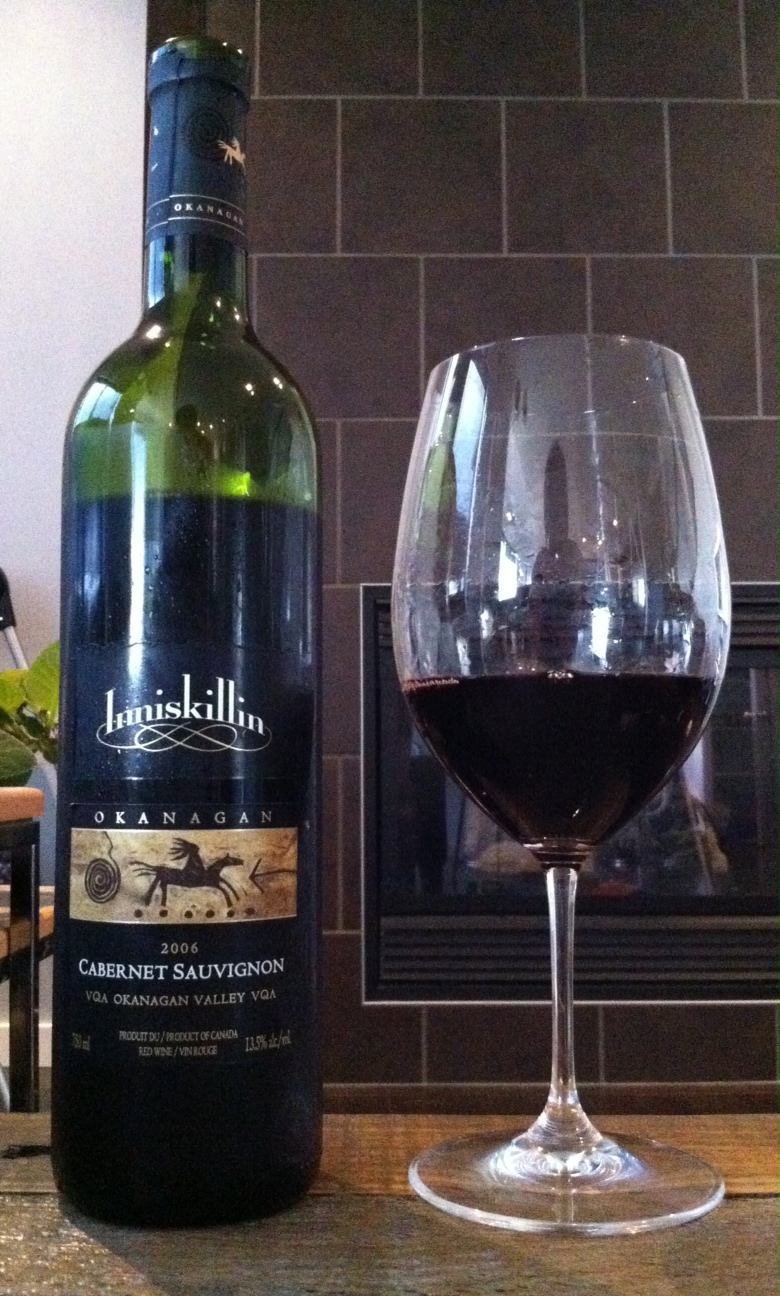
Wine Review: 2006 Inniskillin Cabernet Sauvignon

5 08 2011

$15 Canadian Cab...don't get me started.

Oh, Canada…I had been starting to feel a glimmer of optimism about red wines from my home and native land after positive recent experiences with producers like Laughing Stock (Okanagan) and Tawse (Niagara), but just as I began to forget why Canadian reds have until recently been an endless source of frustration for me, tonight happened.  My consternation isn’t that these wines are terrible (though some are); it’s that too much of the wine industry here seems locked in to grapes and wines that we are hard pressed to make better than many other regions around the world.  Cabernet Sauvignon is a case in point.  Why take one of the most heat-loving, slow-ripening, warm-weather grapes out there and try to specialize in making single-varietal wines out of it north of the 49th parallel?  Why especially would you try to target the sub-$20 price range with your Cabs when better-situated producers with hotter weather and cheaper land from Chile, Argentina, Australia and California basically have that market covered?  Where is the global competitive advantage in that approach?  We need a new business plan. Read the rest of this entry »


Wine Review: 2007 Boedecker Cellars Stewart Pinot Noir

3 08 2011

Just smell this wine once...then keep on smelling.

Oregon!  By now you know that Washington State, especially Washington State Syrah, has a big piece of my wine-loving heart, but my affections actually spread further across the Pacific Northwest, even though Oregon’s wine scene is considerably different from its northern neighbour’s.  Most of Washington’s wines are grown in the southeast part of the state, which is in the rain shadow of the Cascade Mountain range and is almost desert-like:  dry and hot during the day and quite a bit cooler at night.  The heat allows thicker-skinned, warmer-weather grapes like Cabernet Sauvignon and Syrah to ripen fully, while the nightly colder spells give the resulting wines a little restraint and keep them from becoming alcoholic fruit bombs.  Oregon is totally different, with a climate that more closely resembles what you’d expect from the northern Pacific coast (and I lived in Victoria BC for three years, so I know):  cooler, more continental, less sunny and quite a lot rainier.  The big powerful red grapes would struggle to ripen fully here, but their more delicate, thinner-skinned, colder-climate brethren absolutely thrive, especially Pinot Noir.  In my (only partially-informed) opinion and (fairly limited) experience, I would venture to say that Oregon has more promise as a Pinot Noir region than anywhere else on Earth other than Burgundy, France, the grape’s ancestral homeland — it’s better suited for the grape than established Pinot zones like California; more impressive than other up-and-coming areas like Central Otago, New Zealand or Yarra Valley/Mornington Peninsula, Australia; and more intriguing than long-time European growing zones like Germany or Austria.  Oregon has only been noticed as a serious wine region in the last 50 years, but its affinity for Pinot Noir has seen it gain an astronomical amount of international respect in a very short time.  It has since started branching out with some of the white grapes from Alsace, France (Pinot Gris and Pinot Blanc), but Pinot Noir is its meal ticket and its justified claim to fame.  I’m not a huge Pinot fan, but (possibly because I don’t find myself drinking $150+ Burgundy all that often) Oregon’s renditions of the grape are probably my favourite. Read the rest of this entry »


WSET: Officially Intermediate!!

2 08 2011

I’m back from a long weekend trip to the splendours of northern Alberta (note to all those who live in Grande Prairie:  buy your wine from the Costco there, and only from Costco…some crazy good deals even beyond the big labels!) and I’m ready to make up for lost blogging time.  I had planned to dive right into a new wine review tonight, but that all changed when I got a special delivery in the mail this afternoon from the Wine & Spirits Education Trust — my Intermediate exam results!  I am pleased to report that my registration for the Advanced course this October was not in vain…for some reason I’m officially forbidden from posting any image of my actual WSET certificate on the Internet, but I can post this:

Booya! Tuition money not wasted!

Admittedly, the Intermediate exam was just a multiple-choice test without a tasting component, but still, I’m pretty psyched about this.  Now all future reviews will be backed by that sliver of moral authority you get when you’re moderately qualified at something!

Actual wine talk will return tomorrow, when Oregon will have its PnP debut…I’m amazed I haven’t written it up yet, but that will soon be remedied.  Until then!


Botani Cork Mystery – Solved!

28 07 2011

OK,  yes I said I was going on vacation, and I am, but I had to post this quickly before I left.  I reviewed the 2010 Jorge Ordonez Botani white from Christopher Stewart Wine & Spirits Imports a couple weeks ago and was a huge fan, but I couldn’t figure out the elaborate graphics on the cork.  Here’s what I saw and the Cork Rating I doled out:

Cork Rating: 6.5/10 (I'm a huge fan of cork graphics, but what is this? A cruise ship and some mountain-castles? I don't get it.)

I had almost forgotten about my confusion over what this cork art represented until this morning, when a comment showed up under my Botani post…from Victoria Ordonez, Jorge Ordonez’s sister and official blogger of Jorge Ordonez & Co.!  Victoria wrote a great piece on the Jorge Ordonez site clarifying what the actual image is on the JO corks (it’s a three-masted ship, not a no-masted ship with mountains behind it, as I myopically guessed) and, more importantly, what it represents of the history of wine-making in Malaga, Spain…check it out here:

http://jorge-ordonez.es/blog/2011/07/28/ship-in-a-bottle/

As a result of this response, I have booked an eye exam and have also retroactively bumped the Botani Cork Rating up to a stellar 8.5/10 — anytime a cork can combine substantial graphics with historical significance, it’s an absolute winner.  If only every producer put this kind of thought and effort into its bottle closures…the world would be a better place.

Officially on vacation now…see you next week!


5,000 Club & Vacation

27 07 2011

If you don’t see another PnP review for a few days, fear not:  I haven’t sworn off wine forever, I’m just heading out of town for the long weekend.  More bottles will be opened and more write-ups will be posted next week, I promise.

Based on the site’s hit counter, it looks exceedingly likely that Pop & Pour will break the 5,000-hit barrier sometime in the next day.  Since I won’t be around then to say anything about it, I wanted to take the time now to thank everyone reading this and everyone who has subscribed or clicked over to PnP for their support of the blog over the past few months.  Most recently, thanks to Forrest Wines in New Zealand and Christopher Stewart Wine & Spirits Imports in Calgary for posting links to Pop & Pour reviews on Facebook/Twitter earlier today.  It means a lot and is very much appreciated!  See you next week!