Calgary Wine Life: Meet Jesse Willis @ Vine Arts

29 06 2012

[Cross-posted at www.calgaryisawesome.com]
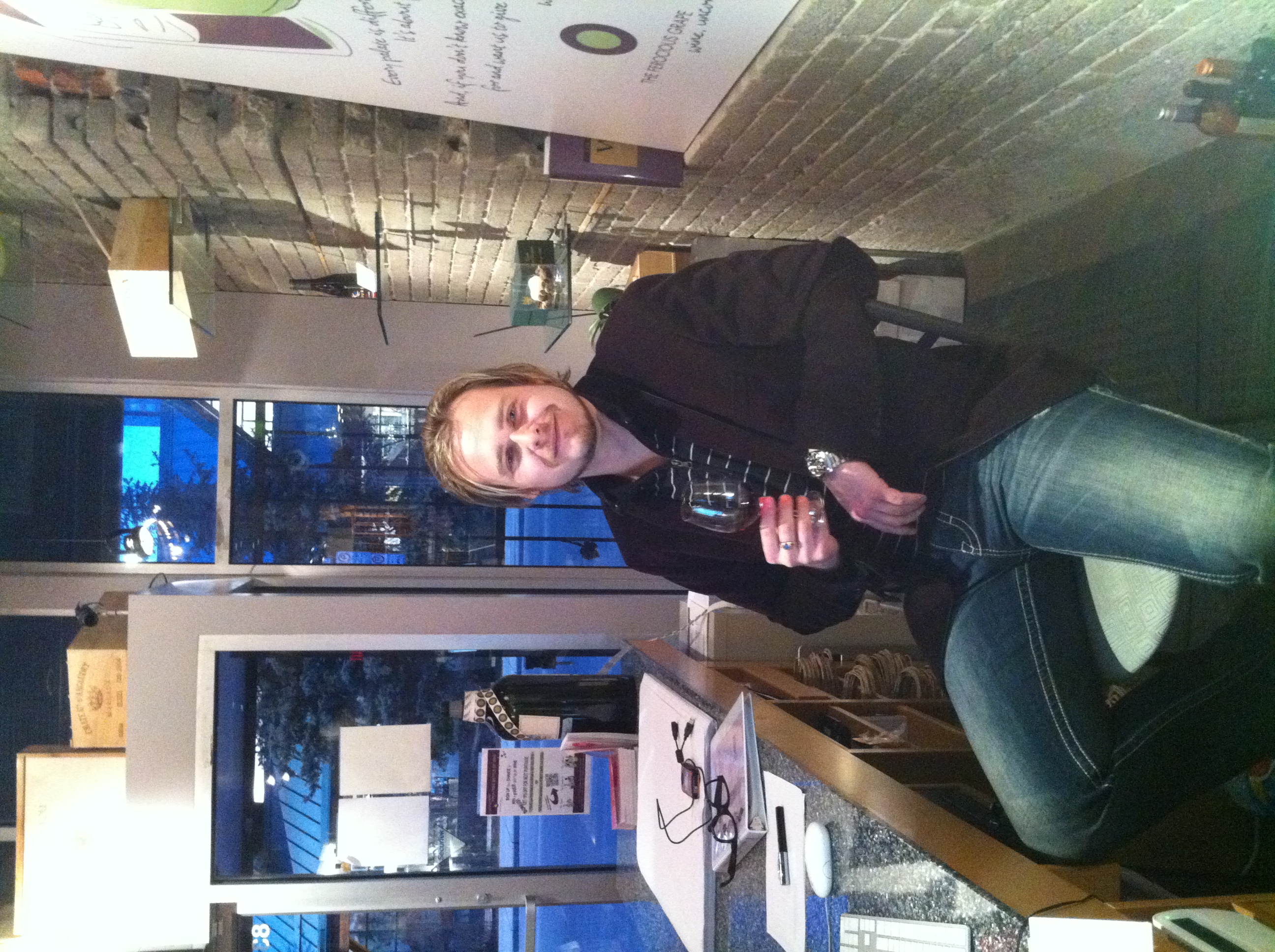
Calgary, Jesse. Jesse, Calgary.

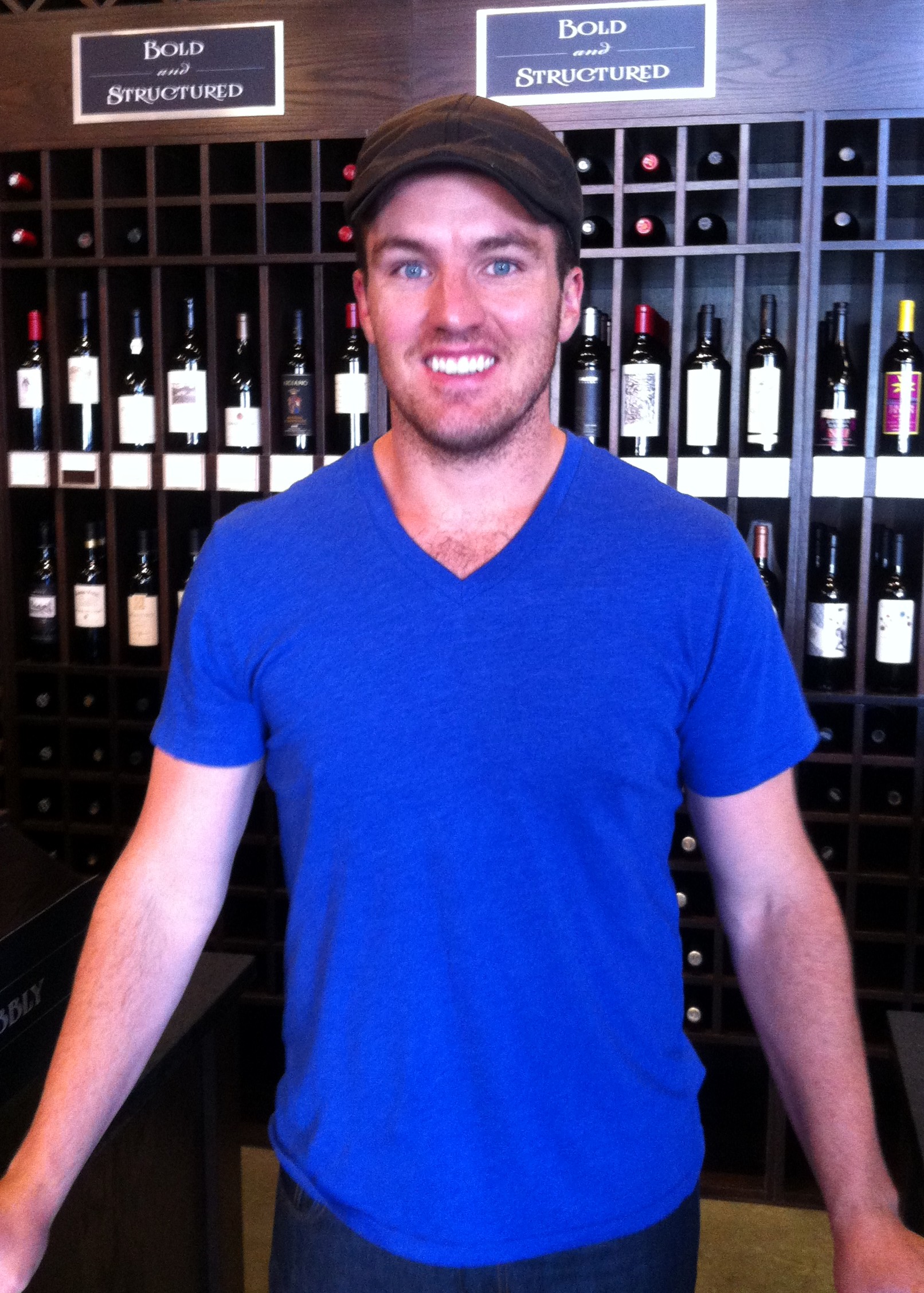
I walked into the Vine Arts retail space for the first time a couple of weeks ago and, like I do in most wine stores, I looked for the Germany section.  There wasn’t one.  No Riesling section either. Rather than sorting its vinous wares by country or by grape, the more or less universal ways of arranging a wine shop, Vine Arts had catalogued and displayed all its wines by adjective, grouping whites under headings like “Off-Dry & Aromatic” or “Light & Fresh” and reds under headings like “Bold & Structured”, “Spicy Earthy Funky” or, my favourite, “Smooth & Sexy”.  That simple but radical design choice is why I believe Jesse Willis when he tells me he’s trying to do things differently. Read the rest of this entry »


Wine Review: 2011 Mission Hill Reserve Riesling

25 06 2012

[This bottle was provided as a sample for review purposes.]

Canada, meet your new favourite grape.

If you’ve followed this blog for any length of time, you’ll be aware of my completely transparent devotion for Riesling, the top wine grape of all in my books and the star of the show in my favourite white-producing country, Germany.  It’s also a varietal that is starting to be developed more seriously in the major wine regions of my home nation of Canada, both in the Okanagan Valley in the west side of the country and the Niagara Peninsula in the east.  This comes as a huge relief to me:  we’re definitely still a country trying to find its identity wine-wise, and thanks to our climate and latitude it will always be a steep challenge for us to produce big reds in all but the most privileged sites, so one way to get recognition as a serious wine nation in an increasingly competitive market is to focus our energy and resources into developing the absolute best quality wine grapes that thrive in cooler, more marginal conditions.  That’s where Riesling comes in.  It creates some of the best, longest-lived wines in the world, but it also embraces sites at extreme wine-growing latitudes with colder average temperatures and shorter growing seasons…in fact, it reaches its apex in these types of locations.  I think Canada and Riesling are a vinous match made in heaven, so it was with great anticipation that I cracked this bottle, sent to me by one of BC’s largest producers, Mission Hill. Read the rest of this entry »


Wine Review: 2009 Jim Barry “Cover Drive” Cabernet Sauvignon

18 06 2012

The second vintage of Cover Drive featured on PnP…let’s see how they stack up against each other.

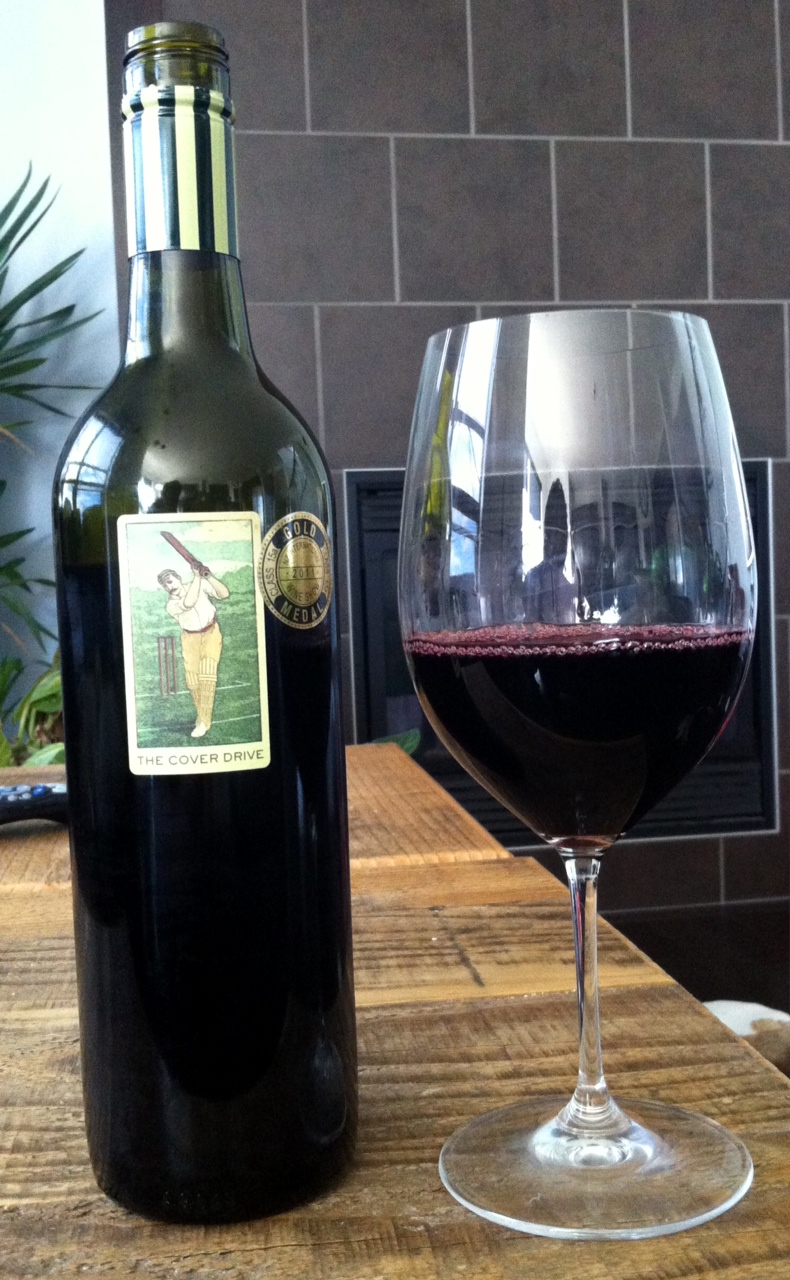
I went to the Costco liquor store this week, and as always when I walk into Costco, I walked out with a bottle of the Jim Barry “Cover Drive” Cab from South Australia, one of my favourite New World value wines.  When I first grabbed the bottle, I thought it was the same wine that I had previously reviewed back in November, but on closer inspection it was in fact a brand new vintage of Cover Drive, the 2009 (my reviewed bottle was the 2008).  This provided a golden opportunity to examine a question that I’m sure many casual wine drinkers ask themselves:  how much does vintage impact the flavour and quality of a wine?  Is there really a discernible difference between the 2008 and 2009 bottlings of a wine made from the same grapes grown in the same spots?  Most inexpensive wines are made to reflect a consistent flavour profile and style year over year, but my bet was that a quality producer like Jim Barry wouldn’t try to make his ’09 Cover Drive a clone of his ’08 and would retain some of the vintage variation arising out of the changes in weather patterns, sunlight, temperature, harvest dates and more between the two years.  To find out, I wrote up tasting notes for the 2009 CD without re-reading my 2008 review, and now I’m going to retro-compare the two bottles by lining up my 08 notes side by side with my impressions of the 09.  Hopefully this actually proves interesting.  Here goes! Read the rest of this entry »


Wine Review: 2010 Villa Maria Marlborough Private Bin Pinot Noir

13 06 2012

[This bottle was provided as a sample for review purposes.]

Marlborough spreads its wings…who needs SB?

This wine is the red corollary to the Villa Maria Sauvignon Blanc I reviewed last week, but (through no fault of the SB, which I quite enjoyed) I found myself much more excited to open this bottle because it was uncharted territory for me.  I (and you, and any other casual-or-more wine drinker) have had the famous Sauvignon Blanc from New Zealand’s Marlborough region many times before, but I can count the times I’ve had Marlborough wine made from ANY other grape on one hand…actually, one finger.  I was enthralled by The Doctors’ Riesling by Forrest Wines, a producer daring enough to take Marlborough vineyard land guaranteed to sell with SB and plant something else instead, and I’m doubly intrigued to open my very first red from this sacred Sauvignon Blanc area.  The most famous region in New Zealand for Pinot Noir is probably Central Otago, located in the southern half of NZ’s South Island and known for generating Pinots with distinctive, if potentially off-putting, gamey/meaty/Band-aidy aromas; I had no idea if Marlborough would be more of the same or if it would show off its own individual Pinot style.  No better way to find out… Read the rest of this entry »


Wine Review: 2011 Villa Maria Marlborough Private Bin Sauvignon Blanc

4 06 2012

[This bottle was provided as a sample for review purposes.]

Cold and young: the best way to enjoy NZ Sauv Blanc.

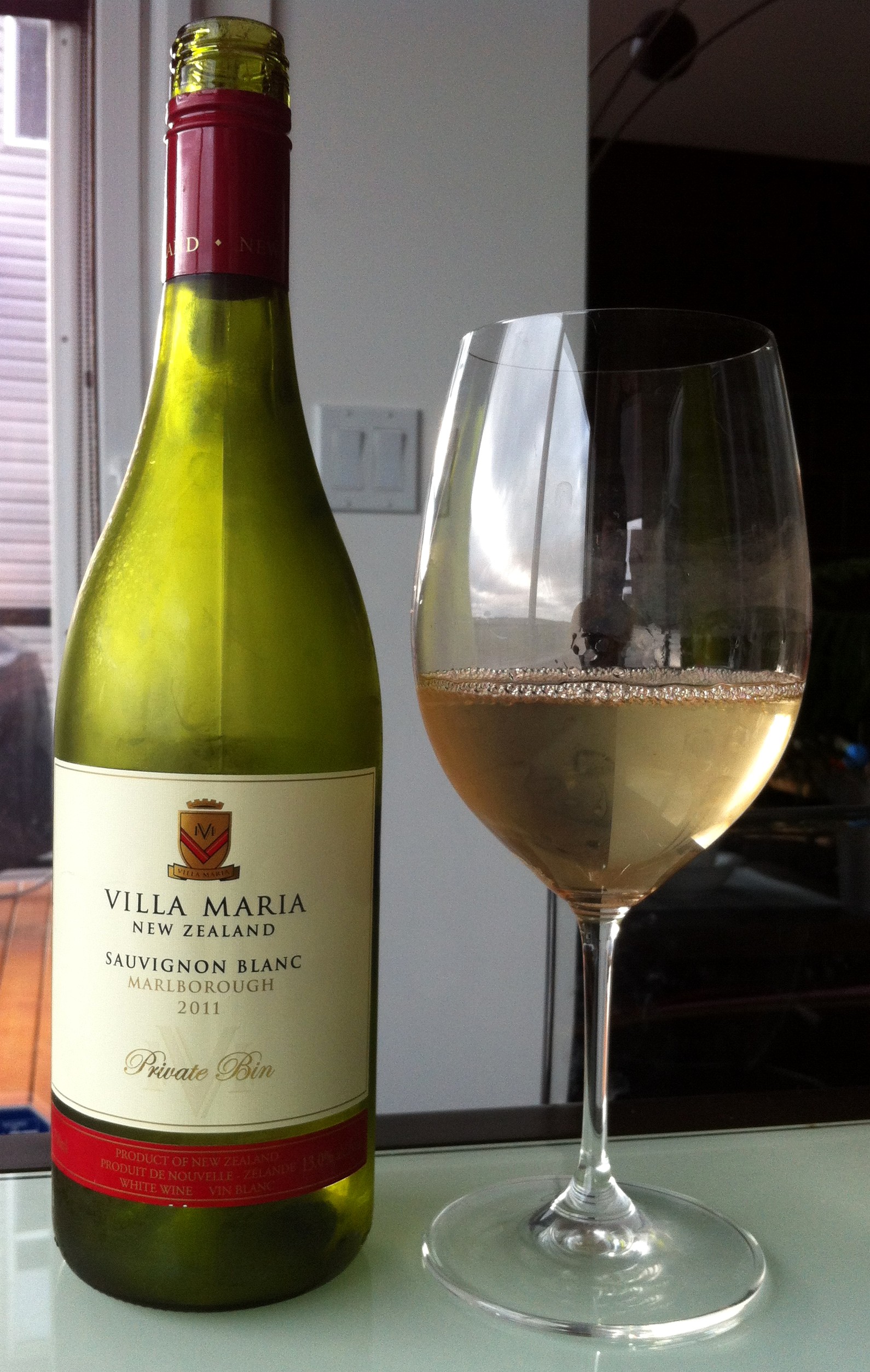
For my generation of wine drinkers, New Zealand Sauvignon Blanc is a white wine mainstay, both a defining expression of the Sauvignon Blanc grape and one of the first whites that comes to mind during a trip to the wine store.  However, this level of penetration into the world’s vinous consciousness is a very new phenomenon:  NZSB didn’t attract international attention until the mid-1980s, when the bright, crisp, fruit-packed bottlings from the country’s star Marlborough region first took foreign palates by storm.  New Zealand has seen exponential growth in its wine production in the nearly 30 years since, and most of the Sauv Blancs you see on the shelves now are a product of this modern white revolution, only recently arrived to the SB scene.  But not this one.  In 2011, Villa Maria celebrated its 50th year as a producer, which, in a country that is relatively new to the world wine limelight, makes it a true New Zealand pioneer.  Its Private Bin bottling of Marlborough Sauvignon Blanc is sourced from grapes grown all over the region and shows that even recent wine history leaves a strong flavour footprint. Read the rest of this entry »


Wine Review: 2006 Brancaia Tre, XMas Edition

31 05 2012

I don’t even know what to say. Oh wait, yes I do.

Yes, I intentionally waited until it was completely seasonally inappropriate to open this bottle.  I bought it back in December (no surprise) mainly because I couldn’t believe someone had done this to a bottle of wine:  pull a back-vintage bottle from a producer’s library (or an importer’s warehouse), replace the original label with a horribly tacky dollar-store-worthy holiday one, and re-release it in time for the Christmas retail rush.  The most amazing thing is that this isn’t some hack wine:  Brancaia is a well-regarded Tuscan producer, and the 2007 vintage of Brancaia Tre (the year immediately after this bottle) was so acclaimed that it cracked the top 10 in Wine Spectator magazine’s Top 100 Wines of the Year.  Meanwhile, the 2006 was stripped of all its dignity, festooned with a cheesy red label and thrown into the hyper-commercialized Christmas arena alongside Justin Bieber’s holiday album and boxes of red and green M&Ms.  My reaction on first seeing this bottle on the shelves probably echoed that of many wine lovers:  “You’ve got to be f______ kidding me.” Read the rest of this entry »


Wine Review: Sokol Blosser Evolution Red, 1st Ed.

26 05 2012

[This bottle was provided as a sample for review purposes.]

That familiar E, now in red form.

If you are at least a semi-regular wine drinker, chances are you’ve stumbled upon the white version of Evolution, a borderline-bizarre blend of 9 different grapes concocted by Oregon producer Sokol Blosser which has become the poster child of fun quality table wine.  White Evolution has been around for 15 years and counting, and this year it has been joined by a red counterpart out to accomplish the same mission using darker-skinned grapes.  Sokol Blosser is keeping the specific mix of grapes for this new wine a secret, revealing only that red Evolution is a Syrah-based blend, but a look at past SB red offerings can let us take an educated guess as to what might be in the bottle.  For the past few years, Sokol Blosser has made a sister red brand called Meditrina, which was a blend of Syrah, Pinot Noir and Zinfandel.  With the introduction of Evo red this year, Meditrina is no longer being made, and I would think there’s a better than even chance that the Syrah, Pinot and Zin grapes which were previously sourced for Meditrina may have found their way into this new label.  I almost hope this is true, because I found Meditrina quite enjoyable when it still existed, and tying it to the juggernaut Evolution brand would certainly help increase its exposure. Read the rest of this entry »


“The Wine Is Sound”

21 05 2012

A great bottle, particularly on a restaurant list for $85!

I’ve been travelling quite a bit for work lately (hence the limited and sporadic nature of my posting in May).  This past week I was in southern Ontario for a couple days and had the chance to eat dinner with some colleagues at a fantastic modern and wine-centric restaurant in downtown Toronto.  The place was built around wine, with a massive temperature-controlled cellar, multiple sommeliers on staff and a huge list of hundreds of bottles covering all points of the vinous spectrum.  Even better, instead of marking up their wines to 2 or 3 times retail price as per restaurant standards, this place took a unique approach to their pricing, tacking a fixed $25 markup onto their cost for each wine on their list and charging only that nominally-increased price to diners.  They basically offered their entire wine cellar to consumers at corkage prices, which is a phenomenal selling feature and an idea that I hope gains greater traction across the fine dining industry in the near future.  As I will describe below, the actual service of the wine was also a thing to behold, with every step from cellar to table carefully handled by a trained sommelier.  It was the epitome of restaurant wine experience…but as I left the place, the only thing I kept coming back to was one little thing the sommelier said as he handed me my glass. Read the rest of this entry »


Calgary Wine Life: Bin 905 Chateau de Beaucastel Tasting @ Divino, Part II

7 05 2012

[Cross-posted at www.calgaryisawesome.com]

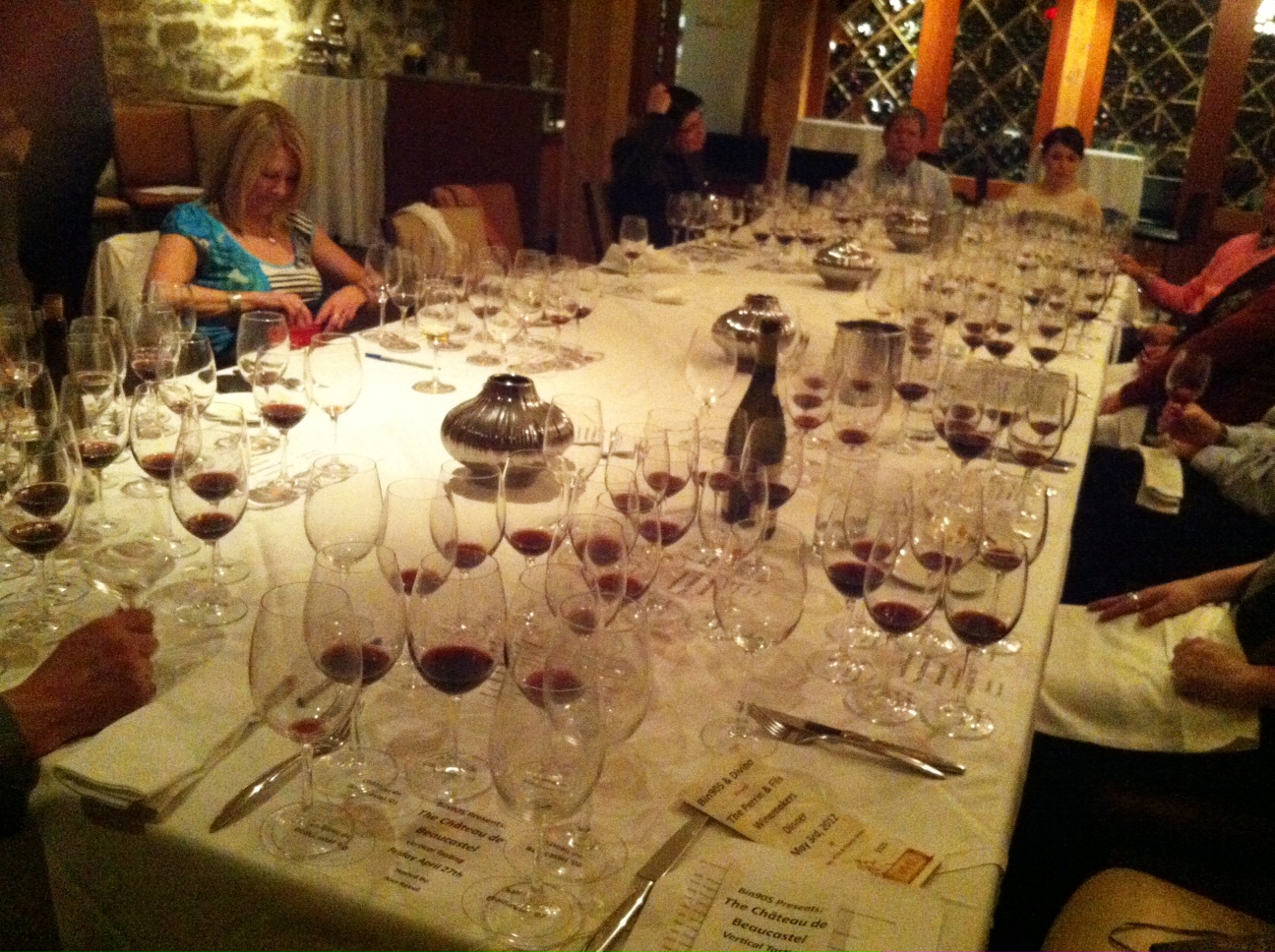
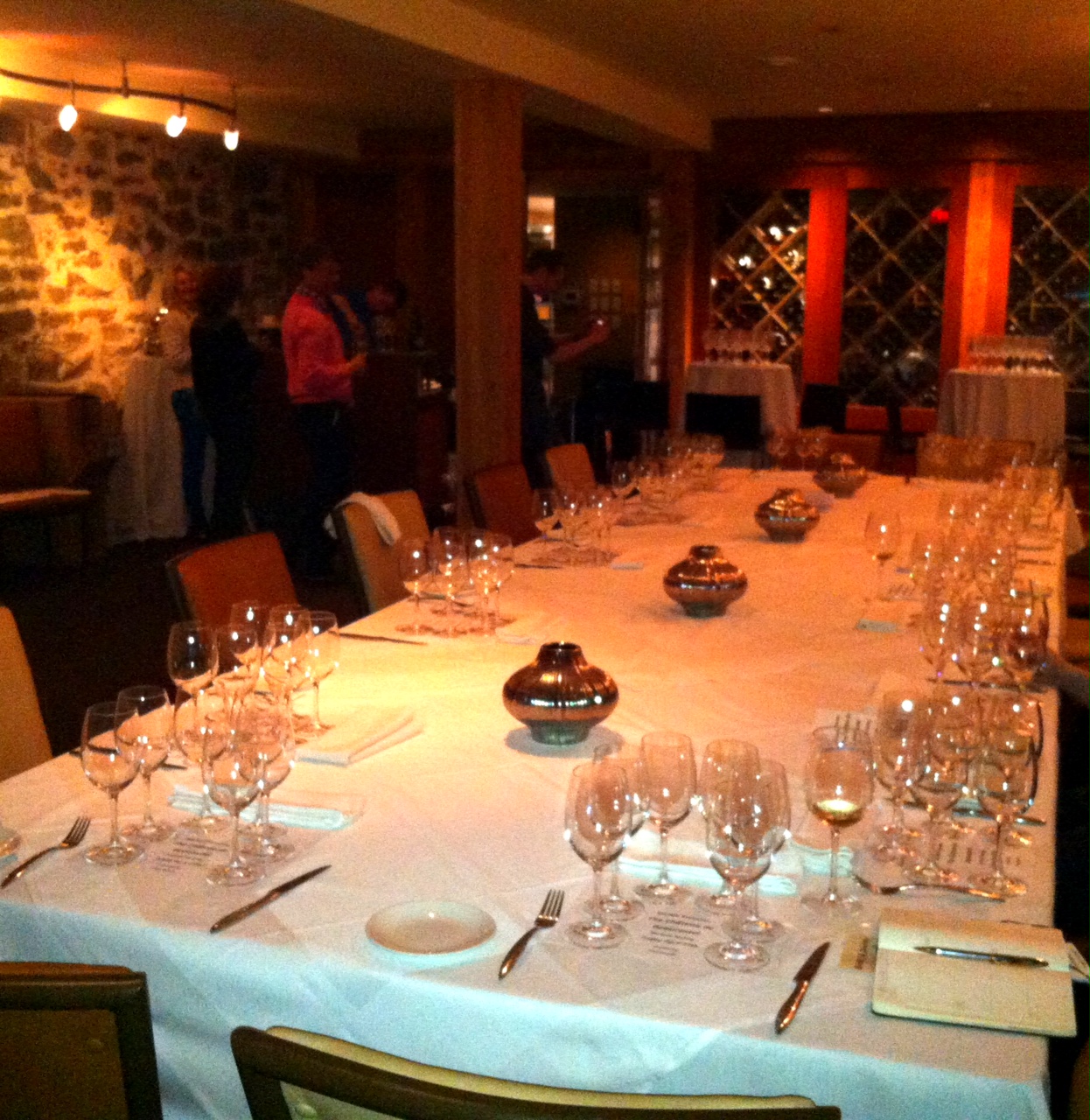
In full swing — there were probably 150 glasses on the table.

For Part I of this mammoth tasting write-up, click here.

After the first half-dozen wines of Bin 905’s Chateau de Beaucastel vertical tasting, spanning six vastly different bottles from 1989 to 1999, we took a 15 minute break to chew on some cheese and cleanse our palates.  After the first 1700 words of my tasting review covering those six bottles, I took a 7 day break to get mentally prepared to delve into another topsy-turvy whirlwind of a decade of Beaucastels.  The second half of the tasting covered six wines from the 2000s and included one of my least favourite wines of the tasting…but also my wine of the night.  First up, tasked with trying to make me forget about the likely-corked 1999, was the Chateau de Beaucastel Chateauneuf-de-Pape from 2000. Read the rest of this entry »


Calgary Wine Life: Bin 905 Chateau de Beaucastel Tasting @ Divino, Part I

30 04 2012

[Cross-posted at www.calgaryisawesome.com]

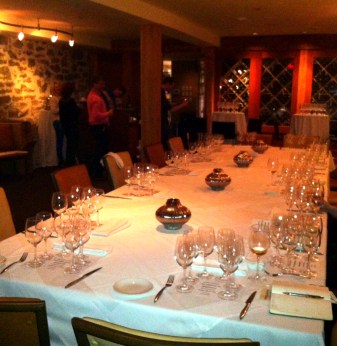
Divino's Stone Cellar, a.k.a. Tasting Central.

I had fully intended that this monthly post would showcase a different player in the Calgary wine scene every month, highlighting the incredible depth of industry talent we have at our disposal locally.  And yet here I am, in CIA post #4, writing about another tasting put on by Bin 905, hosts of the Jim Barry Armagh tasting I covered back in February.  I know we have a remarkable array of wine stores out there, and I know many of them are doing great things with their event schedules, but I can’t say that I feel bad about the Bin 905 duplication because the tasting I went to on Saturday was just that cool.  Held at Divino restaurant’s Stone Cellar, it was a 12-bottle vertical tasting of one of the best and most historic producers of the famed Chateauneuf-de-Pape region in France’s Southern Rhone Valley, Chateau de Beaucastel.  A vertical tasting provides a unique opportunity to track the progress of a wine as it ages and lets you see the impact that a given year has on the style and flavour of a bottle, since you taste the same producer’s wine over a number of vintages; in this case, we tried Beaucastels from the mid-90s through the late-oos (whatever you call that decade), as well as one particularly special bottle from the tremendous vintage of 1989.  The initial tasting program featured far fewer bottles, but Bin 905 had the ingenious idea of offering people a free seat at the tasting if they brought a bottle of Beaucastel from a year that wasn’t yet in the lineup.  Thanks to a number of philanthropic volunteers, we all got treated to the most complete vertical tasting I’ve ever been a part of…which isn’t saying much, since I’ve only been a part of two, but it was still impressive.

Chateau de Beaucastel is a legendary producer in Chateauneuf-de-Pape:  along with a handful of others, it represents the creme de la creme of the region’s growers and winemakers.  CNDP stands out as a wine region because it permits 13 different grape varieties (combined red and white) to be included in its wines, a number that is dramatically higher than most other European wine-growing areas.  Beaucastel in turn stands out as a producer because, in almost all of its bottlings of red CNDP, it incorporates all 13 varietals into the mix, even the whites.  Like most other wineries from Chateauneuf-de-Pape, Beaucastel’s blends rely mostly on the big three red Southern Rhone grapes — Grenache, Syrah and Mourvedre — but Beaucastel again takes a particularly individual approach to its winemaking by incorporating much more Mourvedre (usually around 30%) and much less Syrah (usually around 10%) in its blends as compared to most of its brethren.  The result is a deeper, thicker, more complex wine that ages very well and that spawns a host of secondary flavours after a few years in the bottle.  I had only ever had Chateau de Beaucastel from a recently-released vintage, and it was so knotted and closed upon opening that I couldn’t understand what the fuss was about until about 2 hours later, when I came back to the wine to find an absolute labyrinth of tastes and smells just starting to stretch their legs.  At the time I thought:  how great would it be to try one of these after it has had a proper chance to age?  It turns out I went one better, sitting down to this amazing event that brought a dozen bottles of Beaucastel from 5 to 23 years old into my grasp. Read the rest of this entry »


Burgundy: White Tasting, Part IV

26 04 2012

OK, time to bring this long and winding road of a tasting review to a close.  I had set this up so that we’d end on a high note with the most prestigious bottles in the tasting, the illustrious Grand Crus, but for reasons outside their control, the drinking experience ended up being somewhat anticlimactic.  And no, it wasn’t because we were 10 bottles in by this point.  That’s what made the next morning anticlimactic.

FOURTH FLIGHT

A.k.a. over $300 worth of wine that really shouldn't be open yet.

Grand Cru vineyards are the rarest, best-positioned, most historic, highest-quality growing areas in all of Burgundy…or at least their classification is meant to reflect as much.  As you might expect, Grand Crus come in very limited numbers (only 32 in the Cote d’Or, according to my friend the Internet) and they produce minute quantities of wine each year with prices to match their prestige and scarcity.  I didn’t have the overflowing bank account to go too crazy and delve into the elite of white Burgundian GCs — the series of adjoining Grand Crus bearing the “Montrachet” name, including Le Montrachet, Batard-Montrachet, Bienvenues-Batard-Montrachet, etc. are almost certainly the creme de la creme of white Burgundy, but they’re also a hilarious pipe dream in my current circumstances — so instead I turned my focus to two wines from the well-regarded but much cheaper Grand Cru of Corton-Charlemagne.  Unfortunately, both bottles were from relatively recent vintages, and we quickly discovered that, with great white Burgundy, time is your ally. Read the rest of this entry »


Burgundy: White Tasting, Part III

23 04 2012

When you spend hundreds of dollars over multiple months to build a tasting, you stretch out the write-up as much as possible.  To read the introductory entry in this Chardonnay-fuelled marathon, click here.  To read about the jump from basic Bourgogne Blanc to village-level bottlings, click here.  To read about the exciting ascent into the mystical and expensive world of Premier Cru white Burgundy, well, keep reading.

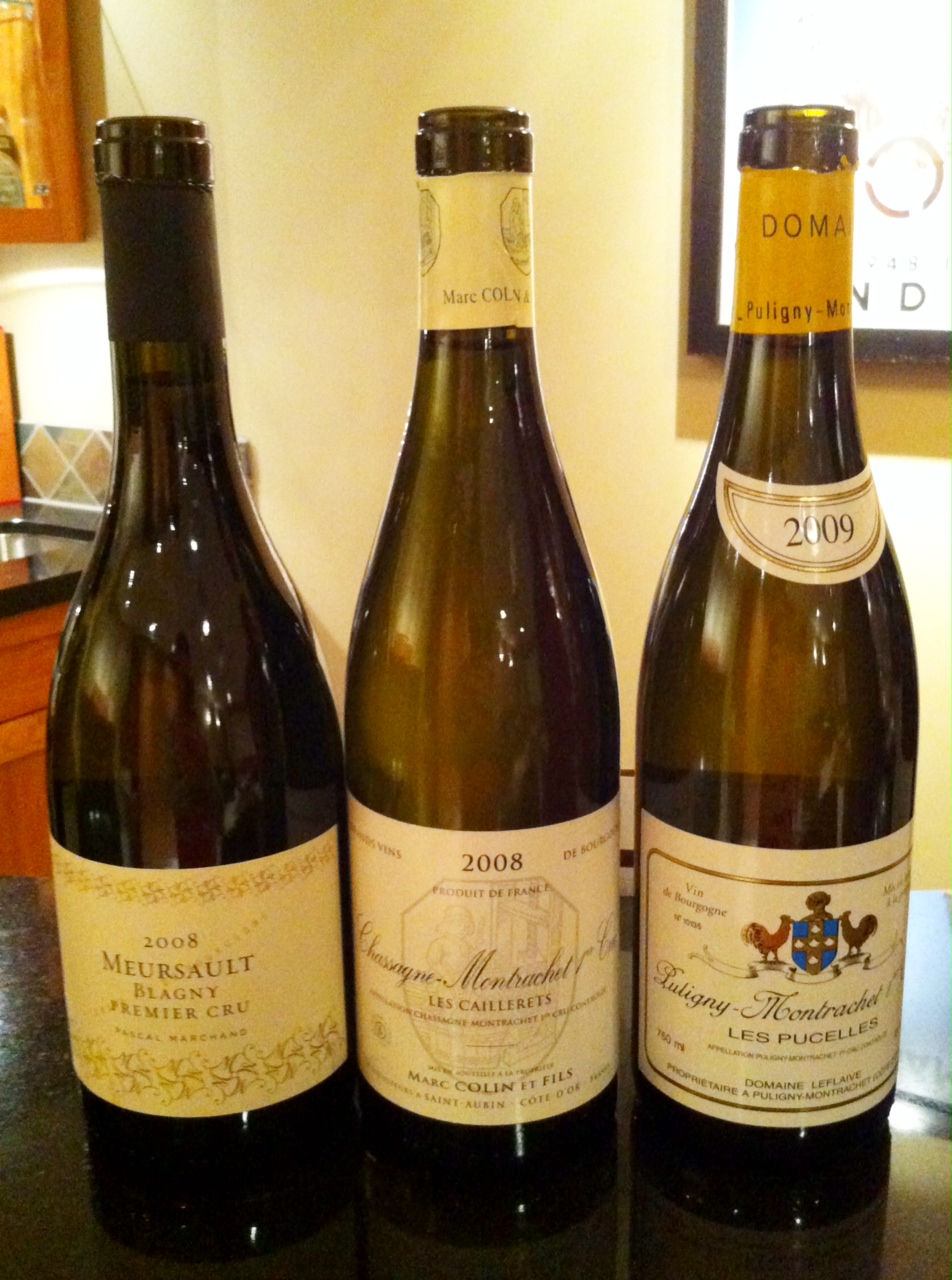
THIRD FLIGHT

Time to hit up the big leagues.

Now we officially move from the wines that you might pop open on a Friday or Saturday if you feel deserving after a hard week to the wines that you agonize over opening until just the right spot in their drinking window and just the right occasion because you know your budget won’t easily permit a replacement.  The combined retail cost of the flight of 3 village-level white Burgundies was about $180; the combined retail cost of the 3 Premier Crus below is almost double that, $340.  This is why I didn’t buy any other wine from January until April.  In the third flight of the evening we continued to highlight the top white Burgundy villages of Meursault, Chassagne-Montrachet and Puligny-Montrachet, and instead of village bottlings made from grapes that could be sourced from anywhere in the adjoining area, we narrowed our focus and opened a bottle from each sub-region made from grapes grown in a particular highly-regarded Premier Cru vineyard near the village in question.  Every inch of land in Burgundy’s famed Cote d’Or region has been analyzed and classified over centuries, and those areas with the best soils, slopes, exposure to sunlight, drainage and growing conditions were isolated as Premier Cru or Grand Cru.  That’s what we’re getting into:  hundreds of years of liquid history. Read the rest of this entry »


Burgundy: White Tasting, Part II

19 04 2012

If you missed the inaugural entry about my dozen-bottle, Bourgogne-Blanc-to-Grand Cru, no-holds-barred white Burgundy tasting, check out my write up of four 2009 Bourgogne Blancs of varying levels of quality and corked-ness here.  Tonight we’re jumping right into Flight #2.

SECOND FLIGHT

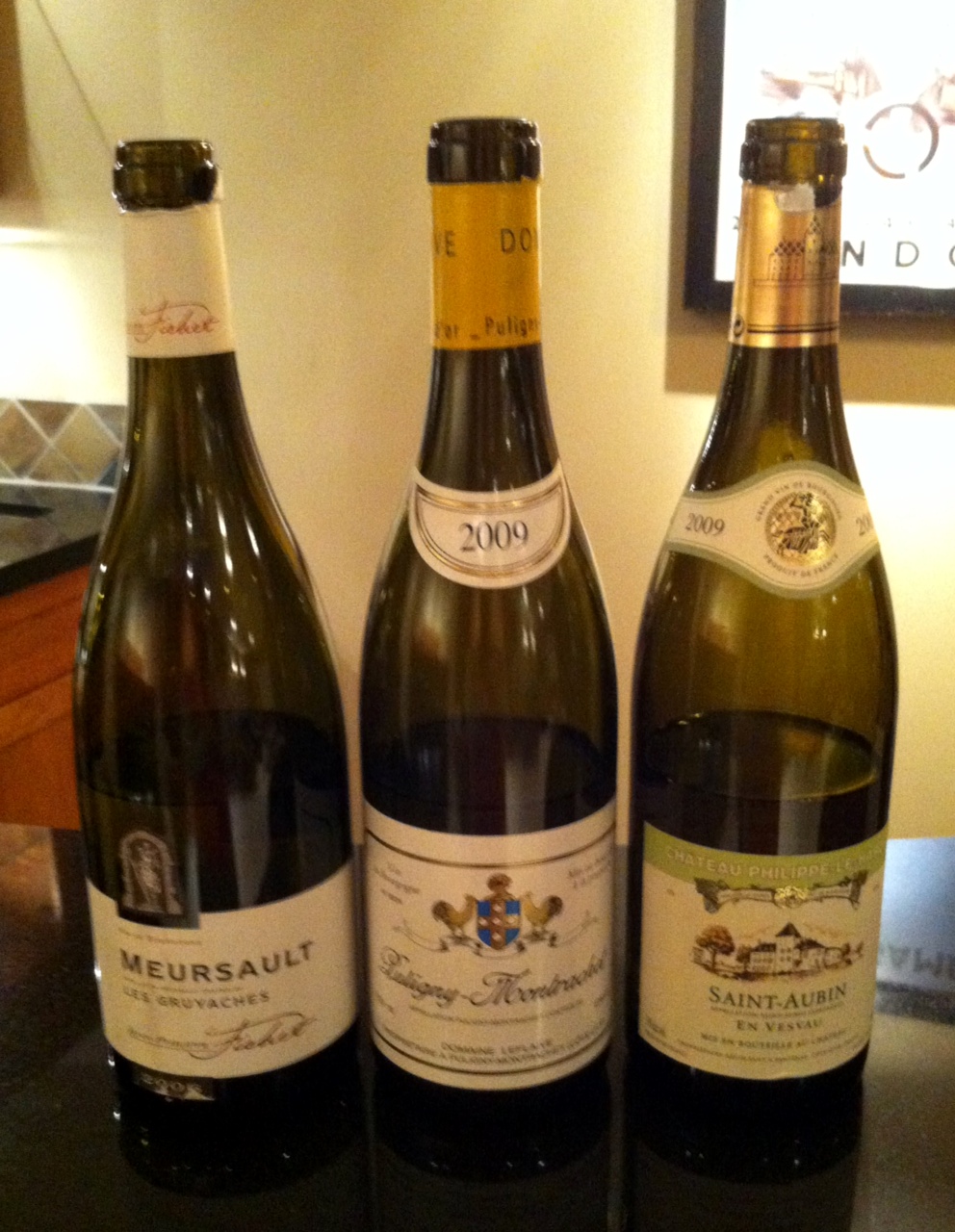
Slightly out of order: from left to right, Wines 1, 3, 2.

From the basic Bourgognes, we move up one quality level and correspondingly narrow our regional focus with three village-level wines, so called because the village closest to the vineyards where each wine’s grapes were grown is the prominent identifying feature of the classification.  Even though Burgundy is a relatively small wine region (the Cote d’Or, the key quality area in the heart of the region, is only around 40 km long and in most spots less than 2 km wide), each of the main wine villages rests on slightly different soils and lies on slightly different aspects, which result in wines with clearly identifiable local identities.  I’ve read about the flavour differences among the various villages, but this was my first chance to experience them myself.  The plan was to open a bottle each from the three most well-known white wine villages in Burgundy:  Meursault, Chassagne-Montrachet and Puligny-Montrachet.  However, after checking in with at least half a dozen prominent Calgary wine stores and being unable to locate a village-level Chassagne anywhere, I had to sub it out for Plan B:  a village wine from the nearby town of Saint-Aubin, which certainly doesn’t have the reputation of its more illustrious neighbour but which has been known to produce solid whites at (relative) value prices.  Would it stand up with the best Chardonnay spots in Burgundy?  Um, not so much. Read the rest of this entry »


Burgundy: White Tasting, Part I

12 04 2012

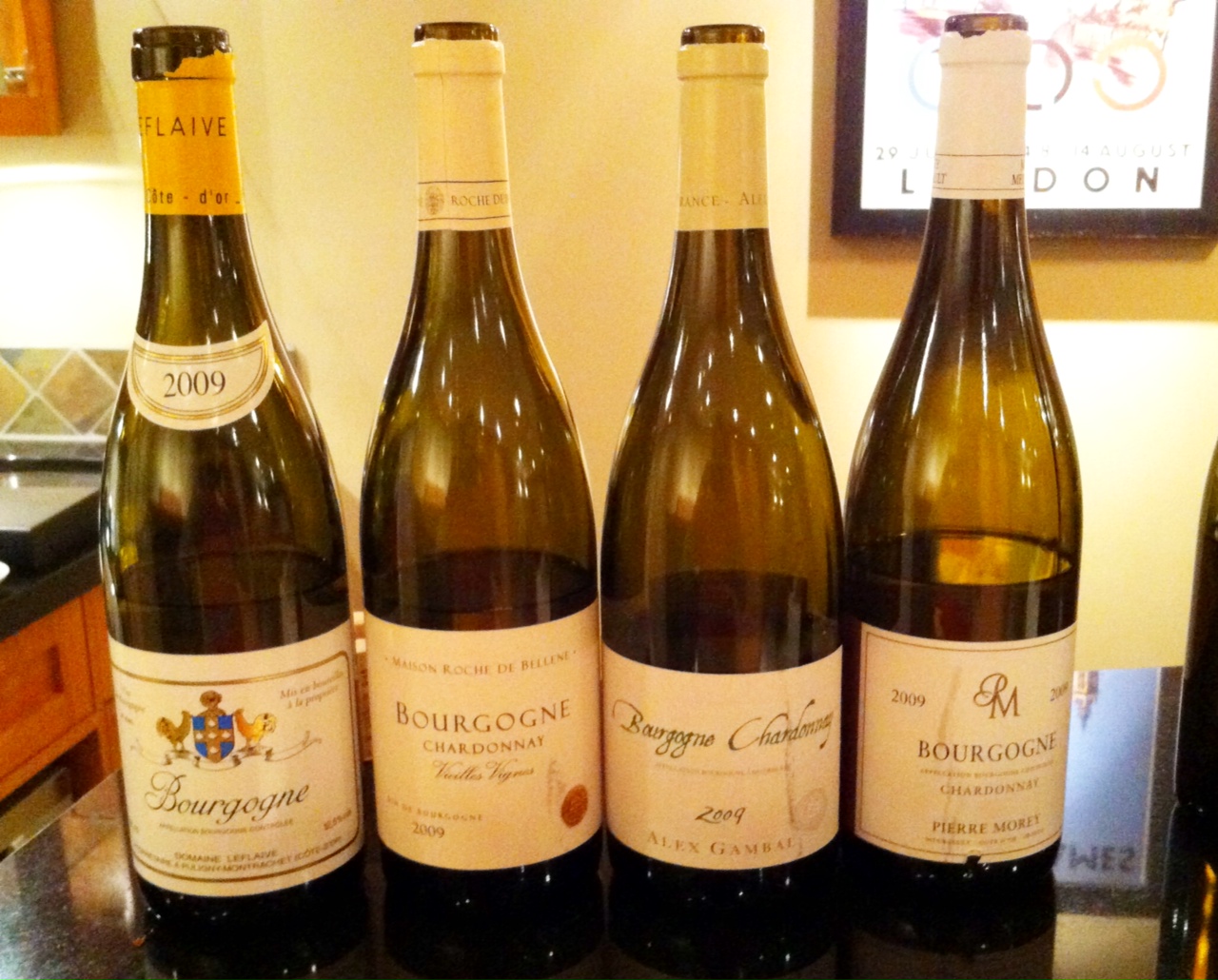
It begins: the first 4 of a dozen hopefully-representative white Burgundies.

I acknowledge that it’s definitely been awhile.  I spent my evenings last week cleaning out my basement, then took the Easter weekend off, then faced a total loss of home Internet for a few days, all of which added up to a blog-less streak of epic proportions…sorry about that.  To make it up to you, instead of posting a lonely wine review tonight, I’m diving back into action with the first instalment of a multi-part writeup showcasing the results of the long-planned white Burgundy tasting that I’ve had in the works since January and that fulfills a 2012 New Year’s Resolution of mine.  More on the planning behind the tasting and the rationale for the various wines selected here.

To summarize for those of you who don’t feel like clicking on the link above, the goal of the tasting was to open bottles from the four main Burgundy quality classifications (Bourgogne Blanc, village level, Premier Cru, Grand Cru), spanning  some of the key sub-regions for Burgundian whites (Puligny-Montrachet, Chassagne-Montrachet, Meursault, Corton-Charlemagne), to see how the wines from each of the sub-areas differed from those from others and how the wines from the same sub-areas varied from producer to producer and between quality levels.  I will vouch from experience that delving to the bottom of these analytical quandaries required a lot of drinking.  Such is life.

Cork Ratings for wines 1-3: 2.5/10, 6.5/10, 5/10. Meh.

There were 12 bottles open for the tasting and an esteemed panel of four judges with glasses at the ready; we tried the wines in four flights grouped by quality classification, going in ascending order from the base Bourgogne Blancs to the Grand Crus.  My actual tasting notes from the first flight are below, and the write-ups of the other three flights will be coming soon to an Internet near you.  At the end of the day, while the tasting didn’t instantly reveal the inner mysteries of Burgundy to me, it was a useful (and highly entertaining) crash course on a region that I haven’t spent nearly enough time getting to know. Read the rest of this entry »


Calgary Wine Life: Meet Brian Greenslade @ The Ferocious Grape

30 03 2012

[Cross-posted at www.calgaryisawesome.com]

Brian Greenslade isn’t much for titles.  Though he has full command over the ordering and inventory direction of the Ferocious Grape, a prestigious position for which others may have taken the label “Wine Director” or “Sommelier”, FG’s website simply anoints him as their resident “Wine Lover”.  Brian’s business card is even more nondescript; below his name, where most people broadcast their employment station, it simply reads “[Insert Title Here]”.  If I had to name one thing that separates the Ferocious Grape from the rest of the pack of Calgary wine boutiques, it would be this kind of laid-back, utterly pretension-free attitude, an approach that remembers that wine is just a drink to be shared among friends, not one that should make you feel like you have to keep an eye on your credentials.

My experience with Ferocious Grape goes back almost to its opening in 2008.  I used to live in the Beltline, a few blocks from FG’s storefront at 8th Street and 10th Avenue SW, so they ended up becoming my friendly neighbourhood wine shop.  I was just starting to get interested in wine at that point, yearning to know more but still totally uncomfortable at the thought of venturing alone into a wine store and being peppered with questions to which I had no answers by some wine-snob-in-training.  Upon noticing this brand new shop a stone’s throw away from my place, however, I couldn’t help but stop in, and I was amazed to walk into a funky, relaxed, pressure-free atmosphere where there was always a full glass waiting for me and never any intimidation factor associated with the products being sold. Read the rest of this entry »