Whisky Advent Calendar: Day 10

10 12 2014

Here come the internationals!  After 9 consecutive days of scotch whisky, the KWM finally departed Scotland’s shores and ventured all the way to…well, Ireland for Day 10.  But a short hop is better than no hop at all!  I’m delighted to start checking out the other whiskies of the free world, and almost as delighted to finally get to spell it as I’m naturally inclined to:  “whiskey”.  The bottle told me I could.  I read recently that a handy guide for how you should spell the word “whisky” with respect to a given bottle is to look at where it’s from:  if it’s from a country without an “E” in its name (like Scotland, or Japan), don’t put an E in “whisky”, but if there is an “E” in its name (like Ireland, or the United States), put an E in “whiskey”.  Not sure if that holds up across the board, but it works here.
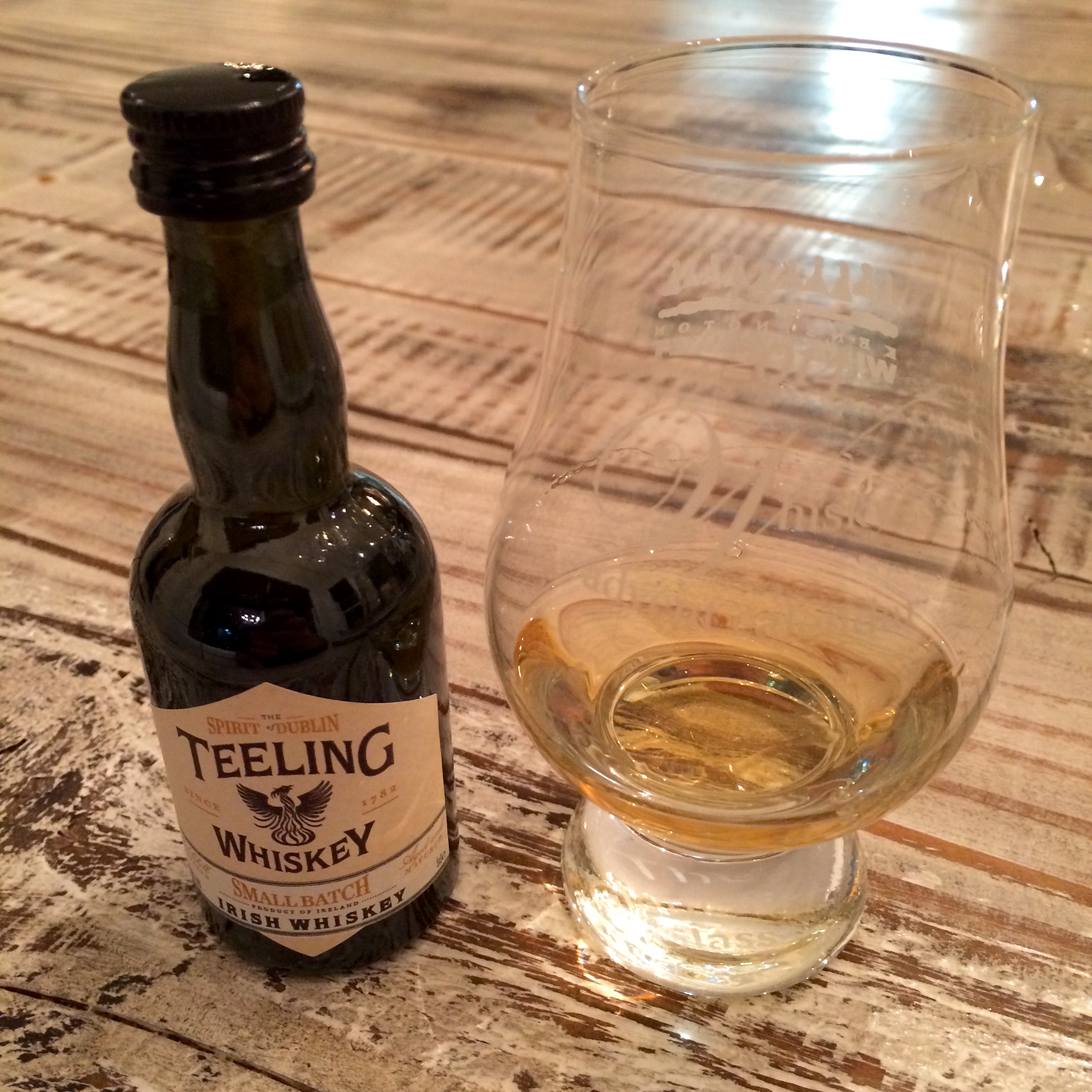
Stellar looking bottle plus an E in "whiskey" to boot. I'm happy.

Stellar looking bottle plus an E in “whiskey” to boot. I’m happy.

Tonight’s whiskEy is a small batch Irish Whiskey from Teeling distillery, which is a high-malt blend finished for 6 months in ex-rum barrels (take that, Oloroso sherry casks!) and bottled at 46%.  There’s not much that legally differentiates Irish whiskey from scotch whisky apart from their country of origin, although Irish whiskies are almost never peated, are usually distilled three times in a pot still and tend to be less regulated in terms of contents.

Read the rest of this entry »


Whisky Advent Calendar: Day 9

9 12 2014

A series of firsts in today’s KWM Advent Calendar offering:  first whisky over $100 for a full bottle ($118); first whisky over 16 years of barrel age (18 Year); first whisky aged in Oloroso sherry casks…no, just kidding, it seems that EVERY whisky nowadays ages in Oloroso sherry casks.  It’s just the cool thing to do.  If I owned a distillery I’d age all my whisky in Amontillado sherry casks just to be a rebel.  The GlenDronach Allardice (named after the founder of the distillery) 18 Year Highland Single Malt at least commits fully to the trendy Oloroso path by aging 100% in Oloroso sherry casks for the entirety of the scotch’s aging period — none of this wishy-washy “finishing” stuff.  As a result, it does not mess around with nutty, mealy, maple-y oxidized sherry flavour, but dives in headfirst.

If I hear the word "Oloroso" again this Advent I'm going to scream.

If I hear the word “Oloroso” again this Advent I’m going to scream.

The first thing to note is the colour of this whisky, which almost looks like oversteeped tea as opposed to barrel-aged spirit.  Then the Oloroso aromatic brigade starts, carrying with it a series of grimy kernel- and nut-inspired flavours that would make a barroom floor proud:  salt, stale beer, peanut shells, cold coffee, pretzels.  Things get malty and lively on the palate, all ginger ale, coffee beans, fig, cloves and dark chocolate, leading into a finish that’s a dead ringer for a cappuccino.  Yes, I know that’s weird.  Maybe it’s just Oloroso cask fatigue, but nothing about this whisky really moved me, although I can appreciate the additional complexity and flavour commitment that goes along with the extended aging process.  Sorry GlenDronach:  wrong year, wrong calendar.


Whisky Advent Calendar: Day 8

8 12 2014

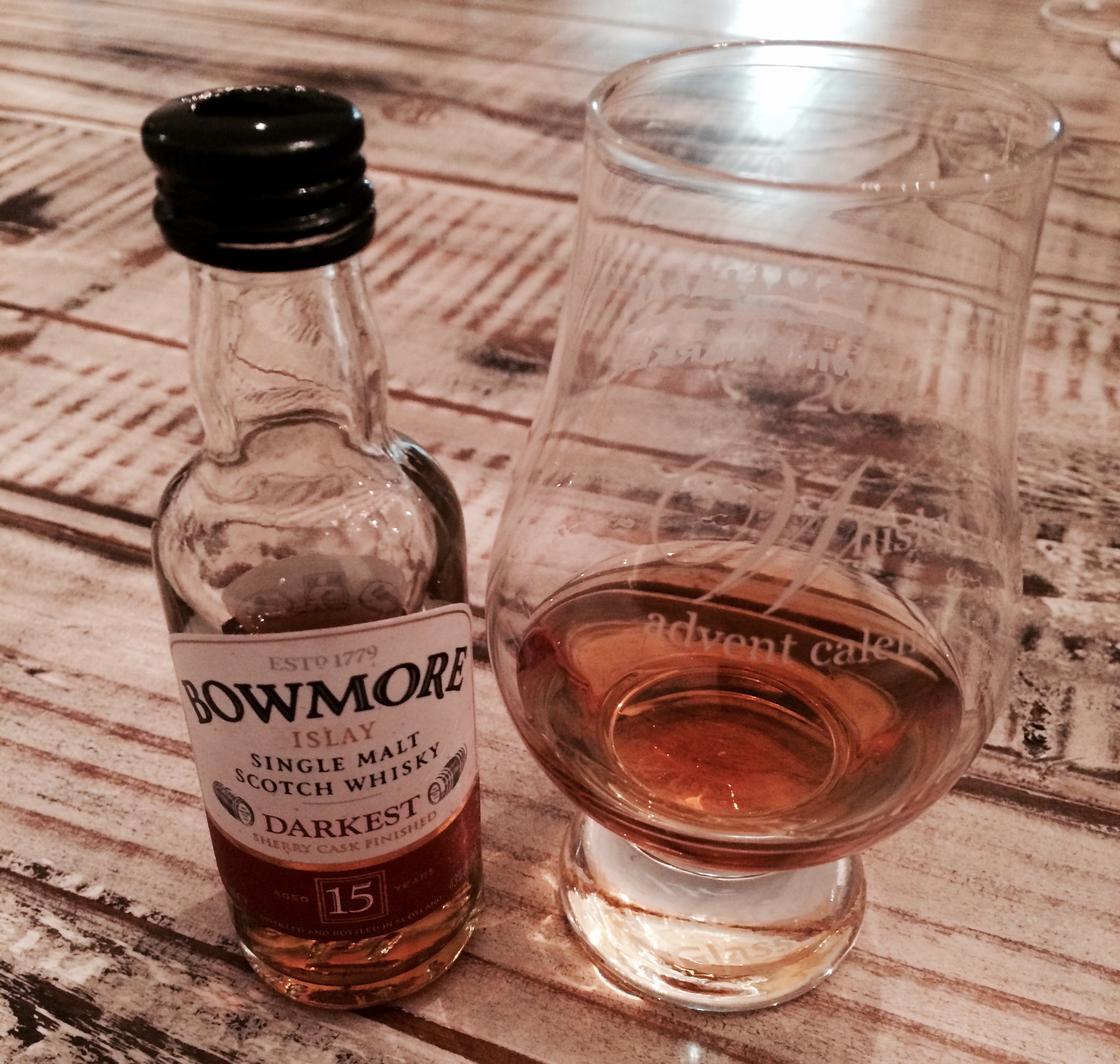
Week two begins!  Tonight’s whisky is the first single malt on the Advent docket from Islay, even though it’s the second time we’ve run into this distillery on our mini-alcoholic Christmas tour of Scotland.  Bowmore was a component of the multi-distillery blend in Day 5’s excellent Big Peat; now it’s on its own on Day 8, which showcases its 15 Year “Darkest” Single Malt.  This is, rather insanely, the 4th out of 8 Advent whiskies to date that has spent some time aging in Oloroso sherry casks.  This surge of barrel popularity makes sense when you think of the long, slow, oxidative process that goes into making dark, treacly Olorosos, a procedure that would leave plenty of colour and flavour imbued into the barrels ready to pass along to the next thing that filled them.  This Bowmore spent the last 3 of its 15 years in Oloroso casks (largely for the colour enhancement which gave the Darkest its name), with the prior dozen in a mixture of bourbon and (other) sherry casks.

Quick - guess which barrels?

Quick – guess which barrels?

I believe this is the most expensive scotch of the bunch so far, although it’s still comfortably under triple digits retail at $88.  I was a massive fan of the Darkest:  its deep bronze colour lived up to its title, and its nose was impeccably balanced between the dirtier, grimier Islay scents of moss, tar, rubber and oil and warmer, prettier notes of baked apple, cinnamon and incense.  Once you took a sip the symphony of flavours was amplified to include celery, saddle leather, moccasins and iron, but nothing ever stood out as overpowering, and everything was tied seamlessly together with the soft kiss of oak and even a hint of tannin on the finish.  If it wasn’t for my joy over the whimsy and constituent elements of Big Peat, this might have been my new favourite of the calendar, but a silver medal position this far into the race isn’t bad.  Internal probability when I first got this calendar that I’d be ranking Islay whiskies 1-2 after 8 days:  0%.


Whisky Advent Calendar: Day 7

7 12 2014

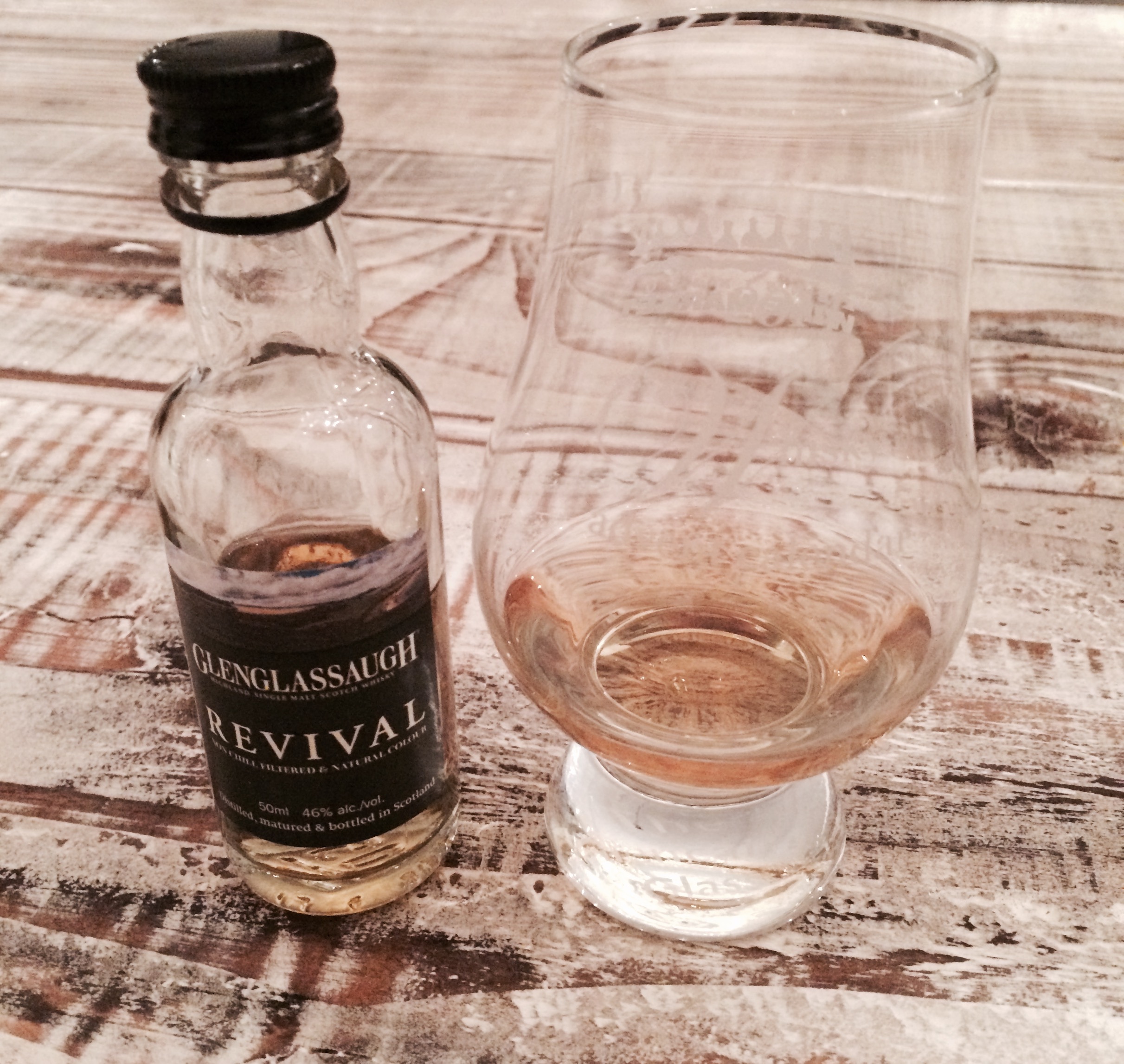
I’m not sure what’s more impressive, one straight week of blog posts or one straight week of whiskies.  More impressive than either might be the story behind tonight’s scotch, the Revival from Glenglassaugh distillery in the Scottish Highlands.  If you’ve never heard of that distillery (I hadn’t), don’t feel bad:  it was mothballed in 1986, much like my favourite distillery Port Ellen was in 1983.  However, unlike Port Ellen, Glenglassaugh wasn’t destroyed, but just sat unused…until 2008, when it amazingly reopened and started producing whisky again.  This bottle (whose name now takes on extra significance) was the first release of Glenglassaugh, version 2.0.

Revival - what's old is new again.

Revival – what’s old is new again.

This is the least expensive of the whiskies in the calendar to date, clocking in at $58 retail, and we’re back into the stratosphere on alcohol levels at 46%.  The Revival was legitimately weird on the nose, featuring an assertive layer of fermented, briny, barnacle-y, almost cheesy sherried notes on top of apple and citrus fruit — unsurprisingly, after aging first in old red wine and bourbon casks, it was finished in first-fill oloroso sherry butts.  Thankfully, the palate was both more generous and less funky than the nose, as maple and honey mingled with saltwater, hot coals and sweet soap, finishing in a potpourri-tinged flourish.  Not sure if it’s quite my whisky of choice, but I do love a good tale of redemption, and I wish more of the shuttered distilleries of the 1980s got the same chance at redemption.


Whisky Advent Calendar: Day 6

6 12 2014

Whatever your views on whether or not adding water to whisky helps unlock and open up its flavours, we can probably all get together on the fact that when a whisky clocks in at 60% ABV it’s probably a good idea to hydrate that bad boy, right?  I made a big deal previously when the Advent scotch lineup jumped from 43% to 46% from one day to the next; in contrast to that jump, today’s almost seems like sensory obliteration.  Day 6’s whisky is the Glenfarclas 105 Cask Strength (no kidding) Highland Single Malt Scotch.  Any whisky labelled as “cask strength” means that the finished whisky was not diluted with water down to a set alcohol level after barrel aging is complete.  The aging process results in varying levels of evaporation and concentration of the distilled liquid in cask, which is how you can end up with substantially advanced levels of alcohol, although 60% is close to the highest I’ve seen.  The Glenfarclas website suggests that “the smoothness makes the 105 drinkable at cask strength”, but the smoothness I got pre-dilution was somewhere between motor oil and fire, so in went the water.  Obviously not quite a scotch drinker’s palate yet…maybe on Day 24.

Day Six…ty?  Percent?

Day Six…ty? Percent?

Once I got the booze in check to a point where it didn’t feel like pure ethanol, I was able to appreciate the deep burnished gold colour and the vegetal nuance of this scotch.  There isn’t a whole ton going on, and the flavours are fairly laid back and mellow, but I coaxed out notes of grain/barley and brine, with an herbal undertone and a touch of honey lemon Halls on the nose.  The green, grassy undercurrent continued on the palate, shot through with vanilla, honey, toast and a notable hit of spiciness to go with a pleasant heat that lingered long after the scotch was gone.  Probably a middle-of-the-pack calendar whisky at the end of the day, one that I didn’t dislike but won’t remember much about in three days.


Whisky Advent Calendar: Day 5

5 12 2014

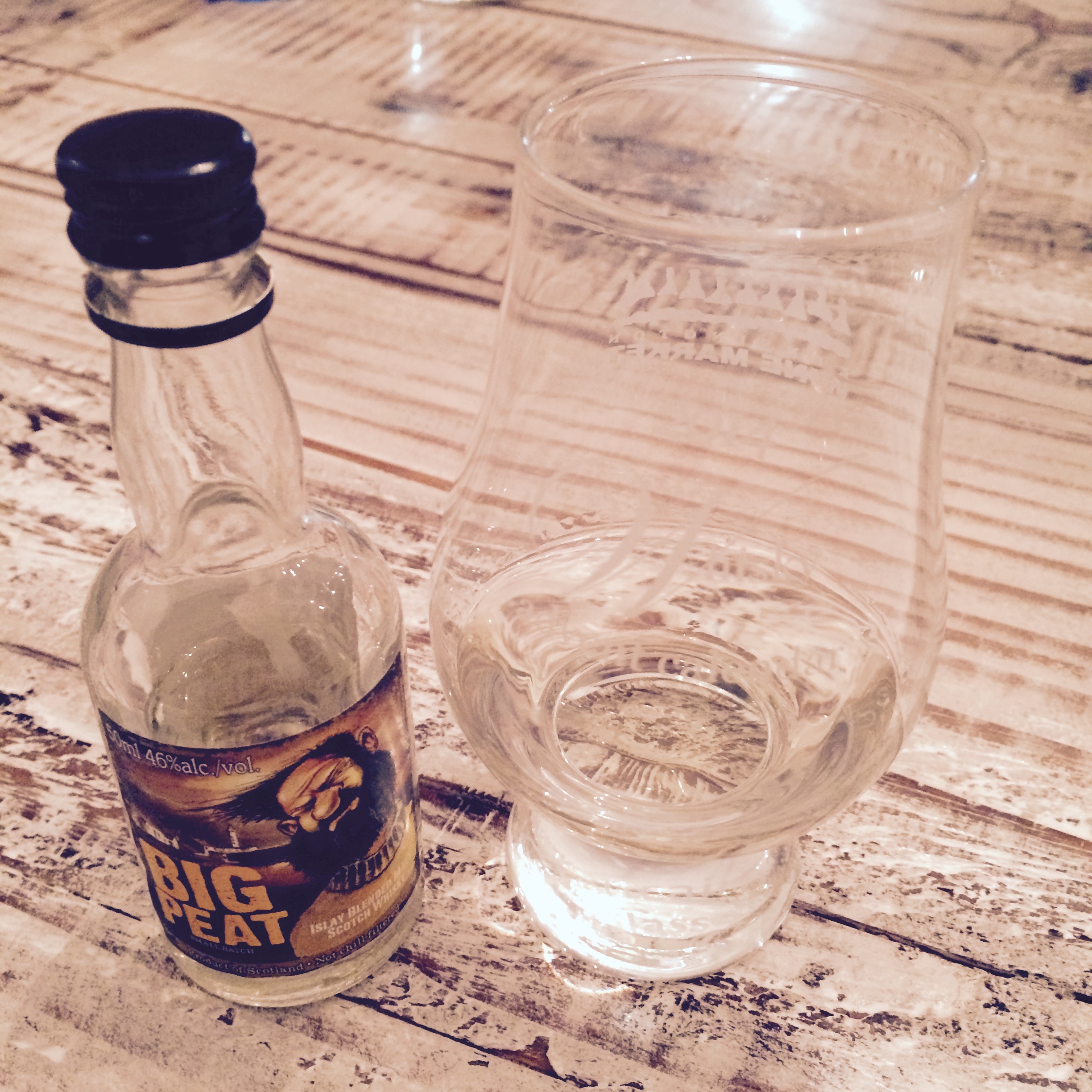
I sort of thought so. I sort of suspected that, after 4 days of relatively innocuous and conservative whiskies, Andrew Ferguson of Kensington Wine Market might pack a punch on day 5 of Whisky Advent.  I sort of expected that it was Islay’s time to shine.  And I was right, in a big way.  Islay (pronounced “eye-lah”) is a small island on the southwestern coast of Scotland that is known in the scotch world for peated whiskies, a distinctive style where drying the barley grain over a peat-fuelled fire leads to an eye- (and nose-) popping whirlwind of smoky, savoury, briny flavours.  I would say that peat has such a powerful and irrevocable influence over a whisky that you either love it or hate it, but I actually stand right in the middle:  I like both peated and unpeated whiskies and can certainly appreciate what peat brings to the table, but I don’t necessarily miss it if it’s not there.  As with wine, it’s all about balance.

Funny label.  Serious scotch.  Big peat!

Funny label. Serious scotch. Big peat!

You have probably suspected given all this talk about peat that peat plays a big role in tonight’s scotch.  You may not have suspected that it makes up most of its name.  Day 5’s whisky is the Douglas Laing blended bottling of Islay Malt Whiskies simply called Big Peat.

Read the rest of this entry »


Wine Review: 2013 Cliff Lede Sauvignon Blanc

4 12 2014

[This bottle was provided as a sample for review purposes.]

Sauv Blanc:  my reawakening continues.

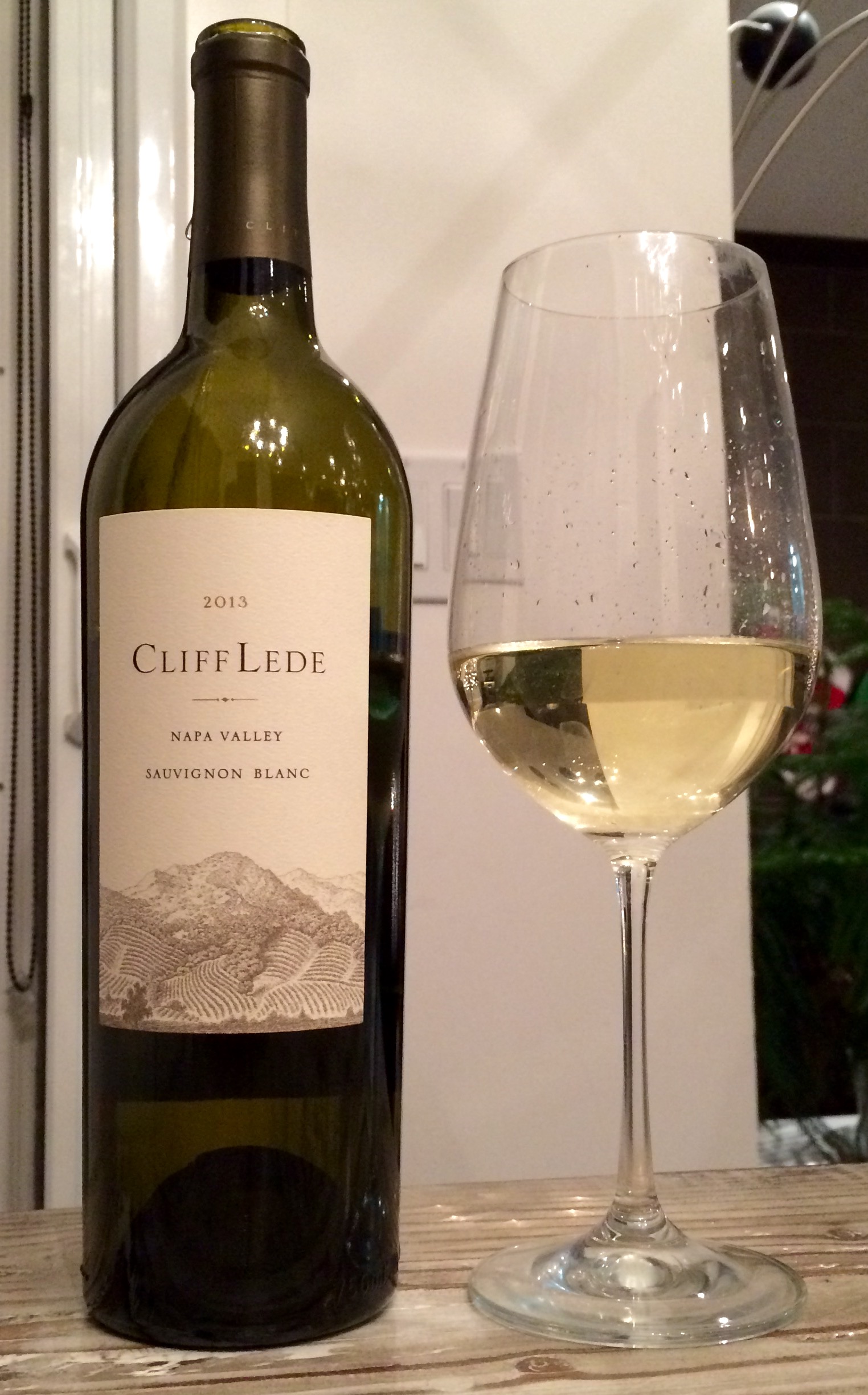
Sauv Blanc: my reawakening continues.

I’ve been experiencing a sort of Sauvignon Blanc renaissance lately.  For the longest time I all but ignored the grape:  I had tried and was clinically impressed but not emotionally roused by many of the SBs and blends of Bordeaux and the Loire; I had lapsed firmly into the camp of “if you’ve tried one New Zealand Sauv Blanc you’ve tried them all”; and I did not hold out much faith that California (too hot) or Canada (too nondescript) could work any magic with the varietal.  But wine, if you let it, has a funny way of pointing out the absurdity in rigidity and making sure your horizons are always boundless.  In the past few months I’ve been blown away by the remarkable and wildly original Greywacke Wild Ferment Sauvignon Blanc from Marlborough and equally amazed by the textural magic of the Alice May Pathfinder Sauvignon Blanc from Cali.  Now add a third one to the list:  the Cliff Lede Sauvignon Blanc, from Napa Valley of all places, not only offers a dynamite sensory experience but also seamlessly exudes a sense of place while doing so. Read the rest of this entry »


Whisky Advent Calendar: Day 4

4 12 2014

I had to work late tonight and just got home, so this will be a short one even for this abridged series of posts, but I wasn’t about to let Whisky Advent get derailed that quickly.  Tonight’s (well-deserved) post-work whisky is the Edradour Caledonia, a special 12 year old Highland single malt whisky aged in Oloroso Sherry casks (which are apparently obscenely popular in the whisky world) which was hand-selected by Scottish folk legend Dougie MacLean (who I admit I’ve never heard of) and named after his song Caledonia (which I admit I’ve never heard).  It was supposed to be a one-off release, but everyone liked it so much that Edradour kept it going.  I particularly like it for the fact that a 50 mL bottle of whisky gets its own mini cardboard tube.  It’s the little things.

Day 4.   You should see Dougie MacLean's picture on the back of this tube.

Day 4. You should see Dougie MacLean’s picture on the back of this tube.

This one was deep bronze in colour but fairly muted on the nose, apple juice and linament and not a ton else.  The slightly higher degree of alcohol — 46%, as compared to 43% in the last three whiskies in this holiday lineup — makes itself known as soon as you take a sip and thickens the texture of the whisky, warming the flavours of golden raisins, figs, caramel and charcoal.  It’s big and pleasant and fruity, but not overly complex as far as single malts go; definitely enjoyable after a 12+ billable hour day, but not necessarily a bottle for which I’d line up to pay its $85 retail price.  Still goes down easy right now though.  8 minute review complete!  See you tomorrow!


Whisky Advent Calendar: Day 3

3 12 2014

This may be the first time I’ve posted three days in a row since this blog’s inauguration.  I promise you that there will be a wine review coming up soon — I’m actually going to be working on it once I finish this — but first the monolith that is Advent rolls on and there are whisky duties to attend to.  The Speyside streak in the KWM Whisky Advent calendar ends at two:  tonight’s bottle is a single malt scotch from the Lowlands in southeast Scotland.  I’m going to give KWM the benefit of the doubt and assume that they loaded up the Auchentoshan 3 Wood on Day 3 of Advent because it would karmically fit nowhere else.

Day 3:  triple distilled, triple wood.  Fore!

Day 3: triple distilled, triple wood. Fore!

The 3 Wood is so named because it was aged in three different types of wooden barrels before bottling:  first old Bourbon casks, then Oloroso Sherry casks and then finally Pedro Ximenez Sherry casks.  It was also triple distilled, a rarity nowadays for whisky and a sort of superfluous additional 3 to add to the pile.  The price point is near-identical to the first two bottles in this series at $76.  The wood triumverate shows up on both the colour (way darker and more orange-hued than the past two scotches) and the flavour profile of the whisky, all coffee grounds and popcorn kernels and hickory on the nose, blooming into chocolate orange and saltwater taffy on the palate, with a slightly bitter-tinged sweet yet medicinal finish, sort of like Neo Citran.  It’s a little rougher around the edges than the breezier, smoother Speysides of Days 1 and 2, and would probably rank the lowest of the three so far, but it would still be ideal for sitting in a big leather armchair and watching golf.


Whisky Advent Calendar: Day 2

2 12 2014
All Speyside all the time. Day 2!

All Speyside all the time. Day 2!

Another December day, another whisky, another representative from Speyside (which, if you’re wondering, is in northeast Scotland and is home to many well-known distilleries that start with “Glen”:  Glenfiddich, Glenlivet, Glenfarclas and more!).  Tonight’s treat is the Benriach 16 Year single malt whisky, and, unsurprisingly for a scotch that is basically a next door neighbour of the whisky that I opened last night on Day 1 of Advent, it has some clear stylistic similarities to the Linkwood 15.  Both are open, welcoming, sweet, non-threatening scotches, whisky gateway drugs, and both provide easy enjoyment at a value price — the Benriach would clock in at around $80 for a full bottle.  This obviously made me dream of dessert, as I got honeycomb, tarte tatin and bananas foster to go with cream, matchsticks and a slight note of wet moss lingering around the edges.  Quite nice, but I have to give the nod to the Linkwood in this Speyside battle.  Now I sort of wonder if this calendar is going to be an orderly tour around Scotland.  Only one way to find out…check back tomorrow!


Whisky Advent Calendar: Day 1

1 12 2014

Obvious disclaimer out of the way first:  I am not a whisky expert.  I have always been a fan of whisky – it was my parents’ drink of choice and so the grown-up beverage that I grew up smelling and tasting (in tiny, adult-supervised sips).  Now that I can supervise my own drinking habits, I have drifted away from whisky slightly, but this is no slight to scotch and mainly a testament to my near-all-consuming devotion to wine.

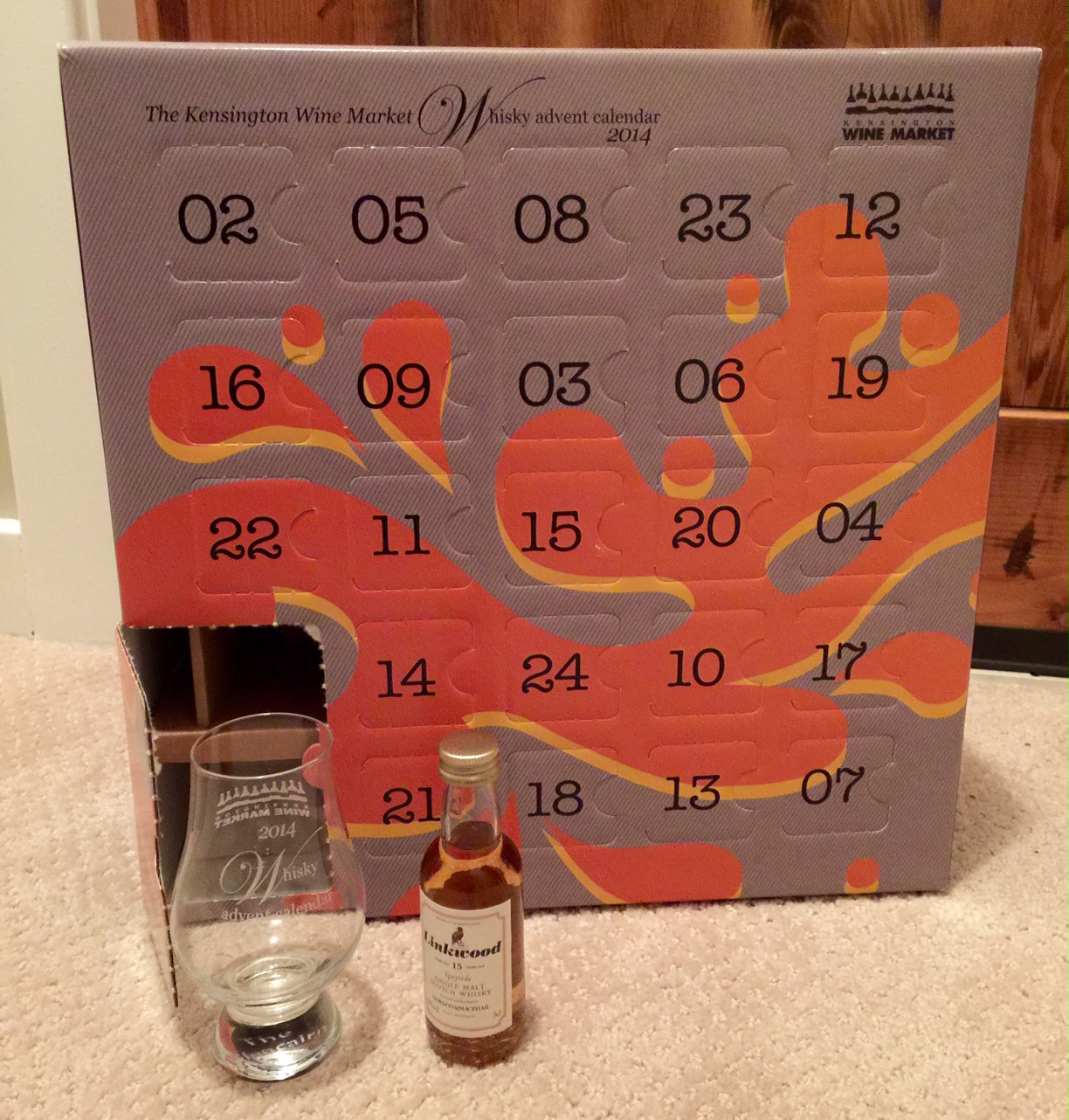
My kind of Advent calendar.

My kind of Advent calendar.

But now I have a reason to venture back to my roots…24 of them, to be exact.  My ultra-incredible wife surprised me yesterday with Kensington Wine Market’s 2014 Whisky Advent Calendar, possibly the most glorious thing ever to come out of the holiday season other than my eldest son (born New Year’s Day).  I don’t have occasion to venture into KWM often, but when I do it’s to see Andrew Ferguson, Calgary’s preeminent whisky expert and all-around good guy.  Andrew has hand-selected a (50mL) bottle of whisky for each day of Advent and put them all in a calendar with a special embossed Glencairn whisky glass on day 1.  The packaging is beautiful and the idea is equally stunning.

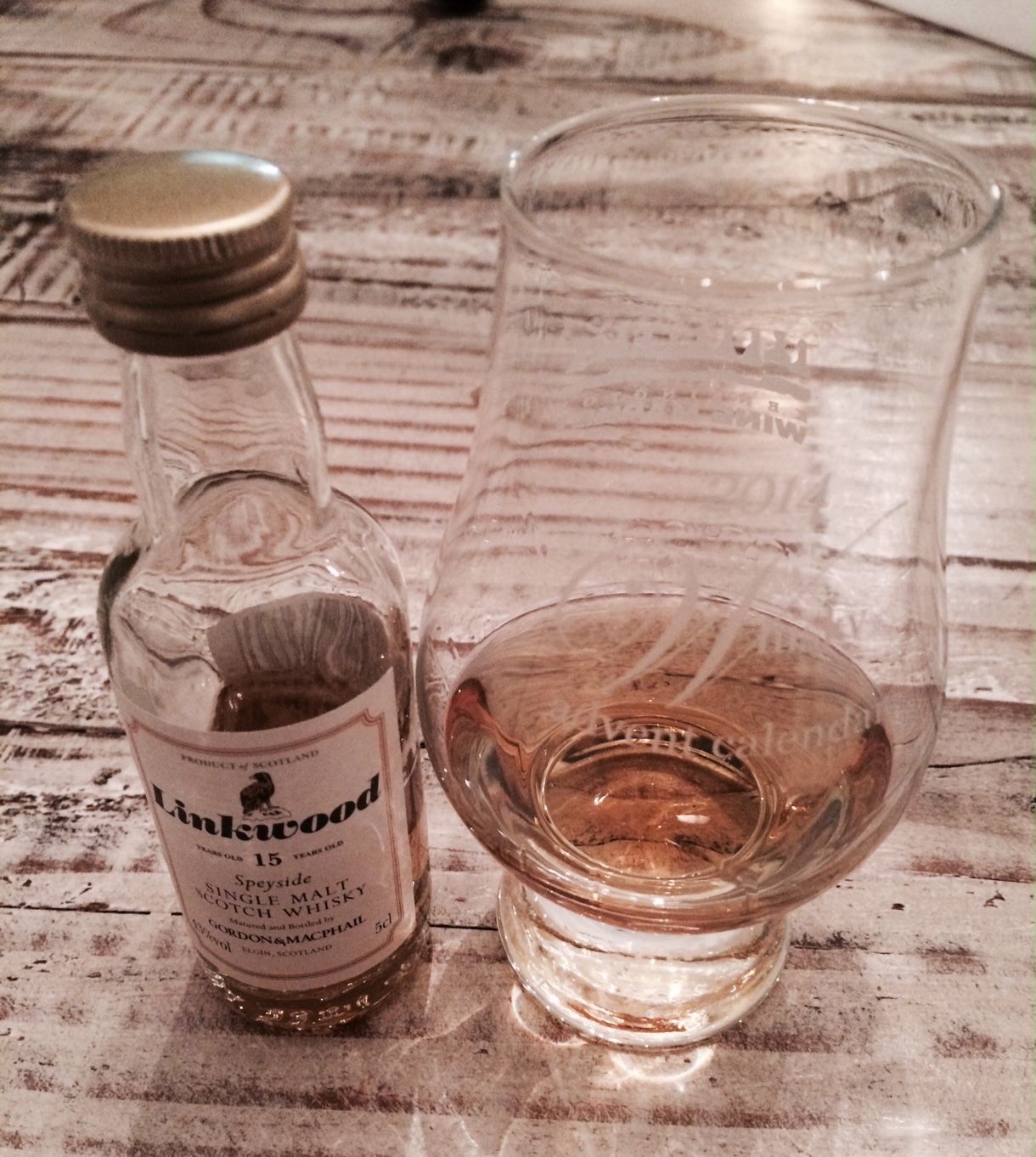
Whisky 1!

Whisky 1!

To commemorate the occasion, I’m going to try and do a quick post each night about the day’s special mini-whisky.  Apologies in advance to the many folks who are kind enough to subscribe to this blog, but hopefully flooding your inboxes with whisky tales will be slightly more appealing than Cyber Monday spam and the breathless news about whatever invented holiday sale comes after it.  Day 1’s whisky is the Gordon & MacPhail bottling of the Linkwood 15 year single malt from Speyside.  It was aged in refill sherry casks (I promise that it’s actually true that I wrote “sherry” as one of my first tasting notes) and retails (in full bottle) for about $80.  My 1-minute tasting notes:  orange zest, lemon drops, brine, maple syrup, brown sugar, joy.  It’s a straightforward but exuberant scotch with some nice weight to the body and an inviting sweetness that’s warm, friendly and ultra-non-threatening.  It’s the big fluffy dog of malt whiskies.  Great start.

I presume these Whisky Advent Calendars are all sold out for the year, but check back in September next year – they retail for $350ish and sell fast!  Props to Andrew and KWM for an absolutely brilliant holiday package.


Wine Review: 2011 Carmen Gran Reserva Carmenere

19 11 2014

[This bottle was provided as a sample for review purposes.]

If someone made a movie about the story of Carmenere, I would watch it.

If someone made a movie about the story of Carmenere, I would watch it.

The story of Carmenere is one of my favourite stories in all of wine.  It starts, as many wine stories do, in France, where centuries ago Carmenere was one of the six varietals used to make red Bordeaux, along with Cabernets Sauvignon and Franc, Merlot, Petit Verdot and Malbec.  As French explorers set out to claim and colonize new territories outside of Europe, they often brought plantings of their national vines with them, introducing these grapes to foreign soils.  It turns out they were lucky they did, because when the phylloxera louse decimated the vineyards of Europe in the mid-19th century, it wiped out Carmenere in Bordeaux completely — today, there are only five red Bordeaux varietals.  Everyone thought that Carmenere had been tragically lost forever…and then it randomly showed up in Chile over a hundred years later.

On November 24th, 1994, the French ampelographer (actual meaning: one who identifies and classifies grapevines) Jean Michel Boursiquot was paying a visit to the Carmen vineyards in Chile when he noticed that the Merlot growing there wasn’t actually Merlot at all, but Carmenere.  The lost grape of Bordeaux had been growing in the Southern Hemisphere for more than century, but due to its vines’ and grapes’ uncanny resemblance to those of its Bordeaux cousin Merlot, everyone assumed it was the latter, particularly given the general understanding that Carmenere no longer existed.  This led to some extensive (and confusing) cross-planting of vineyards that proved extremely difficult to unwind.  Boursiquot’s epic discovery was a boon to world viticulture, and it gave Chile what it needed most at the end of the 20th century:  a wine identity, forged in what is now proudly recognized as the country’s national grape.  It was also a big help to the resulting wines:  Carmenere ripens weeks later than Merlot, and if picked early (due to mistaken identity) it can exhibit strong, and generally unpleasant, green pepper flavours. Read the rest of this entry »


Wine Review: 2013 Ravenswood Besieged

19 10 2014

[This bottle was provided as a sample for review purposes.]

Boo!

Boo!

Let me first say that I fully support theme wines, provided that they exhibit a little bit of effort and make some shred of sense.  Seasonal and holiday releases are just fine in my books as long as they’re somewhat consistent with a winery’s overall image and aren’t just a lazy cash grab.  A producer slapping a new red Christmas label on old stock just in time for the holiday season?  Not cool.  But a winery already named “Ravenswood” concocting an on-brand, original, spooky limited release bottling for Hallowe’en?  I’m in.

Imminently available in stores near you, the 2013 Ravenswood Besieged is a field blend of 7 different, slightly disparate, and never usually combined red grapes:  Petite Sirah (cool), Carignane (double cool), Zinfandel (the winery’s bread and butter), Syrah (my favourite), Barbera (what?), Alicante Bouschet (double what?) and Mourvedre (whew).  The percentages of each grape in the blend are not listed on the label and not currently available online, but by law the grapes listed earlier on a label have to comprise a larger portion of the blend than those listed later, so you can think of Besieged as being primarily made from the thematically similar (deep, dark, bold, structured) Petite Sirah and Carignane, with a bit of kitchen sink thrown in.  The wine is from grapes sourced all over Sonoma, including top subregions Alexander Valley, Dry Creek Valley, Russian River Valley and a couple other Valleys.  According to the winery, this release is called “Besieged” because pioneering winemaker Joel Paterson conceived of it “under a threatening sky besieged by rain clouds” as ravens cackled overhead, a seasonally appropriate vignette which also happens to be laid out on the bottle’s equally eerie label.  My vote for the name was “Nevermore”, but the ravens may have eaten my ballot. Read the rest of this entry »


Calgary Wine Life: Greywacke Tasting with Kevin Judd

7 10 2014

Kevin Judd is a New Zealand visionary, a trailblazer who has left a permanent imprint on the nation’s young wine culture.  As the founding winemaker of Cloudy Bay, now the near-ubiquitous signpost for the sharp, tangy, herbal style of Sauvignon Blanc that is instantly recognizable in the glass, Judd pioneered a flavour profile for New Zealand’s signature grape that put the country on the world wine map.  He helmed the ship at Cloudy Bay for 25 years, taking it from an unknown producer in an anonymous wine nation to a whirlwind New World phenomenon, the crown jewel of a Sauvignon Blanc revolution that saw millions of bottles fly off the shelves.

IMG_2063

After Cloudy Bay was sold to luxury brand behemoth LVMH (whose wine portfolio includes such luminaries as Krug, Dom Perignon, Chateau d’Yquem and Cheval Blanc, upper-crusters all), Judd finally realized a lifelong dream of starting his own label and making wines in a manner that best suited his palate:  riper batches of fruit, slightly softer acid, yet retaining all of the structure and complexity that a cooler climate can provide.  He called the new venture Greywacke, a name he had quietly reserved 15 years earlier while waiting for his opportunity:  the word (pronounced “grey-wacky”) refers to the grey sandstone rocks that are commonly strewn across New Zealand’s vineyards.

Read the rest of this entry »


Argentine Value Challenge: Punto Final

4 10 2014

[These bottles were provided as samples for review purposes.]

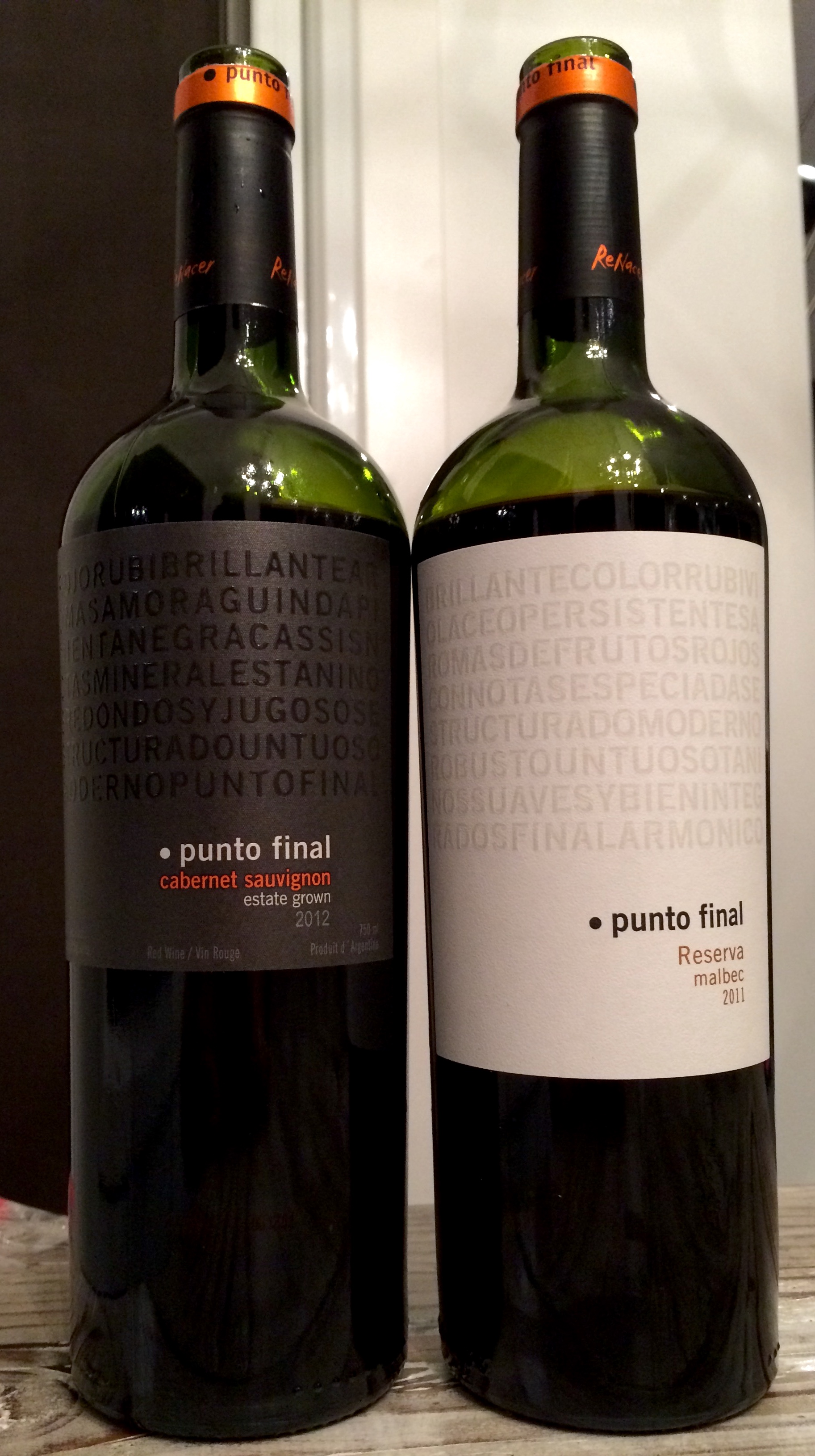
FullSizeRender_1

Look closely: Spanish tasting notes!

There’s a lingering question out there that will go a long way in determining the ultimate path of the nascent Argentinian wine industry:  what to go along with Malbec?  That particular Bordeaux transplant has become a global phenomenon up in the foothills of the Andes and the undisputed star of Argentina’s vinous revolution, but there are a number of grapes currently vying for the role of its trusty national sidekick.  For a while it seemed like there was a strong marketing push to obtain Malbec-like acceptance of Argentina’s most unique white, Torrontes; I recently read a Decanter tasting panel that argued forcefully that the country’s recent forays into Cabernet Franc were an absolute revelation and that this underappreciated varietal should assume the silver medal position among Argentinian producers, although the less exciting Bonarda currently occupies that slot in terms of vineyard acres planted.  And of course, there’s always Cabernet Sauvignon, the international behemoth, promising instant recognition and easy sales for anywhere warm enough for it to grow.  In my experience, if an Argentine wine is on the shelves here and it isn’t Malbec, it’s usually Cab.  And while the wine geek in me would love to see Franc seize the day, the realist in me knows that Sauvignon will be pretty tough to displace. Read the rest of this entry »