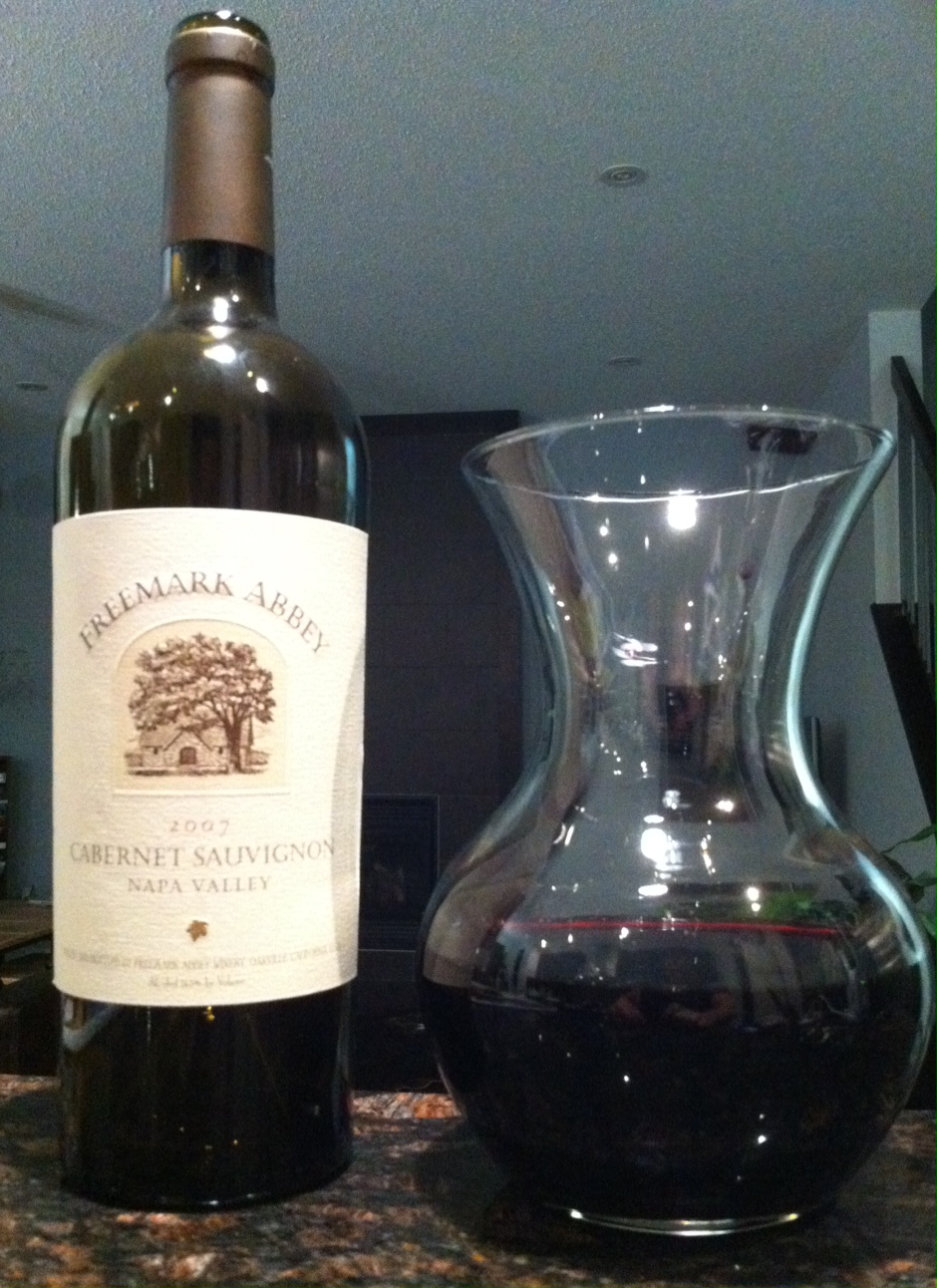
Wine Review: 2007 Freemark Abbey Cabernet Sauvignon

28 11 2011

Can a flower vase be an appropriate decanter? I say yes.

If the name of this wine sounds familiar, it should:  the ’07 Freemark Abbey Cab from the Napa Valley was my ultimate victor in the modern-day Judgment of Paris blind tasting I took part in at Co-op Wine & Spirits a month ago.  Matched up against 9 other top Cabernets including a couple of First Growth Bordeaux (2002 Chateau Haut Brion and 2007 Chateau Mouton Rothschild) and some iconic Napa Cabs (2007 Ridge Monte Bello and 2002 Heitz “Martha’s Vineyard”), by far the cheapest wine of the bunch (average bottle price of the 10 reds:  $277), this $47 little wine that could knocked both my tasting companion and I over and emerged the clear cut JoP winner for each of us.  As soon as the identities of the various wines were unveiled, I knew I had to get my hands on some — a reaction that probably would have been more subdued had the $928 Mouton Rothschild taken the title.  Thankfully for me (and all of you), the Freemark Abbey Cab is currently on sale at Highlander Wine & Spirits for just over $40, which is absolute robbery for a bottle of this quality from a premium region.  If you’re a Cali Cabernet fan, or if you’re not yet done your Christmas shopping, this is your winner.  Thank me later.

Read the rest of this entry »


Introducing the PnP All-Time Ratings Archive Spreadsheet

25 11 2011

PnP's complied Ratings Database spreadsheet: like this, but for wine.

Now that I’ve pounded out nearly 80 reviews over 9 months on this site, I thought it was about time to try and make the content on Pop & Pour a little more accessible.  The Search box at the top right of the page can help you if you’re looking for something specific, but until now there was no easy way to find out at a glance which wines have had the (mis)fortune of being featured on PnP over the course of the year.  Thankfully, my friend Microsoft Excel has helped me solve that problem; I have now compiled all of the names, vintages, scores, prices and review links for each of the wines I’ve written up and put them into a sortable spreadsheet that’s available for download by clicking on one these links (new Excel first, then older Excel):

Pop & Pour Ratings Database Nov 2011

Pop & Pour Ratings DB Nov 2011 Old Excel

My plan is to update this Ratings Archive spreadsheet once a month so that you will always have a fairly current list of PnP’s wines, and so that any particular review that interests you will only be a click away.  The spreadsheet also has one new piece of info for each reviewed wine that isn’t found anywhere on the blog:  a (very) rudimentary calculation of QPR (Quality Price Ratio) that gives you a general idea at a glance how much bang you get for your buck with every bottle. Read the rest of this entry »


Wine Review: 2010 Tantalus Riesling

23 11 2011

I feel like I’ve been remiss in not writing this review until now, seeing as how my visit to Tantalus might have been the highlight of my trip to the Okanagan in September.  I’ve been a fan of the winery (one of the few in Canada about which I can honestly make that claim) for awhile, and actually getting to go there and meet some of the people behind the eye-catching mask-labelled bottles only heightened my respect for who they are and what they do.  I was lucky enough to get a guided tour of both the vineyards and the winery from winemaker David Paterson — which is probably the only reason I was able to answer WSET Advanced exam questions about vertical shoot positioning and replacement cane pruning — and I left there as excited about wine as I’ve ever been.

Believe it or not, this is in a city. Did I mention I'm moving to Kelowna?

Unlike many Okanagan wineries which are based in the hotter, drier southern portion of the valley, Tantalus is located right within Kelowna’s city limits, in as pastoral a setting as possible given that the closest Starbucks is less than 10 minutes away.  All of their wines come from grapes grown directly on their estate, and on the rolling slopes of their vineyards they have planted Pinot Noir and a growing amount of Chardonnay; however, to me at least, they are synonymous with brilliant, high-quality Riesling.  They have some of the oldest Riesling vines in Canada (40+ years) on location, where Kelowna’s relatively cooler but lake-moderated climate is ideal for this hardy, late-ripening Germanic grape.  The winemaker has a clear vision about what he’s trying to achieve with this privileged source material, letting the fruit speak for itself and preserving natural acids, and consistently delivers on the site’s potential.  Although Tantalus also makes a reserve Old Vines Riesling from their decades-old vines (and is starting to experiment with sparkling Riesling as well), tonight’s wine is the producer’s base Riesling bottling, which packs more of a punch than anyone has a right to expect for the sub-$25 price.

Read the rest of this entry »


Wine Review: 2008 Mercer Dead Canyon Ranch Cabernet Sauvignon

21 11 2011

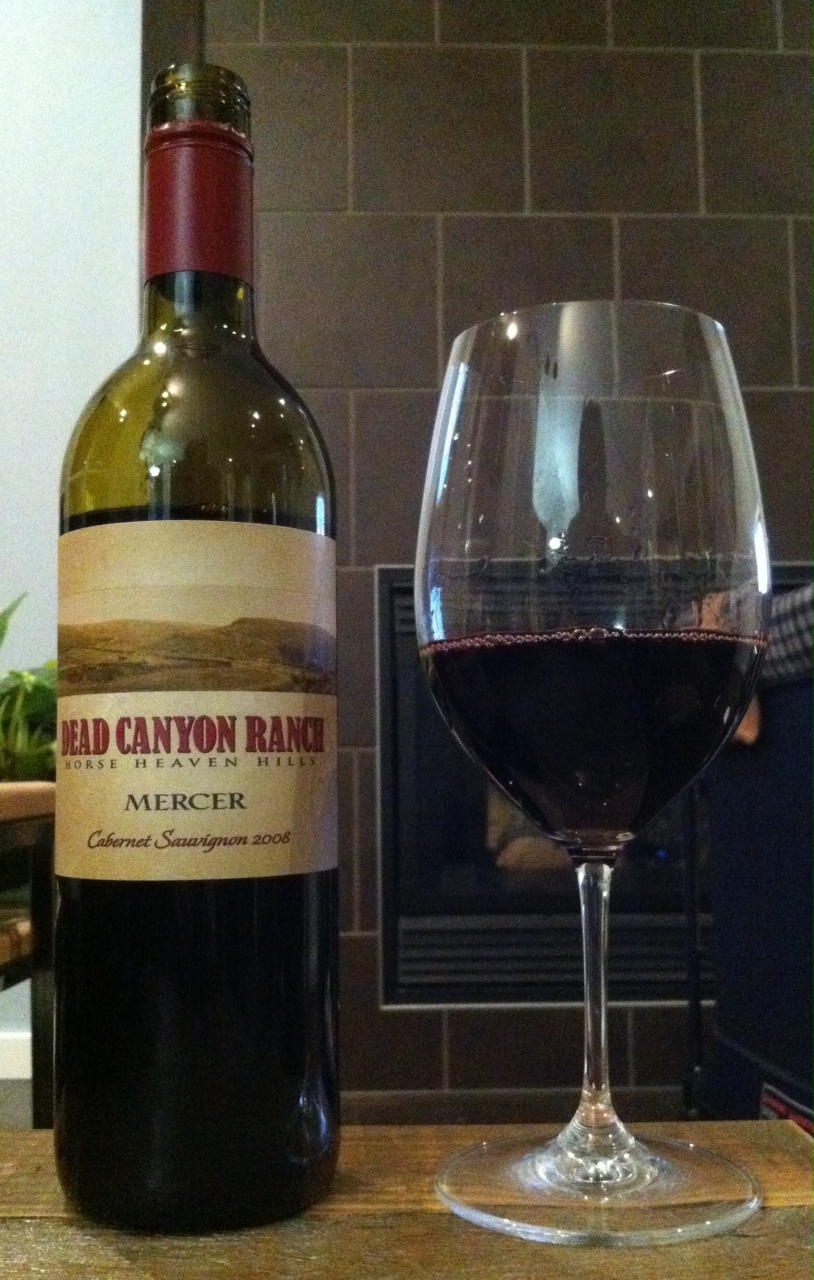
Decidedly ghetto label, questionable colour scheme, killer wine.

Time to enshrine another bottle in the pantheon of Killer Value Wines and expand the already-sizeable place in my heart for Washington State, because cheap Cabernet normally doesn’t taste like this.  The Dead Canyon Ranch from Mercer Estates winery vastly outperforms its price point ($20ish CDN) and screams “house wine” to any self-respecting Cab fan.  This was sadly my last of several bottles purchased from Highlander Wine & Spirits, who (I believe) have an exclusive on Mercer’s lineup of wines in the city; I have previously written about Mercer’s Merlot on this site, but in my opinion at least, the Dead Canyon Ranch is an even better wine at half the price.

This wine gets its eye-catching name from the place from which its grapes are sourced, the Dead Canyon Ranch vineyard in the awesomely-named Horse Heaven Hills AVA (American Viticultural Area), located alongside the Columbia River on central Washington’s southern border.  Washington State is divided vertically in two by the Cascade Mountain Range, and the climate of the area varies substantially depending on which side you fall.  If you’re in the western half of the state bordering the Pacific Ocean, it’s grey, wet and rainy enough for fictional tween-adored vampires to call it home, whereas if you’re on the eastern half the state, in the rain shadow of the Mountains, it’s a hot and arid (and presumably vampire-free) desert zone.  The wines that have been growing Washington’s vinous legend over the past few years (including SEVEN of them in the top 50 of Wine Spectator’s just-released top 100 wines of 2011) come from the eastern half, which is where Horse Heaven Hills and Mercer Estates can be found.  While the desert heat and sun make it possible for red wine grapes to reach full ripeness even this far north, the notably cool nights help to retain acids and preserve fresh flavours, which is the kind of built-in balance you look for in a top wine region.

Read the rest of this entry »


Wine Review: 2009 Conundrum

18 11 2011

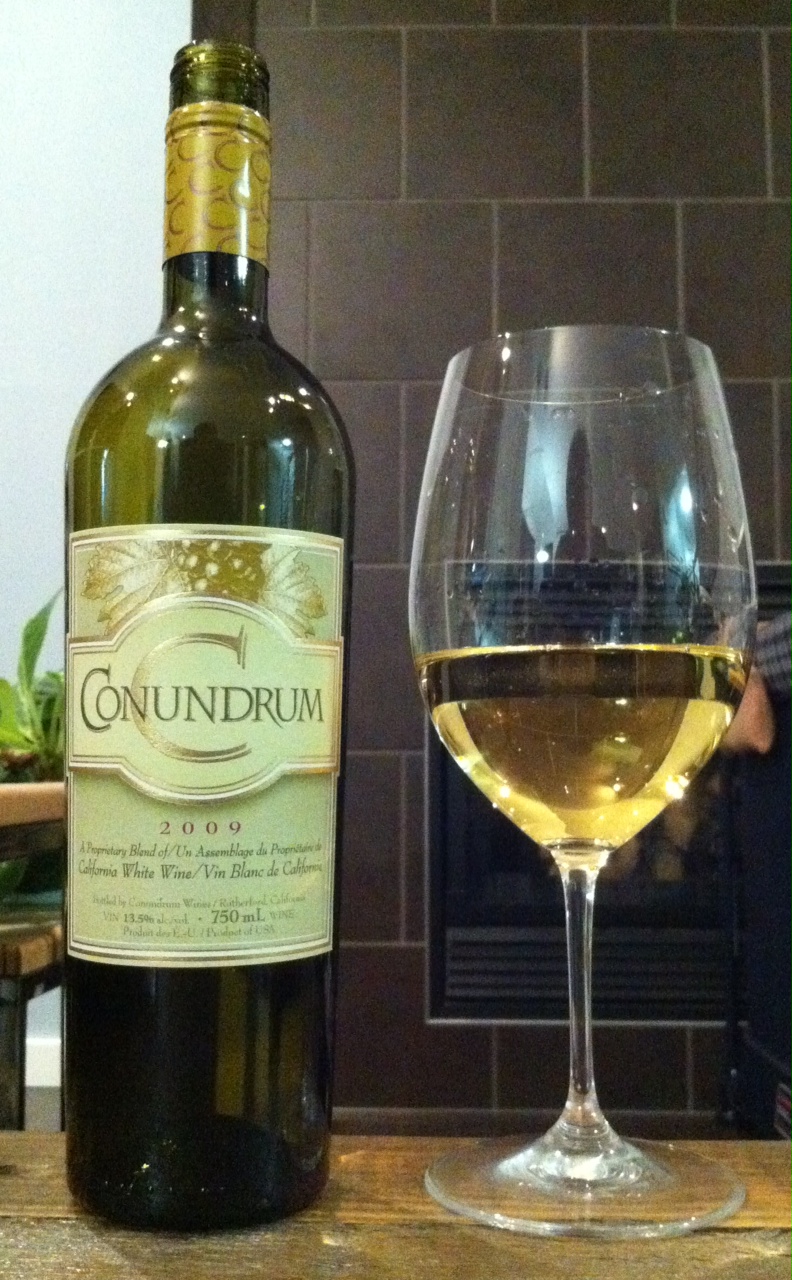
I don't think even 2006 Me would have been overly thrilled by this.

True story:  back in 2006, when I was JUST starting to get interested in wine, I went to a long-standing Calgary wine boutique over the holiday season looking for a special celebratory bottle of wine to help ring in the New Year.  I barely bought any wine at all back then, and when I did it rarely exceeded $20 a bottle, but since this was to be a wine for an occasion, I decided to splurge and upped my max budget to $50.  I was directed to a proprietary white wine blend from an iconic Napa Valley producer, Caymus, who was mainly known for making some of California’s best Cabernet Sauvignon; however, as a side project, they had started putting together this fruity, floral, dynamic white that had quickly made a name for itself.  On the shop’s recommendation, I bought and enjoyed a bottle of Caymus’ Conundrum.  It cost me $45.

Fast forward five years.  I bought tonight’s bottle of Conundrum a couple of weeks ago.  It cost $18.

What happened?

Read the rest of this entry »


WSET Completion Celebratory Wine Review: 2003 Terralsole Brunello di Montalcino

16 11 2011

(Wine) school's out for summer! W00t!

With the WSET Advanced course finally in my rear view mirror, it was time to celebrate:  whether I actually passed or not, I figured I’d earned a bottle from my “good fridge”, the one that houses my pricier, more ageworthy wines.  This one definitely qualifies.  I’ve been loving Brunello more and more lately, to the point where I think it’s become my favourite kind of Italian wine; it strikes that ideal balance between being approachable and enjoyable in youth while still reaping the benefits of aging.  It also deftly marries complexity with drinkability, something a surprising number of expensive wines can fail to do…bringing a wide spectrum of flavours to the table doesn’t mean much when you don’t want to have the resulting glass with dinner.  I don’t own that many bottles of Brunello currently, but that’s something I’ll be looking to fix in the near future (or once my salary doubles, anyway).

Read the rest of this entry »


Wine Review: 2009 Tanins Syrah Chardonnay

19 10 2011

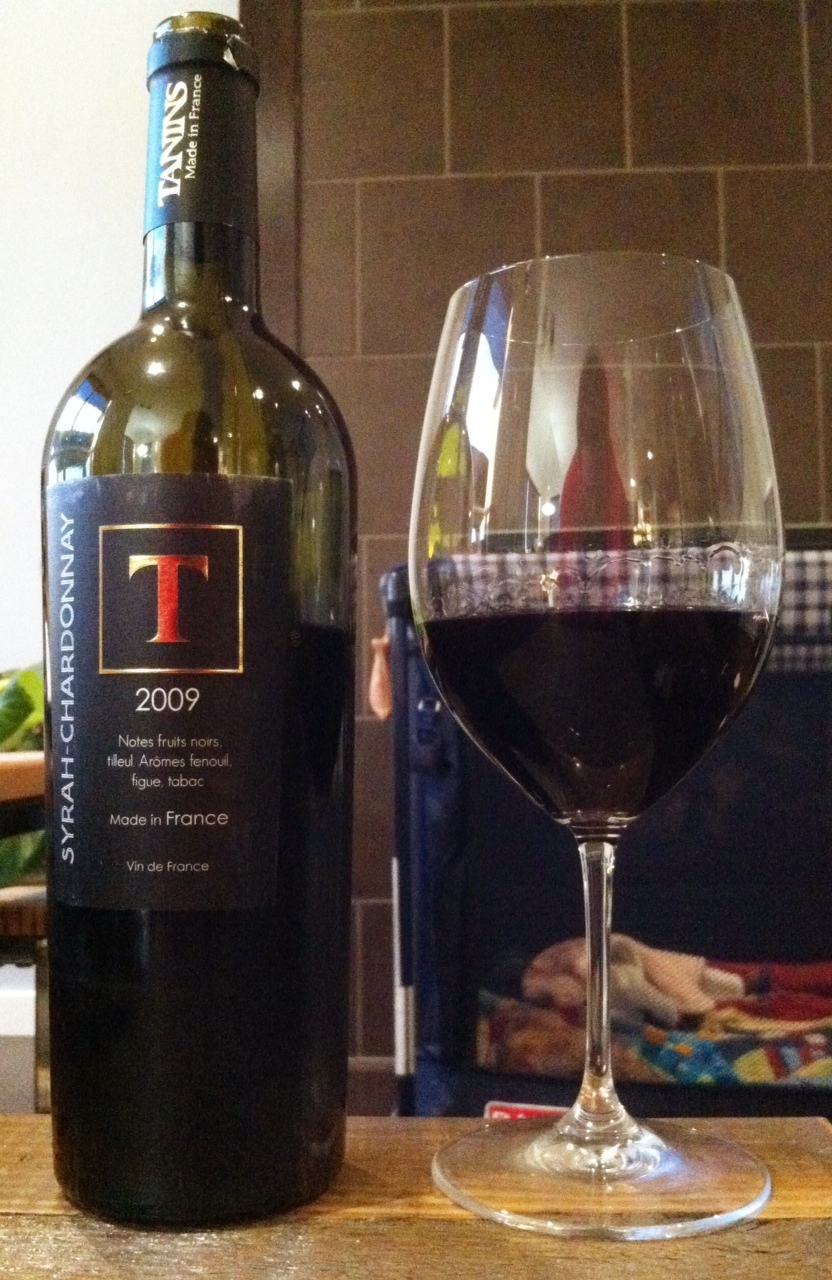
Syrah. And Chardonnay. Just because. You know you secretly want to try it.

I’m sorry, what?

That wasn’t a typo.  Tonight’s wine is ACTUALLY a blend of Syrah and Chardonnay.  It may not surprise you to learn that this is the first time I’ve ever had that blatantly crazy combo of grapes together.  It would not surprise me to learn that LSD was involved in the producer’s blending decisions.  But here we are.  Obviously taking their cue from the long-standing Northern Rhone tradition of blending in a touch of white Viognier with red Syrah, French producer Tanins (sic?) has put together another red-white mashup, only casting the world’s most well-known white grape in the usual Viognier role.  It’s a strange choice:  Viognier is added to Rhone reds because it is intensely aromatic and thus adds pizzazz and complexity to the blend’s nose.  Chardonnay is the exact opposite, a generally neutral varietal without any strong aromas to call its own.  I have no idea what motivated its selection, and this bottle has turned out to be nearly impossible to research electronically, so I’ll just have to take the plunge in the dark.  Morbid curiosity, prepare to be satisfied. Read the rest of this entry »


Wine Review: 2009 Eroica Riesling

17 10 2011

Named after the Beethoven song, not the Madonna song...get your head out of the gutter.

In the car on the way back to Calgary from Edmonton yesterday, we decided to have Chinese food for dinner.  The problem:  I didn’t have any off-dry everyday-drinking Riesling (my pairing of choice for basically any Asian/Indian cuisine) in my cellar.  The solution:  a quick side trip to Costco in Red Deer to stock up.  Avid readers of this blog with photographic memories may remember the luck I had at the Costco in Grande Prairie earlier this summer; I’m not sure if visiting small-city Alberta Costco liquor stores now qualifies as an official PnP theme, but I can guarantee anyone from Red Deer that they’re not finding better wine at better prices anywhere else.  I was fully ready to walk out with a $17 German Riesling when I was stopped in my tracks by this wine, which I’ve had before in prior vintages, but which I’d never seen on sale for less than $40.  At Costco, in Red Deer:  $27.  Sold. Read the rest of this entry »


Wine Review: 2007 Peccatore Douro Reserva

6 10 2011

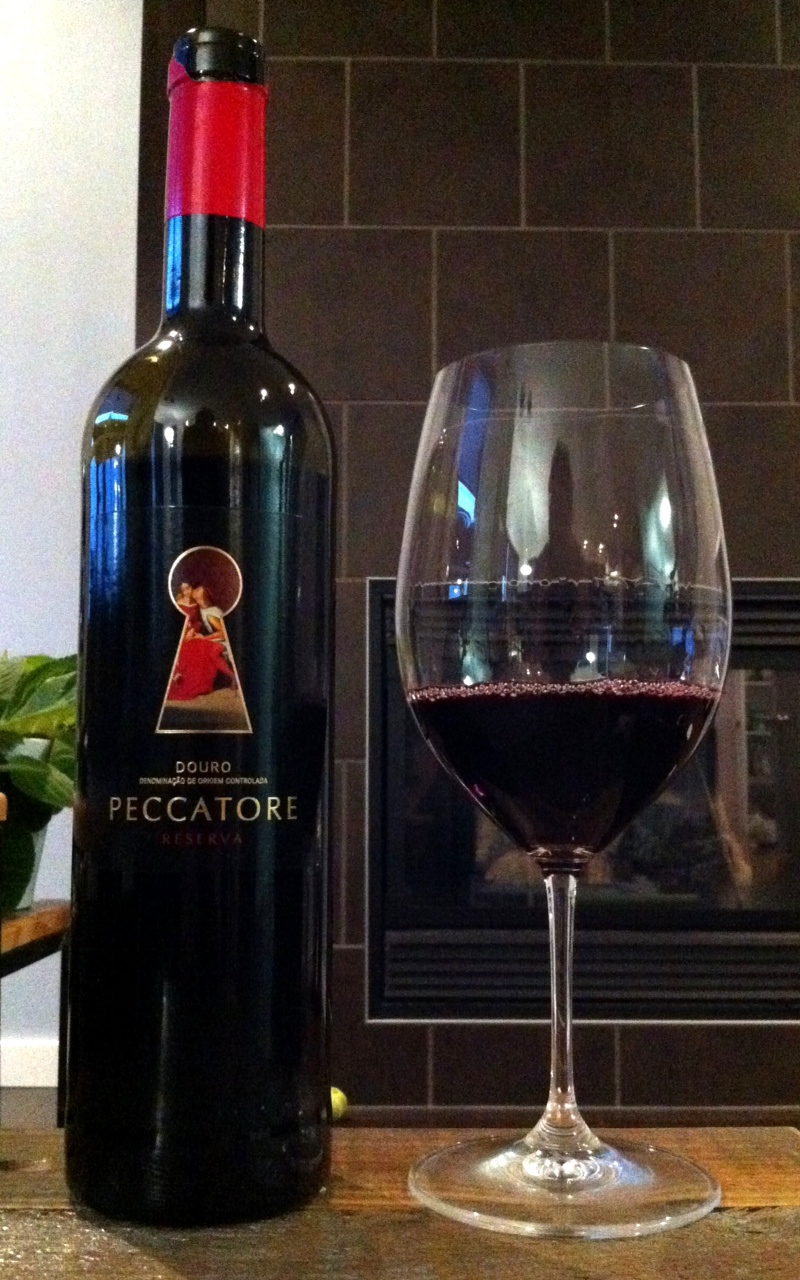
Can you see the difference? Price is the difference. Though the ultra-cheap faux foil on the neck was still a bit disappointing.

I’ll try to be (more) brief tonight than I have been recently — quite a few posts over the last couple weeks have eclipsed the 1000 word mark.  To cut to the chase, tonight’s wine costs $13 and doesn’t suck.  Thanks to my (sizeable) tuition bill for the WSET Advanced class starting at the end of the month, I’ve cut back my wine budget substantially over the past few months and as a result have been on the lookout for inexpensive wines that still deliver.  There may not be a better place in the world for these bargains than Portugal, which is cultivating a reputation for solid, easily drinkable dry reds at value prices.  You may have some initial reticence to delve into the Portuguese wine market, largely because it’s based around a large number of indigenous grapes that no one outside of Lisbon has ever heard of, but if you embrace your fear of the unknown, accept that your $15 Portuguese red won’t be made out of Cabernet and just drink it for what it is, you WILL be very pleasantly surprised. Read the rest of this entry »


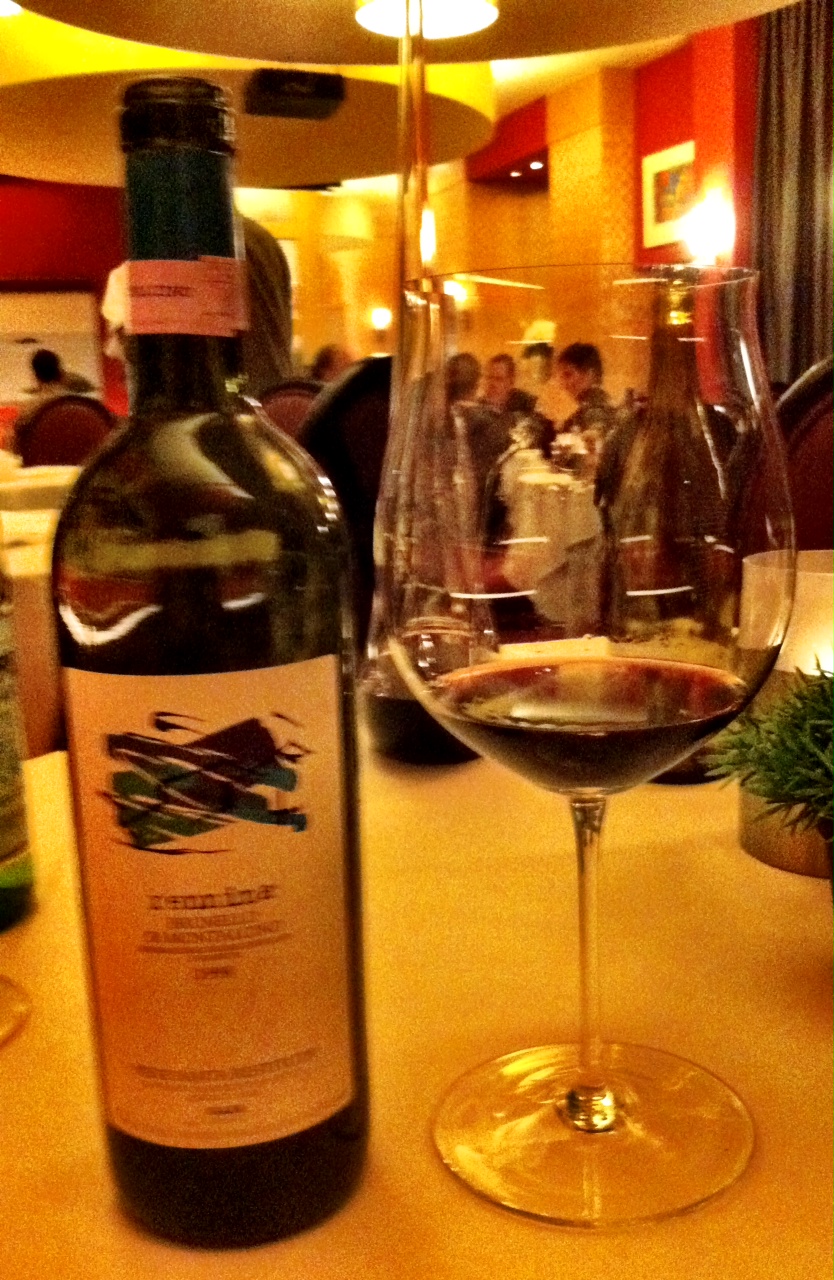
Roving Wine Review: 1998 Pieve Santa Restituta “Rennina” Brunello di Montalcino @ Centini

4 10 2011

Centini: great restaurant, absolutely horrible lighting for iPhone pictures. Note the difference between the old PSR label shown here and the way cooler one they use now...

I have awesome friends.  Shortly after I posted my poll-winning wine review of the 2006 Pieve Santa Restituta Brunello a few weeks back in celebration of Pop & Pour’s 100th post, I got a message from Brian at The Ferocious Grape telling me that he had a great idea for another PnP article.  He had in his massive collection of wine another Pieve Santa Restituta Brunello that was both older and higher-end than the one I had tried:  the 1998 Rennina Brunello from PSR (“Rennina” is PSR’s proprietary name for the wine, which comes from three top vineyard sites on the estate), the current vintage of which is more than 3 times as expensive as the base PSR Brunello ($200ish as compared to $60).  Did I have any interest in opening the ’98 Rennina with Brian, seeing how it fared against the ’06 basic Brunello and writing a post about it?  Um, yes?

If you’ll recall, my main excitement about Pieve Santa Restituta was that it’s owned by Angelo Gaja, the Barbaresco wine icon from Piedmont in northwest Italy whose Tuscan venture into Brunellos is worth some attention (for much more about Gaja and PSR and Brunello, see my last post about the 2006).  The 1998 vintage from PSR was of particular interest because Gaja only took full control over the winery in 1995, so Brian’s bottle was one of this landmark winemaker’s first efforts at making high-end Brunello.  A bottle this special required some proper special-occasion ambience, and I owed Brian some payback for a gesture this generous, so we booked a dinner reservation at Centini on 1st Street and 8th Avenue SE in downtown Calgary to toast one of Tuscany’s finest Italian-style. Read the rest of this entry »


Wine Review: 2009 Laughing Stock Syrah

28 09 2011

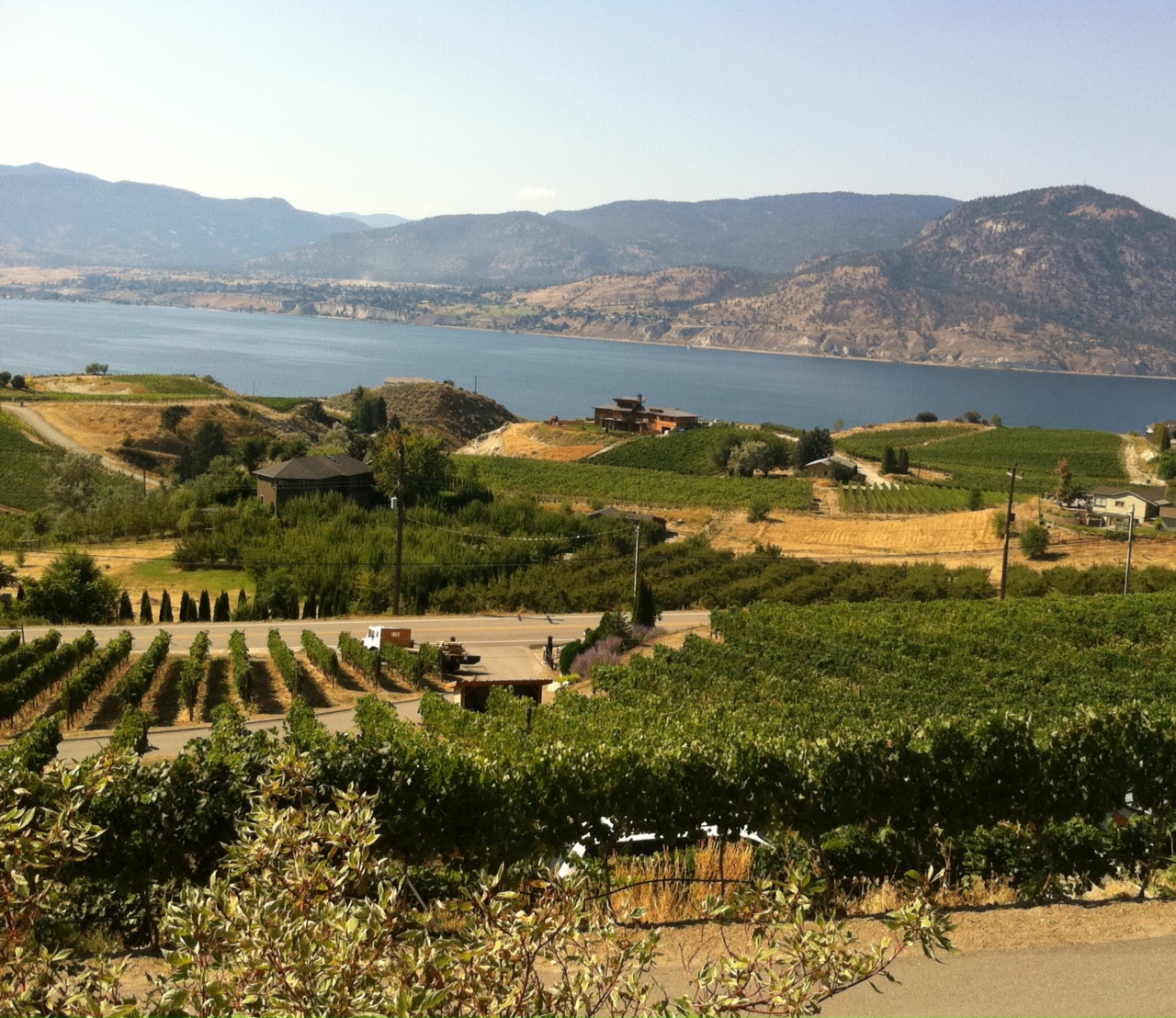
View from the parking lot: I could get used to looking at this every day.

On my trip to the Okanagan earlier this month, one of the things I was most looking forward to was my visit to Laughing Stock Vineyards, producer of my favourite Canadian red wine of all time and restorer of my faith in (at least some of) my homeland’s wine industry.  We made the trek out to Naramata, located just northeast of Penticton along the shoreline of Lake Okanagan, on a gorgeous late summer day and I was lucky enough to meet LS owner/vineyard manager Cynthia Enns and get a guided tour of the property, which sits on a west-facing slope with an incredible view overlooking the Lake.  I was even luckier that the tasting room still had some of the 2009 Laughing Stock Syrah in stock, which I’d been dying to try, partly because LS had made me think that good Canadian reds were an actual possibility, partly because I generally just love Syrah, and partly because I had never seen this particular wine anywhere in Alberta, giving me (in my head, anyway) a chance at a provincial exclusive.  I bought a couple bottles to take home, and tonight was the first taste trial.  Since the last Canadian Syrah I had before this one smelled and tasted like tomato soup, this had nowhere to go but up. Read the rest of this entry »


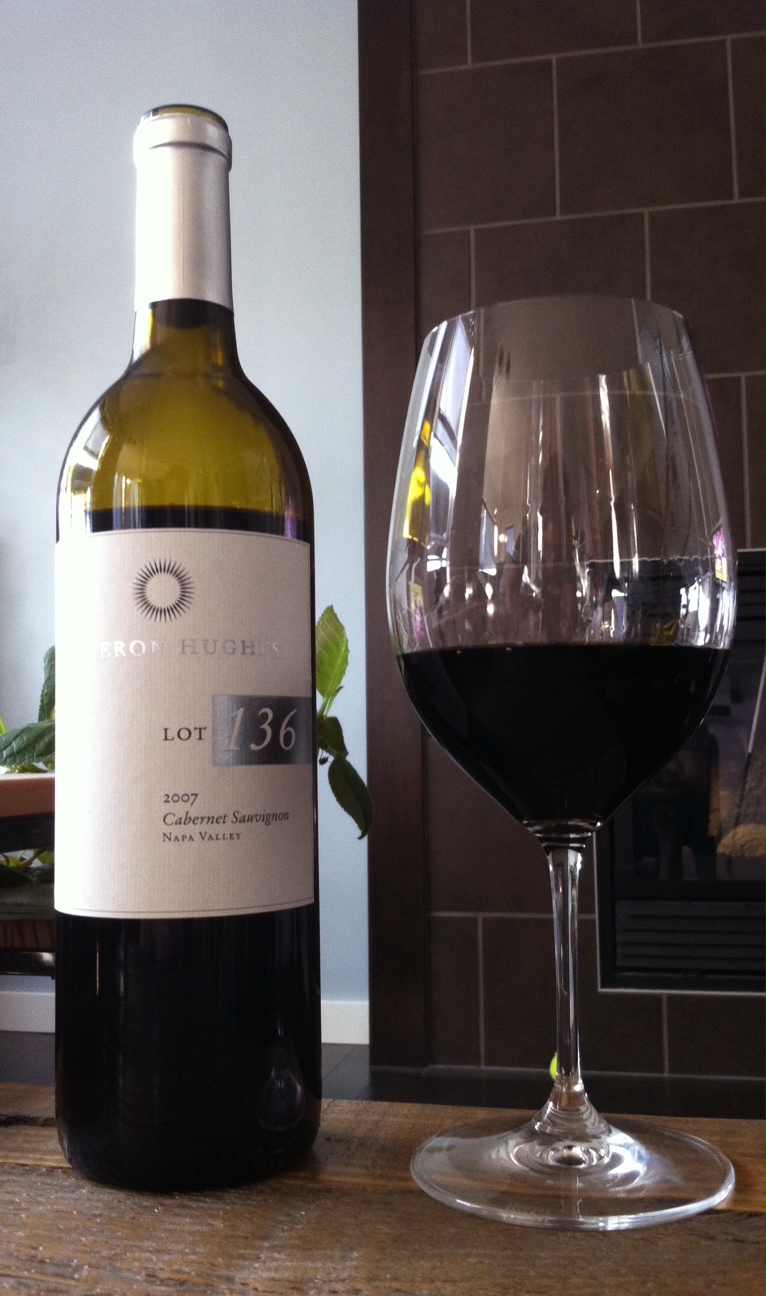
Wine Review: Cameron Hughes Lot 136 Cabernet Sauvignon (2007)

25 09 2011

Could've been a contender.

This is the second time that a Cameron Hughes wine has graced the electronic pages of this blog, and since the first time was a review of one of my all-time favourite value wines, I had both high hopes and high expectations going into this review.  If you don’t know the story about Cameron Hughes and how they source and create wines, it’s covered in some detail here; the Reader’s Digest version is that CH doesn’t grow any of its own grapes but instead buys either grapes, juice, finished wine or fully-bottled wine, usually from established wineries selling excess inventory, and repackages it under its own label at substantially discounted prices.  That’s how it should work, anyway…the price equation gets skewed somewhat once the wine leaves CH’s American home market.  On the Cameron Hughes website, this particular wine is described as being for sale at the CH online store for $15US.  It was also available at Costco in the US at a similar price point.  I bought this bottle last year from Aspen Wine & Spirits in Calgary for $33CDN — 2.2 times the price.  I feel like NAFTA should have something to say about this. Read the rest of this entry »


Wine Review: 2009 Painted Rock Chardonnay

21 09 2011

In wine, as in life, discrimination is wrong.

I’m experiencing a sort of Chardonnay renaissance right now. Like so many people, I had soured on the grape after a couple of initial bad experiences with cheap, gloppy, steroidally-oaked monsters that led me to believe that Chard was overrated and undeservedly well-known, the sellout of the white grape family. This, it turns out, is a tragically limited worldview that illustrates the dangers of drawing conclusions based on a small sample size; the problem wasn’t actually that I didn’t like Chardonnay (which is responsible for some of the best, most acclaimed and most expensive white wines in the world), but that I didn’t like bad Chardonnay (which, thankfully, isn’t a problem at all). I have started to distance myself from this rough start with the grape, and despite my previously-ingrained bias, I’ve been noticing that almost every single Chardonnay I’ve had recently has been, well, good. The oak-and-alcohol-bomb style previously so rampant throughout the New World is starting to recede, and the current movement in the world of Chardonnay seems to be more geared toward balance and allowing the flavours of the actual grape (rather than only the barrel it was aged in) to express themselves. This is a positive development for the Canadian wine industry, as this grape probably does its best work in cooler climates, retaining the structure that can be so easily lost in warmer zones yet still ripening even in shorter, colder growing seasons. I was therefore quite surprised during my recent trip to the Okanagan when one winery owner told me that they would be reining back their production of Chardonnay in favour of other white varietals — they made a tremendous, restrained yet flavourful Chard, but they were turning away from it because they thought that Pinot Gris could outsell it 5 to 1. My newfound appreciation for the world’s best-known white grape must have hit me then, because my first immediate thought was: “Has everybody gone nuts?”

Read the rest of this entry »


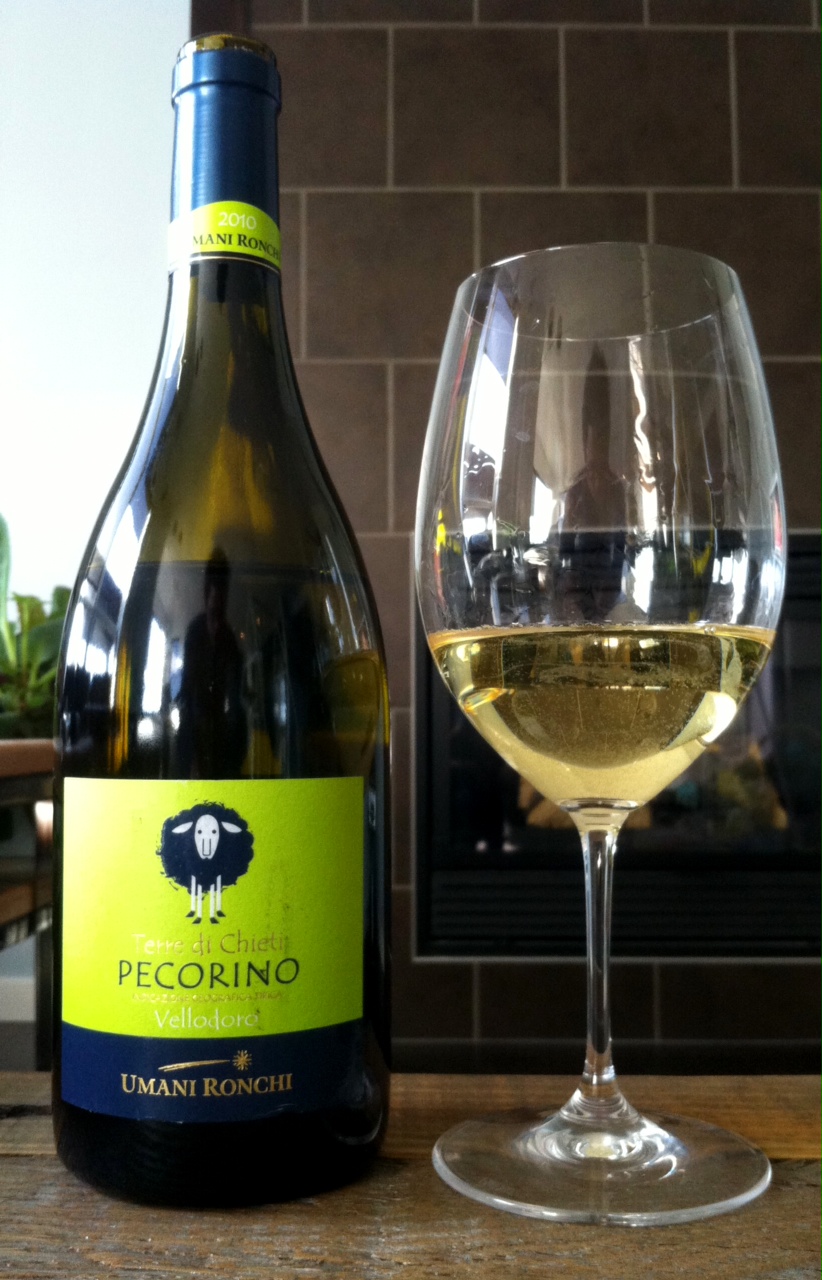
Wine Review: 2010 Umani Ronchi Vellodoro Pecorino

19 09 2011

When drinking on a budget, many people go for cheap wine.  Me, I opt for sheep wine.

Baa.

You are forgiven for thinking that Pecorino is only a sheep’s milk cheese, because I was convinced of the same thing until I was presented with an opportunity to buy this neon green, livestock-labelled bottle.  For the first and possibly last time in my life, the back label of a wine I owned proudly trumpeted that it was made from “the grape of the sheeps” (bad grammar not mine) — the word “Pecorino” comes from the Italian “pecora”, meaning “sheep”.  Apart from being delicious with crackers on an appetizer platter, Pecorino is also a little-known white grape indigenous to the central-eastern Italian wine region of Abruzzo.  It almost became extinct over the past few decades because it is a fairly low-yielding varietal that doesn’t lend itself to big money crops (and because wineries weren’t lining up down the block to plant sheep grapes), but large-scale producer Umani Ronchi recently began a crusade to revive it in an effort to keep regional grape varieties alive, leading up to the first vintage of this Pecorino in 2007.  Thanks to the palate-broadening encouragement of Brian at The Ferocious Grape (who was also behind my foray into Malvar a couple months ago), and because I liked the cute cartoon sheep on the label, it ended up in my glass. Read the rest of this entry »


Wine Review: 2010 Dirty Laundry “Madam’s Vines” Gewurztraminer

16 09 2011

The folks at Dirty Laundry are marketing geniuses.

I love the sign at the bottom right that says "Scenic Outlook: That Way". "Really?! Where?"

They have their own unique story — namely, that the current site of the winery used to be home to a laundromat that illicitly doubled as a brothel during the Gold Rush era — and they stick to it with rigorous discipline in absolutely everything they do, from their wine names to their label art, winery decor to gift shop souvenirs (yes, there’s a gift shop).  All of their production and sales efforts are relentlessly to brand, and the secretly naughty tale of the brand generates a lot of interest; before my recent trip to the Okanagan, DL was one of the places I was told I absolutely had to see.  So one day we ventured out to Summerland, a half hour southwest of Kelowna, and drove up (and up, and up) a series of winding backcountry roads until we found it, high up in the hills above the town overlooking the Lake.  We were treated to a thoroughly modern tasting room, with a brand new gorgeous outdoor patio (complete with giant clothespins and lingerie gently swaying in the breeze) and an amazing view of the surrounding area.  However, amidst all the winks to its shady past and seamless self-promotion, Dirty Laundry got slack about one thing:  the wine. Read the rest of this entry »