Wine Review: 2010 19 Crimes Shiraz Durif

19 09 2012

Looks like a Deadwood episode, tastes a fair bit better.

I’ve seen this bottle in every wine store I’ve been in over the past couple of months, so I presume it’s attracted some critical mass of popularity and is doing well for itself.  I didn’t buy it for that reason, however, or because of its admittedly compelling bottle frosting and showstopper labelling.  I bought it because I felt sure that the makeup of this red blend was some sort of elaborate winemaker’s pun.  19 Crimes is a mixture of Shiraz and Durif.  Shiraz, as I discussed in my last review, is the same grape as Syrah.  Durif also has a more commonly known alias; in North America and elsewhere, it’s usually called Petite Sirah.  So this wine is actually a Syrah/Petite Sirah blend…Syrahs of all sizes?  Not quite.  Petite Sirah is not a type or class of Syrah but a stand-alone grape variety…and while we’re at it, nothing about it is petite at all once it hits the glass:  its diminutive first name refers to the size of its grapes on the vine rather than its flavours or structure.  Since Petite Sirah’s grapes are smaller, this creates a larger ratio of skins to juice, and since the skins are where a red wine’s colour and tannin resides, this makes most Petite Sirahs deep, thick, opaque and massive.  But still not Syrahs.  Who said learning about wine was hard? Read the rest of this entry »


Wine Review: 2009 Prospect Winery Red Willow Shiraz

13 09 2012

[This bottle was provided as a sample for review purposes.]

They (thankfully) don’t make inexpensive Canadian wine like they used to.

Another day, another foray into the once-nebulous-and-terrifying world of inexpensive Canadian wine.  My connotations of this corner of the market harken back to my university days in Victoria a decade ago, when my roommate and I would stop by the nearest government-run liquor store to pick up a $17 magnum of something local and atrocious before having friends over for drinks.  I have only recently started to get over the stigma that built up in my brain due to the bad-wine headaches that ensued from those bottles, and I remain a touch leery whenever I see a bottle from BC or Ontario that dips below the $20 mark.  Thankfully for me, I recently received a vinous intervention in the form of a half-case sample of wines from the Okanagan’s Ganton & Larsen Prospect Winery, all of which clock in under the $20 threshold, and one of which particularly intrigued me:  this bottle of 2009 Red Willow Shiraz. Read the rest of this entry »


Wine Review: 2010 Pheasant’s Tears Kisi

5 09 2012

One of the strangest (and most captivating) bottles you’ll ever try. And it’s orange!

When I interviewed Tim Hendrickson of Wine Ink for last week’s PnP/CIA dual feature, I asked him what was the single weirdest bottle in his unique and eclectic collection of wares, knowing full well that I would likely be buying his response.  The answer was this bottle, the 2010 Kisi from producer Pheasant’s Tears.  What makes it weird?  Well, what doesn’t?  It’s made in Georgia (the country, not the state, although both would be equally weird, I suppose), which is no longer a known winemaking power but is the area of the world with the longest-known history of winemaking, dating back 8000+ years.  It’s a single-varietal wine from a grape, Kisi, that neither I nor the dozens of reference books in my house had ever heard of, a white grape indigenous to the Kakheti province of eastern Georgia, located near the Azerbaijan border.  However, as you can see in the picture at left, the wine is not really white at all, but a rather lurid shade of orange.  And oh yes — it’s fermented and aged by being buried in the ground in a giant clay egg.  Intrigued yet?  Just wait till you taste it. Read the rest of this entry »


Wine Review: 2010 Mission Hill Martin’s Lane Pinot Noir

22 08 2012

[This bottle was provided as a sample for review purposes.]

As aptly pointed out by my 19 month old son: P!!!

It was with great sadness that I uncorked (OK, unscrewed) the last of the sample bottles that the Okanagan’s Mission Hill winery had sent my way.  When MH sent me their small-batch limited edition Martin’s Lane Riesling a few weeks ago, they included with it the Riesling’s vineyard twin, the inaugural release of the Martin’s Lane Pinot Noir.  This bottle of Pinot was many years in the making (the vineyard was planted in 1995), but MH held back on releasing it as a single-vineyard offering until the vines and the grapes were fully ready to show their stuff.  I laid out the story behind Martin’s Lane in my Riesling review, but to quickly recap, it’s a high-quality, steeply-sloped vineyard located right by Mission Hill’s winery property just outside of Kelowna, and it’s named as a tribute to MH proprietor Anthony von Mandl’s late father Martin.  Only 485 cases of this Pinot were produced, and this is the first bottle I’ve seen in this province, so unless you live near the winery, this bottle is probably hard to come by.  All the more reason to enjoy it if you have it! Read the rest of this entry »


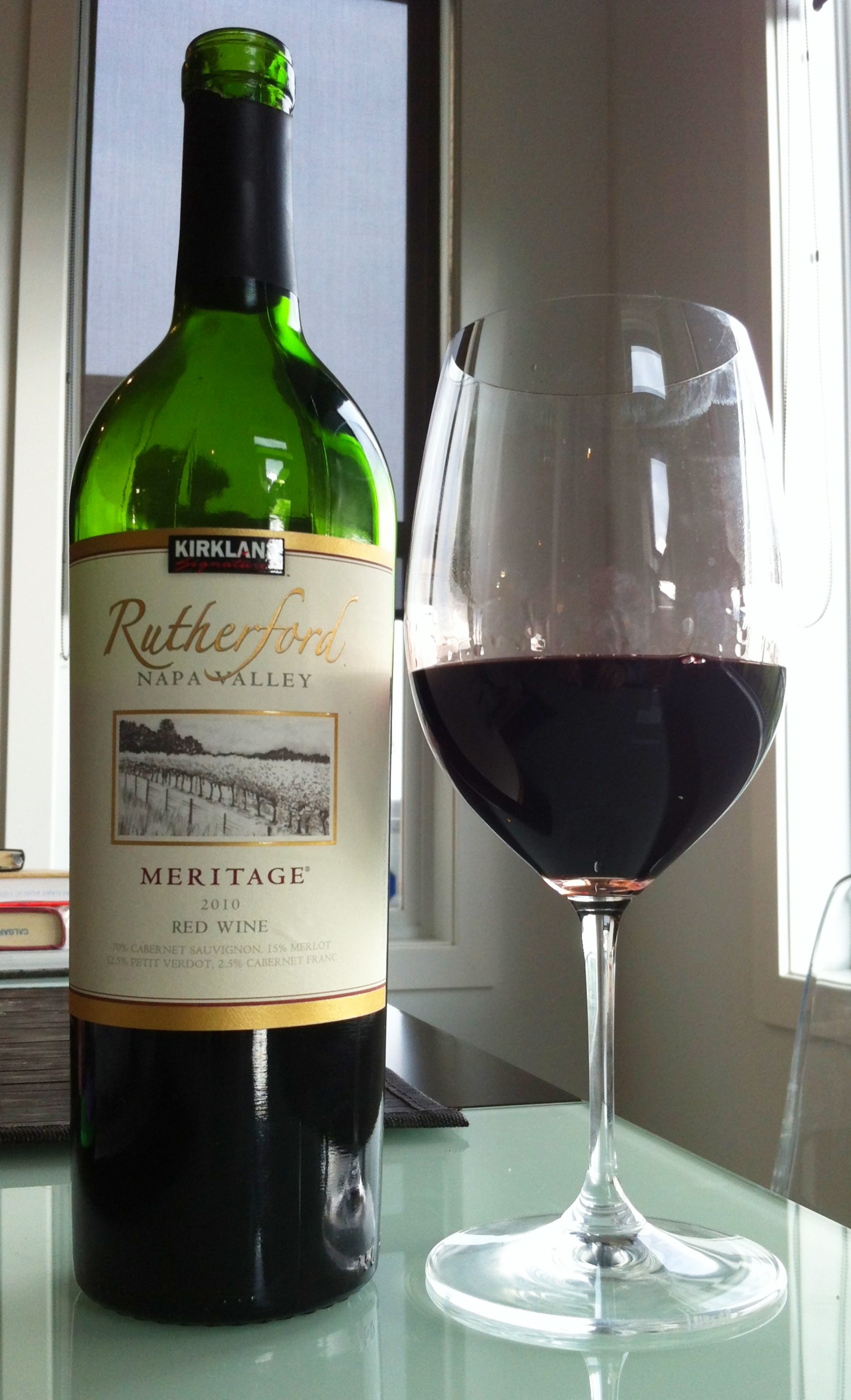
Wine Review: 2010 Kirkland Rutherford Meritage

15 08 2012

Not just wine FROM Costco, wine BY Costco. Too weird.

I had to.  Every time I’ve gone into Costco to grab a bottle or two, my eyes always linger for a moment with morbid curiosity on the various Kirkland bottles for sale.  I can wrap my head around Costco-brand ketchup or Costco-brand paper towel, but I have no idea what to make of Costco-brand wine, particularly since Kirkland (Costco’s proprietary label) keeps spitting out offerings from a vast array of well-to-do regions like Chateauneuf-de-Pape, Champagne, and, as seen here, Napa Valley.  These areas have an established pedigree in the wine world:  this particular bottle comes from Rutherford, arguably Napa’s most prestigious, highest-quality and most expensive sub-region.  Rutherford is a tiny area in the heart of the Valley — when I went to Napa it took about 3 minutes for us to drive from one end of it to the other — and is one of the best places in the world to grow the Cabernet Sauvignon grape, and its name on a label usually signifies that you’re going to be shelling out at least $50-$60 (and often much more) for the privilege of the bottle.  This bottle was $17.  The utter dichotomy in my head between “Rutherford wine” and “produced by Costco” made me have to see what was inside.  One disturbingly inexpensive Napa Cab later, I cracked the Kirkland tonight feeling equal parts anticipation and dread. Read the rest of this entry »


Wine Review: 2010 Domaines Andre Aubert “Le Devoy”

23 07 2012

There are two compelling reasons why you should track down and drink this wine:

  1. It is a tremendously good value wine that offers depth, intrigue and tons of flavour at a bargain price.
  2. It may give you superpowers.  Or radiation poisoning.  Or both.  It’s tough to predict.

You see, Andre Aubert’s Le Devoy comes from the bucolic Grignan-Les-Adhemar region in France’s Southern Rhone valley.  Before Grignan-Les-Adhemar adopted its almost-impossibly-French appellation name in 2010, it was previously known as the AOC region of Coteaux de Tricastin, named for the French city of Tricastin found within its borders.  Unfortunately for Tricastin, on top of vineyards, it was also home to a series of 4 nuclear reactors, and unfortunately for the nuclear reactors, in 2008 this happened:

Shortly after this questionable incident, a number of employees at the Tricastin plant were exposed to radioactive particles that escaped from a reactor pipe that was supposed to be shut down.  Then a 3 year-old previously-unnoticed nuclear waste leak led to another spill.  Not surprisingly, these terrifying events did little to draw the public towards bottles of wine with “Tricastin” plastered all over their labels, so the growers there petitioned France’s governing wine body to let them change the name of their region, and Grignan-Les-Adhemar (which translates to “Land of the Geiger Counters”) was born.  I have never before heard of a French wine appellation changing its name, especially just so that it could escape from bad PR, but as a result, Le Devoy will now forever be known to me as “nuclear wine”.

But it’s good!  Really!  You should buy it! Read the rest of this entry »


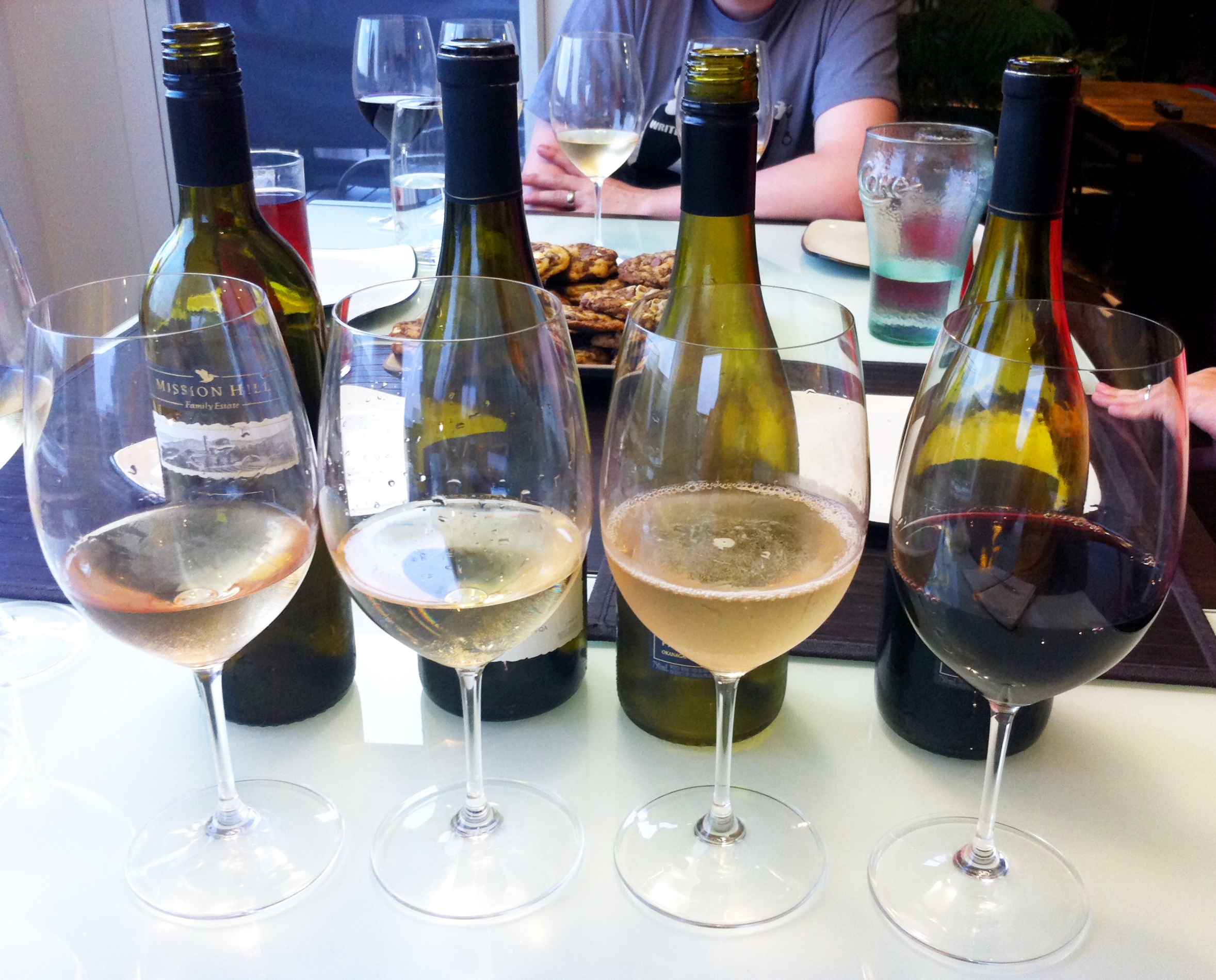
The Mission Hill Pinot Olympics

17 07 2012

[The bottles below were provided as samples for review purposes.]

As tactfully mentioned by the disclaimer above, I recently received a mixed six-pack of sampler bottles from the good folks at Mission Hill Family Estate winery in the Okanagan Valley.  Two of these bottles, the 2011 Reserve Riesling and the 2011 Five Vineyards Sauvignon Blanc, have received separate PnP review treatment over the past couple of weeks:  see here and here for the full write-ups.  But I couldn’t bring myself to split up the other four bottles and rate them separately, because it was clear that they belonged together, bound as they were by a common provenance:  the family name Pinot.  Pinot Grigio, Pinot Gris, Pinot Blanc and Pinot Noir all sat side by side in the MH sample box like a monochromatic grape rainbow, their shared forename a reminder of their common genetic ancestor (Pinots Grigio and Gris are the same grape, and both PG and Pinot Blanc are mutations of Pinot Noir, which is well-known for being genetically unstable).  Since the fortunes of these bottles were clearly tied together, and since it’s July 2012 and our athletes are preparing to head off to London for the Summer Games, I did the only thing I could do and hosted the inaugural Mission Hill Pinot Olympiad at my house over the weekend.

In order: Grigio, Gris, Blanc, Noir. Let the Games begin.

Here’s how our game was played:  I invited over a couple of fellow wine enthusiasts, opened all four bottles of MH Pinot, and we tasted through the lineup and separately ranked each of the wines as against its peers, individually coming up with our gold, silver, bronze, and, um, whatever’s below bronze (lead? aluminum? tungsten?) medal choices.  I then added all of the placements together to come up with a cumulative judges’ score (for example, a wine ranked 1st, 2nd and 3rd by the three different judges would get a total score of 1 + 2 + 3 = 6); the lower the score, the better.  The lowest total score won the overall prize, which basically meant that the bottle was emptied the fastest.  We tasted the wines from whites to red, lightest to heaviest, and my notes below are in the same order.  Who emerged victorious?  Read on! Read the rest of this entry »


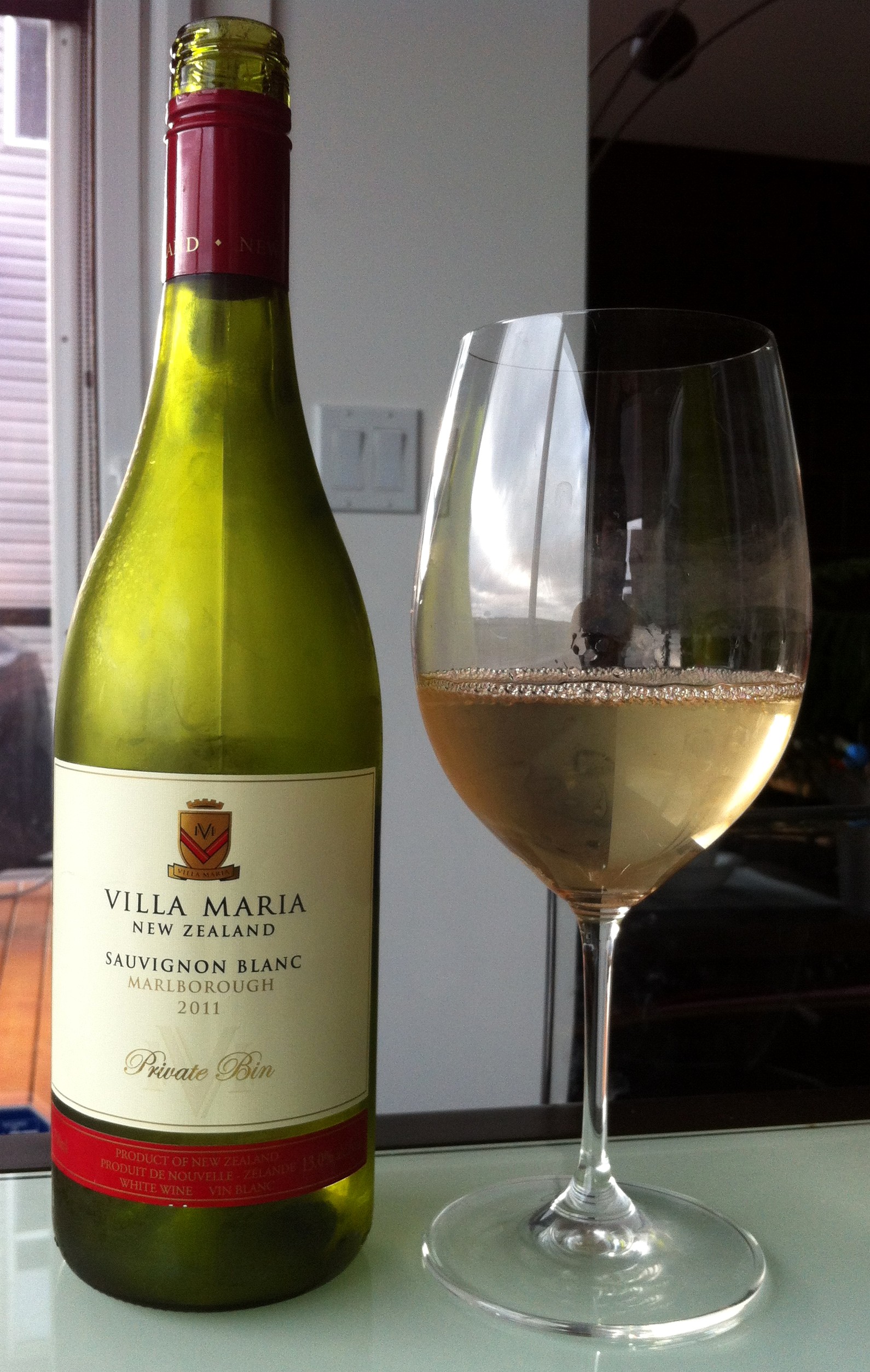
Wine Review: 2011 Villa Maria Marlborough Private Bin Sauvignon Blanc

4 06 2012

[This bottle was provided as a sample for review purposes.]

Cold and young: the best way to enjoy NZ Sauv Blanc.

For my generation of wine drinkers, New Zealand Sauvignon Blanc is a white wine mainstay, both a defining expression of the Sauvignon Blanc grape and one of the first whites that comes to mind during a trip to the wine store.  However, this level of penetration into the world’s vinous consciousness is a very new phenomenon:  NZSB didn’t attract international attention until the mid-1980s, when the bright, crisp, fruit-packed bottlings from the country’s star Marlborough region first took foreign palates by storm.  New Zealand has seen exponential growth in its wine production in the nearly 30 years since, and most of the Sauv Blancs you see on the shelves now are a product of this modern white revolution, only recently arrived to the SB scene.  But not this one.  In 2011, Villa Maria celebrated its 50th year as a producer, which, in a country that is relatively new to the world wine limelight, makes it a true New Zealand pioneer.  Its Private Bin bottling of Marlborough Sauvignon Blanc is sourced from grapes grown all over the region and shows that even recent wine history leaves a strong flavour footprint. Read the rest of this entry »


Burgundy: White Tasting, Part IV

26 04 2012

OK, time to bring this long and winding road of a tasting review to a close.  I had set this up so that we’d end on a high note with the most prestigious bottles in the tasting, the illustrious Grand Crus, but for reasons outside their control, the drinking experience ended up being somewhat anticlimactic.  And no, it wasn’t because we were 10 bottles in by this point.  That’s what made the next morning anticlimactic.

FOURTH FLIGHT

A.k.a. over $300 worth of wine that really shouldn't be open yet.

Grand Cru vineyards are the rarest, best-positioned, most historic, highest-quality growing areas in all of Burgundy…or at least their classification is meant to reflect as much.  As you might expect, Grand Crus come in very limited numbers (only 32 in the Cote d’Or, according to my friend the Internet) and they produce minute quantities of wine each year with prices to match their prestige and scarcity.  I didn’t have the overflowing bank account to go too crazy and delve into the elite of white Burgundian GCs — the series of adjoining Grand Crus bearing the “Montrachet” name, including Le Montrachet, Batard-Montrachet, Bienvenues-Batard-Montrachet, etc. are almost certainly the creme de la creme of white Burgundy, but they’re also a hilarious pipe dream in my current circumstances — so instead I turned my focus to two wines from the well-regarded but much cheaper Grand Cru of Corton-Charlemagne.  Unfortunately, both bottles were from relatively recent vintages, and we quickly discovered that, with great white Burgundy, time is your ally. Read the rest of this entry »


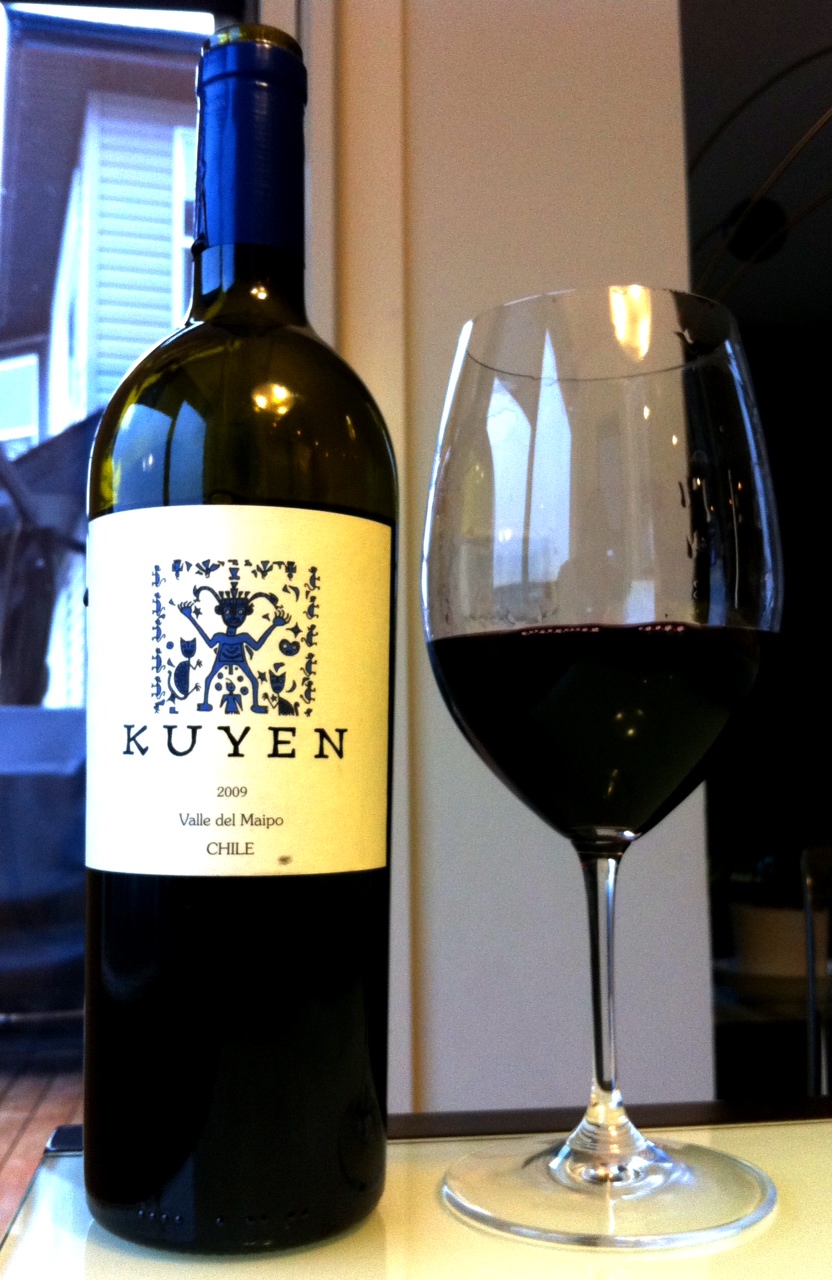
Wine Review: 2009 Antiyal “Kuyen”

29 02 2012

The name says it best: this is a lunar sort of wine.

I’m hoping this is a glimpse at the future of Chilean wine.  While until recently the Chile section of your local wine shop was probably best known as a half-decent place to get a $15 bottle, there has been an increased focus in making wines of quality and interest in the country that is perfectly highlighted by this producer and this bottle.  Antiyal is the brainchild of winemaker Alvaro Espinoza, whose wines are all the product of organic and biodynamic viticulture (a pesticide/herbicide-free method of farming that makes use of cover crops, natural predators, and even lunar cycles to grow grapes harmoniously with the surrounding ecosystem), an approach growing in popularity and one very well-suited to Chile, whose wine regions are in mostly drier climates with consistent weather and few natural pests/diseases.  The winery’s eponymous wine Antiyal (which means “sons of the sun”) still stands out in my memory a couple of years after I last tried it because of its sheer purity of flavour.  You know how some wines are the perfect example of a certain type of taste?  Antiyal is THE standard-bearer for the flavour “black currant”…I’ve never tasted anything like it.  Ever. Read the rest of this entry »


Wine Review: 2009 Beso de Vino Seleccion

22 02 2012

How many of you really needed to see full frontal bull nudity?

I’m sure the first thing the folks at Beso de Vino wanted me to see on this bottle was the 90-point score it received from Jay Miller of The Wine Advocate (which is likely why that number was posted front and centre on the neck in bigger font than the wine’s name).  Instead, the first thing I saw was:  testicles.  Yes, for reasons only known to a marketing department that should be immediately fired, BdV’s loveable mascot Antonio the Bull is drawn on the main label of the wine as a blatantly anatomically-correct stick figure.  Is it really necessary to showcase the animated gonads of a cartoon bull?  It has horns; I can already tell it’s a bull without any more explicit gender identification.  I don’t think the testicles add anything in particular to the artist’s rendition, and it’s not like the bull is really central to the wine or its faux back story (that Antonio kissed the wine and fell in love…not exactly deep stuff).  I am at a loss to explain this, but it’s hard to think of anything else when I look at the bottle.  Most unnecessarily X-rated critter wine ever. Read the rest of this entry »


Wine Review: 2008 Fog Crest Vineyard “Laguna West” Chardonnay

15 02 2012

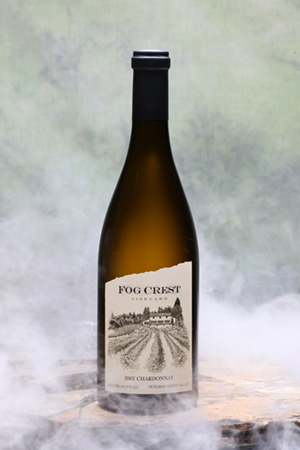
I had to use the promo pic from the website instead of my actual pic, for obvious reasons. Sure is foggy.

I just finished reading the book Judgment of Paris by George Taber, which is primarily a recounting of the now-legendary 1976 Judgment of Paris tasting where California Cabernets and Chardonnays shockingly upset top French Bordeaux and Burgundies in a blind tasting evaluated by renowned French judges, but which also tangentially describes the birth and rapid growth of the California wine industry.  The truly amazing thing about the J of P tasting wasn’t that the California wines upset the French; it was that the California wineries represented in the competition didn’t even exist a decade earlier.  Many of them entered their first, second or third vintages EVER in a tasting contest against historic French bottlings that dated back centuries, which in the world of wine should have been a recipe for embarrassment.  I now think about this every time I open a Cali Cab or Chard because, as a recent disciple of wine, I’ve only ever known California as a world vinous powerhouse; it’s remarkable to think that 40 years ago it would have been laughable to describe it that way.

To coincide with my finishing the book, I felt it only appropriate to open a California wine in commemoration, and the Fog Crest has been a bottle I’ve been very interested in trying, largely because the producer brings in ultra-famous Cali winemaker David Ramey as a consultant to help craft its Chardonnays and Pinot Noirs.  Fog Crest is based out of the Russian River Valley sub-region of Sonoma County, an area known for having a notably cooler climate than the surrounding area, helped in part by cold morning fogs (hence the winery name).  These climatic conditions make RRV an ideal spot for growing grapes like Chardonnay that show their best in cooler sites.  My favourite thing about this wine has to be its thematically-accurate, dry-ice-induced foggy promo pic from its website (see above left), the set up for which almost inevitably involved some marketing guru saying:  “See, FOG Crest?  Get it?”  (I get it.)   Read the rest of this entry »


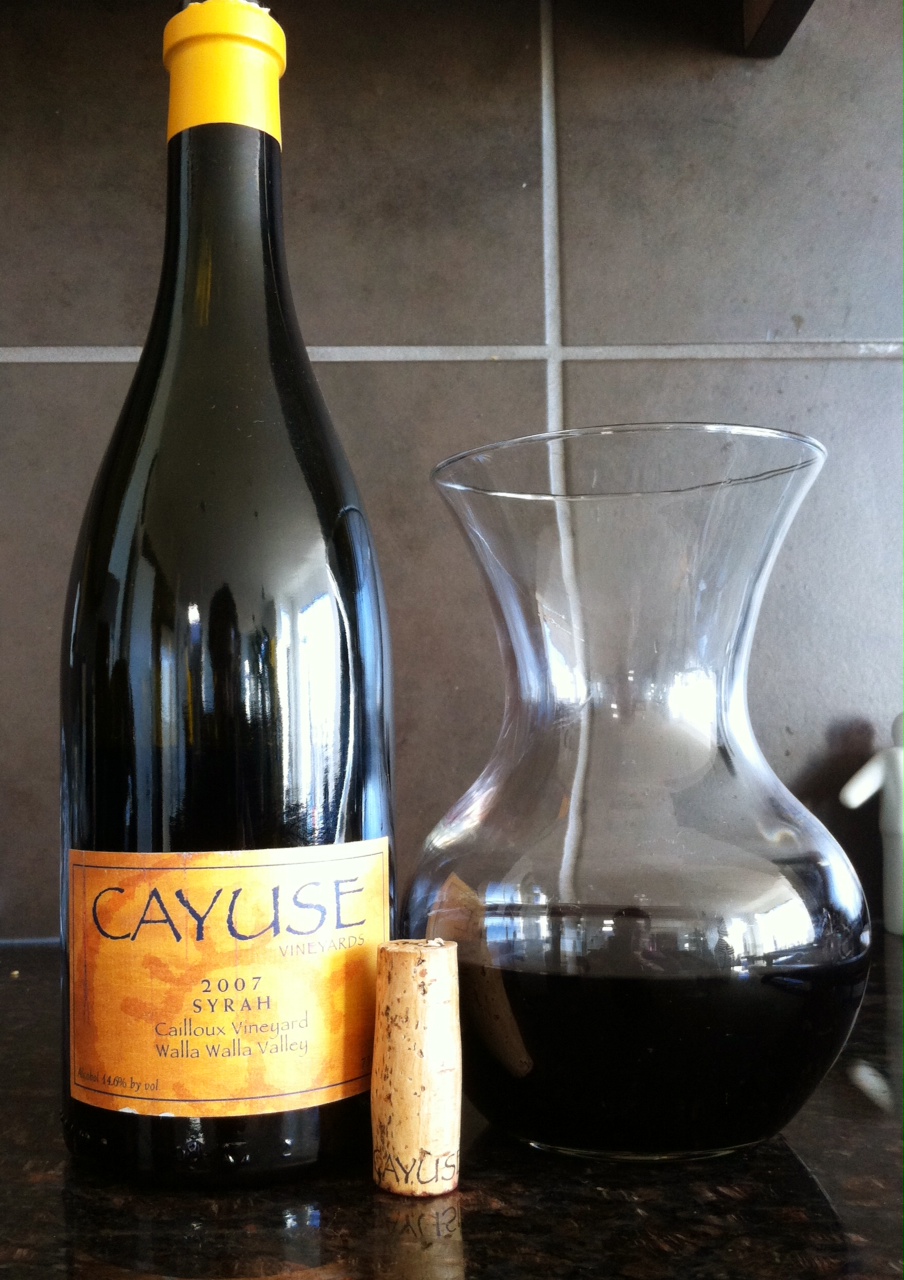
WSET Celebratory Wine Review: 2007 Cayuse Cailloux Vineyard Syrah

6 02 2012

When people ask me what kind of wine I like, I'm going to pull out this pic.

Ever since I found out that I passed my WSET Advanced course last week, I’ve been wanting to break open something truly special to celebrate.  However, sickness intervened, so rather than crack a $100+ bottle and write stuff like “smells like nothing” and “my throat hurts” in a review, I decided to wait until the congestion clouds had cleared.  This weekend I pronounced myself fit to taste and rummaged through my cellar to find a suitable victory bottle, and as soon as I came to this one, I stopped thinking about any other.  However, it’s a bottle built for the long haul, so I was faced with the quandary that every wine lover about to pull the cork on an expensive bottle has had to face:  should I open the wine now so I can try it, or will I be undercutting its long-term potential by having it too early?  After getting some savvy advice from the amazingly-informed wine community on Twitter (thanks, @peterzachar and @nwtomlee!), I turned to Cayuse’s website for the final verdict.  On their FAQ page, there was a question that said:  “How soon can I open my wines?”  Cayuse’s answer?  “A Latin saying insists, ‘There are four reasons for drinking wine: the arrival of a friend; one’s present or future thirst; the excellence of the wine; or any other reason.'”  I opened the wine.

Read the rest of this entry »


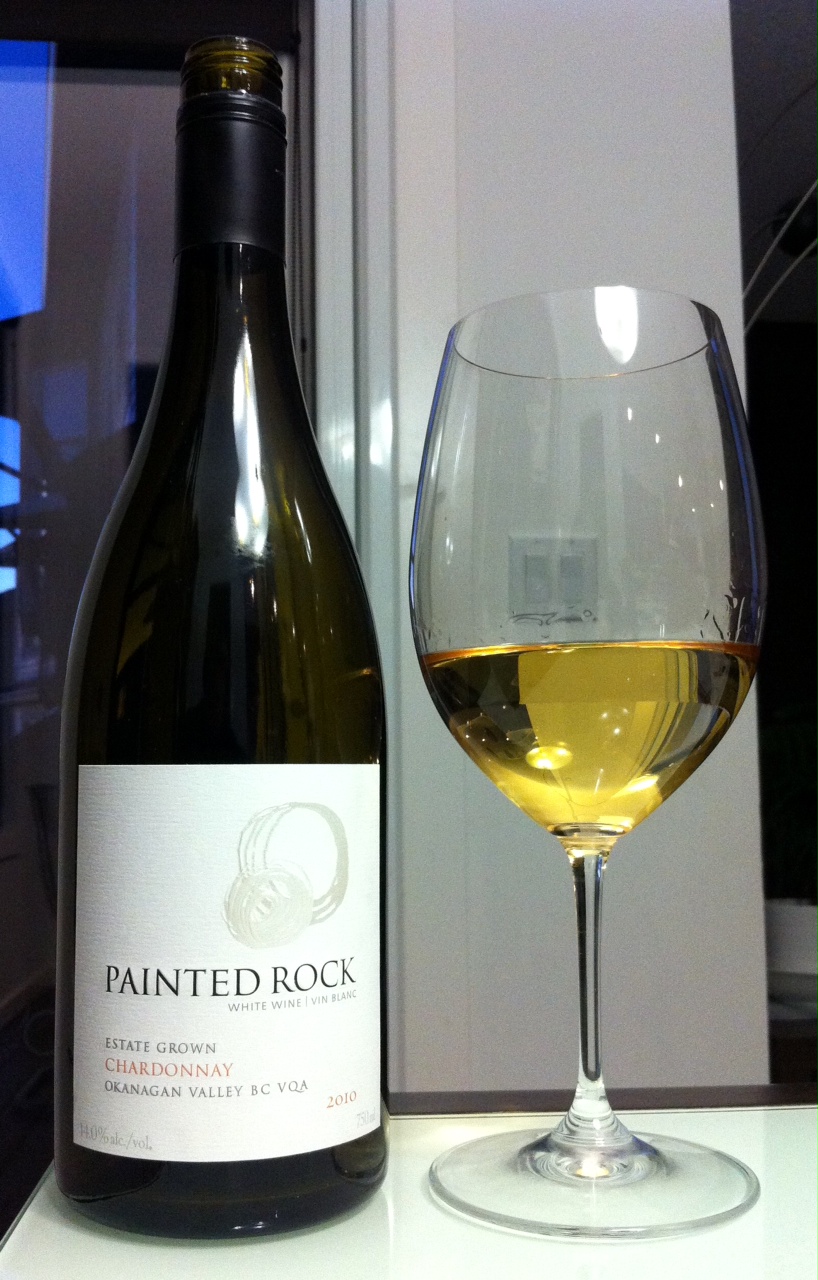
Wine Review: 2010 Painted Rock Chardonnay

3 02 2012

Although a newer vintage than the 2009, it's still like going back in time.

The coolest thing about this blog having been around awhile, other than the fact that I’ve miraculously managed to regularly publish an Internet wine blog for the better part of a year, is that I’m starting to come across second vintages in the bottles I open:  current vintage wines whose predecessors I have previously featured on PnP.  Case in point:  the 2010 Painted Rock Chardonnay from the Okanagan Valley, which is probably already facing an uphill battle in this review due to monstrously high expectations because I totally loved the 2009 PR Chard back in September.  I think Painted Rock is a producer on the forefront of the Canadian wine scene, one that is starting to show that we don’t have to settle for local wines that only measure up as against their neighbours, but that can also stand tall on the international market.  While PR focuses primarily on red wine, their lone white is a testament to the wonders of cool-climate Chardonnay, and I thought enough about the ’09 vintage that I absolutely loaded up on the 2010 as soon as it became available.

Read the rest of this entry »


Wine Review: 2009 Laughing Stock Blind Trust (Red)

19 01 2012

With this seamless a marketing pitch, this wine should always be in demand.

“Assets of the Blind Trust are kept under wrap and seal”, says the neck of Laughing Stock Vineyards’ “just trust us” bottle.  And so they are:  while at first glance you will not find any mention of what grape varieties make up this wine, and while the bottle tells you that the grapes in the blend change every year and never remain consistent, if you make good use of your corkscrew and fully remove the foil covering the top of the bottle, the mystery blend is revealed.  Since this is absolute genius marketing (and most of the fun involved in buying this bottle), I’m not going to spoil the surprise for you, other than to say that (1) the grapes involved are three of the five that go into Bordeaux wines in France (Cabernet Sauvignon, Merlot, Cabernet Franc, Malbec, Petit Verdot) and (2) the ’09 Blind Trust mix is heavily weighted in favour of one of the five.  And it ain’t Petit Verdot.

Read the rest of this entry »