By Peter Vetsch
I think it’s safe to say that we’ve migrated into our “classics” phase of the 2019 Half-Bottle Wine Advent calendar. After Canadian bubbles, German red crossings and New York cans, yesterday’s Chianti Classico signalled a bit of a vibe shift, and tonight’s offering got the message loud and clear and has continued the trend. You don’t get more throwback textbook Old World than Sancerre, a region that has stood the test of time but also run the fairweather gamut of popular opinion over the past few decades. If this was the 1982 Half-Bottle Advent Calendar, it might be entirely composed of Sancerre; fifteen years before or after might have seen Sancerre wholly excommunicated. Now it’s making a cautious return, seeking to reclaim (or maybe just re-assert) its status as the spiritual home of Sauvignon Blanc.

Sancerre is one of the most easterly sub-regions of the long, thin, west-to-east Loire Valley, which ultimately connects to the Atlantic Ocean but extends all the way to the dead centre of France on its other end. Monks first planted vines in Sancerre in the 11th or 12th centuries, and subsequent swaths of royalty ensured that its sought-after wines were always available in their courts. While currently most known as a (if not THE) key French site for Sauvignon Blanc, which now makes up 80% of all plantings in the region, it was previously home to considerably more Pinot Noir and Gamay, the latter of which was ravaged by a phylloxera outbreak in the 19th century and was replanted with Sauvignon. Pinot retains 20% of the acreage in Sancerre, but this is now firmly a white wine region, and tonight’s bottle has its name all over it.
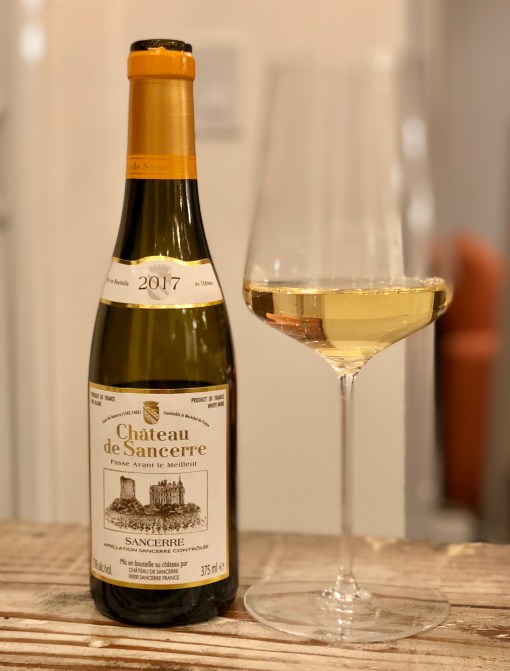
I don’t know whether to call this the 2017 Chateau de Sancerre or the 2017 Chateau de Sancerre Sancerre. It seems completely ridiculous to use the name twice, but I’ve never come across a producer whose name was the name of its region before. (Chateau de Bordeaux and Domaine de Bourgogne, you missed your chance.) The Chateau appears quite aware of its unique nomenclature, boasting in almost all of the available online literature, not to mention the back label of this bottle, that it is the “only wine which can be marketed under this exclusive name”. Well…no kidding? Isn’t that the case for EVERY SINGLE WINERY on Earth? You don’t get a lot of non-Beringer wines marketed under the “exclusive name” of Beringer, thanks to the rather handy world of intellectual property law. But whatever. The Chateau de Sancerre is actually a Chateau, a castle (re)built in 1879 in the heart of the vineyards of the region, which was purchased in 1919 by Louis Alexandre Marnier-Lapostolle and is still owned by the Marnier-Lapostolle company a century later. Its name is more familiar than you might think, as Louis Alexandre was also the inventor of Grand Marnier (speaking of exclusive names).
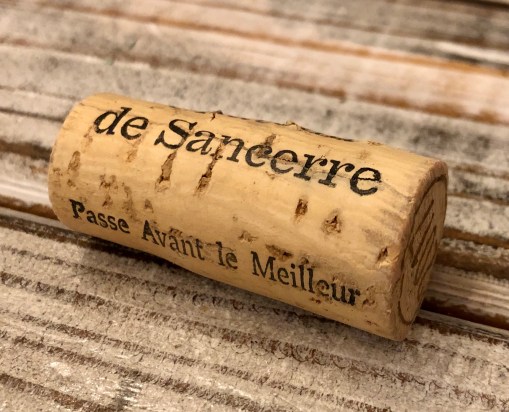
Cork Rating: 6.5/10 (Pretty boring cork, but I love the swag associated with the tagline “Pass before the best.” Badass.)
This particular bottling is 100% Sauvignon Blanc, as one might expect, and emerges a deeper lemon colour than I had anticipated given its utter lack of oak contact. Meyer lemon, salted lime (inching towards margarita), Fuzzy Peaches, Tums, rock dust and straw/dried grass sing a stately yet playful aromatic song…until you sip and the hammer comes down. The Sancerre Sancerre is bright and instantly alive on the palate but extraordinarily tart, like Sprite if you removed all of the sugar. Tonic water, (very) green apple, citrus peel, flint and a torrent of biting, punishing acid lead into a chalky, icy, mineral finish that oddly dries out the mouth as it scrubs it clean. An emphatic and almost angry wine, vociferously expressing its turf in defiance. Sorry for the IP jokes?
88- points


 cabernetdialectic (Raymond Lamontagne)
 Dan Steeves
 Peter Vetsch
 tylerderksen
 pop & pour