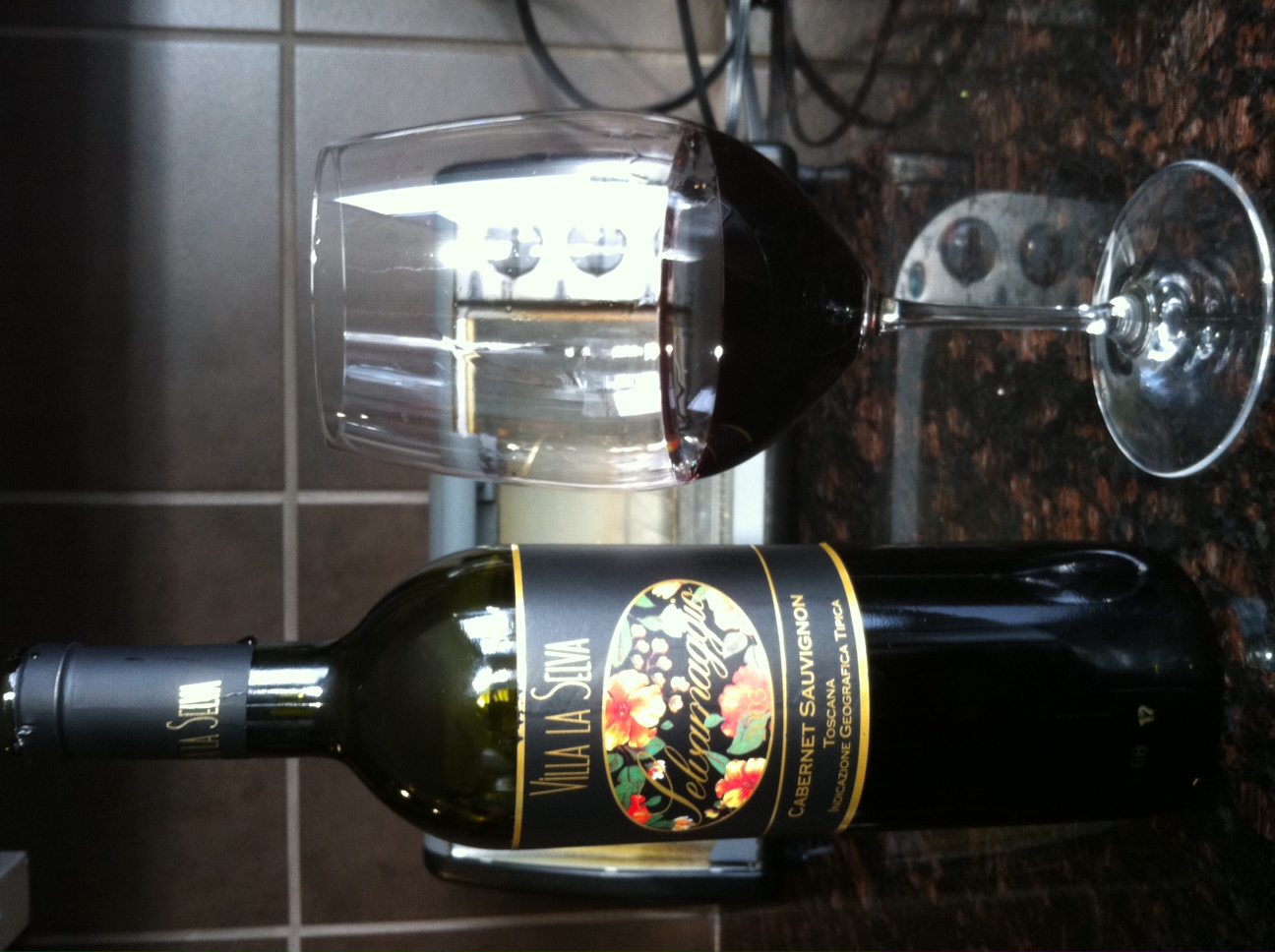
Wine Review: 2003 Villa La Selva Selvamaggio IGT

19 04 2011

Is that old woman or couch on the label?

In order to show Italy that I wasn’t mad at it for my corked Dolcetto last night, I stuck with the red, white and green again tonight, though I moved south to Tuscany, in the centre-west of the country (the upper shin of the boot).  The 2003 Selvamaggio, which I got from the good folks at Highlander Wine & Spirits (thanks Tim & Elliot!), is a Super Tuscan wine, a designation which I described in some detail in this post.   It is 100% Cabernet Sauvignon, which is a non-Italian varietal and thus automatically disqualifies the wine from obtaining the highest official status in the region, though that is by no means an indictment on the Selvamaggio’s underlying quality.  Since the word “Selva” appears in both the producer’s name and the wine’s name, I feel compelled to tell you that “Selva” means “woods” in Italian and refers to the forest growing around the vineyard area.  Now you know.

I shouldn’t ignore the obvious:  this might be the ugliest wine label of all time.  It either looks like an old woman’s sun dress or part of somebody’s sofa (my wife called it “snowbird wine”); either way, some marketing lessons are urgently required in Tuscany. Read the rest of this entry »


Wine Review: 2006 Domaine Les Pallieres Gigondas

10 04 2011

All the CNDP quality, half the price.

There hasn’t been a lot of French wine so far on PnP, not because I’m not a fan, but because I haven’t had a lot of it lately.  But tonight that all changes with authority, as this Gigondas put on quite a show at Sunday night dinner.  Gigondas is a wine region that’s a good bet for killer value wines:  it’s located in the Southern Rhone in the southeast corner of France, very near the much more famous Chateauneuf-de-Pape, and it makes wines that closely resemble those of its more exclusive neighbour.  It has a very similar climate (warm and Mediterranean) as CNDP and uses very similar grapes in its wines (in its reds, predominantly Grenache  with Syrah, Mourvedre and Cinsault the main others in the blend) as CNDP, but since it’s not called “Chateauneuf-de-Pape”, its wines (many of which rival CNDP in quality) are much, much cheaper.  Once you stop paying for the region name on the label, more of your buying dollar goes to pay for the quality of the wine itself.  Case in point:  this Gigondas was only slightly more expensive than this horrible train wreck of a CDNP, but was about a zillion times better made. Read the rest of this entry »


Wine Review: 2005 Woodward Canyon Merlot

7 04 2011

Ever watched a movie where only the first half hour was good?

I’ve been trying to drink a little more Merlot.  It’s one of the best known and most classic grape varietals in the world, and it’s responsible for some of the most famous, memorable and expensive wines out there, but compared to Cabernet Sauvignon and Syrah I drink relatively little of it, especially in unblended form.  When I found out that my new wine region man-crush, Washington State, was well known for its high-quality Merlots, I decided to dive in, and I scooped this 2005 Columbia Valley Merlot from an iconic Washington producer, Woodward Canyon.  It was on the pricier end of the wines I usually buy ($30-$40), but being from a pioneer of red wine in this area, I figured it was worth a shot. Read the rest of this entry »


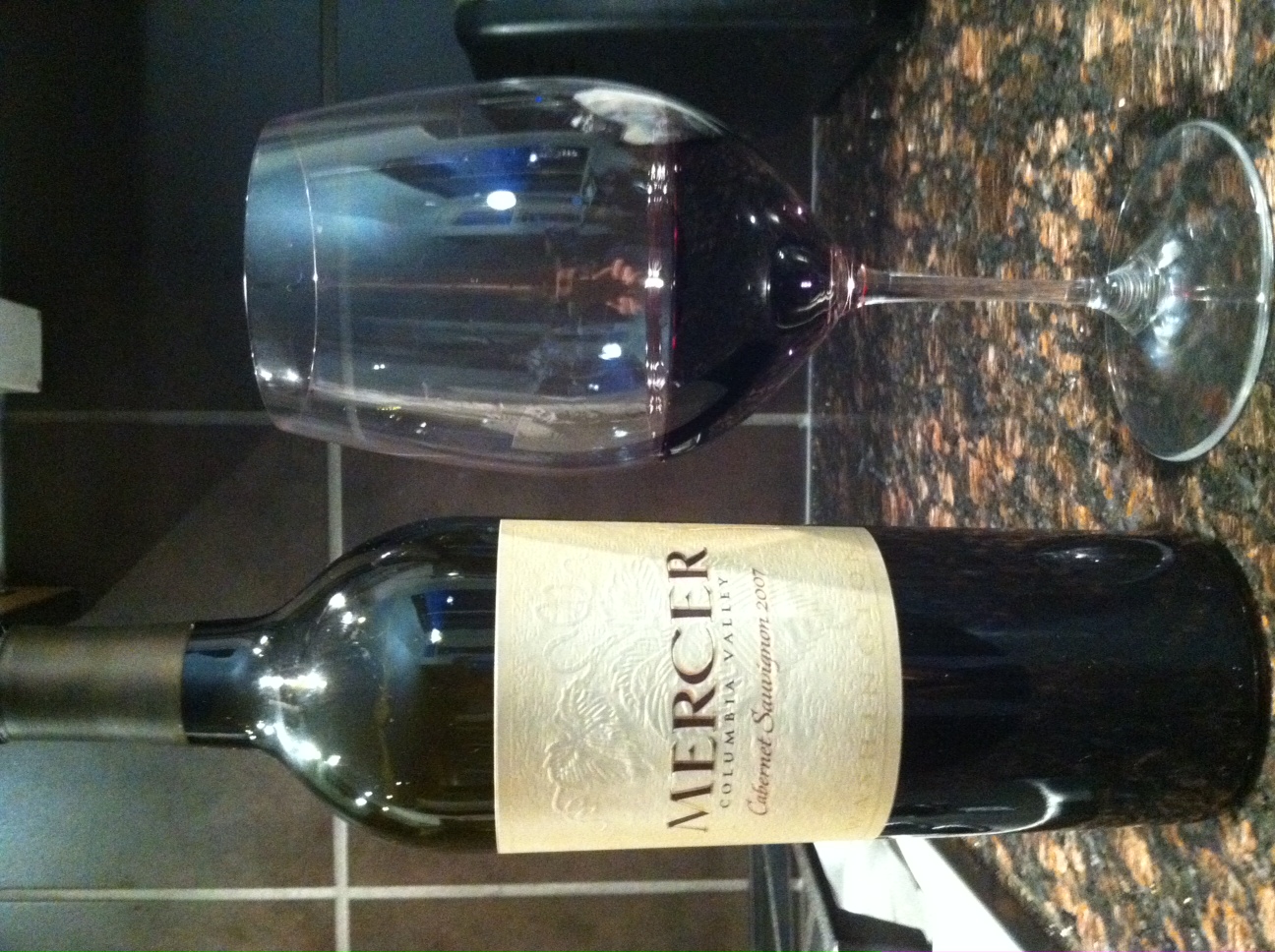
Wine Review: 2007 Mercer Columbia Valley Cabernet Sauvignon

30 03 2011

Beige label, non-beige wine.

Another day, another journey to what is rapidly becoming my favourite New World wine region, Washington State.  Today was one of those days where work was busy, I hit a traffic jam on the way home, the baby wouldn’t sleep, and I didn’t get to sit down to have dinner until almost 8:00; by that time, all I wanted with my meal was a welcoming, easygoing, easy-drinking (no more beer commercial adjectives, I swear) wine, a leather armchair by a fireplace in a glass.  That’s exactly what I got with this Mercer Cabernet. Read the rest of this entry »


Wine Review: 2007 Ramon Bilbao Edicion Limitada Crianza

29 03 2011

Give some love to Rioja. Ramon begs you.

Back in the saddle tonight with a wine from one of my favourite red regions in the world:  Rioja, Spain.  Rioja is located in north-central Spain and is unquestionably the most historically significant wine region in the country.  It is an open question whether it is still the most relevant Spanish wine area today, with other regions like Ribera del Duero (just southwest of Rioja) and Priorat (in the far east near Barcelona) getting more press and attention these days, but I’m always still drawn to Rioja, where both traditional and modern-styled wines are made.  The traditional reds of Rioja are a rarity in the 21st century wine world because they are held and aged by their producers in barrel and bottle until they are deemed ready to drink, which in some cases is decades after harvest; there aren’t too many other industries where a manufacturer of goods would hold onto their inventory (thereby depriving themselves of sales revenue and increasing storage and maintenance costs) until they thought it was just so, but that’s what Old World style Rioja is all about.  More modern examples from this region are aged for less time and are far fruitier and more suited to mass appeal, but they can be less interesting as a result.  This Ramon Bilbao Edicion Limitada is made from 100% Tempranillo (the primary red grape of Rioja) and exhibits both the positive and negative effects of the region’s modern school of winemaking:  it is more approachable and easy to enjoy with many different kinds of food (in my case, pulled pork, a match made in gastronomic heaven), but it is also less distinctive and loses some of its Spanish-ness because of its production style, which creates a flavour profile that could almost be from anywhere. Read the rest of this entry »


Tips & Tricks: Don’t Drink Your Reds Too Warm!

27 03 2011

This fridge wants to see your reds for a few minutes.

One of the most insidious falsehoods about wine that still gets passed around like fortune-cookie wisdom is that red wines should be served and drunk at room temperature.  If your “room temperature” is the thermostat reading inside a one-room stone cottage in the 1600s, you may be on to something, but otherwise you are doing your reds more harm than good if you follow this “standard” rule.  In my opinion (and that of every wine author whose book I’ve read), there is no dinner wine that shows best when served at 20-21 degrees Celsius (70-72 Fahrenheit)…and yet every time I go to a restaurant or a wine tasting and am presented with a glass of red, it tastes like it’s been stored in the furnace room or directly above the kitchen range (in a couple of places in town, it literally is!).  This, if you haven’t gathered already, is a huge pet peeve of mine. Read the rest of this entry »


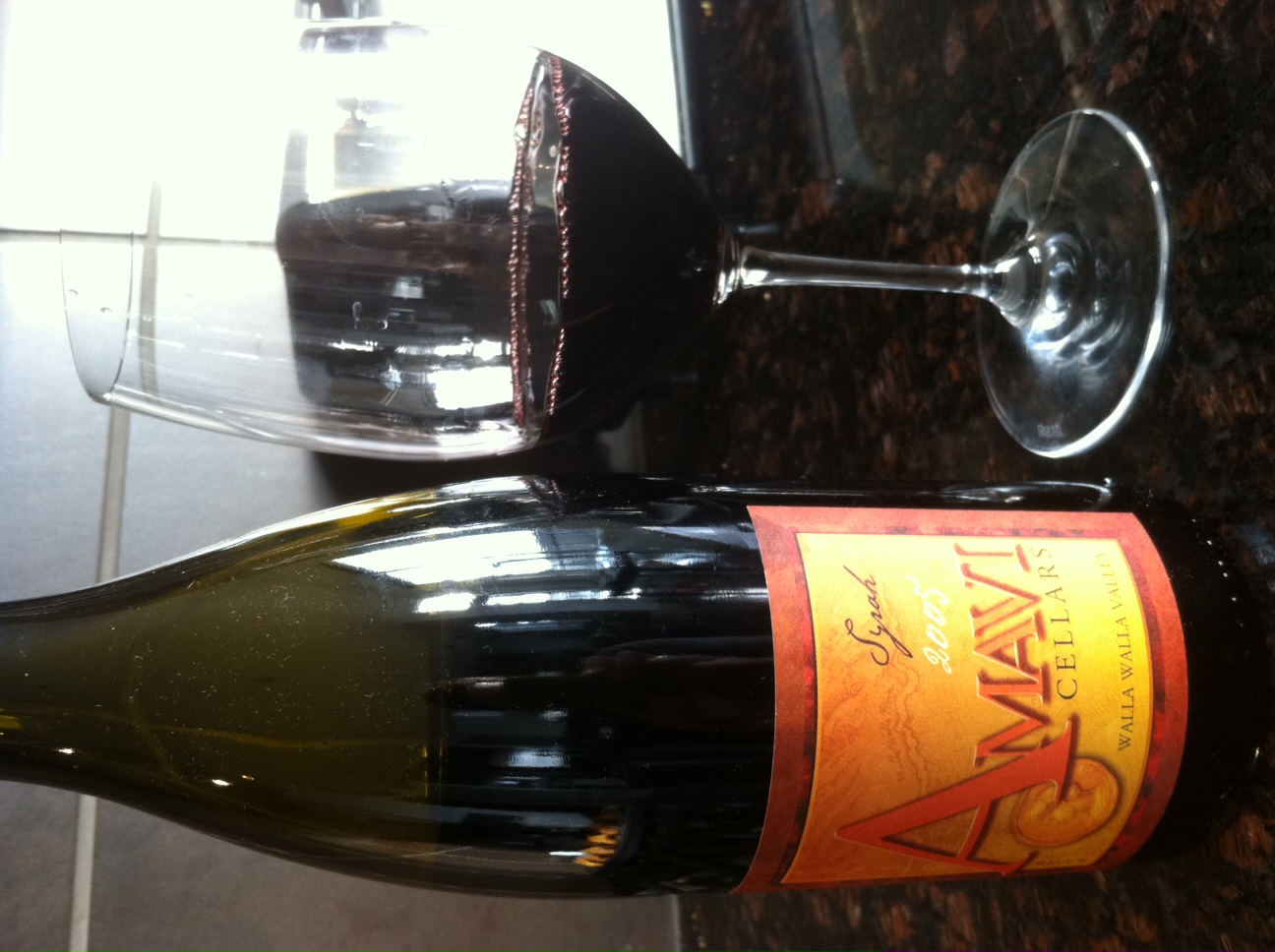
Wine Review: 2005 Amavi Cellars Syrah

17 03 2011

You had me at "Syrah".

This.  Wine.  Is.  AWESOME.

I promised a winner from Washington in my next review, and I have delivered and then some.  There are lots of good wines out there, but to me a great wine is one that keeps you coming back to the glass for each new sip or sniff wondering what you’re going to find next.  Great wines have depth, complexity and an interest factor, something compelling that latches onto you and won’t let go.  This wine is great. Read the rest of this entry »