Malbec World Day Challenge: Luigi Bosca Showdown

17 04 2015

[These bottles were provided as samples for review purposes.]

Malbec World Day Challenge contenders.

Malbec World Day Challenge contenders.

Happy Malbec World Day everyone!  If you weren’t previously aware, April 17th was declared an international day of Malbec celebration by the Wines of Argentina back in 2011 in commemoration of the date back in 1853 when the Argentine government submitted a bill to the legislature for the formation of a School of Agriculture and with the objective of boosting and diversifying the country’s wine industry.  The bill quickly became law and led directly to the introduction of the Malbec grape (among other French varietals) to Argentine soils by noted agronomist Michel Aime Pouget.  The rest, as they say, was history.  You might know Argentine Malbec as something of a recent trend, but it’s been a presence in the country for longer than Canada has existed as a nation, and one of the reasons it was well-positioned to take the world by storm in the 2000s was the wealth of remarkable wine infrastructure already present in Argentina, old-vine Malbec vineyards that had been planted a century earlier.  This is actually my second recent brush with a country feting its ex-French national varietal:  I helped Chile celebrate World Carmenere Day back in November.  If any other parts of South America have grape holidays they want broadcast (International Tannat Day, Uruguay?), I’m totally there. Read the rest of this entry »



Calgary Wine Life: Cakebread Tasting with Dennis Cakebread

15 04 2015

I have long held a soft spot for Cakebread Cellars wines, dating back to when my knowledge and interest in wine were in their infancy.  At the end of my articling year a decade ago, my co-workers and I were out at a nice dinner courteously paid for by our firm the night before we were to find out who would be hired back after articles.  There was suitably fancy wine to go with the upscale meal at our group’s aptly named Last Supper, but the only bottle I remember from that night came after dessert, when a couple wine-loving fellow students ordered a bottle of Cakebread Sauvignon Blanc to the table.  I know (now) that this isn’t Cakebread’s go-to grape or claim to fame, but it stopped me in my tracks.  I had never had a wine like it.  It was instantly memorable and made me understand how people could invest so much time, attention and money in the enjoyment of fine wine, which I have now spent the last ten years doing myself.  When I was in Napa a few years ago I made sure to stop by Cakebread (and have matching wine glasses at home to prove it), all because of that one bottle of Sauvignon Blanc.  So when I got invited a few weeks back to taste through a lineup of Cakebread’s wines with its VP and second-generation owner Dennis Cakebread, my wine life flashed in front of my eyes a little bit.  It was like coming full circle.

FullSizeRender-52

Read the rest of this entry »


Argentine Value Challenge: Punto Final

4 10 2014

[These bottles were provided as samples for review purposes.]

FullSizeRender_1

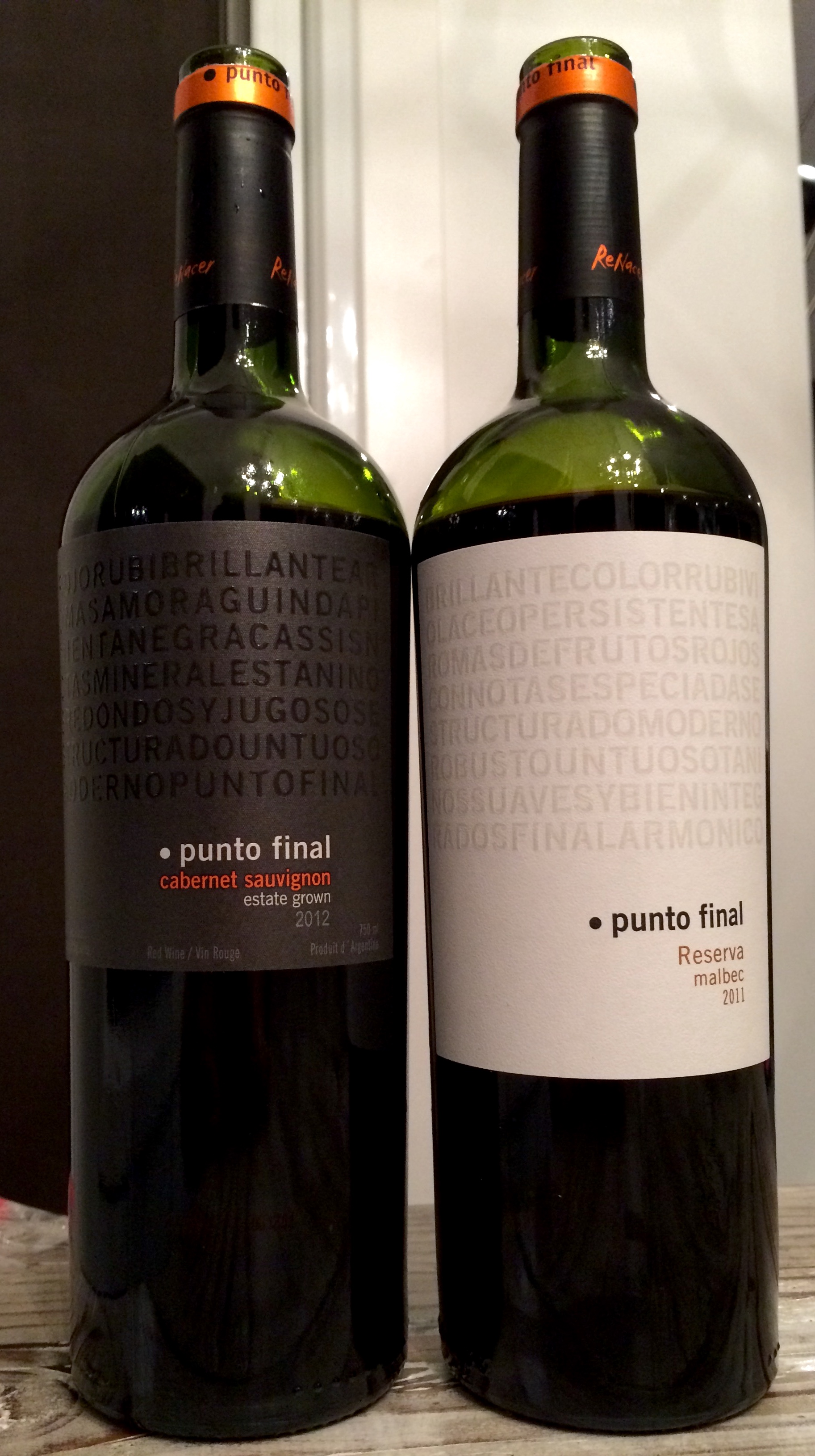
Look closely: Spanish tasting notes!

There’s a lingering question out there that will go a long way in determining the ultimate path of the nascent Argentinian wine industry:  what to go along with Malbec?  That particular Bordeaux transplant has become a global phenomenon up in the foothills of the Andes and the undisputed star of Argentina’s vinous revolution, but there are a number of grapes currently vying for the role of its trusty national sidekick.  For a while it seemed like there was a strong marketing push to obtain Malbec-like acceptance of Argentina’s most unique white, Torrontes; I recently read a Decanter tasting panel that argued forcefully that the country’s recent forays into Cabernet Franc were an absolute revelation and that this underappreciated varietal should assume the silver medal position among Argentinian producers, although the less exciting Bonarda currently occupies that slot in terms of vineyard acres planted.  And of course, there’s always Cabernet Sauvignon, the international behemoth, promising instant recognition and easy sales for anywhere warm enough for it to grow.  In my experience, if an Argentine wine is on the shelves here and it isn’t Malbec, it’s usually Cab.  And while the wine geek in me would love to see Franc seize the day, the realist in me knows that Sauvignon will be pretty tough to displace. Read the rest of this entry »


Calgary Wine Life: Torres Mas La Plana 40th Anniversary Tasting

16 07 2014

photo 4For the CEO of a global wine empire, Miguel Torres Maczassek is a pretty chill guy.  Soft-spoken yet jovial, the 5th-generation head of one of the wine world’s largest family businesses initially comes across as unassuming, but his passion for his multitude of intercontinental wine projects and his pride in the Torres family legacy shines through whenever he speaks.  Torres (the estate) has vineyards and properties across all of the major wine regions of Spain and many other countries, and Torres (the man) recently spent 3 years living in Chile running the family’s operations there, making connections with local growers and taking steps to preserve and revive some of the country’s oldest known varietals.  He was in Calgary recently to help celebrate the 40th anniversary of Torres’ flagship red, Mas La Plana, which I have had and enjoyed many times before and which is one of those rare premium wines that can still be found locally at a fairly reasonable ($50ish) price point.  We had the opportunity to track the evolution of this wine through four different decades, from the 1980s to the 2010s, and to witness firsthand the steps taken to fully realize the family’s vision for its top bottling. Read the rest of this entry »


Longview Showdown: 2010 Devils Elbow Cabernet Sauvignon vs. 2010 Yakka Shiraz

18 03 2014

[These bottles were provided as samples for review purposes.]

Cab. Shiraz. The ultimate battle.

Cab. Shiraz. The ultimate battle.

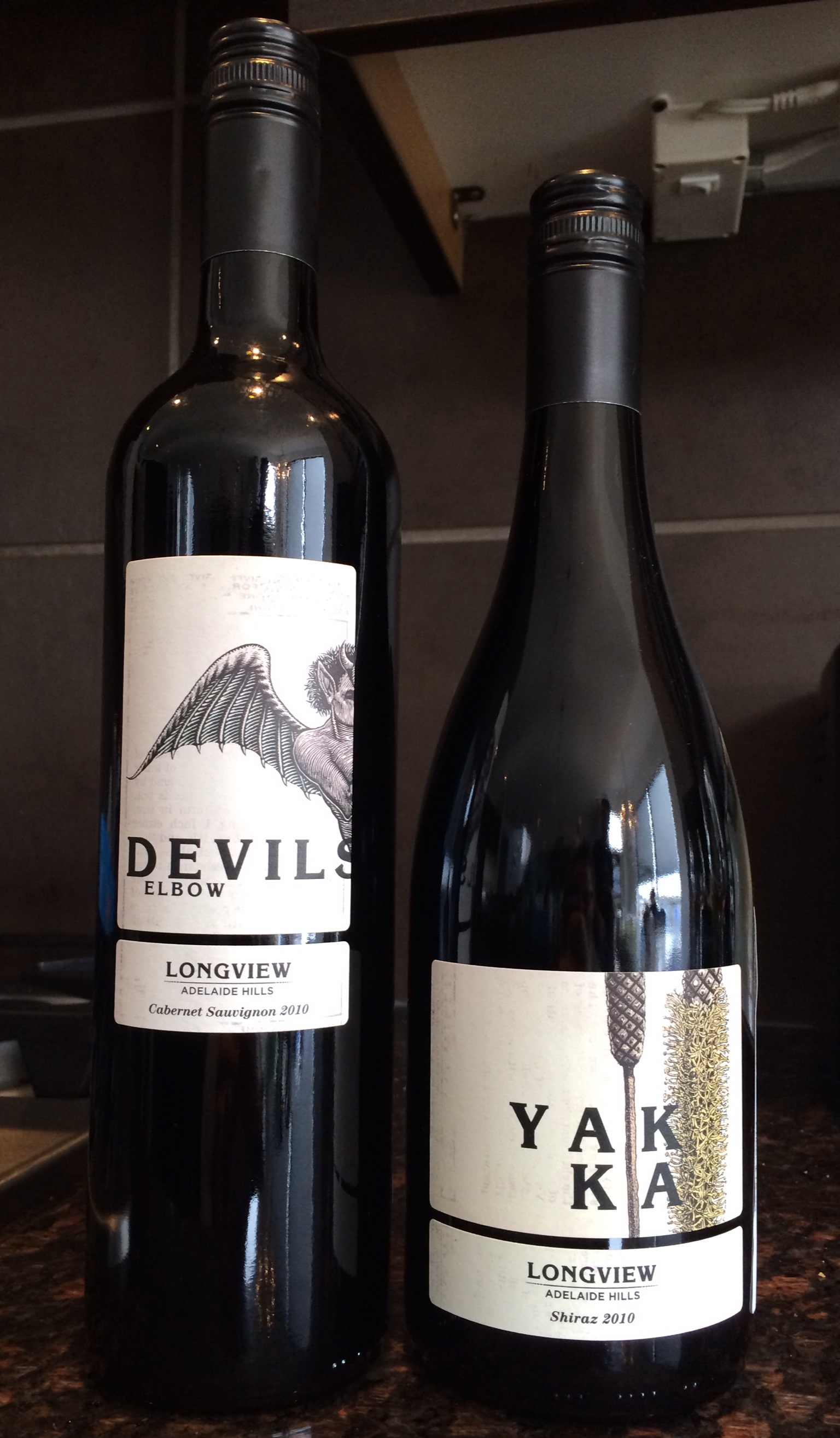
This is the kind of tasting opportunity that wine geeks drool over:  two bottles from the same producer (Longview), same region (Adelaide Hills in Australia), same vintage (2010) and same single vineyard (the aptly named Longview Vineyard), made using the same winemaking techniques (fermentation on skins, 18-20 months aging in French oak), differing only by their grape variety, Cab vs. Shiraz.  The Devils Elbow Cabernet Sauvignon was named after a treacherous hairpin turn in the windy road leading up the hills into Longview Vineyard; the Yakka Shiraz was named after a spiny prehistoric-looking plant that grows in it.  Both red offerings epitomize the New Australia now being unveiled to the wine world:  many recent efforts from Down Under try to sell themselves as a counterpoint to the stereotypical blowsy Aussie fruit bombs of years past, but these wines from Longview take that philosophy absolutely to the hilt, offering up balanced, restrained, nuanced flavours and a take on each grape that is dripping with Old World influence.  The similarities between the two reds are plentiful, but when poured side by side, the differences slowly emerge. Read the rest of this entry »


Wine Review: 2008 Canepa Finisimo Gran Reserva Cabernet Sauvignon

21 11 2012

[This bottle was provided as a sample for review purposes.]

Call me strange, but I would like to see more wines with orange labels. Snazzy.

I don’t think a bottle from Chile has graced this site since late February, so I’m overdue to show South America some love.  This particular bottle’s major claim to fame is that one of its prior vintages was named the 5th best wine in the 1979 Wine Olympics held in France.  Winding up in 5th usually isn’t that memorable (I tried to do a Google search for “famous fifth place finishes” to see if I could come up with an exception to that rule, but the pickings were slim), but in this case it was a national breakthrough of sorts:  the top four wines in the Finisimo’s category were French, making this Cab the top New World wine of the bunch and helping cement Chile’s status as a serious producer of Cabernet Sauvignon.  Back in the late ’70s the words “quality Chilean wine” were almost certainly thought of as an oxymoron; fast forward 30-odd years and the country is now a veritable wine power with a strong reputation for producing solid, flavourful bottles at bargain prices.  Canepa’s website suggests that Finisimo’s near-podium Olympic finish positioned it as Chile’s first premium wine, but these days it is more of a mid-range bottling (Canepa’s Magnificvm is its current top Cab, allowing Finisimo to settle in at an everyday-enjoyment price range). Read the rest of this entry »


Wine Review: 2009 Jim Barry “Cover Drive” Cabernet Sauvignon

18 06 2012

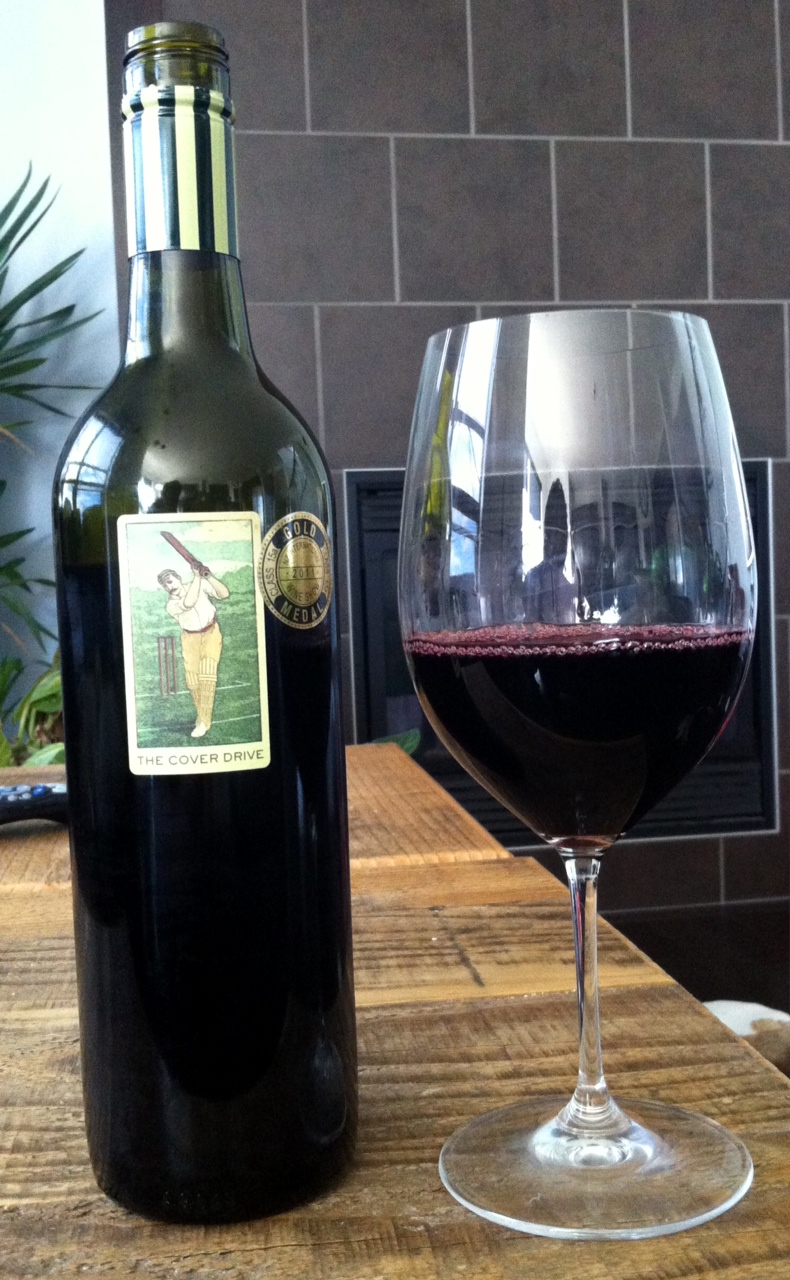
The second vintage of Cover Drive featured on PnP…let’s see how they stack up against each other.

I went to the Costco liquor store this week, and as always when I walk into Costco, I walked out with a bottle of the Jim Barry “Cover Drive” Cab from South Australia, one of my favourite New World value wines.  When I first grabbed the bottle, I thought it was the same wine that I had previously reviewed back in November, but on closer inspection it was in fact a brand new vintage of Cover Drive, the 2009 (my reviewed bottle was the 2008).  This provided a golden opportunity to examine a question that I’m sure many casual wine drinkers ask themselves:  how much does vintage impact the flavour and quality of a wine?  Is there really a discernible difference between the 2008 and 2009 bottlings of a wine made from the same grapes grown in the same spots?  Most inexpensive wines are made to reflect a consistent flavour profile and style year over year, but my bet was that a quality producer like Jim Barry wouldn’t try to make his ’09 Cover Drive a clone of his ’08 and would retain some of the vintage variation arising out of the changes in weather patterns, sunlight, temperature, harvest dates and more between the two years.  To find out, I wrote up tasting notes for the 2009 CD without re-reading my 2008 review, and now I’m going to retro-compare the two bottles by lining up my 08 notes side by side with my impressions of the 09.  Hopefully this actually proves interesting.  Here goes! Read the rest of this entry »


Wine Review: 2007 Freemark Abbey Cabernet Sauvignon

28 11 2011

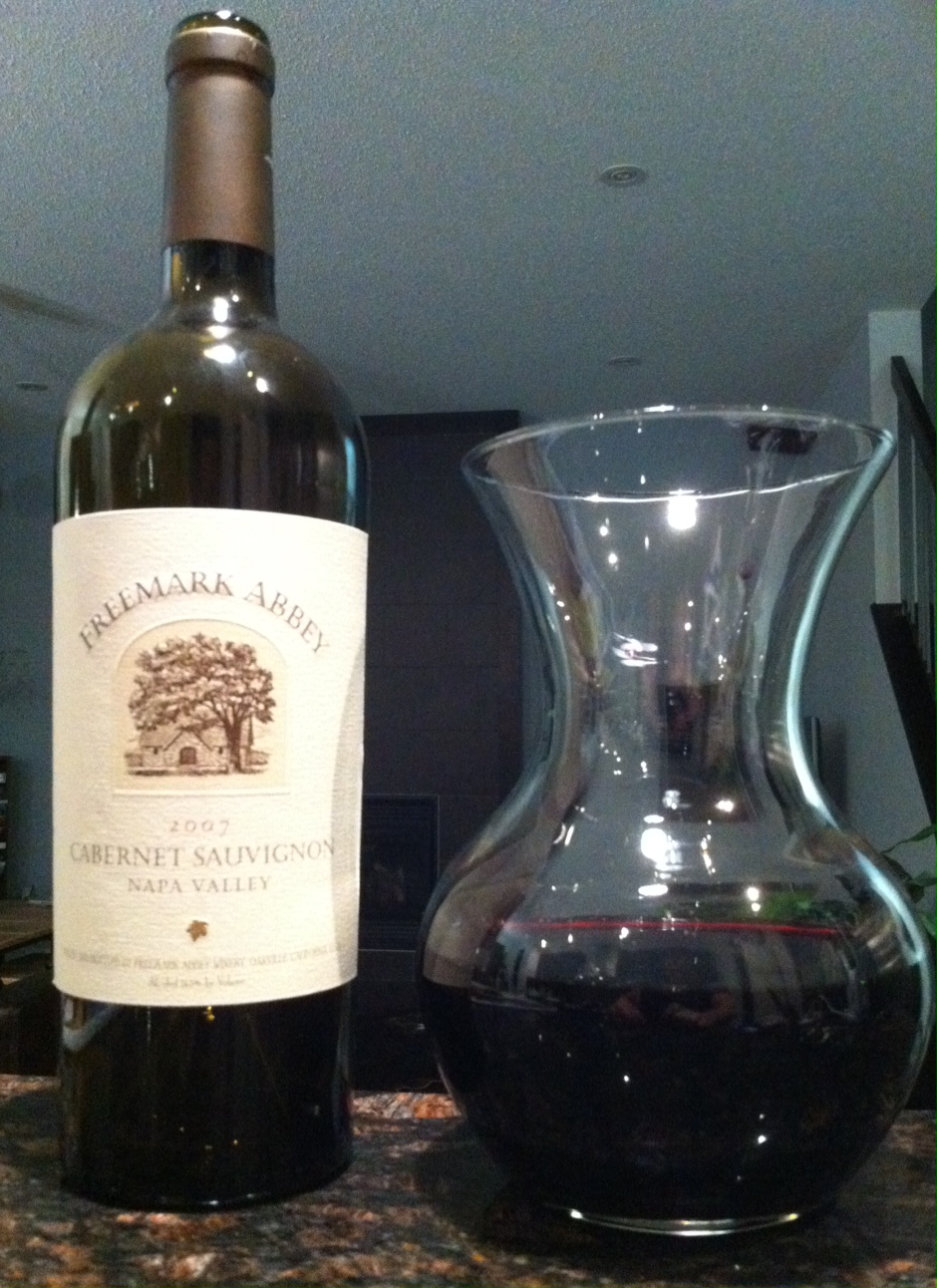
Can a flower vase be an appropriate decanter? I say yes.

If the name of this wine sounds familiar, it should:  the ’07 Freemark Abbey Cab from the Napa Valley was my ultimate victor in the modern-day Judgment of Paris blind tasting I took part in at Co-op Wine & Spirits a month ago.  Matched up against 9 other top Cabernets including a couple of First Growth Bordeaux (2002 Chateau Haut Brion and 2007 Chateau Mouton Rothschild) and some iconic Napa Cabs (2007 Ridge Monte Bello and 2002 Heitz “Martha’s Vineyard”), by far the cheapest wine of the bunch (average bottle price of the 10 reds:  $277), this $47 little wine that could knocked both my tasting companion and I over and emerged the clear cut JoP winner for each of us.  As soon as the identities of the various wines were unveiled, I knew I had to get my hands on some — a reaction that probably would have been more subdued had the $928 Mouton Rothschild taken the title.  Thankfully for me (and all of you), the Freemark Abbey Cab is currently on sale at Highlander Wine & Spirits for just over $40, which is absolute robbery for a bottle of this quality from a premium region.  If you’re a Cali Cabernet fan, or if you’re not yet done your Christmas shopping, this is your winner.  Thank me later.

Read the rest of this entry »


Wine Review: 2008 Mercer Dead Canyon Ranch Cabernet Sauvignon

21 11 2011

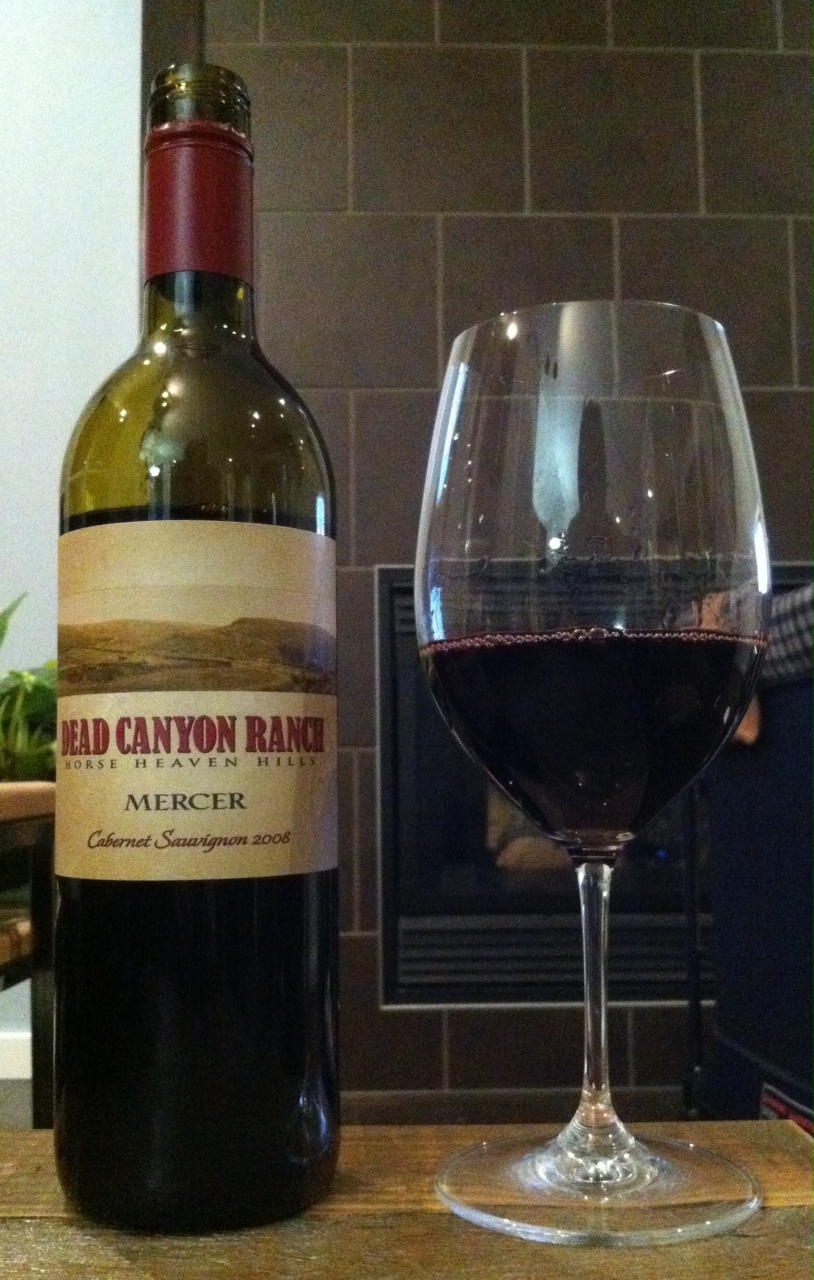
Decidedly ghetto label, questionable colour scheme, killer wine.

Time to enshrine another bottle in the pantheon of Killer Value Wines and expand the already-sizeable place in my heart for Washington State, because cheap Cabernet normally doesn’t taste like this.  The Dead Canyon Ranch from Mercer Estates winery vastly outperforms its price point ($20ish CDN) and screams “house wine” to any self-respecting Cab fan.  This was sadly my last of several bottles purchased from Highlander Wine & Spirits, who (I believe) have an exclusive on Mercer’s lineup of wines in the city; I have previously written about Mercer’s Merlot on this site, but in my opinion at least, the Dead Canyon Ranch is an even better wine at half the price.

This wine gets its eye-catching name from the place from which its grapes are sourced, the Dead Canyon Ranch vineyard in the awesomely-named Horse Heaven Hills AVA (American Viticultural Area), located alongside the Columbia River on central Washington’s southern border.  Washington State is divided vertically in two by the Cascade Mountain Range, and the climate of the area varies substantially depending on which side you fall.  If you’re in the western half of the state bordering the Pacific Ocean, it’s grey, wet and rainy enough for fictional tween-adored vampires to call it home, whereas if you’re on the eastern half the state, in the rain shadow of the Mountains, it’s a hot and arid (and presumably vampire-free) desert zone.  The wines that have been growing Washington’s vinous legend over the past few years (including SEVEN of them in the top 50 of Wine Spectator’s just-released top 100 wines of 2011) come from the eastern half, which is where Horse Heaven Hills and Mercer Estates can be found.  While the desert heat and sun make it possible for red wine grapes to reach full ripeness even this far north, the notably cool nights help to retain acids and preserve fresh flavours, which is the kind of built-in balance you look for in a top wine region.

Read the rest of this entry »


Wine Review: 2008 Jim Barry “Cover Drive” Cabernet Sauvignon

2 11 2011

Oh right, did I mention this wine is cricket-themed? All the more reason to Costco it up.

Long time no speak!  I was shocked and appalled to discover that it’s been almost a full week since my last PnP post, but rest assured that I have not been wine-slacking:  after 17 hours spent in classroom for the WSET Advanced last weekend, I’ve been spending my weeknight evenings preparing for my exam next weekend by re-reading my textbook (which we were told we should do 4 times in the next 2 weeks.  The book is 300 pages long.).  The whole experience to date has been both more intense and more rewarding than the Intermediate course that I took in the summer; I walked in Saturday morning feeling intimidated and out of place and left on Sunday feeling like I actually belonged in the class, which was gratifying.  I also thanked my lucky stars for 8 months of doing Pop & Pour reviews, because we had to sample, evaluate and identify FORTY wines blind in two days using the WSET’s copyrighted Systematic Approach to Tasting, designed to allow someone to create a quick, consistent, (mostly) objective analysis of the main components of a wine and use that to formulate an opinion on the wine’s price, quality level and identity.  It’s fun for the first few times, but increasingly taxing as you hit wines #18 and 19 of the day.  To give you a sense of the WSET tasting method in action, I thought I would write up tonight’s wine using their proprietary method…just to ensure that I don’t get sued, let me clarify again that I did NOT invent this approach and am a mere student and user of the WSET’s brilliant taxonomy.

Read the rest of this entry »


Calgary Wine Life: Co-op Wine & Spirits Judgment of Paris Tasting, Part 2

24 10 2011

The official checklist of what was poured, for the low low total retail price of $3800.

If you missed the excitement of the white wine portion of Co-op’s Judgment of Paris re-enactment, or me harshly slagging a $300 bottle of Grand Cru Burgundy, click here for Part 1 of this post.  While you had a whole day to absorb the notes and results from the white flight before moving onto the reds, we had about 15 minutes, which was spent running to McDonalds and powering down cheeseburgers and Quarter Pounders (note to wine retailers:  if you’re conducting a 5 hour tasting featuring 20 wines, don’t wait until the end of the tasting to serve food).   Then it was time for the main event.  Generally speaking, I think white wines are tragically underappreciated as compared to reds and shouldn’t be automatically classified as a vinous undercard; that said, some of the J of P red wines are among the most famous on Earth and were clearly the star attractions of this show.  I was particularly excited for the opportunity to try two of the five First Growth Bordeaux — Chateau Mouton-Rothschild and Chateau Haut Brion (combined bottle price for both:  $1500), which, at least from a reputation/prestige/marketing standpoint, constitute the creme de la creme of the wine world.

Read the rest of this entry »


Tips & Tricks: Pairing Wine With Chocolate, Part 1

2 10 2011

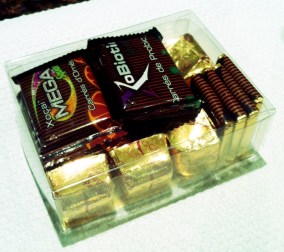
How you know you’ve made it as an amateur blogger:  when somebody sends you free chocolate.  Me, as of this week?  Made it.

The (few) perks of writing a free blog.

One of this site’s dozens (OK, dozen) of loyal subscribers is Victoria Kaye, an Ontario-based marketing guru, freelance writer and distributor of the Xocai lineup of chocolate products.  Victoria is a blogger in her own right, regularly churning out insightful posts about her unique choco-wares at her site XoXoXocai.  I took particular notice of this site not only because it shares a platform affiliation with PnP (holla WordPress!) but also because it so happens that Victoria and I started up our respective blogs within a week of each other at the start of March 2011…as I’m continually reminded, it’s a small world full of strange coincidences.  Victoria actually first stumbled across Xocai chocolates as a guest at a wine tasting, and since then has been wanting to delve further into the intricacies of pairing wine with chocolate; the chocolate package I received was conditional on my attempting to respond to this very issue.  Well, chocolate received and mission accepted!

Wine and chocolate is a pairing that seems to have been universally sold as a match made in heaven (if Hallmark cards, romantic getaway packages and any Valentine’s Day episode of any TV show in history are effective barometers of these kinds of things).  In reality, however, I have a hard time envisioning there will be even a handful of wine styles that will truly form a mutually-enhancing match with most types of chocolate.  Even before I started looking into this in detail, I thought that chocolate had two key characteristics that would severely restrict the number of wines that would taste good with it:  it’s sweet and it’s distinctive.  Dry wines generally don’t match up well with sweeter foods, and foods with individual and assertive flavours automatically narrow their pairing options because they’re incapable of simply being a blank canvas that can be fleshed out by multiple different wine choices.  There are assuredly some truly symbiotic wine matches for chocolate out there, but my guess is that they’re few and far between.  Of course, that’s not going to stop me from trying to find them.  The goal of this post is to narrow down what to look for in a potential chocolate pairing, after which I’ll go buy a few likely candidates, recruit some willing volunteers, then take a bullet for all of my dear readers by eating a lot of chocolate and drinking a lot of wine to find out what tastes good with what.  The results of my strictly-for-science tasting night will be posted shortly after its completion (i.e. as soon as I come out of the sugar coma). Read the rest of this entry »


Wine Review: Cameron Hughes Lot 136 Cabernet Sauvignon (2007)

25 09 2011

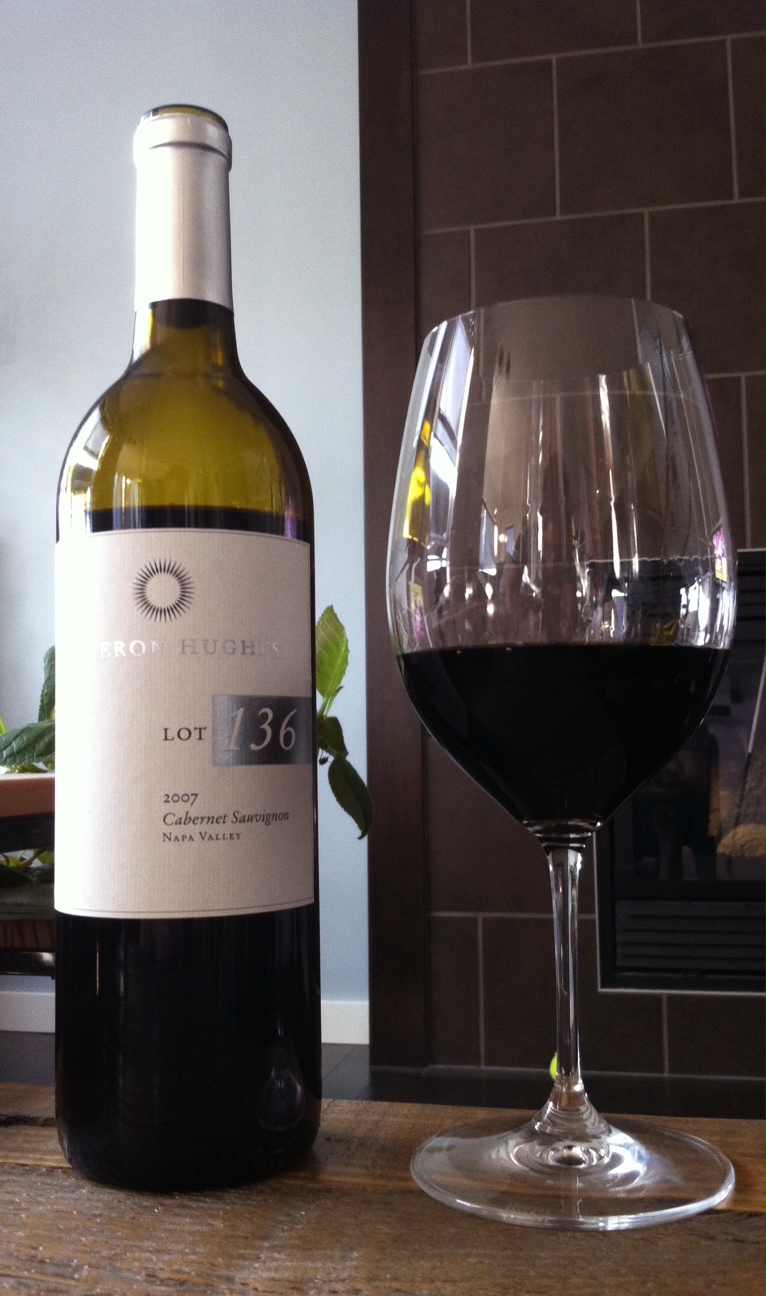
Could've been a contender.

This is the second time that a Cameron Hughes wine has graced the electronic pages of this blog, and since the first time was a review of one of my all-time favourite value wines, I had both high hopes and high expectations going into this review.  If you don’t know the story about Cameron Hughes and how they source and create wines, it’s covered in some detail here; the Reader’s Digest version is that CH doesn’t grow any of its own grapes but instead buys either grapes, juice, finished wine or fully-bottled wine, usually from established wineries selling excess inventory, and repackages it under its own label at substantially discounted prices.  That’s how it should work, anyway…the price equation gets skewed somewhat once the wine leaves CH’s American home market.  On the Cameron Hughes website, this particular wine is described as being for sale at the CH online store for $15US.  It was also available at Costco in the US at a similar price point.  I bought this bottle last year from Aspen Wine & Spirits in Calgary for $33CDN — 2.2 times the price.  I feel like NAFTA should have something to say about this. Read the rest of this entry »


Wine Review: 2006 Inniskillin Cabernet Sauvignon

5 08 2011

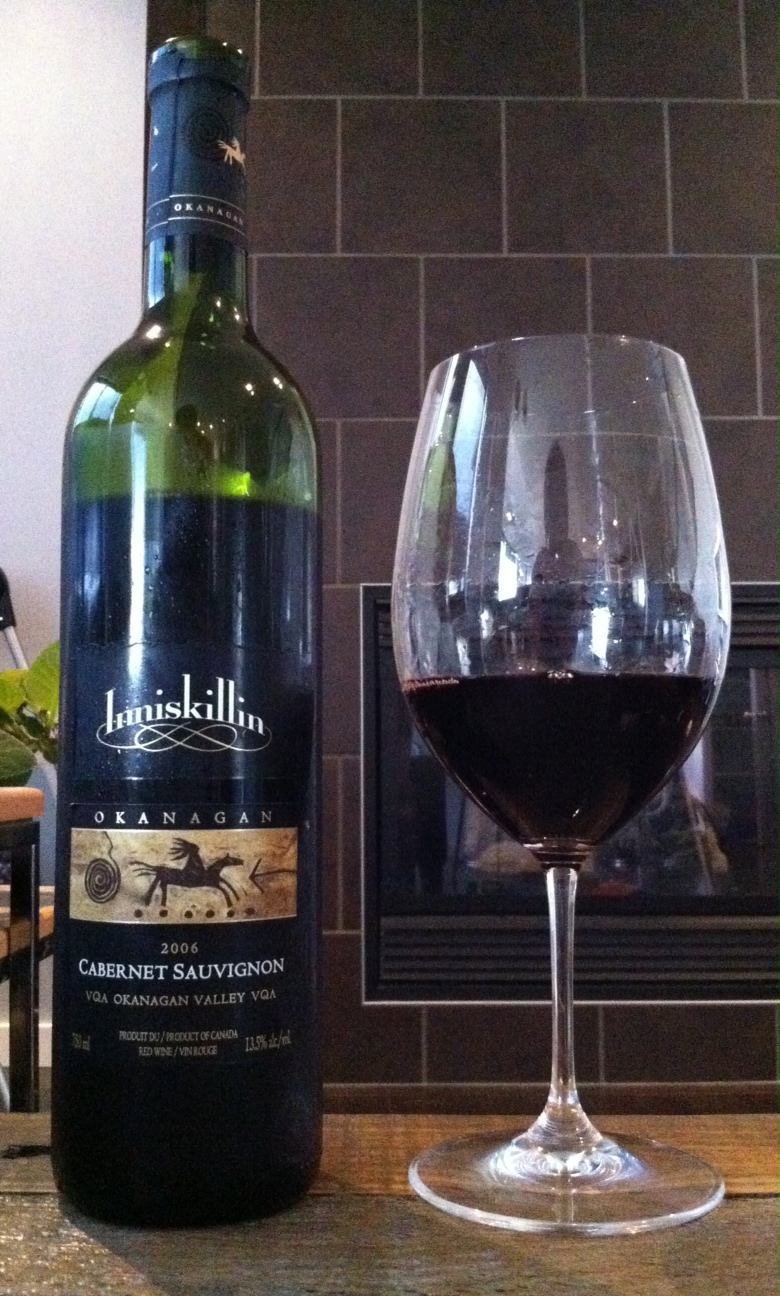
$15 Canadian Cab...don't get me started.

Oh, Canada…I had been starting to feel a glimmer of optimism about red wines from my home and native land after positive recent experiences with producers like Laughing Stock (Okanagan) and Tawse (Niagara), but just as I began to forget why Canadian reds have until recently been an endless source of frustration for me, tonight happened.  My consternation isn’t that these wines are terrible (though some are); it’s that too much of the wine industry here seems locked in to grapes and wines that we are hard pressed to make better than many other regions around the world.  Cabernet Sauvignon is a case in point.  Why take one of the most heat-loving, slow-ripening, warm-weather grapes out there and try to specialize in making single-varietal wines out of it north of the 49th parallel?  Why especially would you try to target the sub-$20 price range with your Cabs when better-situated producers with hotter weather and cheaper land from Chile, Argentina, Australia and California basically have that market covered?  Where is the global competitive advantage in that approach?  We need a new business plan. Read the rest of this entry »


Wine Review: 2009 Owen Roe Abbot’s Table

7 06 2011

Great label, insane blend, great wine.

From delicate Old World white to bold New World red in the span of a day!  This wine gives new meaning to the term “red blend”: it’s comprised of (wait for it) 25% Zinfandel, 20% Sangiovese, 20% Cabernet Sauvignon, 13% Grenache, 10% Syrah, 7% Blaufrankisch, 2% Cabernet Franc, 2% Malbec and 1% Merlot.  I feel like that should add up to 250%…I can buy into the use of the first 5 grapes, but I think the last 4 are just for showing off.  Unsurprisingly, this info is left off the label, as it must prove abjectly terrifying to most consumers (including me).  The precise blend for the Abbot’s Table changes every year, and with this many grapes involved, the focus of the producer must be to create a wine that’s of a similar style and flavour profile every year rather than one that’s reflective of one or two particular varietals.  And I have to say, even if it takes nine different grapes from disparate world wine regions to make it happen, the end result is quite worthwhile. Read the rest of this entry »