Bricks Wine Advent Calendar 2018: Day 4

4 12 2018

By Peter Vetsch

Well, Ray got his blast from Wine Advent past yesterday, continuing his baffling streak of Austrian dominance (which I believe is now at FOUR Austrian calendar wines in a row, somehow).  Mine came today.  Last year, I was a fresh-faced Wine Advent newbie on December 4, 2017 when I pulled a Manoir du Carra Cru Beaujolais from the Bricks calendar.  Tonight, on December 4, 2018, I unwrapped my designated Advent bottle to find…a Manoir du Carra Cru Beaujolais.  I quickly checked my calendar to ensure I had the right year.
IMG_9360

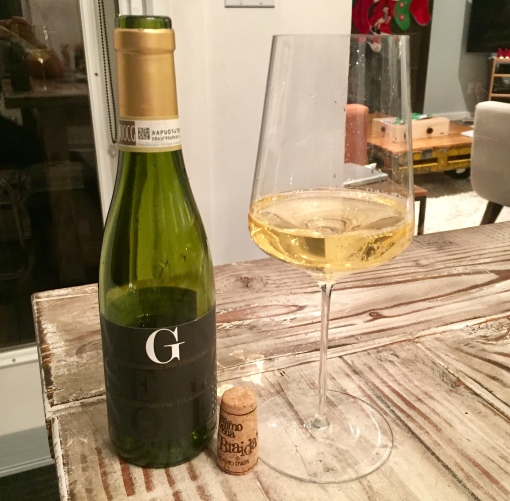
To be clear, it’s a different Manoir du Carra Cru Beaujolais this time around.  This producer is on its fifth generation of family ownership and has accumulated 34 hectares of vineyard land in an astonishing FIFTY different plots scattered throughout Beaujolais. Last year’s wine was from one of the better-known of the 10 Beaujolais Cru subzones, Fleurie; tonight’s option is from the larger but lesser-known (or at least less visible on shelves here) Brouilly, the biggest and southernmost of the Crus which by itself comprises 20% of the Cru vineyard land in the region.  Brouilly is so named for a massive volcanic hill at the heart of the area, Mont Brouilly, which is itself named for Brulius, a lieutenant in the Roman legion who apparently liked naming volcanoes after himself.  This particular wine comes from the Combiaty lieu-dit (or small plot/area bearing a traditional wine) in the village of St. Etienne le Varenne, located in the south of Brouilly and known best for its dry, nutrient-poor pink granite soils.

IMG_9363

I have a strange relationship with Manoir du Carra, in that I have had their wines on at least a dozen different occasions, but NEVER yet in a full-sized bottle — I’ve had a few splits, a number of glass pours, and a strange but incredible 500 mL bottle (which is a remarkably effective size for a bottle of wine and should be produced in greater quantities).  I assume they actually make normal bottles but cannot confirm.  The Terre de Combiaty comes from Gamay vines that average 50 years of age which are hand-harvested (like everything in the Manoir du Carra portfolio), treated with minimal intervention in the cellar and fermented using semi-carbonic maceration, where the intracellular fermentation processes within the individual grape berries from the carbonic maceration process are joined with simultaneous normal alcoholic fermentation from the crushed berries at the bottom of the fermentation tank, resulting in more colour and tannin than pure carbonic maceration and a scaled-back version of the bubble-gummy carbonic flavour set.
IMG_7088

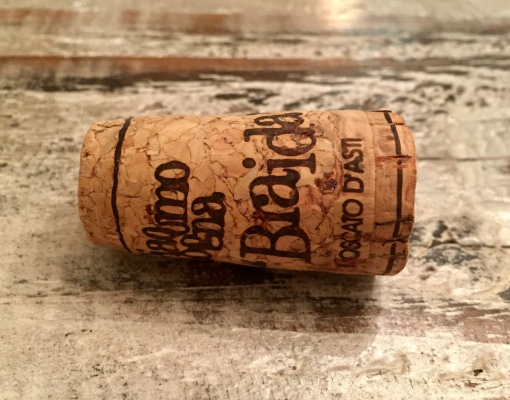
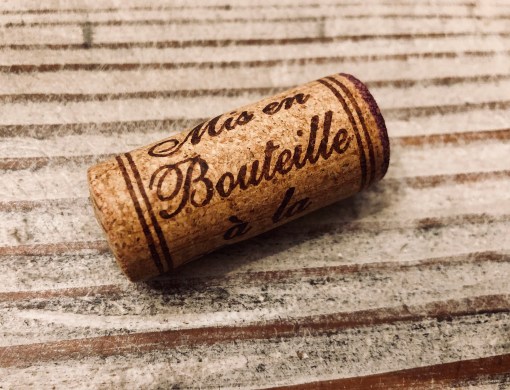
Cork Rating:  1.5/10 (Further deduction from last year’s edition for not changing the nondescript “Mis en Bouteille” nonsense after being blog-warned.)

This sort-of carbonic Brouilly is a sharp purple colour in the glass but thins quite markedly at the rim.  It is initially much darker than expected aromatically, date and slate and dirt emerging first, with black cherry and chalk peeking through underneath.  Over time, a Banana Runts (with banana leaf?) top note emerges, a nod to its carbonic half, as well as the more anticipated raspberry-rooted Gamay sense of joy.  Fresher and plummier on the palate, the wine showcases its clean, squeaky tannins almost immediately, and fairly laissez-faire acidity results in this Gamay seeming more broad and expansive than its standard varietal signature, albeit while retaining a feathery, wispy sort of texture.  The mineral streak noticeable on first smell lasts throughout, iron and rock dust and magnets, but red fruit blooms as you go along to keep anything from seeming severe.  Bricks, I’d say you are 4 for 4.

88 points


Bricks Wine Advent Calendar 2018: Day 2

2 12 2018

By Peter Vetsch

Day 2.  The spirit is still strong, the Advent joy still coursing through my veins, and now the Christmas decor is up and running in my household, so we are officially in the season.  I’m not sure what I was expecting when peeling back the wrapping paper on the sophomore bottle of this calendar, but Cru Bourgeois Bourdeaux wasn’t it.  This could bode well.  Let’s find out.

IMG_9349

Chateau Caronne Ste. Gemme was THIS close to the big time.  As far as global wine locales go, it is quite nicely situated in Bordeaux’s esteemed Haut-Medoc region, but through a misfortune of cartography it fell a scant 500 metres from where they drew the border for the much more esteemed sub-zone of St. Julien, home of legendary classed-growths Leoville-Las Cases, Ducru-Beaucaillou, Leoville-Barton, Gruaud-Larose, Langoa-Barton and other pricy hyphenated estates.  Its vineyards are actually right beside Gruaud-Larose’s, but on the other side of the appellation tracks and thus on the outside looking in of the 1855 Classification and Bordeaux’s power hierarchy.

IMG_9351

That said, it’s not the legendary estates where the bargains are found; it’s their neighbours.  Caronne Ste. Gemme has been owned by the same family since 1900, but in the last 25 years the current generation of owners has overseen a quality explosion thanks in part to a renewed focus on their 45 hectares of Gruaud-adjacent estate vineyards, planted on a mound of Cabernet Sauvignon-friendly gravel over sandstone.  The wines are fittingly largely Cab (60%), rounded out by Merlot (34%) and Petit Verdot (6%) and see around a year in barrique (20-25% new barrel) and further time in bottle before release.

IMG_1455

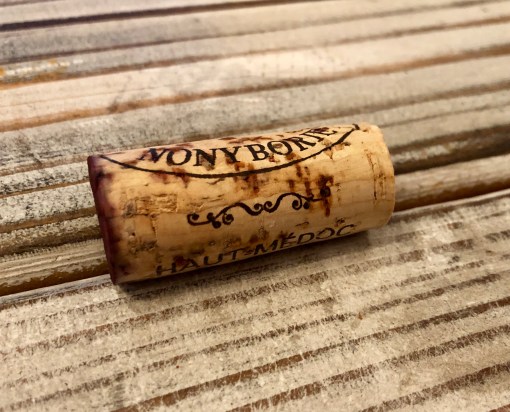
Cork Rating:  3/10 (Better idea: put the CHATEAU name on the cork, not the proprietor’s name.)

This is SUCH a textbook, classic Bordeaux.  The 2014 Ste. Gemme is a deep thick ruby-purple colour and smells as though it’s just starting to trace the contours of its aging curve:  blackberry and blackcurrant fruit, tomato leaf, juniper, new pennies (back when those were a thing), pink erasers, campfire embers and topsoil.  An interesting beam of supporting raspberry red joins the chorus once the wine hits the tongue, joined by pipe tobacco, cedar shavings, moss and leather, surrounded by still-scratchy tannins that frame rather than block the flavour symphony.  This is a wine that could simply be nothing else.  It is a dream tasting wine, because it purely and accurately displays exactly what it is without overdoing it; varietal and regional typicity squared.  The Bordeaux that I own I’m trying to age, so I haven’t cracked a bottle of youthful Bordeaux in some time.  This makes the argument that I should, while simultaneously making me mull over what it might taste like in another 5 or 10 years.  Value Bordeaux, I have found you.

89+ points


KWM Whisky Advent Calendar 2017: Day 25

25 12 2017

Merry Christmas!  I am NOT blogging tomorrow.

49 different reviews, covering two totally different types of drinks and written by 4 different people, have now been posted on this site in the month of December.  It has been the most Herculean effort in the history of Pop & Pour and I’m unabashedly thrilled to be at the other end of it, but as these things always are, it has also been rewarding without measure.  It’s been a new experience to blog with others and share this space with alternate viewpoints and different frames of tasting reference, but to also be able to share what goes into getting something down on paper and then up on the site has felt like a weight off my shoulders, and when those other authors contribute as consistently and impressively as Tyler Derksen has, the burden lifts even further.  Massive thanks to Tyler for a killer blogging debut.

IMG_7343

Our Christmas reward.

I usually round off the KWM Whisky Advent experience with two things:  a heartfelt kudos to Andrew Ferguson and the Kensington Wine Market team for somehow making this remain fresh and interesting year after year, and the list of my top whiskies of the calendar.  I emphasize the first even more than usual this year, because the breadth and diversity of whiskies in 2017 surpassed any previous year I’ve tasted through, lacking only (IMO) something from Japan to round out the lineup – maybe next year?  I may de-emphasize the second this time around, because my whisky podium for this calendar ended up decidedly weird.  But I’m sticking with it, because that’s what you do with traditions.  Here goes.

  • Best Value Dram:  Glengoyne 15 Year (Day 21) — An utterly delicious 15 Year Single Malt Scotch, from a distillery that once invaded Islay as a marketing ploy, for $77?  In.
  • Honourable Mention:  Gordon & MacPhail Connoisseurs Choice 2004 Caol Ila (Day 5) — Tyler gave the most props to this out of his lineup of whiskies, and Caol Ila is one of both of our favourite distilleries, somehow managing to balance Islay peat and surrounding flavour just right time and again.
  • Honourable Mention 2:  Ardbeg Corryvreckan (Day 18) — Look.  I may have been in an apocalyptic mood while drinking this whisky; it may also be that this whisky inevitably puts anyone drinking it in an apocalyptic mood.  Ardbeg is decidedly not my thing, but a week later I can objectively recognize that this was the most layered, Ardbeg-est Ardbeg I have come across.  I will never buy it.
  • 3rd Place:  Cadenhead’s Dailuaine-Glenlivet 12 Year (Day 1) — This was as rugged and rustic as a lumberjack living on the beach, but there was something gripping and honest about it that I still remember 24 days later.
  • 2nd Place:  Hyde 1938 No. 6 Black Label Special Reserve (Day 6) — The best Irish whiskey I’ve ever had?  Almost assuredly.  Hyde keeps impressing calendar after calendar, and this was the most complex and noteworthy thing I’ve had from them.
  • 1st Place:  Shelter Point Artisanal Single Malt Whisky (Day 11) — OK, I’m seriously not trying to make this a Whisky Bible/Crown Royal Northern Harvest Rye thing, and I’m not sure I would say that, if I blind-tasted all 24 calendar whiskies side-by-side, I would rate this as objectively the best one.  BUT:  without a shadow of a doubt, it incinerated my expectations far more than anything else I tasted in December, possibly in all of 2017.  Since Day 11 ended, I have gone back to KWM to buy more Shelter Point because it opened my eyes to the promise of Canadian whisky to such a degree.  And that is why it is my winner for 2017.

If you vehemently disagree with the above, just remember that I have no real qualification or standing to be evaluating whiskies.  Let me know what your top 3 was for #KWMWhiskyAdvent 2017! Read the rest of this entry »


Bricks Wine Advent Calendar 2017: Day 24

24 12 2017

Well, the children are tucked all snug in their beds — not sleeping yet, of course, as that would be asking for a miracle — so the time has come to close the curtain on a riotously fun Wine Advent experience and give some kudos to the bottles and people that made it all happen.  The first thank you obviously goes to the remarkable team at Bricks Wine Company, who eagerly took on this half-bottle Advent challenge and then went all out foraging through a not-all-that-overflowing 375 mL market to put together 24 quality bottles reflective of their identity as a shop and their value proposition to their customers.  Way to go — all of your effort clearly showed through over the course of this month.  I would also be remiss not to thank my ultra-awesome co-collaborators Dan Steeves and Ray Lamontagne for their blogging prowess and oh-so-necessary assistance that allowed PnP to forge through two parallel booze Advent calendars at the same time. I’m hoping this won’t be the last time you see their work on this page.

IMG_7333

As for the bottles that shone brightest, I asked each Wine Advent writer to give me their thoughts about their 3 favourite wines of the 2017 calendar and separately made up my own podium of winners for comparison purposes.  There was a lot of jostling in the silver and bronze spots, but the gold medallist was a runaway unanimous victor:

Ray Lamontagne’s Top 3 Wines

1.  2011 Raventos i Blanc “De La Finca” (Day 12):  Buzzsaw acidity is the lens through which all that spiced sourdough and fruit is focused.

2.  2015 Frog’s Leap Zinfandel (Day 15):  A down-home BBQ in a bramble patch.

3.  2010 Bonny Doon Le Cigare Volant (Day 22):  Peppered blueberries baked into a gingersnap, this can hover by anytime.

DARK HORSE – 2014 Domaine Vacheron Sancerre Rouge (Day 20):  Oh look, another Pinot from…Sancerre??  Don’t injure yourself on all those stony outcroppings.

IMG_7334

Dan Steeves’ Top 3 Wines

1.  2011 Raventos i Blanc “De La Finca” (Day 12):  Beautiful acidity with complex layered nutty and toffee flavours with an exceptional finish.

2.  2015 Gruber Roschitz Chardonnay TBA (Day 23):  Great balance for being lusciously sweet, with mouthwatering acidity and an incredibly long and lingering finish.

3.  2015 Schug Carneros Pinot Noir (Day 13):  Beautiful fruits with powerful structural elements that showcases the value that New World Pinot Noir can offer.

DARK HORSE – 2012 Caparzo Brunello di Montalcino (Day 2):  The later wines are fresher in my memory, but this was a beautiful bottle.

IMG_7335

Cork Rating:  7/10 (Score bumped by the awesome shade of blue on the metal cap.)

My Top 3 Wines

1.  2011 Raventos i Blanc “De La Finca” (Day 12):  Just a clear notch above the rest in terms of complexity, structure, power and soul.  A true emotive experience.

2.  2015 Krutzler Eisenberg Reserve Blaufränkisch (Day 14):  So effortlessly refined, luxurious yet precise, an eye-opening reason why you should all be drinking more Blaufränkisch.

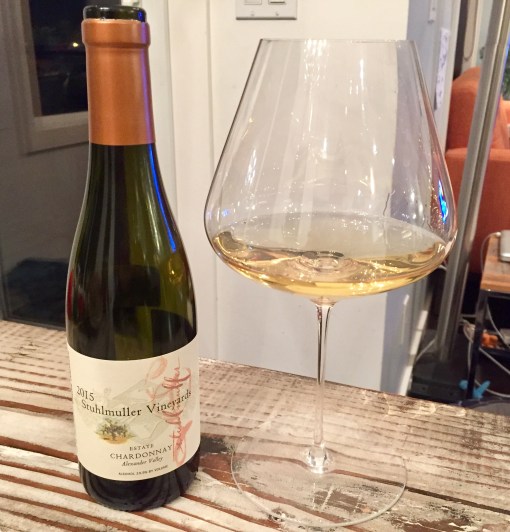
3.  2015 Stuhlmuller Vineyards Chardonnay (Day 21):  California Chardonnay is largely responsible for giving itself its own reputation for blowsy, overoaked, overripe, overblown wines, but bottles like this show why everyone made such a fuss about it in the first place.

DARK HORSE – 2016 Bella Sparkling Rose “Westbank” (Day 1):  This showed me something that I hadn’t yet seen in Canadian wine; I can still vividly picture its live-wire energy.  It was our first bottle and I remember it more than most of the others.

The fact that three generally like-minded wine lovers picked nine completely different wines to round out their podiums after all zeroing in on the same winner gives you some indication of the overall quality of the wines in this calendar.  The diversity of great bottles in this 24-day span has been phenomenal.

IMG_7339

Merry Christmas from my family to yours!!

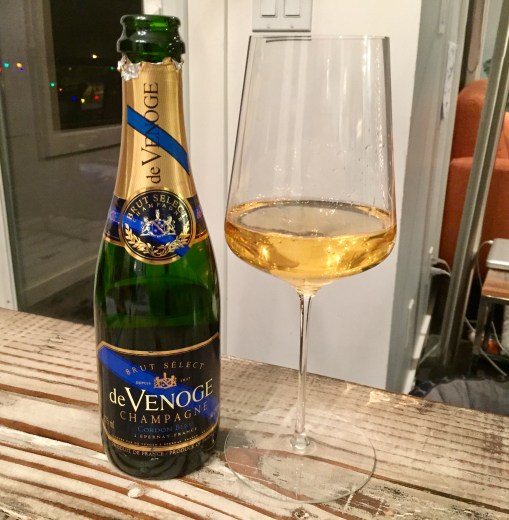
There’s not much time or space left to talk about bottle #24, which was the De Venoge Cordon Bleu Brut Select NV Champagne, an appropriately celebratory finish on the night before Christmas.  That ends up being a blessing in disguise, as my bottle was not showing I expect it should have.  It was a VERY dark gold coming out of the bottle and had almost no mousse or carbonation to speak of, smelling heavily of dulce de leche, Kraft caramels and hot sandpaper and tasting flat and roasted and bitter, like coffee left too long on the burner.  Blowtorched black jellybeans, soggy parchment and molasses rounded out a Guinness-like flavour profile.  If I had to guess, I would say this cork didn’t sufficiently hold its seal as the wine sat for some time after bottling but before sale; it’s not as ragingly faulted as my unlucky Brunello on Day 2, but since I highly doubt it’s in condition, I’m not going to score it.  I will instead set it aside and remember the other remarkable bottles that I enjoyed so much, and hope that we’ll get to do it all again next year.  Until then, thanks for following along!


Bricks Wine Advent Calendar 2017: Day 21

21 12 2017

This is my second last wine post of Advent 2017:  the coming two days will see Dan and Ray post their Bricks calendar wrap-ups, and the next time you hear from me will be on Christmas Eve, for the grand half-bottle Advent finale.  It’s almost hard to believe our countdown to Christmas is almost done; it’s almost harder to believe that I actually survived it (though perhaps I shouldn’t say that yet).  And Bricks appears determined to send me off in style, because Day 21’s wrapping comes off to reveal an absolute firecracker of a Chardonnay:  the 2015 Stuhlmuller Vineyards from Sonoma’s Alexander Valley.  I think this grape is still in a down phase when it comes to much of the consumer world, but we seem to be entering a period where many of the regions previously responsible for Chard’s worst oaky boozy excesses have started to dial it in just right, at least on the quality wine side of the spectrum.  And there is no better representative of this evolution than California.

IMG_7307

Stuhlmuller Vineyards was founded by a husband and wife team who got their start in 1982 growing and supplying grapes to neighbouring wineries.  They didn’t become a full-fledged estate winery until 2000 but have already developed a reputation in the crowded California wine scene, particularly for Chardonnay, which makes up over half of its acreage.  The Alexander Valley is in the northeast corner of Sonoma, inland from the coast and due north of the better-known Russian River Ralley; its eponymous Russian River runs up and along the eastern edge of Stuhlmuller’s vineyards in Alexander’s southwest corner, where it and the Russian River Valley come together with Dry Creek Valley.  Much like Napa, the grape-growing conditions in the Alexander Valley are helped by two separate ocean-induced effects:  morning fog coursing in daily through the Chalk Hill gap, and cool nights spurred by ocean breezes, both of which provide the grapes relief from the scorching California heat, help preserve precious acidity and lead to more balanced ripening.  This bottle shows the results of all that climatic effort, clocking in at 13.9% abv.

IMG_7308

Cork Rating:  3/10 (Friendly advice – no phone numbers or websites on corks. This has both.)

This is Stuhlmuller’s “entry-level” Chardonnay, but it’s clear from the start that no shortage of care went into its creation.  It was fermented sur lie (on its spent yeast cells) over 8 months and matured in French oak, mostly small-barrel barriques but only 5% new.  It is a rich golden colour in the glass and finds that perfect harmony between Chardonnay’s careful fruit and oak’s at-times exuberant influence, mixing fresh pear, peach and Granny Smith apple pie with ginger chews, almond shortbread, oatmeal cookies and rubber boots.  Simultaneously full and cutting on the palate, the Stuhlmuller’s oak-aided roundness is run through with a table saw of slicing acidity.  It is beautifully poised on the tongue without losing the weight and body that is a defining feature of Chardonnay, a honeyed swirl of caramel apple, white flowers and a bracing quality on the finish like a cool sea breeze.  Refined and restrained but still California in essence — exactly what New World Chardonnay should be.

92 points


Bricks Wine Advent Calendar 2017: Day 20

20 12 2017

When the days hit double digits starting in 2s, I know our calendar work is almost done.  I’m not going to lie:  I’m ready not to be writing tasting notes and blogging on a daily basis, at least for a little bit.  But then I unwrap a bit of an Advent mystery and find myself sucked in all over again, pulled once more into the insatiable curiosity that goes with loving wine.  This time it came from revealing a bottle bolding displaying “Sancerre”, likely THE Old World heartland of Sauvignon Blanc and a renowned white region in France’s eastern Loire Valley…but then noticing things that seemed off.  Did it seem kind of dark inside?  Is that a maroon neck foil?  Wait – does that say Sancerre ROUGE?  (Granted, I have already had a white wine in this calendar say that it was a red wine by mistake, but this bottle actually IS one.)

IMG_7300

It turns out that red wine makes up close to 20% of Sancerre’s yearly production, all of which is required by appellation rules to be 100% Pinot Noir.  And there is perhaps no estate in Sancerre that takes its reds more seriously than Domaine Vacheron, which plants 11 hectares of Pinot alongside 34 hectares of Sauvignon Blanc and doesn’t treat it like an afterthought in the cellar.  The Domaine is now in its fourth generation of family ownership and has revamped all of its vineyard practices in the hands of the two young cousins who now direct its operations, Jean-Laurent and Jean-Dominique Vacheron.  They converted the estate to biodynamics in the early 2000s and now only fertilize the chalk and silex soils with composts made on the property, harvest by hand, ferment using only native yeasts and bottle according to the lunar cycle.  Their Pinot Noirs are partly matured in stainless steel tanks to preserve their fruit and partly in large neutral barrels for oxidative effect without oak flavours.

IMG_7301

Cork Rating:  2.5/10 (Not only is it boring as sin, it doesn’t do that great a job at its primary function of holding in liquid.)

This is my first ever bottle of Vacheron, the 2014 Sancerre Rouge, from a property that is almost at the literal centre of France.  I was a little leery from the outset as the cork came out of the bottle completely sodden and squeaky, but the wine inside seemed to bear no ill effects.  It was a fully transparent ruby in the glass and emitted a distinctive and attention-grabbing set of aromas:  beyond the more expected Pinot smells of cranberry, underripe raspberry and violets, there is a pronounced vegetal greenness (dill/pickles; Ray says nettles), a tangy citric bite (tangerine, gooseberry) and a base industrial rockiness (flint, car tire skid marks) that differs markedly from your run-of-the-mill Old World Pinot earthiness.  The palate adds salted watermelon, pomegranate, lava dust and crushed roses on a light, deft body structured mainly by prominent papery tannins.  This is a compelling mirror of its rocky soil and a suggestion that Pinot has the potential to ascend from its eternal Sancerre understudy status.

88- points


Bricks Wine Advent Calendar 2017: Day 18

18 12 2017

For those few brave stragglers who have stuck with us through this dual Advent adventure, we are three-quarters of the way there.  This is the last wine of the third of four columns of the Bricks Wine Advent crate:  we are a week from Christmas and six wines from having to pick our own bottles again for dinner.  Tonight’s bottle is a bit of a double-take wine, a Canadian split that is five years back-vintage for an offering that currently retails for around $20 for a full bottle (out east, at least).  It’s not often that I get a chance to see how value-priced local wines stand up to a bit of time, though I would love to hear the story of how Bricks came across this as a calendar opportunity.

IMG_7282

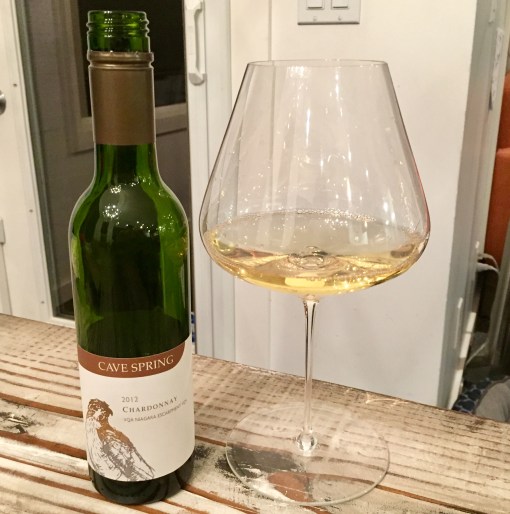
“This” is the 2012 Cave Spring Chardonnay from the Niagara Escarpment region.  The winery was the first to plant vinifera grapes in Niagara and among the first to recognize the vinous potential of the region.  It was also the first in Niagara to tack on its own spa as a tourist attraction, making it an early leader at recognizing the area’s business potential as well.  The Niagara Escarpment line of wines represents the second of four tiers of Cave Spring wines, where grapes are sourced from multiple different vineyards within the subregion; the most interesting part of this wine is that it appears to be a blend of standard Chardonnay grapes with Chardonnay Musqué, an aromatic, floral, spicy mutation of the varietal that adds some olfactory punch to what can otherwise be a fairly neutral grape.
IMG_7280

RED wine???

One thing about half-bottles is that they accelerate a wine’s aging curve, because (1) oxygen is the primary thing that matures (and ultimately degrades) a wine and (2) there is a greater ratio of oxygen to wine in a 375 mL split because the ullage (the space between the wine and the cork at the top of the bottle) is the same for all sizes of wine.  This 2012 is therefore further advanced in its life than a standard bottle would likely be, and it’s starting to show.  The wine is a shimmering lemon-gold colour in the glass and showcases its multi-clone blend in a musky, tutti-frutti nose of honeydew, Meyer lemon and cantaloupe, accented by remnants of once-toasty oak and sulphur-y struck matches.  Medium-bodied, with still-present scruffy barrel tannin and fading acidity, this Chardonnay is not quite sure where it is on the palate:  the fruit has kind of gone to a murky place, the oak has resolved to a pastry crust/vanillin glaze, and the wine overall seems to have one foot each in two different stages of development, clinging to the remains of its youth while also giving in to the inevitability of age.  I think it likely would have stood out more a couple of years ago, but it remains a solid expression of what Niagara Chardonnay can do at a wallet-friendly price.

87+ points

IMG_7281

Steven Rating:  6/10 (Dig the colour, but there’s only so high I can go with two underlined letters.)


KWM Whisky Advent Calendar 2017: Day 18

18 12 2017

The world has ceased to be.  Welcome to oblivion.

That is some approximation of what I felt when I cracked tonight’s calendar door after this particular day and saw Ardbeg Corryvreckan staring me back in the face.  Between and early and constantly stressful workday and other obligations, I was ready for a friendly Labrador retriever of an Irish whiskey or something fun from some other new wacky whisky nation.  Instead I got the Mordor of Scotch whisky, from the producer most commonly associated with near-merciless peat levels in its bottlings.  Before levels of peating in whisky became something people tried to top each other at for no reason (looking at you, Octomore and Supernova, the latter of which is, to no one’s surprise, an Ardbeg), this distillery was probably known as THE foremost purveyor of peat, with most of its offerings featuring 55 ppm of peat phenols, the highest in the calendar to date.

IMG_7250

Nothing means anything.

This particular bottle of Ardbeg, the weirdly named (they’re all weirdly named) Corryvreckan, gets its moniker from a famous whirlpool located just north of the Scottish island of Islay from which this derives.  Even this whisky’s NAME is sliding off into the abyss on the label (welcome to oblivion), in honour of both the marine landmark and my current mood.  Before this gets too depressing, I should point out that the Corryvreckan is actually one seriously decorated whisky:  it was named World’s Best Single Malt (!!) at the World Whisky Awards in 2010 and has received a swath of other critical accolades.  A quick Google search results in much gushing about this French oak-matured monster, which retails for a relatively tame $120 given the buzz around it.

This is like drinking a junkyard:  my first aromatic notes were old rubber hoses, car tires, motor oil, shoe polish, kerosene and leather on fire, plus this weird melting-plastic offgas vibe at the start of every sniff that hammers home the whisky’s identity.  Ardbeg is rugged, fiercely peated, fiercely Islay whisky, and the Corryvreckan shies away from none of that.  There is a sweetness to the back of the palate, an apple cobbler and poached pear pleasantry, but that’s then almost immediately sacked and pillaged by industrial malaise and every conceivable sensory experience arising out of an old factory falling apart while still operating, with a finish like eating still-red fire pit ashes.  Welcome to oblivion.


Bricks Wine Advent Calendar 2017: Day 15

15 12 2017

Tonight’s wine might suffer from a disconnect between actual and anticipated identity.  When the first words you note on a label are “California Viognier” and the listed alcohol clocks in above 14%, you think you’re in for a fun, flouncy, slightly provocative stone fruit and flower party.  When the label in question is from an Oakville winery, based in the heart of Napa, which is the heart of big, brash, Cali wine, you doubly brace yourself in anticipation of something raucous.  This bottle is solidly drinkable but has none of that carefree, sultry attitude.  It’s Viognier without joy.

IMG_7256

Miner Family Winery was founded by a husband and wine team in 1996, making this 2015 Miner California Viognier their 20th anniversary vintage bottling.  They make an astonishing array of wines, from Cab and the other Bordeaux varietals to Burgundy’s Pinot Noir and Chardonnay to the reds and whites of the Rhone Valley to Tempranillo and Sangiovese.  There are multiple bottlings of most of these, so their winemaker obviously stays busy.  The winery’s pride and joy is likely its 20,000 square feet of underground cellaring caves carved into a Napa rock face, which were dug at great expense shortly after Miner came to be.  Despite being Napa-based, they source from across the state of California, as evidenced by the straight “California” designation on this particular bottle.  62% of this Viognier comes from a single vineyard in Paso Robles, while the other 38% comes from the Sierra Foothills; since the wine crosses appellations, it has no choice but to revert to the broader state-wide statement of origin on the label.

IMG_7259

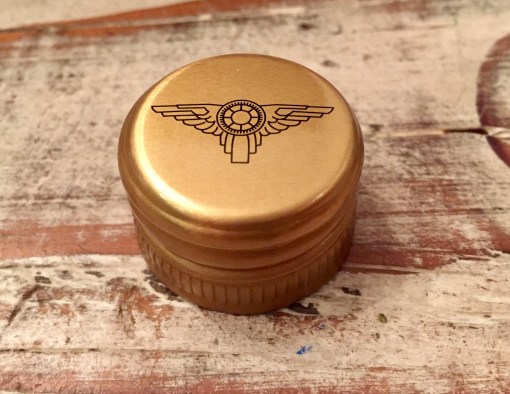
Stelvin Rating:  8/10 (Love the gold, love the sun god logo, love the interest yet simplicity.)

The 2015 Viognier is a surprisingly pale lemon colour coming out of the bottle, partly due to the lack of any oak treatment (which deepens the colour of white wines).  It is almost shockingly lean and citric for a 14+% abv California Viognier, leading with lemon zest and mountain stream aromas backed by frozen honeycomb, Tums and talcum powder.  It broadens slightly in waxy, watery ways on the tongue, adding tart pear fruit and some kind of tropical musk, but retaining an overall sense of distance and a prevailing greenness — fresh leaves and flower stems, grass and baby spinach — finishing with a touch of astringency.  Viognier’s trademark bouncy peachiness and sensual mouthfeel don’t make an appearance, almost like these grapes were picked before those elements got there (harvest dates: August 19th-27th); despite significant sugar ripeness, the phenolics and ultimate character of the wine never quite caught up.  I had no issue crushing the bottle, but this would not be the expression that Viognier sends with its cover letter to land a job interview.

87- points


KWM Whisky Advent Calendar 2017: Day 15

15 12 2017

By my count this is “Glen” whisky #5 (well, 4 1/2) in 15 days of 2017 Advent, after Glenfiddich, Glenmorangie, Glentauchers and Dailuaine-Glenlivet all the day back on Day 1.  But the more important number for this particular Glen, Highlands’ Glenglassaugh, is three.  The distillery was founded in 1875, but like so many others it was mothballed in the 1980s (1986 to be exact), only to be near-miraculously purchased and re-opened 22 years later in 2008 (then purchased again by BenRiach in 2013, but that’s not part of this story).  I had never heard of Glenglassaugh back in 2014, when on December 7th I opened the KWM Advent Calendar door and discovered the very first whisky it had released after opening its doors again, aptly named the Revival.  The next year, on December 8th, 2015, we were treated to the SECOND ever whisky from the new Glenglassaugh, the Evolution.  And now we arrive to today, December 7+8 = 15th, and back to the number three:  today’s Glenglassaugh Torfa is the third new whisky to come out of the distillery’s doors.  The difference with this one is that it’s peated — according to the label, RICHLY Peated, although at 20 ppm (less than half of The English Smokey’s 45, which itself wasn’t over the top) it might be exaggerating things a bit.

IMG_7226

The rather odd name of the whisky, Torfa, is a nod to its burnt-moss-imbued nature, as it is an old Norse word for peat (turf).  It is an orangey golden colour and certainly exhibits some of its namesake on the nose, beaming out the shoe leather, moss and marsh bog aromas associated with peat, but measuring those with a honeyed sweetness and a lingering grassiness…despite its “Richly Peated” boast, it doesn’t come close to overwhelming.  Coming closer is the flamethrower of a palate that takes no prisoners at 50% abv, even with added water, but behind the alcoholic rage lies more careful peat balance, the smokiness never bullying the other notes of apple crisp, sandpaper, tangerine, black pepper and fallen leaves.  But the telltale slithery griminess shows up on both the attack and the finish, bookending a fun and fascinating dram.  Here’s to a fourth and fifth and many more, Glenglassaugh.


KWM Whisky Advent Calendar 2017: Day 14

14 12 2017

The name of this whiskey basically encapsulates what I’m feeling right now, just over halfway through Advent, with 26 posts in the books and 2 more on the way tonight, not quite soon enough to feel close to the finish but far enough along to make me wonder what the heck I was doing.  Writers Tears was so named to be evocative, in honour of those 19th century Irish writers who would descend on their favourite pub to soothe their frustrations and as a global boutique brand that did not need overt Irish references to find its niche in the whisk(e)y world.  (That said, the lack of any apostrophe in “Writers” makes it hard to come to any sensible grammatical conclusion about the name choice.  It just looks like two plural words standing awkwardly beside each other at a bus stop.)  Writers(‘) Tears is a refreshingly modern story:  it is the creation of Walsh Whiskey Distillery in southeast Ireland, a company which was only founded in 1999, and then only to make (seriously) Irish Coffee.  Walsh didn’t launch a solo whiskey until 2007 (made via supply agreements with other distillers) and didn’t have a physical distillery space of its own until LAST YEAR.  Writers Tears came into being in 2009, making it a shade younger than my dog (good boy, Eli).

IMG_7209

This Writers Tears Copper Pot Irish Whiskey bottling is 60% Single Pot Still Whiskey and 40% Single Malt Whiskey, though it comes from 100% Irish barley and contains no grain whiskey.  Let me explain.  Single malt whiskey refers to any whiskey made by a single distillery from malted barley (malting is a process where the raw barley is soaked to get it to germinate before being dried, helping the starches in the barley convert to fermentable sugar).  The limited distinction between this and single pot still whiskey (a purely Irish concept) is that single pot still whiskey features both malted AND unmalted barley in the mash (the liquid that ends up being fermented and distilled), which is distilled in a copper pot still.  The raw barley is supposed to lend spiciness and texture to the mix; I got more of the second here than the first.  This blend is a brilliant medium-amber colour and emits toasty honey, celery sticks, carrot cake, wheat field and vanilla cream aromas, any spiciness certainly of the baking variety.  Cream is also THE word to describe the palate, rich and smooth like steamed milk, soaked through with languid burnt sugar/creme brûlée flavours along with mocha frappuccino, star anise and Werthers’ Originals, all overlaid by a light maltiness.  Yeah, it’s as delicious as it sounds.  An absurd value for $52 — Irish whiskey now fully has my attention.


Bricks Wine Advent Calendar 2017: Day 12

12 12 2017

We are here, my friends:  at the midpoint of Advent, 24 posts in (including this one) and 25 to go, about to hit Advent Hump Day tomorrow (on a Wednesday, natch), with two columns of the Bricks Wine Advent crate vaporized and another two left to go.  I’m late posting this tonight not because I got started late, but because tonight’s bottle is so damn fascinating that I’ve just spent the better part of the last hour reading about it instead of getting down to business.  It’s a Cava, but not really.  It has a history dating back either millions (for the land) or hundreds (for the family) of years, but it’s also so new that it has yet to obtain an official designation.  I looked at the label for a good long time trying to figure out what was going on before resolving to dive deeper on this one.

IMG_7230

The label says “2011 Raventos i Blanc Conca Del Riu Anoia De La Finca”.  I recognize it to be a sparkling wine from eastern Spain, but it doesn’t say “Cava” (the only widely known bubbles appellation in the area) anywhere on the bottle.  It’s also vintage-dated, which a lot of Cava is not.  Um.  Starting with the only one of those label words that I knew, and the only one with its own website, I pulled on that thread and started unravelling the mystery.  Raventos i Blanc is one of the top quality sparkling producers in Spain, an estate that has been family-owned and -run for TWENTY-ONE GENERATIONS, since 1497.  The Raventos family is intimately connected with the creation and rise of Cava:  it was Raventos ancestors who first established the indigenous grapes that would form part of the Cava blend (Macabeu, Xarel-lo and Parellada) and who actually made the very first bottles of Cava in 1872.  The Cava DO has since stretched, however, now encompassing a half-dozen areas that aren’t at all geographically connected and now permitting Champagne grapes Pinot Noir and Chardonnay to also be used in the bubbly blend.  The current generation of the Raventos family were not a fan of these changes.  So in December 2012, they left the Cava appellation and started their own.

IMG_7233

The estate and vineyards are still based in the very heart of classical Cava, of course, in the core of Penedes near Barcelona.  But Raventos pulled the name of the region off its bottles and instead added the name of a proposed new location-focused appellation:  Conca Del Riu Anoia, named for the nearby Anoia River.  Their proposed requirements for this new region are strict, ranging from a commitment to organic viticulture to minimum purchase prices for fruit bought from growers to longer minimum aging periods.  I keep saying “proposed” because the Conca Del Riu Anoia “region” has no legal or formal existence but is still just a vision; but it has some kind of existence, because I see it on the label of this leading light. Read the rest of this entry »


KWM Whisky Advent Calendar: Day 12

12 12 2017

It’s been a frenetic start to Advent, both in terms of the 22 posts that have graced this blog over the past 11 days and in terms of the kaleidoscope of countries and new whisky experiences to which Kensington Wine Market has treated us so far.  Maybe at this point, at the halfway mark of the calendar, we can stop and take a breath and revel in a dose of familiarity before launching ourselves again into the unknown.  Enter the safest low-cost whisky you can buy when you’re stuck somewhere out of town and the only accessible shop is Superstore:  Tullibardine.  I have had the same “hey, this is actually pretty good!” reaction to many a suspiciously cheap Tullibardine scotch and have come to the conclusion that they can deliver on a budget far better than most in the spirit world.  You will often come across a “1488” logo on the distillery’s packaging, and their website hints at their illustrious history…sort of.  It turns out their site was previously a brewery in the 15th century that King James IV once visited, which is impressive, but for the fact that the distillery had nothing to do with the brewery and wasn’t a thing until 1947.  The website does not discuss the intervening 450 years in detail.

IMG_7184

Take a breath.

Through its entire whisky lineup, Tullibardine only uses first-fill casks (barrels that were only previously used once before, so the interior toasting and wood grain is still receptive to liquid contact) for maximum flavour transference.  This Sovereign bottling is the foundation of the portfolio, a Highland Single Malt matured only in first-fill Bourbon casks, at $65 probably the price baseline for a proper single malt scotch.  It is a grainy pale gold colour and comes across somewhat aromatically muted, its baked apple, banana Runts, grass and honey aromas slightly shy and stunted.  Bourbon’s characteristic sweetness wakes it up on the first sip, however. launching flavours of vanilla bean and creme brûlée laced with char and toasted marshmallow skin, those scorched-barrel notes echoing into a smoky finish.  This is not a dynamic whisky, but it is easily an enjoyable weeknight sip, which is all it has to be to justify this price tag.


KWM Whisky Advent Calendar 2017: Day 11

11 12 2017

I’m not sure what shocks me more:  that there are not one but TWO Canadian whiskies in this calendar; that they have shown up in the first 11 days of Advent nestled in with offerings from England and The Netherlands; or that this one is from Vancouver Island!! Andrew Ferguson is a madman, the 2017 calendar is officially unhinged and this is by far the most fun Whisky Advent ever.  I used to live on Vancouver Island while in law school, and I never would have expected there would be a renowned distillery there, but as of 2011, there is:  Shelter Point, established across 380 acres running up the eastern coast of the island on land that was previously a UBC research farm.  Why do you need 380 acres to run a distillery, you ask?  You need it if you ALSO want to farm and grow your own environmentally sustainable barley with which to MAKE your whisky.  This sounds like an obvious concept when viewed through the lens of the wine world (the barley is basically Shelter Point’s estate fruit), but it is almost never done in the whisky world; the only other farm distillery that comes to mind off the top of my head is Scotland’s Kilchoman, whose ethos I admire greatly but whose products I can’t seem to get myself to enjoy.  No such problem here.

IMG_7176-1

Shelter Point is heavily committed to the health of its farmlands and the surrounding area, even donating a large chunk of its “estate” to Ducks Unlimited for use as a nature park.  They make vodka and liqueur in addition to multiple different releases of whisky, but tonight’s focus is their Artisanal Single Malt Whisky, all distilled from homegrown barley and then matured for years in a warehouse right alongside the ocean in what is rumoured to be all ex-Jack Daniels casks.  Badass.  At $85, it is roughly double the price of the previous Canadian whisky in this calendar, and it proves itself easily worthy of this price tag.

IMG_7177-1

My first Vancouver Island whisky has a zesty, spicy nose, lemon peels and cinnamon hearts rounded out with almonds, apple pie crust and warm leather.  I can’t remember ever writing this about a whisky before, but it is absolutely linear on the palate, driven and focused, powered ever-forward by an engine of grainy, peppery, malty verve.  There is no meandering here, no stopping for breath, at least not until the sip is long swallowed and a Coffee Crisp sort of finish makes itself apparent.  This is far more cohesive and structured than the Gretzky whisky from Niagara and easily cruises to the Top Canadian Dram crown of both this Advent and my lifetime.  It may in fact be my favourite whisky of the whole calendar so far.  Shelter Point, I’m coming over.


Bricks Wine Advent Calendar 2017: Day 10

10 12 2017

I think it is officially Sugar Coma Weekend in the Bricks Wine Advent Calendar.  When the COMBINED alcohol level of your Saturday and Sunday wines is 12%, you know you’ll be facing an armada of unfermented grape sugar in the bottle.  After last night’s 6.5% abv Auslese Riesling, I thought we had hit our December alcohol floor, but the 2015 Braida “Vigna Senza Nome” Moscato d’Asti will see that 6.5% and raise it (well, technically, lower it), clocking in at an almost juice-like 5.5%.  The wine’s name roughly translates to “Vines Without Names”; the roughly dozen online sources I consulted trying to find out why declined to say so, though most of them noted that the corresponding motto on the front label “Sator Arepo Tenet Opera Rotas” means “the farmer at the plow chooses the path”, which is reflective of this classic producer’s focus on the quality of the vineyard, even if they decline to name the vines in it.

IMG_7219

I love Moscato d’Asti.  At its best it is equally refreshing and luxuriant, searing and delectable, a frozen rope of distilled fruit essence that disappears from the glass before you even notice.  It is made from Moscato Bianco grapes grown around the famed town of Asti, in the heart of Piedmont, which are harvested then crushed and immediately refrigerated before fermentation so that the yeasts don’t immediately kick in.  The cooled must is then transferred to pressurized sealed steel tanks before fermentation is allowed to begin; as the grape sugars are converted to alcohol, carbon dioxide is released as a by-product, which can’t escape the tank and gets dissolved into the wine.  Once the alcohol content clocks above 5% (which is WAY before all of the sugars are fully converted), the whole tank is chilled down to near freezing so that fermentation stops, after which the yeasts are filtered out and the wine is bottled under pressure, leaving an intensely sweet, slightly bubbly bolt of lightning for patio enjoyment.  It is best consumed as early as possible, when acids are crisp and bubbles are buoyant, and there is little to be gained in trying to mature it.

IMG_7220

Cork Rating:  6/10 (The extra expansion and vertical writing are winning somehow, even if the cork as a whole is bland.)

This 2015 Vigna Senza Nome is a surprisingly golden colour for a Moscato and has a slightly syrupy nose of baked pear, bruised apple, honey and caramel to go with brighter tropical and Fuzzy Peach notes.  Some lift remains on the palate in the form of hedonistic melon, lychee, blood orange and bergamot, but much of the life and effervescence that normally characterizes this style and expression has been faded away, whether due to time (it’s only two years old, but Moscato’s probably best at 20 minutes old) or (more likely?) due to storage conditions between its bottling and its insertion into the calendar. I’ve had this exact bottle multiple times before, albeit never in back vintage form, and this is the first time it’s tasted heavy; the bubbles aren’t quite up to the task of scouring away the sweetness, and quiet acidity doesn’t provide enough of a helping hand.  It’s still completely delicious, but it is drained of some of its usual joy and not quite showing at its peak.

86 points