Wine Review: 2004 Pago del Vicario “Agios”

30 11 2011

It may be from a DO farm team, but it can still bring it. Cool bottle too.

It’s 9:30, I’m back from my first Christmas party of the year, I’ve walked the dog, I have the hockey game on TV and I’d like to go to bed within the hour…sounds like the perfect time for a condensed review!  Tonight’s wine is the classic buy-low no-expectations bottle:  although its regular retail price approaches $40CDN, I got it on sale in unusual circumstances for only $15, so I popped the cork not particularly caring whether or not it was a worldbeater.  The producer, Pago del Vicario, is based in the sprawling Castilla region of central Spain, just southeast of Madrid; the official appellation name, Vino de la Tierra de Castilla, signifies that Castilla is kind of a higher-grade appellation in waiting, a second or third division region awaiting promotion to the top tier of the Spanish wine area hierarchy, DO (Denominacion de Origen).  With apologies to those non-hockey fans out there, Vino de la Tierra wines are like the ECHL of the Spanish wine world.  However, that’s not to say that quality wines can’t be found in Castilla — this is one example of a lower-yield artisan wine that has clearly been made with care.

Read the rest of this entry »


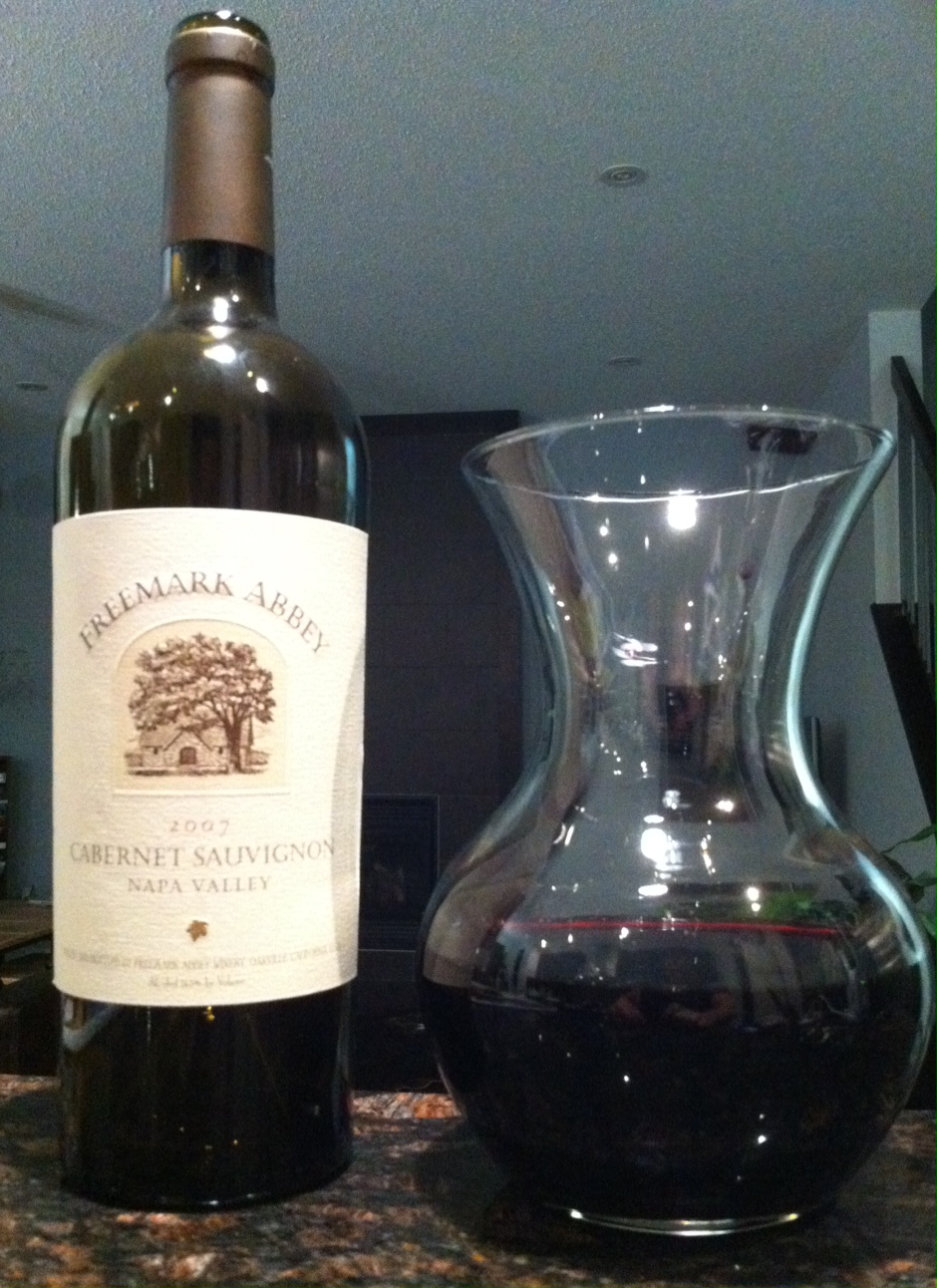
Wine Review: 2007 Freemark Abbey Cabernet Sauvignon

28 11 2011

Can a flower vase be an appropriate decanter? I say yes.

If the name of this wine sounds familiar, it should:  the ’07 Freemark Abbey Cab from the Napa Valley was my ultimate victor in the modern-day Judgment of Paris blind tasting I took part in at Co-op Wine & Spirits a month ago.  Matched up against 9 other top Cabernets including a couple of First Growth Bordeaux (2002 Chateau Haut Brion and 2007 Chateau Mouton Rothschild) and some iconic Napa Cabs (2007 Ridge Monte Bello and 2002 Heitz “Martha’s Vineyard”), by far the cheapest wine of the bunch (average bottle price of the 10 reds:  $277), this $47 little wine that could knocked both my tasting companion and I over and emerged the clear cut JoP winner for each of us.  As soon as the identities of the various wines were unveiled, I knew I had to get my hands on some — a reaction that probably would have been more subdued had the $928 Mouton Rothschild taken the title.  Thankfully for me (and all of you), the Freemark Abbey Cab is currently on sale at Highlander Wine & Spirits for just over $40, which is absolute robbery for a bottle of this quality from a premium region.  If you’re a Cali Cabernet fan, or if you’re not yet done your Christmas shopping, this is your winner.  Thank me later.

Read the rest of this entry »


Introducing the PnP All-Time Ratings Archive Spreadsheet

25 11 2011

PnP's complied Ratings Database spreadsheet: like this, but for wine.

Now that I’ve pounded out nearly 80 reviews over 9 months on this site, I thought it was about time to try and make the content on Pop & Pour a little more accessible.  The Search box at the top right of the page can help you if you’re looking for something specific, but until now there was no easy way to find out at a glance which wines have had the (mis)fortune of being featured on PnP over the course of the year.  Thankfully, my friend Microsoft Excel has helped me solve that problem; I have now compiled all of the names, vintages, scores, prices and review links for each of the wines I’ve written up and put them into a sortable spreadsheet that’s available for download by clicking on one these links (new Excel first, then older Excel):

Pop & Pour Ratings Database Nov 2011

Pop & Pour Ratings DB Nov 2011 Old Excel

My plan is to update this Ratings Archive spreadsheet once a month so that you will always have a fairly current list of PnP’s wines, and so that any particular review that interests you will only be a click away.  The spreadsheet also has one new piece of info for each reviewed wine that isn’t found anywhere on the blog:  a (very) rudimentary calculation of QPR (Quality Price Ratio) that gives you a general idea at a glance how much bang you get for your buck with every bottle. Read the rest of this entry »


Wine Review: 2010 Tantalus Riesling

23 11 2011

I feel like I’ve been remiss in not writing this review until now, seeing as how my visit to Tantalus might have been the highlight of my trip to the Okanagan in September.  I’ve been a fan of the winery (one of the few in Canada about which I can honestly make that claim) for awhile, and actually getting to go there and meet some of the people behind the eye-catching mask-labelled bottles only heightened my respect for who they are and what they do.  I was lucky enough to get a guided tour of both the vineyards and the winery from winemaker David Paterson — which is probably the only reason I was able to answer WSET Advanced exam questions about vertical shoot positioning and replacement cane pruning — and I left there as excited about wine as I’ve ever been.

Believe it or not, this is in a city. Did I mention I'm moving to Kelowna?

Unlike many Okanagan wineries which are based in the hotter, drier southern portion of the valley, Tantalus is located right within Kelowna’s city limits, in as pastoral a setting as possible given that the closest Starbucks is less than 10 minutes away.  All of their wines come from grapes grown directly on their estate, and on the rolling slopes of their vineyards they have planted Pinot Noir and a growing amount of Chardonnay; however, to me at least, they are synonymous with brilliant, high-quality Riesling.  They have some of the oldest Riesling vines in Canada (40+ years) on location, where Kelowna’s relatively cooler but lake-moderated climate is ideal for this hardy, late-ripening Germanic grape.  The winemaker has a clear vision about what he’s trying to achieve with this privileged source material, letting the fruit speak for itself and preserving natural acids, and consistently delivers on the site’s potential.  Although Tantalus also makes a reserve Old Vines Riesling from their decades-old vines (and is starting to experiment with sparkling Riesling as well), tonight’s wine is the producer’s base Riesling bottling, which packs more of a punch than anyone has a right to expect for the sub-$25 price.

Read the rest of this entry »


Wine Review: 2008 Mercer Dead Canyon Ranch Cabernet Sauvignon

21 11 2011

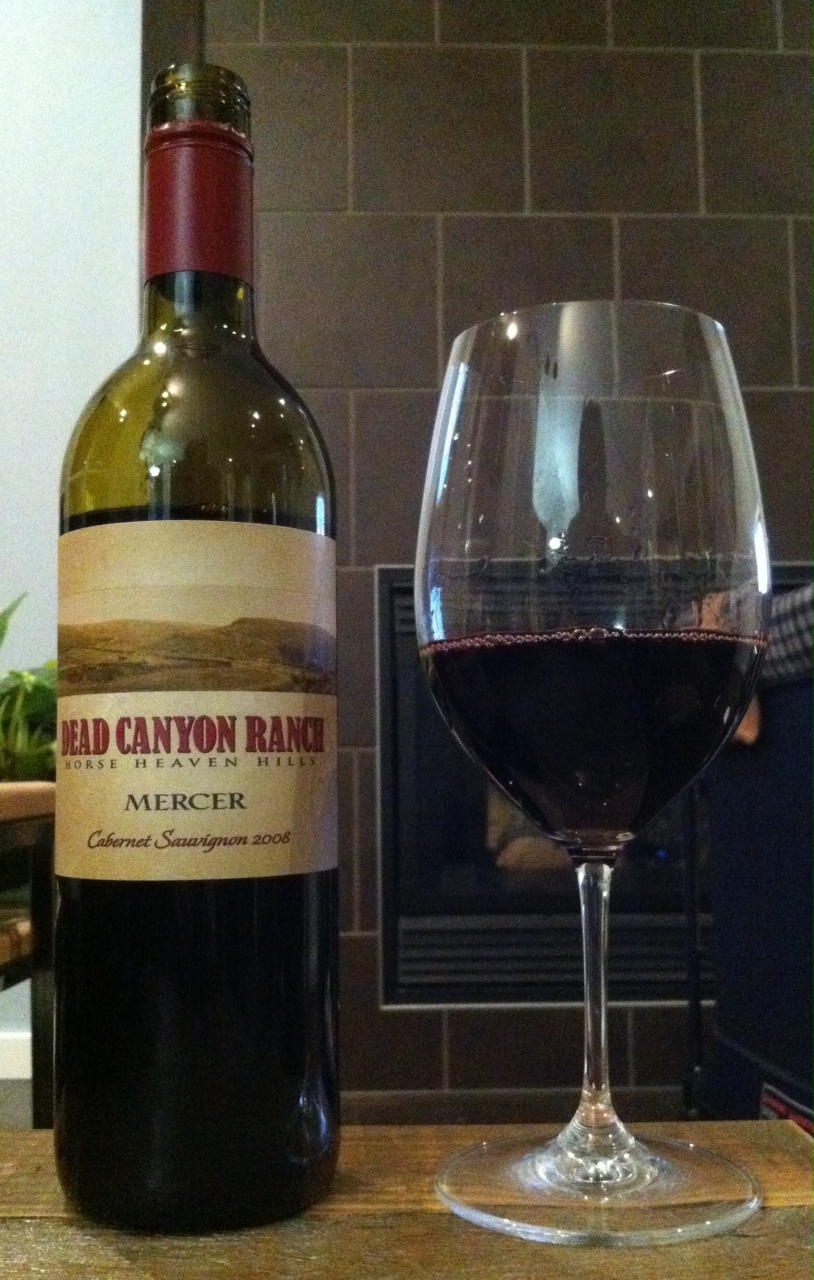
Decidedly ghetto label, questionable colour scheme, killer wine.

Time to enshrine another bottle in the pantheon of Killer Value Wines and expand the already-sizeable place in my heart for Washington State, because cheap Cabernet normally doesn’t taste like this.  The Dead Canyon Ranch from Mercer Estates winery vastly outperforms its price point ($20ish CDN) and screams “house wine” to any self-respecting Cab fan.  This was sadly my last of several bottles purchased from Highlander Wine & Spirits, who (I believe) have an exclusive on Mercer’s lineup of wines in the city; I have previously written about Mercer’s Merlot on this site, but in my opinion at least, the Dead Canyon Ranch is an even better wine at half the price.

This wine gets its eye-catching name from the place from which its grapes are sourced, the Dead Canyon Ranch vineyard in the awesomely-named Horse Heaven Hills AVA (American Viticultural Area), located alongside the Columbia River on central Washington’s southern border.  Washington State is divided vertically in two by the Cascade Mountain Range, and the climate of the area varies substantially depending on which side you fall.  If you’re in the western half of the state bordering the Pacific Ocean, it’s grey, wet and rainy enough for fictional tween-adored vampires to call it home, whereas if you’re on the eastern half the state, in the rain shadow of the Mountains, it’s a hot and arid (and presumably vampire-free) desert zone.  The wines that have been growing Washington’s vinous legend over the past few years (including SEVEN of them in the top 50 of Wine Spectator’s just-released top 100 wines of 2011) come from the eastern half, which is where Horse Heaven Hills and Mercer Estates can be found.  While the desert heat and sun make it possible for red wine grapes to reach full ripeness even this far north, the notably cool nights help to retain acids and preserve fresh flavours, which is the kind of built-in balance you look for in a top wine region.

Read the rest of this entry »


Wine Review: 2009 Conundrum

18 11 2011

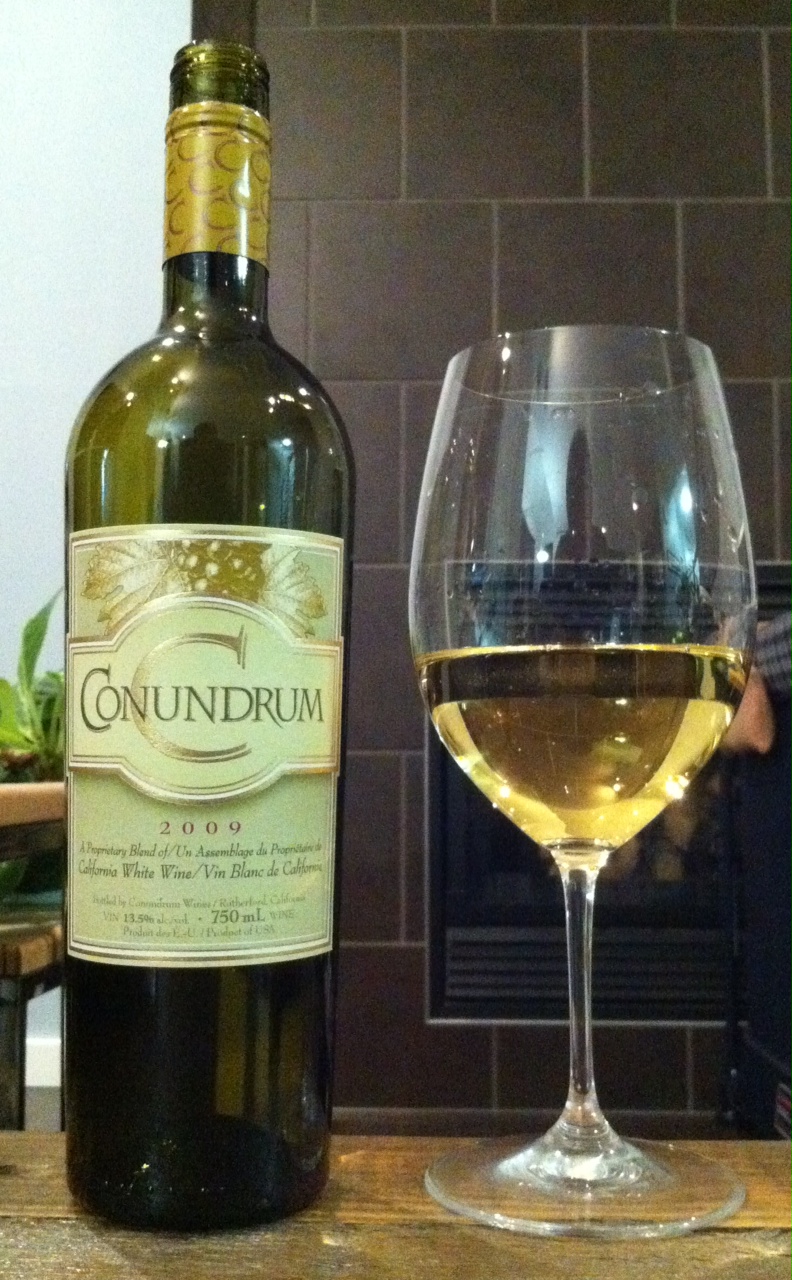
I don't think even 2006 Me would have been overly thrilled by this.

True story:  back in 2006, when I was JUST starting to get interested in wine, I went to a long-standing Calgary wine boutique over the holiday season looking for a special celebratory bottle of wine to help ring in the New Year.  I barely bought any wine at all back then, and when I did it rarely exceeded $20 a bottle, but since this was to be a wine for an occasion, I decided to splurge and upped my max budget to $50.  I was directed to a proprietary white wine blend from an iconic Napa Valley producer, Caymus, who was mainly known for making some of California’s best Cabernet Sauvignon; however, as a side project, they had started putting together this fruity, floral, dynamic white that had quickly made a name for itself.  On the shop’s recommendation, I bought and enjoyed a bottle of Caymus’ Conundrum.  It cost me $45.

Fast forward five years.  I bought tonight’s bottle of Conundrum a couple of weeks ago.  It cost $18.

What happened?

Read the rest of this entry »


WSET Completion Celebratory Wine Review: 2003 Terralsole Brunello di Montalcino

16 11 2011

(Wine) school's out for summer! W00t!

With the WSET Advanced course finally in my rear view mirror, it was time to celebrate:  whether I actually passed or not, I figured I’d earned a bottle from my “good fridge”, the one that houses my pricier, more ageworthy wines.  This one definitely qualifies.  I’ve been loving Brunello more and more lately, to the point where I think it’s become my favourite kind of Italian wine; it strikes that ideal balance between being approachable and enjoyable in youth while still reaping the benefits of aging.  It also deftly marries complexity with drinkability, something a surprising number of expensive wines can fail to do…bringing a wide spectrum of flavours to the table doesn’t mean much when you don’t want to have the resulting glass with dinner.  I don’t own that many bottles of Brunello currently, but that’s something I’ll be looking to fix in the near future (or once my salary doubles, anyway).

Read the rest of this entry »


WSET Advanced Complete!

14 11 2011

This logo and I have had a good 2011 together.

So how many different wines did you drink over the last three weekends?  I had about 100.  From White Zinfandel to Barolo, Tokaji to Pinotage, Sherry to Port — if it was from a recognizable world wine region, I probably tasted it over 50ish classroom hours in WSET Advanced class.  The wines we tasted in the course retailed for anywhere from $10 to $100, came from 15 different countries and ran the gamut of styles, preparations and flavours.  To top it off, the WSET threw in some spirits for good measure:  in the span of an afternoon this past Saturday, I had Cognac, Armagnac, Calvados (apple-based spirit), Irish Whiskey, Single Malt Scotch, Bourbon, Dark Rum and Tequila (it would have been like a Vegas weekend were it not for the spit cups).

Read the rest of this entry »


Wine Review: 2009 Paolo Conterno Barbera d’Alba

9 11 2011

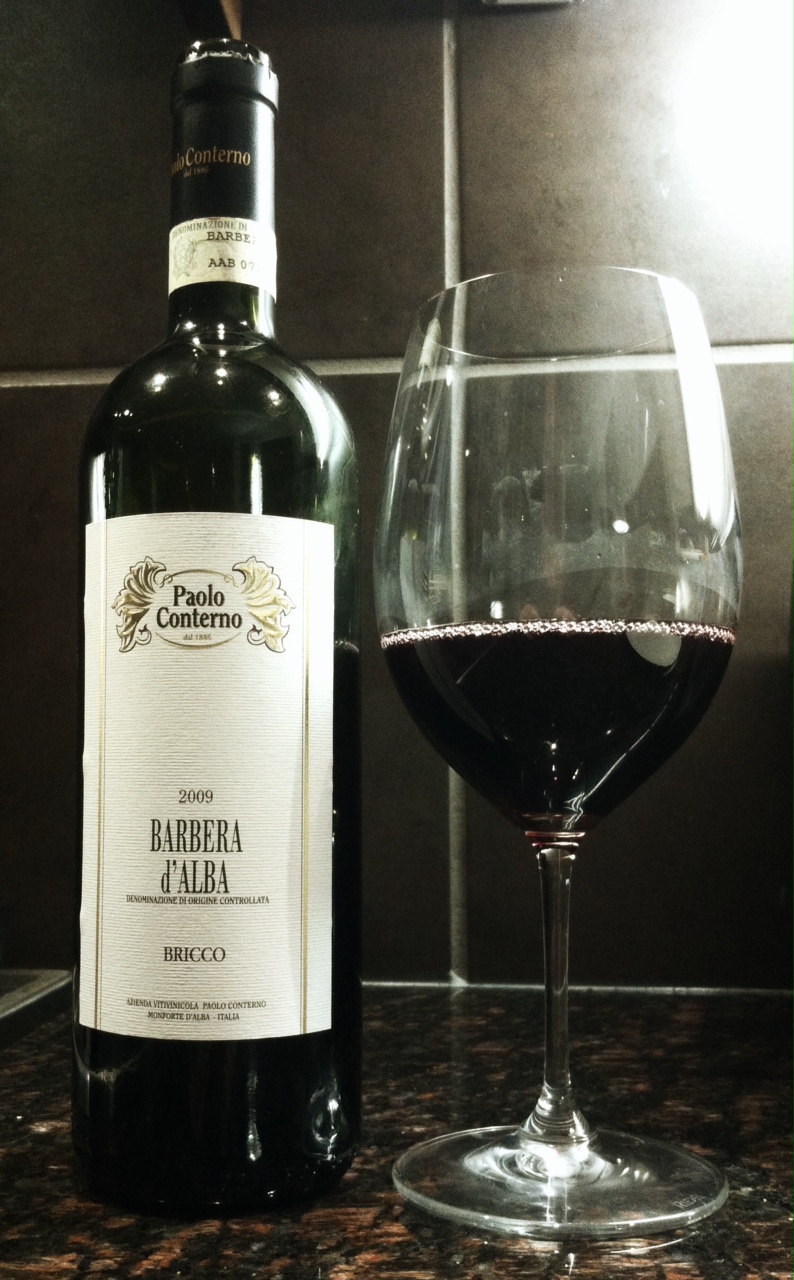
Not to reinforce any improper stereotypes, but I totally dig the Mafia lighting in this photo.

Well, another week, another lone post on Pop & Pour — there’s no doubt that my brief foray back into academics has taken its toll on my blogging productivity.  Thankfully, my WSET Advanced exam is this Sunday, after which my writing schedule will get back to normal (provided I haven’t given up on wine entirely by then, something I might just do if I have to read my textbook one more time).  After two weekends of boot-camp-esque Advanced training and 30+ hours of class time logged, we’ve tasted and evaluated close to 80 wines and covered off every major world wine region except Spain and Portugal (which are coming up this Saturday), as a result of which everyone’s brain is in varying degrees of pain.  My head is so WSET-laden that I have random wine words like Trincadeira (Portuguese grape variety) and bocksbeutel (odd-shaped wine bottle used in Franken, Germany) floating around the edges of my consciousness at night as I’m trying to go to sleep, and I can’t pour a straightforward glass of vino with dinner without mulling over whether it has a medium or medium-plus body or a ruby-with-some-garnet or garnet-with-some-ruby appearance.  Tonight I poured one of my favourite kinds of inexpensive wine, Barbera d’Alba from northwest Italy, and even though I was fairly familiar with the grape and the region, I still felt compelled to dive into my text to find out what my new vinous Bible had to say about them.

Read the rest of this entry »


Wine Review: 2008 Jim Barry “Cover Drive” Cabernet Sauvignon

2 11 2011

Oh right, did I mention this wine is cricket-themed? All the more reason to Costco it up.

Long time no speak!  I was shocked and appalled to discover that it’s been almost a full week since my last PnP post, but rest assured that I have not been wine-slacking:  after 17 hours spent in classroom for the WSET Advanced last weekend, I’ve been spending my weeknight evenings preparing for my exam next weekend by re-reading my textbook (which we were told we should do 4 times in the next 2 weeks.  The book is 300 pages long.).  The whole experience to date has been both more intense and more rewarding than the Intermediate course that I took in the summer; I walked in Saturday morning feeling intimidated and out of place and left on Sunday feeling like I actually belonged in the class, which was gratifying.  I also thanked my lucky stars for 8 months of doing Pop & Pour reviews, because we had to sample, evaluate and identify FORTY wines blind in two days using the WSET’s copyrighted Systematic Approach to Tasting, designed to allow someone to create a quick, consistent, (mostly) objective analysis of the main components of a wine and use that to formulate an opinion on the wine’s price, quality level and identity.  It’s fun for the first few times, but increasingly taxing as you hit wines #18 and 19 of the day.  To give you a sense of the WSET tasting method in action, I thought I would write up tonight’s wine using their proprietary method…just to ensure that I don’t get sued, let me clarify again that I did NOT invent this approach and am a mere student and user of the WSET’s brilliant taxonomy.

Read the rest of this entry »


Goals & Milestones

27 10 2011

Once more into the breach!

One of the things I wanted to do in 2011 (other than making sure I muddled through figuring out how to keep our first child alive — so far so good!) is get some formal wine education.  I had read a ton of books and articles, gone to tastings, talked to shop owners and, of course, drank a lot of vino, but I wanted to take things a step farther and actually get into the classroom, which prompted me to enrol in the WSET Intermediate program a few months ago.  Thankfully, I successfully completed and passed the course, coming out of the summer with my Intermediate Certificate, and I enjoyed the experience so much that I immediately signed up for the WSET Advanced class later in the year.  Well, “later in the year” is now two days away — for the next three weekends I will be shut away in a conference room downtown with other like-minded wine die-hards, trying desperately to absorb reams of technical and geographical information while simultaneously tasting 20-30 wines a day.  If my course materials are any indication, the Advanced course will be WAY more, well, advanced than the Intermediate, so if you don’t see as many PnP posts as normal until mid-November, you can assume it’s because I’m studying.  The blog will be back up to full throttle once my exam (which includes a blind tasting this time) is blissfully behind me.

Thankfully, this blog continues to get amazing support even when I’m a bit lax about regular posting.  Sometime in the next two days Pop & Pour will clock over the 10,000 (!!!) hit mark, which is both gratifying and astonishing to me.  In each month of its operation, PnP has attracted more views than the month before, and I have all of you to thank for your interest in this site.  Once the WSET is done I’ll crack and review a suitable tribute bottle to celebrate both this latest round-number hit target and the fact that school’s officially out for winter.  Cheers!


Calgary Wine Life: Co-op Wine & Spirits Judgment of Paris Tasting, Part 2

24 10 2011

The official checklist of what was poured, for the low low total retail price of $3800.

If you missed the excitement of the white wine portion of Co-op’s Judgment of Paris re-enactment, or me harshly slagging a $300 bottle of Grand Cru Burgundy, click here for Part 1 of this post.  While you had a whole day to absorb the notes and results from the white flight before moving onto the reds, we had about 15 minutes, which was spent running to McDonalds and powering down cheeseburgers and Quarter Pounders (note to wine retailers:  if you’re conducting a 5 hour tasting featuring 20 wines, don’t wait until the end of the tasting to serve food).   Then it was time for the main event.  Generally speaking, I think white wines are tragically underappreciated as compared to reds and shouldn’t be automatically classified as a vinous undercard; that said, some of the J of P red wines are among the most famous on Earth and were clearly the star attractions of this show.  I was particularly excited for the opportunity to try two of the five First Growth Bordeaux — Chateau Mouton-Rothschild and Chateau Haut Brion (combined bottle price for both:  $1500), which, at least from a reputation/prestige/marketing standpoint, constitute the creme de la creme of the wine world.

Read the rest of this entry »


Calgary Wine Life: Co-op Wine & Spirits Judgment of Paris Tasting, Part 1

23 10 2011

Last night I went to the longest and most expensive retail wine tasting of my life (5 hours and $250 respectively):  Co-op Wine and Spirits’ modern day re-enactment of the historic 1976 Judgment of Paris tasting, the event that first put California and Napa Valley on the world’s vinous radar screen.  The original Judgment of Paris was a promotional stunt organized by Steve Spurrier, the owner of a well-known Paris wine shop, pitting top French reds from Bordeaux and whites from Burgundy against Napa Cabernets and Chardonnays.  While today that might seem like an alcoholic battle of the titans, 35 years ago California wine had basically no international presence or prestige, and it certainly was not viewed as a wine region whose products could stand up to the aristocracy of France’s top names.  As a result, especially because 9 of the 11 hand-selected judges at the tasting were French (and a 10th, Steve Spurrier himself, was British), the J of P was expected to be an Old World massacre.  10 reds and 10 whites (6 US/4 French, for some reason) were poured blind and the judges rated and ranked them without knowing which wine belonged to which producer/country.  When the scores were tallied, France’s divine right to make the best wine in the world was shattered as California took top prize in both the red (Stags Leap Wine Cellars Cabernet) and white (Chateau Montelena Chardonnay) categories.  One reporter covered the tasting and wrote up the shocking upset in Time Magazine; less than half a century later, out of these humble beginnings, Napa Valley is one of the most famous, critically acclaimed and expensive wine regions on Earth.

Ready to (re)make history?

Read the rest of this entry »


Wine Review: 2009 Tanins Syrah Chardonnay

19 10 2011

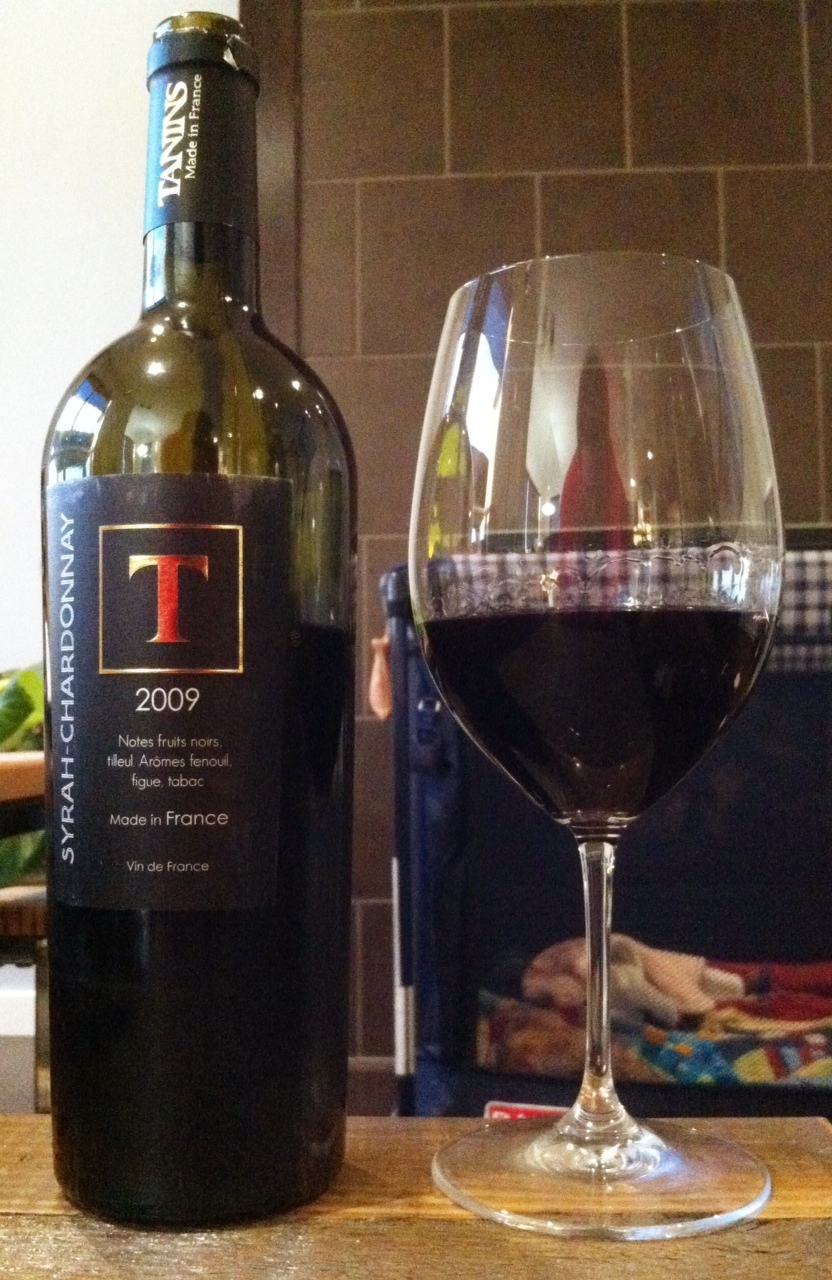
Syrah. And Chardonnay. Just because. You know you secretly want to try it.

I’m sorry, what?

That wasn’t a typo.  Tonight’s wine is ACTUALLY a blend of Syrah and Chardonnay.  It may not surprise you to learn that this is the first time I’ve ever had that blatantly crazy combo of grapes together.  It would not surprise me to learn that LSD was involved in the producer’s blending decisions.  But here we are.  Obviously taking their cue from the long-standing Northern Rhone tradition of blending in a touch of white Viognier with red Syrah, French producer Tanins (sic?) has put together another red-white mashup, only casting the world’s most well-known white grape in the usual Viognier role.  It’s a strange choice:  Viognier is added to Rhone reds because it is intensely aromatic and thus adds pizzazz and complexity to the blend’s nose.  Chardonnay is the exact opposite, a generally neutral varietal without any strong aromas to call its own.  I have no idea what motivated its selection, and this bottle has turned out to be nearly impossible to research electronically, so I’ll just have to take the plunge in the dark.  Morbid curiosity, prepare to be satisfied. Read the rest of this entry »


Wine Review: 2009 Eroica Riesling

17 10 2011

Named after the Beethoven song, not the Madonna song...get your head out of the gutter.

In the car on the way back to Calgary from Edmonton yesterday, we decided to have Chinese food for dinner.  The problem:  I didn’t have any off-dry everyday-drinking Riesling (my pairing of choice for basically any Asian/Indian cuisine) in my cellar.  The solution:  a quick side trip to Costco in Red Deer to stock up.  Avid readers of this blog with photographic memories may remember the luck I had at the Costco in Grande Prairie earlier this summer; I’m not sure if visiting small-city Alberta Costco liquor stores now qualifies as an official PnP theme, but I can guarantee anyone from Red Deer that they’re not finding better wine at better prices anywhere else.  I was fully ready to walk out with a $17 German Riesling when I was stopped in my tracks by this wine, which I’ve had before in prior vintages, but which I’d never seen on sale for less than $40.  At Costco, in Red Deer:  $27.  Sold. Read the rest of this entry »