Wine Review: 2007 Ramon Bilbao Edicion Limitada Crianza

29 03 2011

Give some love to Rioja. Ramon begs you.

Back in the saddle tonight with a wine from one of my favourite red regions in the world:  Rioja, Spain.  Rioja is located in north-central Spain and is unquestionably the most historically significant wine region in the country.  It is an open question whether it is still the most relevant Spanish wine area today, with other regions like Ribera del Duero (just southwest of Rioja) and Priorat (in the far east near Barcelona) getting more press and attention these days, but I’m always still drawn to Rioja, where both traditional and modern-styled wines are made.  The traditional reds of Rioja are a rarity in the 21st century wine world because they are held and aged by their producers in barrel and bottle until they are deemed ready to drink, which in some cases is decades after harvest; there aren’t too many other industries where a manufacturer of goods would hold onto their inventory (thereby depriving themselves of sales revenue and increasing storage and maintenance costs) until they thought it was just so, but that’s what Old World style Rioja is all about.  More modern examples from this region are aged for less time and are far fruitier and more suited to mass appeal, but they can be less interesting as a result.  This Ramon Bilbao Edicion Limitada is made from 100% Tempranillo (the primary red grape of Rioja) and exhibits both the positive and negative effects of the region’s modern school of winemaking:  it is more approachable and easy to enjoy with many different kinds of food (in my case, pulled pork, a match made in gastronomic heaven), but it is also less distinctive and loses some of its Spanish-ness because of its production style, which creates a flavour profile that could almost be from anywhere. Read the rest of this entry »


Tips & Tricks: Don’t Drink Your Reds Too Warm!

27 03 2011

This fridge wants to see your reds for a few minutes.

One of the most insidious falsehoods about wine that still gets passed around like fortune-cookie wisdom is that red wines should be served and drunk at room temperature.  If your “room temperature” is the thermostat reading inside a one-room stone cottage in the 1600s, you may be on to something, but otherwise you are doing your reds more harm than good if you follow this “standard” rule.  In my opinion (and that of every wine author whose book I’ve read), there is no dinner wine that shows best when served at 20-21 degrees Celsius (70-72 Fahrenheit)…and yet every time I go to a restaurant or a wine tasting and am presented with a glass of red, it tastes like it’s been stored in the furnace room or directly above the kitchen range (in a couple of places in town, it literally is!).  This, if you haven’t gathered already, is a huge pet peeve of mine. Read the rest of this entry »


Wine Review: 2008 Schild Estate Barossa Shiraz

26 03 2011

My wine-loving history in a bottle.

I’m psyched about this review tonight for a few reasons.  First, I have been buying Schild Shiraz basically since I started collecting wine.  This 2008 will be the 4th vintage that I’ve purchased (making Schild my first legit vertical), and while four years isn’t that long in the grand scheme of things, it takes me back to my earliest serious interest in wine, a time when ALL I drank was Australia Shiraz. (Incidentally, who DOESN’T start drinking wine via Aussie Shiraz?  It’s like the vinicultural gateway drug.)  Second, this particular bottle of Schild was the recipient of an honour this year that many $100+ bottles would kill for:  it was named the #7 wine of the year in Wine Spectator magazine’s Top 100 Wines of 2010 list.  This doesn’t mean that Wine Spectator thought that this $28 bottle of Shiraz was the 7th best wine on Earth last year, but it does mean that, when taking quality, availability, value and other factors into account, this Schild rose almost to the top of the heap.  Spectator scored it 94 points (very rare for a wine at this price point) and generally showered it with praise.  Third, unlike some of the bottles I’ve discussed in recent weeks, this one is widely available almost everywhere. Read the rest of this entry »


The Basics: Hot vs. Cold Weather Wine

25 03 2011

I suppose this goes without saying, but the climate of a wine-growing region can have a profound impact on the resulting wine.  At its core, wine is an agricultural product, and even though there are a number of steps producers can take during the winemaking process to put their stamp on the flavour of their wares, much of what ends up in a bottle of wine is determined by the environment in which the grapes are grown and is locked in by harvest time.  This is useful for people trying to make wine-buying decisions, because it means that if you have a little knowledge about the general climatic conditions of the place where a bottle is from, you will be able to get some solid hints about what’s waiting for you inside. Read the rest of this entry »


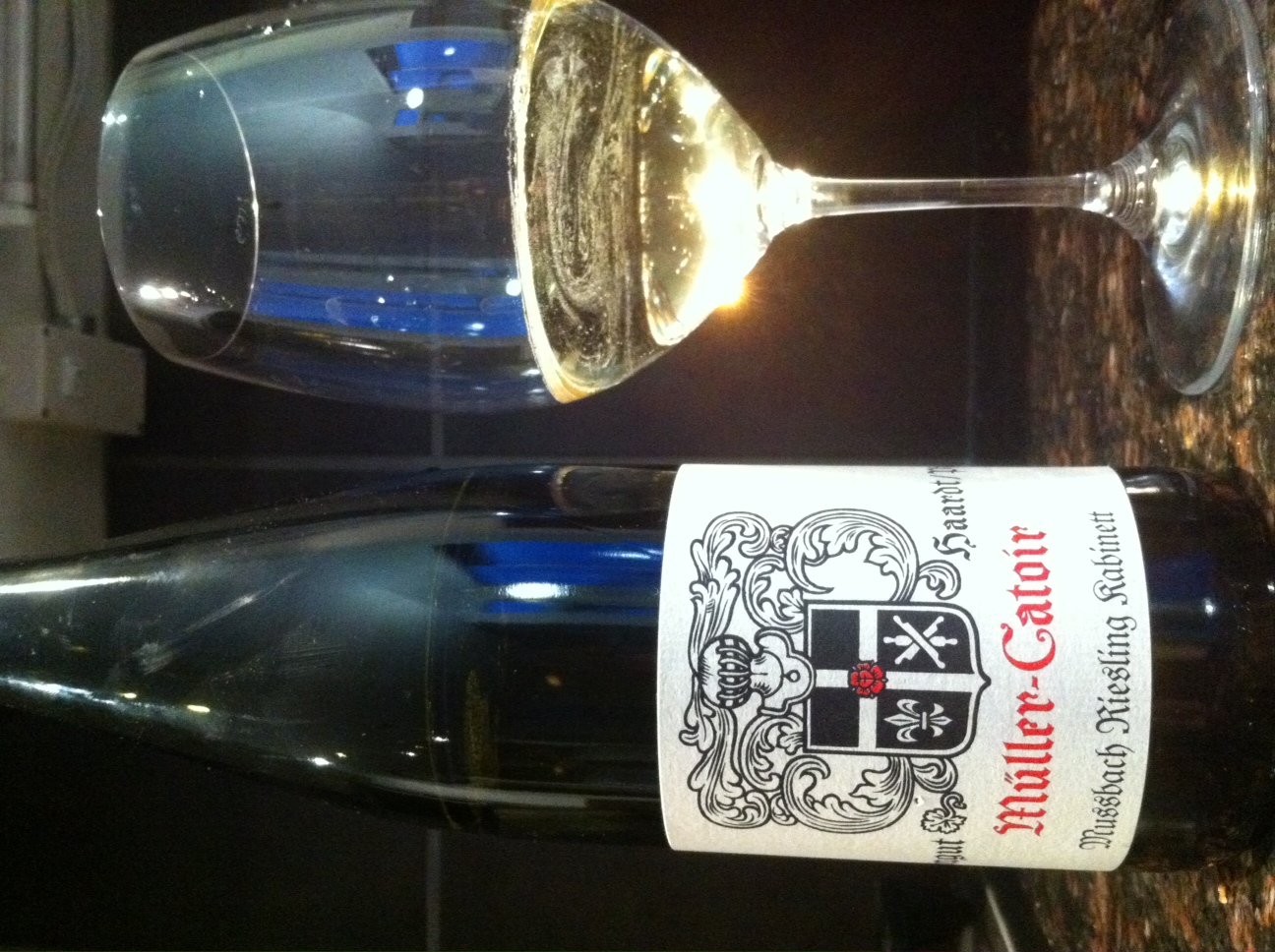
Wine Review: 2009 Muller-Catoir Mussbach Riesling Kabinett

24 03 2011

German wine aristocracy.

After last night’s CNDP debacle, I wanted to make sure I bounced back strong tonight.  So I turned to my go-to varietal (Riesling) in my go-to wine country (Germany) to bring you the first ever non-dessert white wine featured in PnP, the 2009 Mussbach Kabinett Riesling from Muller-Catoir.  I bought this wine a few months ago from Bin 905 on 4th St and 23rd Ave SW, on which visit I discovered that they have the most ludicrously large German Riesling selection in Calgary, probably in Canada…it’s like Anglo-Saxon Mecca in there.  I don’t go to Bin a lot, but I foresee a few periodic Riesling pilgrimages in my future. Read the rest of this entry »
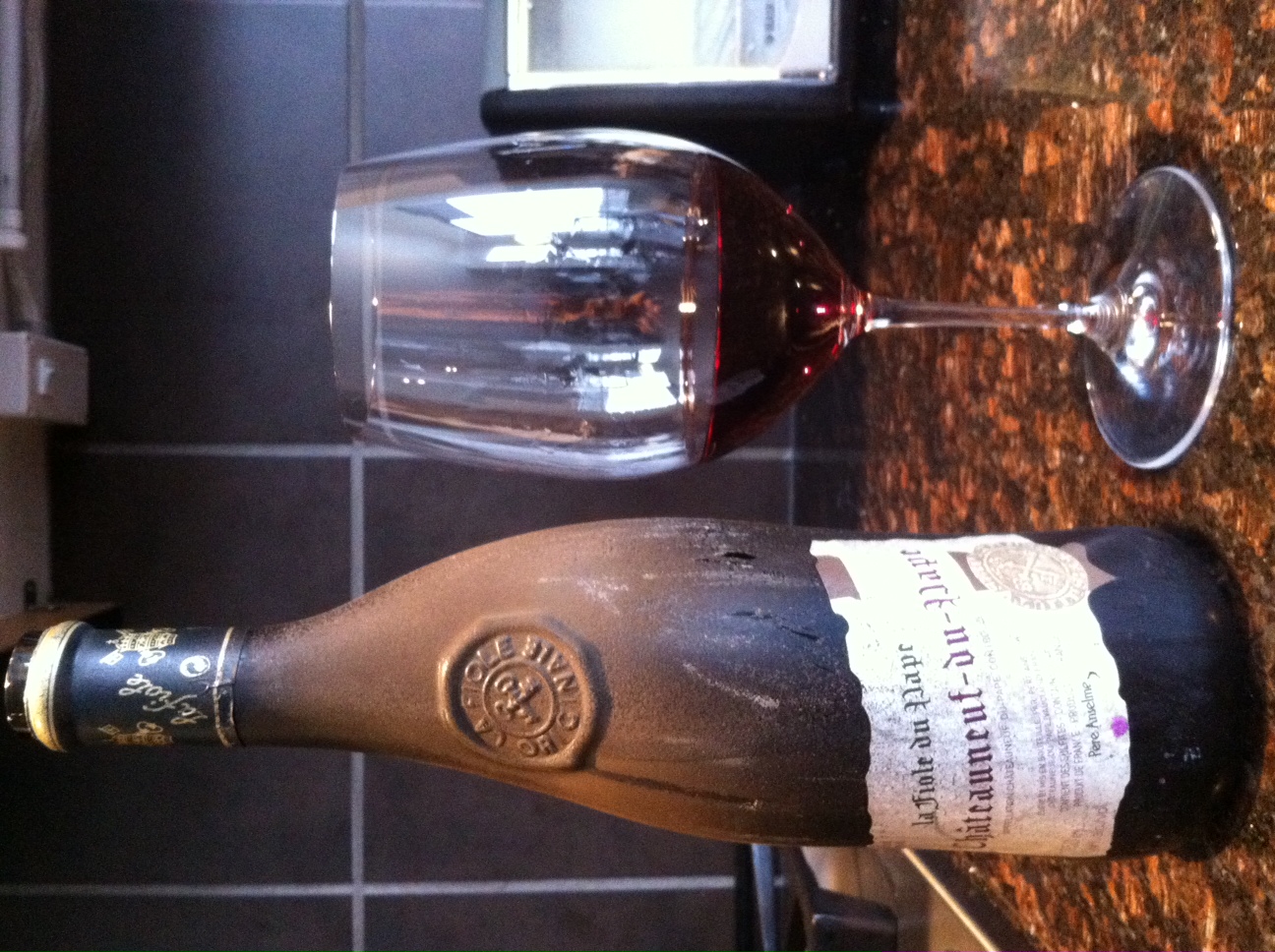


Wine Review: Pere Anselme “La Fiole du Pape” Chateauneuf-de-Pape (NV)

23 03 2011

I basically paid $35 for this lovely glass bottle.

I admit the obvious: I bought this because it looked like a bottle of buried-treasure pirate wine.  I knew I was being taken in by pretty packaging, but I figured that this was from Chateauneuf-de-Pape, one of France’s most heralded wine regions, so it couldn’t be THAT bad…right?  I forgot that top wine regions are like luxury cars:  they don’t sell with gimmicks.  If you walk into a Lexus dealership, the salesman probably isn’t going to bother offering you purchase rebates or free gas for a year; his sales pitch is going to be “It’s a Lexus.”  Chateauneuf-de-Pape, located in the Rhone Valley in the southeast of France, is a Lexus wine region: it doesn’t need anything other than its name on the bottle to draw people in.  So when a Chateauneuf producer starts messing with the bottle itself to draw in sales, it’s probably not a good sign. Read the rest of this entry »


Roving Wine Review: 2007 Gaja Promis @ Alloy

22 03 2011

If you haven't been to Alloy, go. Now.

I had an Important Business Dinner last night that took me to Alloy restaurant just off Macleod Trail on 42nd Ave. S.E…. my favourite restaurant in the city, and as it turns out, even better on somebody else’s tab.  There was remarkable food (I had a short rib appetizer with a roasted pepper and fenugreek chutney that should be illegal) and witty conversation, but most importantly, there was wine.  I was lazy and didn’t take contemporaneous notes, but this is the second time I’ve had the bottle we ordered, and it left enough of an impression that this review should still be fairly accurate.

The wine in question was the 2007 “Promis” from Gaja, made from grapes grown in the Ca’Marcanda vineyard in Tuscany.  Both the producer and the style of wine are rife with history. Read the rest of this entry »


Some Notes About Scoring

21 03 2011

It has been (correctly) pointed out to me that, in most cases, a wine’s rating or score is not an absolute value.  It’s not a direct measure of how good a particular wine is as matched up against every other wine in the world, but instead is a somewhat-relative reflection of how well a winemaker has created a wine of his or her chosen style, how well a producer has hit the vinicultural mark at which they were aiming.  So if you have two wines that are rated 90 points, it doesn’t necessarily mean that they’re equally matched to each other in every way in terms of flavour and quality; to properly assess these ratings, each wine is more accurately matched against others of a similar ilk.

My ratings don’t quite work that way. Read the rest of this entry »


Wine Review: 2008 Juan Gil Monastrell…and Is Kraft Dinner the Perfect Wine Food?

20 03 2011

Old-vines Monastrell...or Mourvedre...or Mataro...or whatever.

Super interesting Sunday night wine tonight:  the 2008 Juan Gil Monastrell from the lesser-known Jumilla wine region in eastern Spain.  This wine comes from grapes grown on 40+ year old vines; the older the vines, the less fruit they produce, but the more concentrated and complex that fruit is (the wonders of Mother Nature), which is why producers trumpet Old Vines if they have them.  Monastrell is a grape of many names, all of which strangely start with M:  apart from its Spanish name, it is known as Mourvedre (and sometimes Morastel) in France and Mataro in Australia.  I don’t know if there’s any kind of movement afoot to create an Esperanto-like universal world wine language, but if there is, I would sign the petition.  What makes the Juan Gil interesting is that Monastrell/Mourvedre/Mataro is usually a blending grape that gets added to wines made predominantly of other varietals in lesser quantities to boost the blend’s colour and structure; very rarely does it get to be the star of the show in a bottle of wine, but this Juan Gil is 100% pure Monastrell, front and centre. Read the rest of this entry »


Wine Review: 1989 Schloss Reinhartshausen Hattenheimer Nussbrunnen Riesling Beerenauslese

19 03 2011

Today was as good as it gets in terms of wine-drinking occasions:  we had two great friends over to our place to celebrate their recent engagement.  They are both amazing people and are perfect together, so this was definitely cause for opening something special.  Most people might think to toast news like this over Champagne — me, not so much.  We went with German Beerenauslese dessert wine instead, and once we tried it, there was no doubt that we came out ahead. Read the rest of this entry »


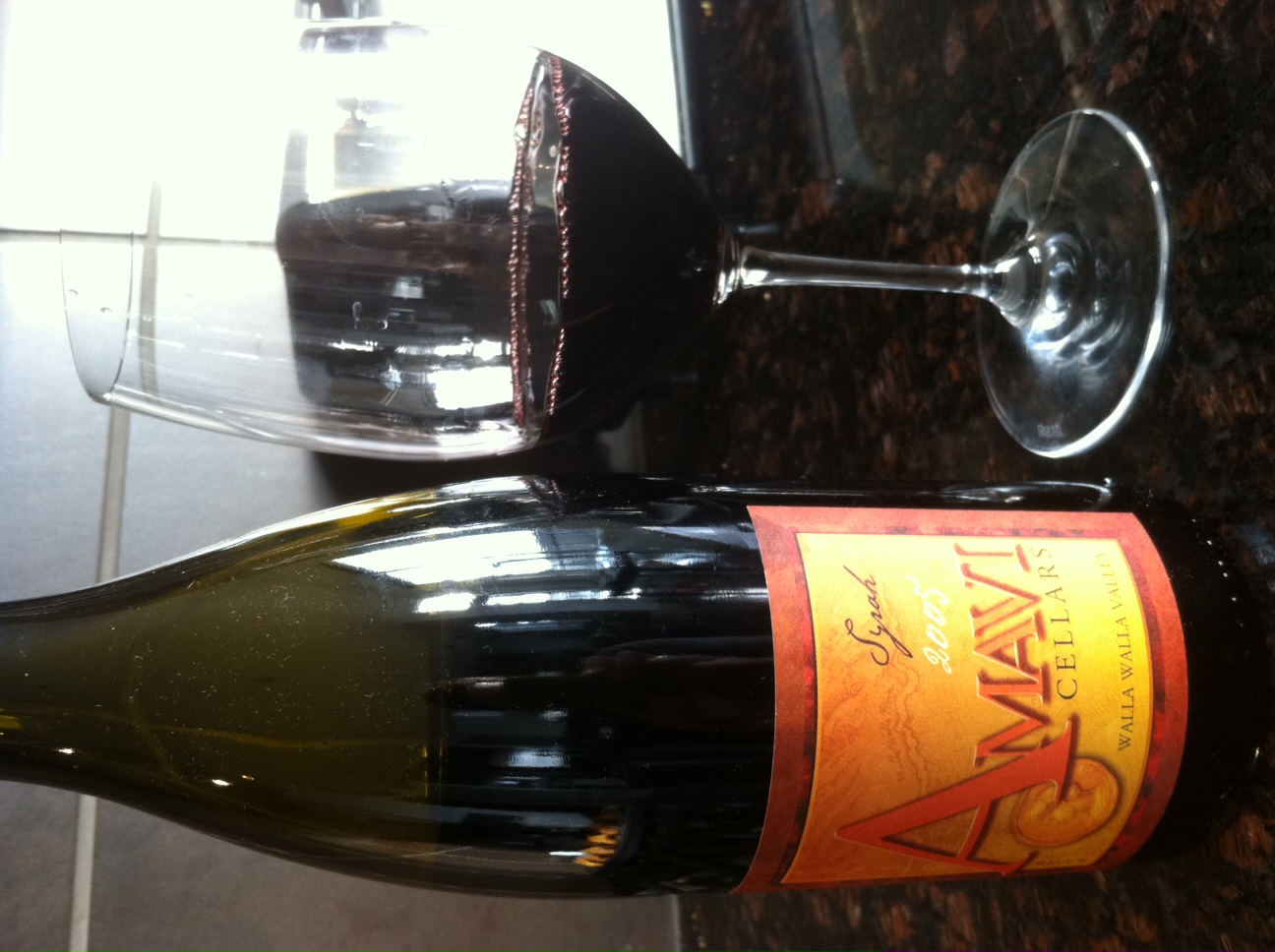
Wine Review: 2005 Amavi Cellars Syrah

17 03 2011

You had me at "Syrah".

This.  Wine.  Is.  AWESOME.

I promised a winner from Washington in my next review, and I have delivered and then some.  There are lots of good wines out there, but to me a great wine is one that keeps you coming back to the glass for each new sip or sniff wondering what you’re going to find next.  Great wines have depth, complexity and an interest factor, something compelling that latches onto you and won’t let go.  This wine is great. Read the rest of this entry »


The Basics: What’s Tannin?

16 03 2011

If you’re just getting into wine, you’re finding out that there is a LOT of information to assimilate and some steep learning to do.  Some of it, like figuring out the grape varieties and the major wine regions and the top producers, isn’t so bad, because it primarily just involves drinking a lot.  But other stuff, like the never-ending list of vocabulary that goes into describing a wine, is a lot trickier and can often become a barrier that increases the intimidation factor of wine to the point where many people decide it’s not worth the effort.

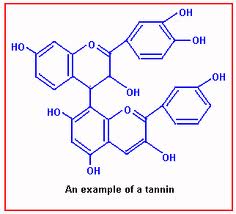
This should clear everything up...

For me, one of the terms in the wine glossary that I had the most trouble with was tannin.  Every wine review you see (including my own reviews below) makes reference to a particular bottle’s smooth, silky, bitter, soft, graceful, harsh or (stop me anytime) aggressive tannins…I had no idea what any of this meant until a couple years ago, well after I had started buying wine regularly.  Since it turns out that tannin is one of the basic building blocks of red wine and something that has to be understood by any would-be wine lover sooner or later, here’s my attempt at a primer. Read the rest of this entry »