New Links!

24 07 2011

I realized two things today:  (1) I hadn’t updated my Links section down the right-hand page of this site since I started PnP, and (2) my Links section sucked.  When thinking about how best to describe it, words like “half-hearted” and “filler” jumped to mind.  Well, no more — I set about re-tooling it tonight and I feel I’ve upgraded it to at least “work in progress” or “mediocre-plus”.  Check out my new additions below, most of which are wine sites that I visit on a regular basis.

I especially want to invite you to take a look at some of the other local wine blogs that are out there, all of whom do a wonderful job of building and promoting Calgary’s wine culture.  YYC Wine is sharp, well-written and easily readable, and they provide not only regular insightful wine reviews (with specific mention of where in Calgary/Alberta you can find each subject bottle) but also write-ups of special wine events in the city.  Check out YYC on Twitter (@yycwine), where they have been known to pass along info about some killer Calgary wine deals…  Tom Firth is a wine blogger and reviewer for Canada’s own Wine Access magazine, but I know him best from his prolific and interactive tweets (@cowtownwine)…I’ve gotten more than one piece of sage 140-character vino advice from him in the past few months.  Highlander Wine & Spirits (@highlanderwine) runs its own stream-of-consciousness wine blog, Vinous Virtuosity, as does the Calgary Herald with Uncorked, the latter of which I use more for local events news than actual wine write-ups.

Do you know of any other solid Calgary online wine contributors?  If so, please let me know in the Comments section below, because I would love to add them to my Links.  There’s an amazing amount of local expertise in our fair city, but I feel like a lot of people don’t know where to look to find it…that seems like something that can be fixed if we do enough to spread the word.  Have a great week!


Wine Review: 2008 Domaine du Vissoux Fleurie Poncié

22 07 2011

Confusing label, but quality white wine substitute.

Butter chicken was on the dinner menu tonight, but after having white wine for the last two nights in a row, I didn’t want to have it again, thus depriving me of the most natural spicy food wine pairing (as discussed previously here):  a slightly sweet, lower-alcohol, low (or no) tannin white like a German Riesling (natch) or a Chenin Blanc.  Since tannin and alcohol are notorious enemies of hot and spicy cuisine, I dug around for the red in my cellar likely to have the lowest levels of both, a difficult feat since booze and tannin are two of the hallmarks of most good red wines.  I came up with Beaujolais, a red wine region in the southernmost part of Burgundy in southeastern France that may be the world’s only premium red site focused on making wines from the Gamay grape.  Gamay is an ideal white wine pinch-hitter because it is generally light in body, fairly low in alcohol, and most importantly, extremely low in discernable tannins; it has the fruity punch of a red with the delicacy and texture of a white.  Not to say that it’s a match made in heaven with Indian food, but it stood the greatest chance of not clashing horribly. Read the rest of this entry »


Wine Review: 2010 Zestos Vinos de Madrid Blanco

20 07 2011

Malvar! You can't really see it in this picture, but the neck of the bottle says "Ole 'No Brainer' NB". Randomest neck foil ever?

Time to venture into the obscure!  Aside from being the first wine I’ve ever had out of an orange-tinted bottle, tonight’s vino is also the first wine I’ve ever had made from the Malvar grape.  Raise your hands if you’ve ever heard of “Malvar” before.  If your hand is currently resting on your lap, or if it’s up in the air but you’re lying through your teeth, you’re not alone:  even my most reference-y wine books had never heard of it.  The New Wine Lover’s Companion by Ron and Sharon Herbst is literally a dictionary of wine knowledge, but “Malvar” doesn’t show up in it.  Oz Clarke’s Grapes & Wines is a 300+ page book ONLY about the various different grape varietals, hundreds of them listed in alphabetical order, and “Malvar” is nowhere to be found.  In Jancis Robinson’s The Oxford Companion to Wine, which is a monolithic 800-page wine encyclopedia and probably the most famous wine reference book in the world, “Malvar” gets less than 30 words of attention:  “Malvar, white grape commonly grown around Madrid producing slightly rustic wines but with more body and personality than the ubiquitous Airen.”  Wow, thanks.  Basically, we’re on our own for this one. Read the rest of this entry »


Wine Review: 2004 Andrew Will Sorella

18 07 2011

I may have let PnP’s 50th wine review pass with a $13 bottle that didn’t quite scream “momentous occasion”, but I wasn’t about to let review #51 similarly slip by without bringing out the big guns.  As a belated “happy 50th”/”I can’t believe I’ve written 30,000+ words about wine for free” gift to self, I went to my current favourite red wine region last night for a special bottle:  the 2004 Andrew Will Sorella red blend from Washington State.  I got this wine for my birthday this year from a couple of very discerning and wine-savvy friends (thanks Tyler and Corey!) and am proud that I actually held out for 2 months before my resolve totally melted away…give me a premium Washington red and my willpower just evaporates.  The current release price for this wine is $75 to $80 a bottle, but I’m guessing a back-vintage bottle like this (the current vintage is 2008) probably pushed $100 or more.  Let’s get to it. Read the rest of this entry »


Wine Review: 2009 Loosen Bros. “Dr. L” Riesling

15 07 2011

Apologies for the long delay between reviews — I was fully planning on writing a new post on Wednesday, but those good intentions were interrupted when a tornado hit my neighbourhood in western Calgary…yes, it takes an act of God to tear me away from PnP.  Thankfully, aside from a children’s playset that was thrown from our backyard halfway over our neighbour’s fence and is now teetering on the brink of “structurally unsound”, we didn’t suffer any damage, and nobody in the area was hurt.  I think “I was in a tornado” is probably the ultimate “dog ate my homework” excuse for not doing something on time, so I will shamelessly rely on it here.

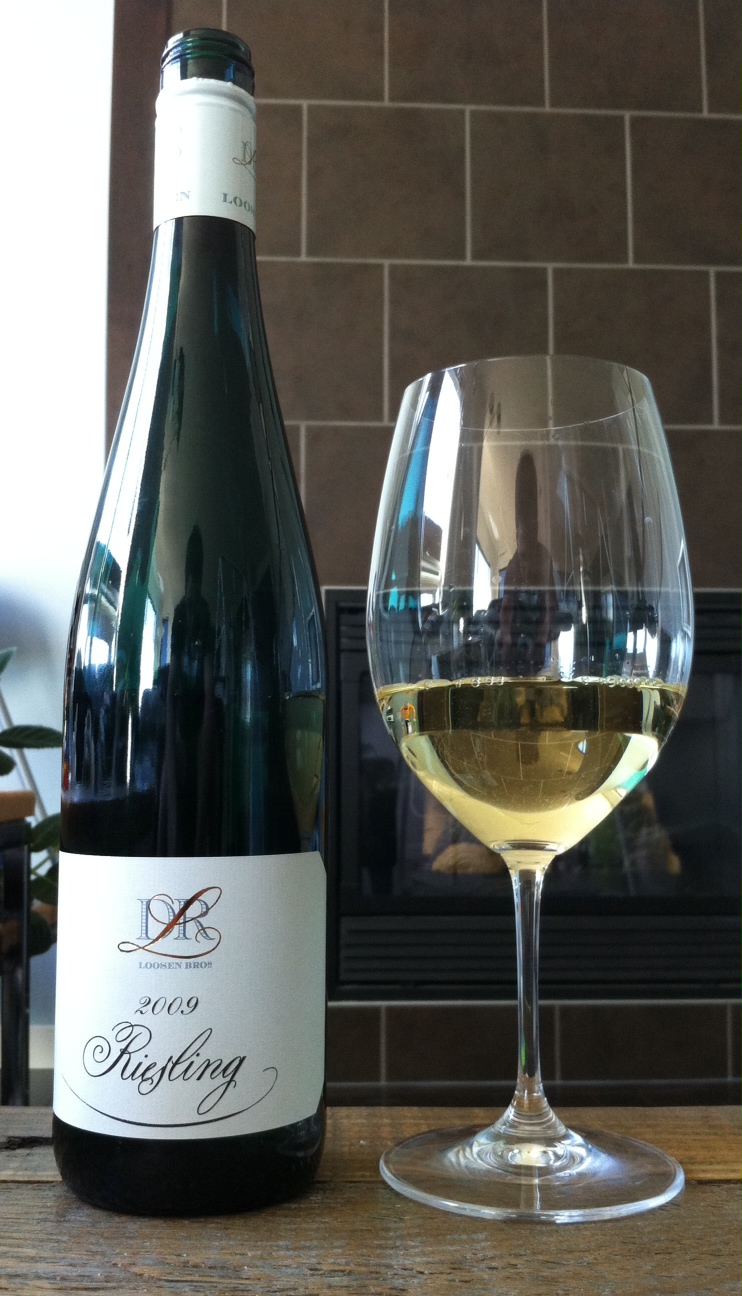
Only the top of the line for milestone reviews. At this rate, review #100 will be Arbor Mist.

Believe it or not, this is the 50th wine review that I’ve posted on Pop & Pour!  Not sure if that indicates anything other than that I drink a lot of wine, but it’s definitely milestone-y, so in honour of the occasion I was planning on pulling out a really nice bottle from my “good fridge” downstairs.  However, then I realized that I was having Chinese food for supper.  Between the spice, the sweetness and the deep-fried nature of most Chinese takeout menu items, it pretty much eliminates red wine from your pairing arsenal and cries out for an off-dry (i.e. slightly sweet, to handle the sweeter sauces and offset the spice), highly acidic (to cut through the frying fat) white…wait, what’s that?  Did German Riesling just go with ANOTHER type of food?  Amusingly, the Riesling that I had on hand that best fit the bill for Chinese might also be the cheapest bottle in my whole cellar:  the 2009 “Dr. L” Riesling, available basically anywhere booze is sold, which I got at the Superstore liquor store for $13. Read the rest of this entry »


Wine Review: 2009 Laughing Stock Chardonnay

11 07 2011

In case my constant compulsive pumping of Riesling didn’t already tell you this about me, I’m not much of a Chardonnay guy.  I’m not an active hater, but I can generally take it or leave it, and it’s definitely not where my eyes go on a white wine list.  I find most oak-aged Chardonnays to be a bit of a blunt instrument, tasering the taste buds into submission with a lumberyard of wood (often accompanied by crazy high alcohol) and overwhelming the sense of delicacy that I think the best white wines possess.  Conversely, I find most unoaked Chardonnays to be, well, extraordinarily boring:  Chardonnay is a fairly neutral grape by itself, without any intense flavours, and with no oak providing backup vocals it can lack the layer of intrigue that it sorely needs.  Of course, this dreary portrait doesn’t apply to all Chards out there (Burgundy fans, put down your pitchforks — I can’t afford your wines anyway), but it covers more of them than it should.

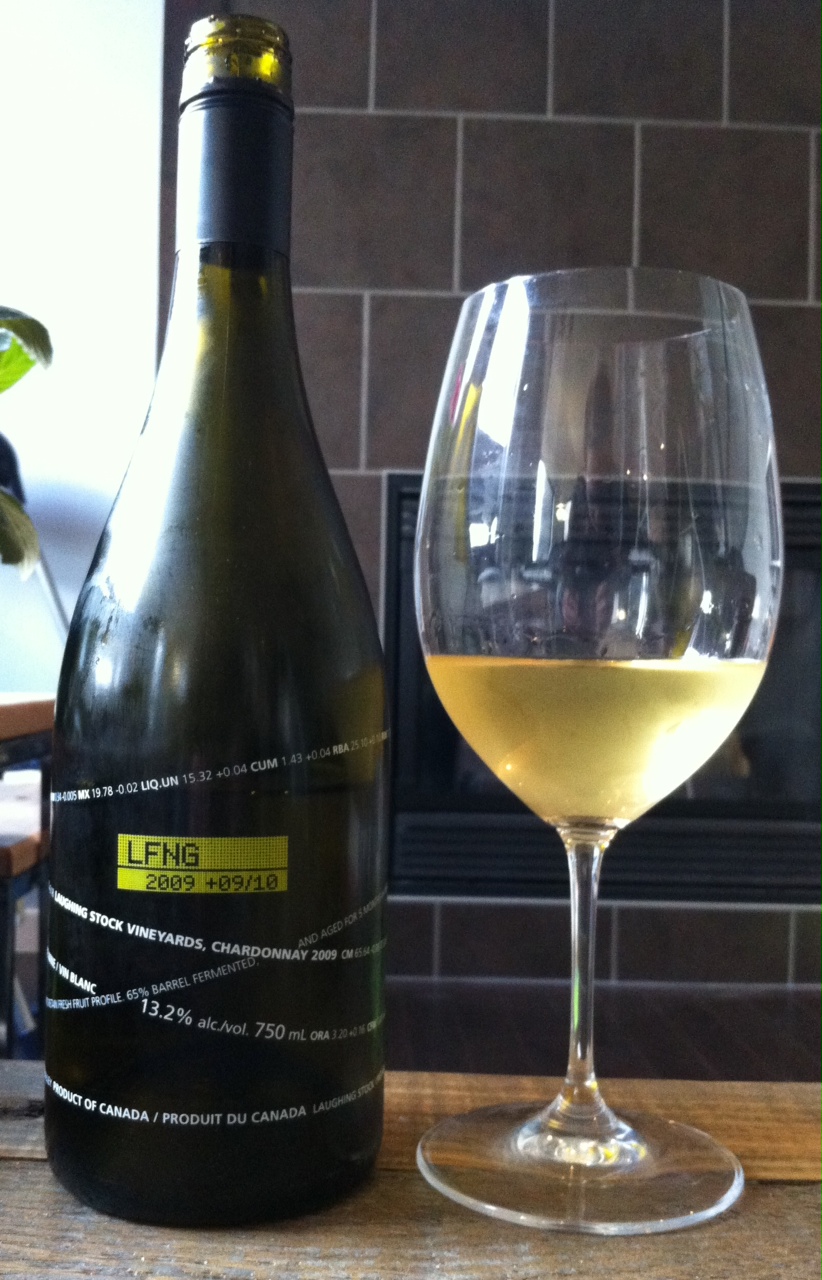
Great bottle, great marketing, great wine.

But leave it to my (now official) favourite Canadian producer to walk that difficult middle ground between extreme oakiness and mind-numbing neutrality.  Coming off the extremely strong showing of their signature red blend Portfolio back in May, the Okanagan’s Laughing Stock Vineyards kept the PnP love fest going with their 2009 Chardonnay, which struck a perfect balance.  The LS label info alone gave me high hopes, for two reasons.  First, the alcohol level was only 13.2%, not a percent and a half higher like some New World Chardonnays; since all the alcohol in wine comes from the sugars in ripe grapes, this non-astronomical alcohol level means that the grapes weren’t crazily overripe when they were fermented, which in turn means that the resulting wine likely won’t be overly full and will likely retain some much-needed acidity.  Second, instead of being aged in small oak barrels for a long period of time (usually a year or more), the LS Chardonnay was actually fermented in oak and then aged in larger oak barrels called puncheons (the bigger the barrel, the less surface area contact with the wine and the less flavour imparted) for only 5 months.  As compared to strictly aging in oak, barrel fermentation generally results in more controlled, better integrated and softer oak flavours being imparted into the wine, all good things for someone easing their way into oaky whites.  This is why more information on wine labels is always better than less! Read the rest of this entry »


Wine Review: 2008 CARM Douro Reserva

8 07 2011

Know what the problem with most wine labels is? Not enough turquoise.

Most people are probably acquainted with Port, the fortified sweet wine from northern Portugal that has never met a blue cheese platter or a dark chocolate dessert it didn’t like.  Port is made by partly fortifying a blend of indigenous grapes from Portugal’s Douro region, but interrupting the fermentation before all of the grapes’ sugar is converted into alcohol by adding concentrated grape spirits to the mix.  These spirits vault the booze level over 20%, which kills off the yeast driving the fermentation and leaves some residual sugar in the finished product:  a half-fermented, spiked, naturally sweet wine.  What would happen if this fortification process wasn’t interrupted and the yeast wasn’t killed off before it turned all the grape sugar into alcohol?  Dry Douro table wines like this would happen.  Not all of grapes in this region are pre-destined for Port production anymore; an increasing proportion of them are cultivated in the steep terraced vineyards along the banks of the Douro River strictly for non-dessert wines.  These wines are fascinating to try, because although it is only production and aging methods that separate them from their sweeter, more famous counterparts (which are made from the same grapes grown in the same areas), they show a completely different side of Portugal in the glass. Read the rest of this entry »


Wine Review: 2010 Jorge Ordonez Botani Moscatel Seco

6 07 2011

Summer is finally, briefly here -- I have just the wine.

It’s wines like this that make a good local wine shop (or a friendly neighbourhood blog) so important.  Apart from an atypically stylish label, this wine has nothing going for it that would normally make you pick it up off the shelf:  it’s not bargain-basement cheap (usual retail is $25ish), it comes from a completely obscure region (Sierras de Malaga) in a country (Spain) that is not at all known for its white wines, and it’s made from a grape (Moscatel Seco, otherwise known as dry Muscat) that doesn’t exactly have Chardonnay-esque market appeal.  Why have a $25 Muscat from southern Spain when you can stick to Wolf Blass and Kim Crawford and avoid risking that kind of cash on the unknown?  Because it’s freaking awesome, that’s why.  Thanks to a good wine store initially talking me into taking the plunge, I’ve now tracked down Botani in three successive new vintages, possibly the longest streak in my brief wine-collecting career, and if I can encourage some of you to be similarly adventurous then this blog will be worth its while. Read the rest of this entry »


Wine Review: 2005 Andrew Rich “Les Vignes En Face” Syrah

4 07 2011

What a difference a day makes.  I first cracked this wine last night and was sort of ambivalent about it, despite the fact that it represented my current ideal red wine region and grape (Washington State Syrah); as a result, I was fully gearing up to write a “nice try, but…” 85-86 point review tonight.  But then I had the rest of the bottle tonight and everything changed:  the rough and rustic edges had softened, the fruit was better balanced, and every component of the bottle was suddenly in harmony.  How cool is wine, that 24 hours in the fridge can make that transformative a difference?

Ridiculous name, but give it time...it'll grow on you.

Let’s back up.  I was tremendously excited to try this wine because it was simultaneously recommended to me by both my favourite Calgary wine shops (Ferocious Grape and Highlander Wine & Spirits) and because it was a good-quality Washington State Syrah for under $30, not a common combination.  The grapes for Les Vignes En Face came from two of the better Syrah vineyards in all of Washington, Ciel du Cheval (the vineyard that spawned my poor cork-ruined Andrew Will wine a few weeks ago) and Klipsun.  Even better, it was a 2005, so it had already had some time to settle down in the bottle before making its way into my greedy hands.  The only downside was its unfortunately pretentious faux-French name, which as far as I can tell roughly translates to “The Vines In Front” (note to producers:  if you’re not in France, don’t name your wines French names), but questionable nomenclature notwithstanding, I still had high hopes. Read the rest of this entry »


Wine Review: 2006 Therapy Vineyards Superego

1 07 2011

A+ label art -- even cooler up close, AND appropriate Canada Day colouring.

Happy Canada Day, everyone!  I would have been remiss if I didn’t focus on a wine from my home and native land tonight, but that proved to be more of a challenge than I thought, as my cellar’s currently a little thin on the Canada front — out of the 90-odd bottles that I keep stored in an army of wine fridges in my basement, only two of them are from Canada.  One of them is a $15 Niagara Cabernet Sauvignon that I’m a little scared to open, and the other one is this bottle.  Fearing the patriotic retribution that might ensue if I rated a cheap Canadian wine 65 points on Canada Day, I instead went with this bottle, the 2006 Superego from Therapy Vineyards in the Okanagan Valley.  You may know Therapy from their ink-blot labels and punny wine names (Freudian Sip white blend, Pink Freud rosé, etc.); the Superego is their top red bottling, made from top quality grapes using stringent processes to be Therapy’s flagship wine.  As you can see in the picture to the left, it comes in an absolutely spectacular-looking bottle that rivals Chile’s Montes Folly Syrah as my favourite wine label art of all time.  I got this particular bottle from a fellow wine lover and a Therapy devotee (thanks Allison!) and have been holding it for the right occasion.  Happy 144th, Canada — tonight I pop and pour for you! Read the rest of this entry »


Wine Review: 2006 Trimbach Pinot Gris Reserve

29 06 2011

Long time no PnP!  Sorry about that — I was away on the weekend and discovered both at the time and after coming back that trip-related schedule lulls are multiplied tenfold when babies are involved.  However, I am now back in the saddle and again devoted to reducing my cellar one bottle at a time.  Tonight’s wine seemed like a promising combination:  a region (Alsace, France), producer (Trimbach) and varietal (Pinot Gris) that I love, all at a bargain price (I think this bottle was $17).  Too good to be true?  Oh yes.

"Reserve" is the wine equivalent of "part of a nutritious breakfast".

For those of you wondering if Pinot Gris has any relation to Pinot Grigio, the Italian white that I reviewed a few wines ago, they’re actually the exact same grape, although they usually manifest themselves in the bottle in very different ways.  Pinot Grigio is grown and made to be light, crisp, refreshing and neutral-tasting, whereas Pinot Gris is much fuller, lusher, riper and more flavourful.  If you taste classic examples of the two back to back, you wouldn’t believe they were the same grape.  Pinot Grigio’s home is northeast Italy, while Pinot Gris is best known from Alsace, where it is one of four “noble grapes” allowed to be in the region’s top Grand Cru wines (the others, if you’re curious, are Riesling, Gewurztraminer and Muscat).  I personally prefer the Gris to the Grigio, as I find it more interesting and think it has much more personality in the glass.  Even better, like many Alsatian wines, it can be a value:  I’ve seen Grand Cru Pinot Gris on sale for less than $30 a bottle.  It’s also consumer-friendly, because all Alsatian wines actually list the grape on the bottle label, unlike the wines from almost every other spot in France. Read the rest of this entry »


Wine Review: 2007 Edward Sellers Syrah

23 06 2011

Better than a fancier, more expensive version of itself -- awesome!

Apologies in advance for the short-form review, but I haven’t gotten to the computer until now and I’m heading out of town tomorrow for the weekend, so faced with the Sophie’s Choice of not posting at all for almost a week or posting a lame point form review, I went with lameness over absenteeism.  This Syrah from the Paso Robles region (which is between San Jose and LA in southwest California) is mainly interesting because it’s the cheaper, less fancy, less package-focused (screwcap here vs. cork on the other bottle) version of the Edward Sellers “Le Thief”, which I reviewed way back in the infancy of PnP.  Granted, the Le Thief was a Syrah-based blend, and this is pure Syrah, but I got the impression that the Le Thief, pretentious name and all, was set up as a higher-end offering, while this Syrah was more the base model.  All of this is only important because I think this Syrah is a way better wine.  Condensed review…go! Read the rest of this entry »


Wine Review: 2008 Rocca Delle Macie Confini Chianti DOCG

20 06 2011

Before I get into tonight’s wine, if you read my review of the 2007 Amavi Cellars Syrah from Friday, you’ll know that I was musing about why the 2005 Amavi Syrah tasted so different from the 2007 when so many of the variables going into it were the same, and I vowed to take to Twitter to get some answers right from the source.  Lo and behold, the Information Age is a wonderful place to be, and the good people at Amavi have posted a tremendous and thorough response to my Syrah-related queries in the comments section of the review.  So to recap, I had a bottle of wine in Calgary and then posted a blog article and a Twitter question, and then someone in Washington State who I’ve never met went and personally asked the head winemaker at Amavi Cellars what the difference was between his 2005 and 2007 Syrahs!!  There is very little cooler than that.  Thanks Amavi!

Warning: drink with food or face the consequences.

I wish I could say that tonight’s bottle has spawned Amavi levels of inquisitiveness and interest, but not quite.  I’ll get to that in a moment.  Chianti is a well-known wine region located in Tuscany, in west-central Italy, that has seen its share of ups and downs in recent decades.  Once regarded as one of the cream of the crop of Italian vinicultural areas, it then became the victim of shoddy production and overplanting and lost its reputation for quality, which it is only now starting to regain.  The problem with Chianti is that a lot of it is still pretty bland, although some of the higher-end renditions from the Chianti Classico region (the historic heartland of Chianti, which forms a smaller sub-zone within the larger area of Chianti) definitely can make you stop and take notice.  The main thing you need to know about wines labelled as Chianti is that they will be predominantly made using the Sangiovese grape, a varietal that shows best in Tuscany and isn’t usually seen that much elsewhere (though it WAS in the 2009 Abbot’s Table from Washington State, if you’ll recall…I doubt you’ll recall). Read the rest of this entry »


Wine Review: 2007 Mercer Columbia Valley Merlot

19 06 2011

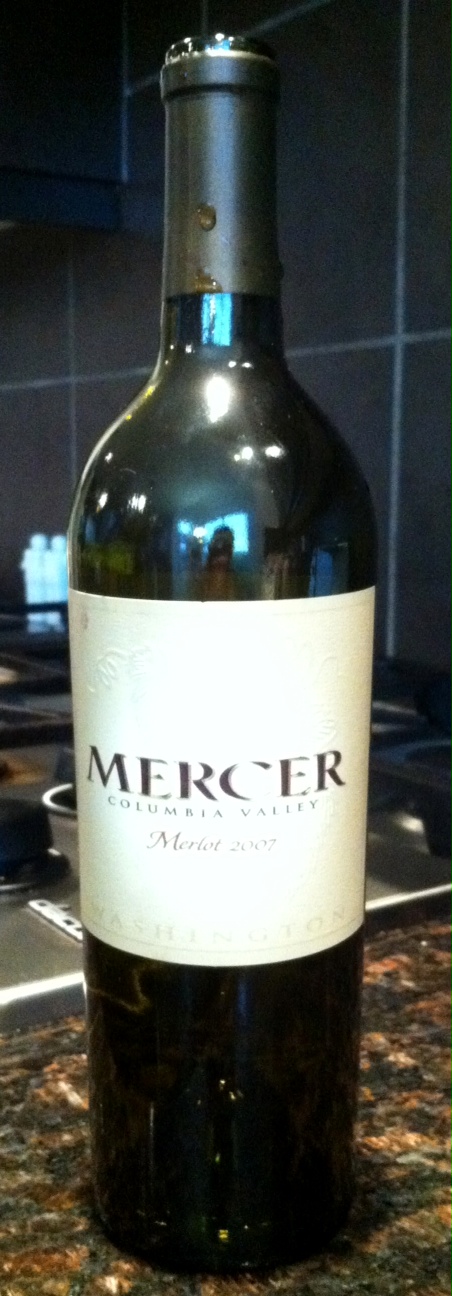
Special delivery from the tasty factory.

Right after reviewing a wine (the 2007 Amavi Syrah) that was identical to one reviewed previously but for the vintage, tonight I’m tackling a wine that’s identical to a prior review but for the grape.  I reviewed the 2007 Mercer Columbia Valley Cabernet Sauvignon at the end of March, and tonight I stick with the same vintage (2007), the same producer (Mercer) and the same subregion (Columbia Valley in Washington State), but I’m subbing out one full-bodied red (Cab) for another (Merlot).  As I look back on my previous Mercer review, it strikes me how similarly these two wines have been put together; both are built to pop, pour and enjoy in the near term, with big accessible fruit and no hard edges, and both are ripe, friendly and easy to drink.  Both are also a direct shipment from the tasty factory — they’re absolutely delicous, the Merlot even more so than the Cab.  I bought this wine over the weekend from Highlander Wine & Spirits because it was crazily on sale:  half off normal retail price at $20!  It’s one of my rules in life not to turn down Washington State wine when it’s 50% off…I’m principled that way. Read the rest of this entry »


Wine Review: 2007 Amavi Cellars Syrah

17 06 2011

Yes, I drank the whole bottle before remembering to take a picture. Shoot me.

This is a Pop & Pour first:  a review of a wine that has been previously featured on this site, just in a different vintage.  I have very fond memories of the 2005 Amavi Syrah from Walla Walla Valley in Washington State, which bears the eternal distinction of being PnP’s first 90+ point wine (92 points) and which delivered layer after layer of complex, savoury, intriguing goodness when I had it back in March.  Skip forward two harvests and you get to tonight’s wine, Amavi’s 2007 rendition of the same Syrah from the same region, which I’ve been eagerly awaiting to compare to its predecessor ever since I bought the bottle.  The ’07 had big shoes to fill (I still vividly remember the ’05 three months later), but it definitely delivered, albeit in a very different way than I expected. Read the rest of this entry »