Beautiful Bubbles: Benjamin Bridge Trio

3 02 2016

[These wines were provided as samples for review purposes.]

If you have a passing familiarity with the Canadian wine scene, you’re probably pretty comfortable about what’s where.  You know that the two big players are the Okanagan and Niagara.  You know where to look for dynamite Riesling, Gewurz, Gamay and Cab Franc.  You may know about the potential rise of Syrah out west, about new possibilities in the Similkameen and a focus on subregional quality in Prince Edward County and the Golden Mile Bench.

But did you know that the best sparkling wine in Canada may well be made in…Nova Scotia?
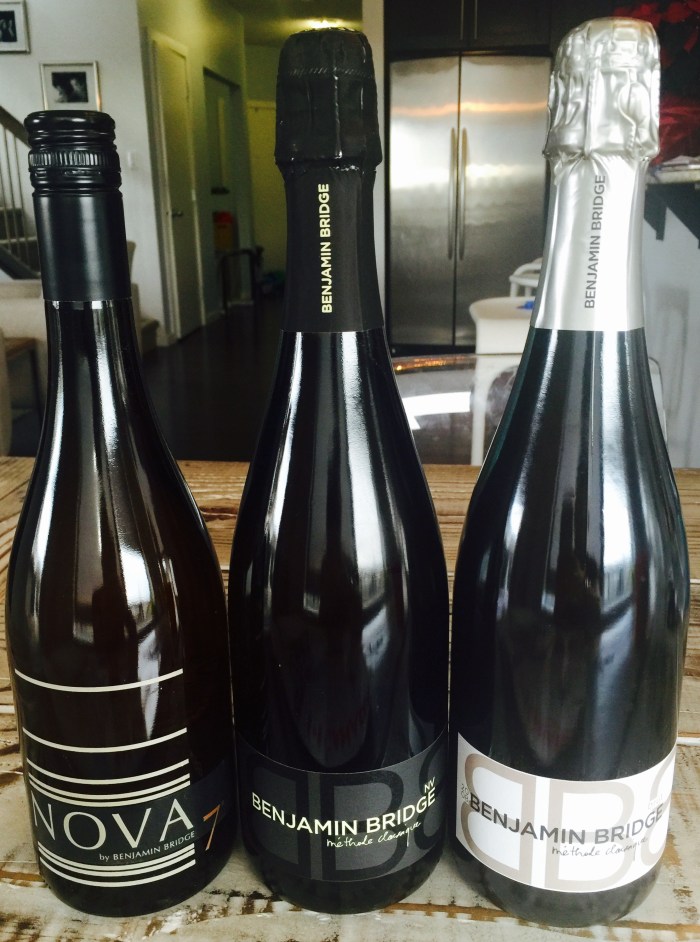
IMG_3824

A Nova Scotia awakening.

Despite only being in existence for just over a decade, Benjamin Bridge definitely deserves a place at Canada’s bubbly head table, and to my mind they are already the cream of the crop.  Located in the Gaspereau Valley northwest of Halifax, in north-central Nova Scotia (bordering the Bay of Fundy as opposed to the Atlantic), Benjamin Bridge is without question the most acclaimed and well-known winery east of Niagara, producing a wide range of bottlings but focusing heavily on traditional method sparkling wines.  The Gaspereau, with its (unsurprising) cool climate and maritime breezes, delivers a colder, shorter growing season promoting leaner ripening and lower yields, one remarkably similar to bubbly’s Mecca, Champagne in France.  The marginal conditions and harsh winters mandate partial reliance on hardier and earlier-ripening hybrid grapes, which are not usually known for their complexity and delicacy in the bottle, but somehow the winery makes them sing, embracing rather than hiding them and adding a unique sense of intrigue to the wines as a result. Read the rest of this entry »

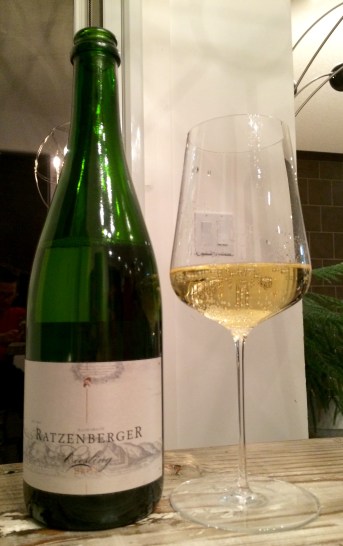


Wine Review: 2008 Ratzenberger Bacharacher Riesling Sekt Brut

13 12 2015

[This bottle was provided as a sample for review purposes.]

Redefining the world of German bubbly.

Redefining the world of German bubbly.

What’s this?  A wine review?  Isn’t this a whisky blog now?  OK, I probably deserved that.  But Advent only comes around once per year, and since no one yet has taken up the torch of my idea to find 24 good half-bottles and make a Wine Advent Calendar, this is what you get instead.  For those wine lovers out there just dying for the calendar to turn to January, this one’s to tide you over.

This bottle is another selection from Cellar Direct (cellardirect.ca), the online Canadian Natural Wine Club that allows people from all over the country to have high-quality, artisanal, naturally made wines shipped to their door via an array of tailored subscription packages ranging from $40 to $80 per month depending on your location and the package selected.  Since I last wrote about the service back in September, it has revamped its website, introduced an offer of two free bonus bottles for every 24-bottle annual subscription, and added an online shop (which will be operational in January) where Cellar Direct members can order more of their favourite bottles over and above their subscription.  It has also gotten rave reviews in BC, where price increases and regulatory chaos have otherwise made reasonably priced access to many good wines a pipe dream.

The one thing I can so far say for sure about Cellar Direct is that its selections are not fooling around; each of the three bottles I’ve now had the chance to try from their library have been of exceptional quality and proud ambassadors of where they’re from.  These are wines from somewhere as opposed to wines that could be from anywhere, and this gets all the more impressive given that this latest wine is a bottle of Sekt.  Nobody usually makes quality and terroir proclamations about Sekt (German sparkling wine), and for good reason:  most Sekt doesn’t deserve it.  In fact, it’s hard to say anything specific about Sekt as a category because it might be the least regulated category of Old World wine I’ve come across.  German wine law doesn’t mandate that Sekt be made of any particular types of grapes; it doesn’t even require those grapes to be from Germany; and it doesn’t require the wine to attain its bubbles any particular way.  Sekt is required to be at least 10% abv, but after that, all bets are off. Read the rest of this entry »