By Raymond Lamontagne
Corked bottles suck. Alas, they remain part of wine life despite the myriad of precautions now taken during cork production and in modern wineries. The Bricks Wine Advent Chateauneuf-du-Pape curse lives on, at least for the three of us providing this coverage. We forge ahead. Today’s bottle appears rather short and squat under its wrapping, perhaps heralding some form of compact power in the contents therein. Now this is intriguing…

Petite Sirah! Robert Parker once described Petite Sirah as “the most underappreciated red wine in California for drinking pleasure and longevity.” I did not expect this variety to put in an appearance, although I’m more than pleased to welcome it into the Advent fold with a big old plummy, tannic, spicy hug. Taking off the wrapping here makes me think of the Fonz strolling into the room with his patented “Ayyyy….”. However, there was a time when the identity of this grape was far from clear. So much confusion abounded that at least one entire book chapter has been written about the issue, and it reads like a compelling detective story. You see, the “Petite Sirah” moniker was once applied to at least four distinct grapes in California vineyards, and likely more besides: true Syrah (fair enough), the obscure Peloursin (which still retains a toehold in old mixed plantings and even occasionally makes its way into wines such as the various Zinfandels from Carlisle), and even Pinot Noir (errrr…that one’s a bit of a stretch). Eventually, various researchers ascertained that around 90% of what was called Petite Sirah in California was actually Durif, itself a cross of Syrah and Peloursin bred in France by French botanist Francois Durif. Mystery solved, and the stage was then set for this grape to become a fairly well-known international celebrity…occasionally even called by its original French name. Speaking of names, get a load of this particular bottle’s handle: “Royal Punishers”. Mildly disturbing and severely badass.
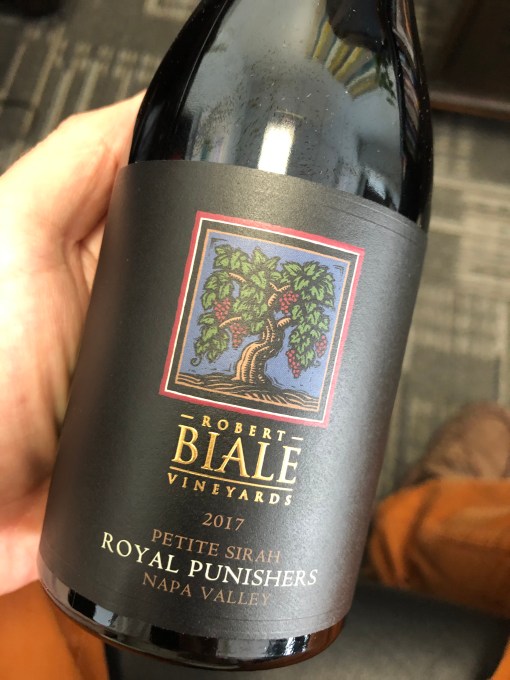
A Zinfandel specialist located in the Napa Valley, Robert Biale Vineyards also makes a point to honour the deep history of Petite Sirah in the state. School chums Bob Biale and Dave Pramuk began this endeavour to preserve the tradition of the historic old vines in Napa that were often left to languish until winemakers started waking up to the possibilities permitted by the intense fruit that such vines can produce. Bob’s father Aldo used to sell jugs of homemade Zin to various neighbours and friends, many orders for which were placed over the phone. The phone line, though, was a so-called “party line”, susceptible to eavesdropping. As Aldo was not exactly selling his wine through, ahem, legal channels, he had his customers use the code phrase “Gallo Nero” (or Black Rooster, of Chianti fame) when ordering a jug. The code name then shifted to “Gallina Nero” or “Black Chicken”, a name that now graces one of the Biale Zinfandels. A keen interest in viticultural history remains a core strand of the Biale winemaking approach, along with careful farming and encouraging the effects of terroir to shine forth in the finished wines. The back label on the present bottle refers to a “black and blue” wine, a coy hint as to the genesis of this wine’s name.

The 2017 Robert Biale Vineyards Royal Punishers Petite Sirah is made from hand-sorted fruit from the Varozza vineyard, meticulously farmed by the family of the same name. This wine is fermented in open-topped vessels, with ample punch down of the cap followed by a Burgundian oak regime (30% new). The wine is poetically enough a rather inky purple-blue in the glass, a dead ringer for Welch’s. My glass wafts up an expanding nebula of blueberry and black cherry pie, blackberry, purple Mr. Sketch marker, black tea, cinnamon stick, old dried rosemary and peppercorns, lavender, menthol, graphite, sautéed wild mushroom, pumpernickel bread, and milk chocolate. Beneath this cloud, the sugar plum and fig jam palate is reinforced by bands of ripe chewy tannin and scattered shards of hazelnut and dill oak. This is big, but markedly structured, and compelling in ways that some big wines are not. This taskmaster knows when to pull back just a little. A curious orchard fruit note flits in and out of what is otherwise a black fruit and baking goods profile, something almost like cooked pear. The finish lingers, wisps of coffee bean and more pie crust. Hurts so good.
89+ points
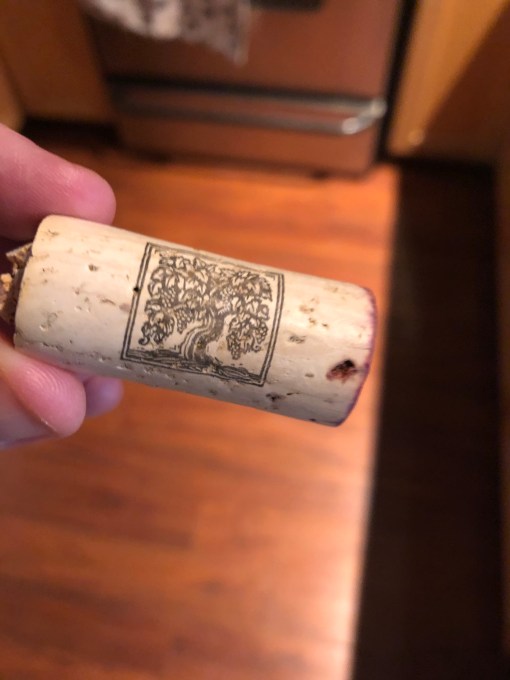
Cork Rating: 7/10 (Great graphic. The other side has the winery name, mercifully devoid of a phone number.)


 cabernetdialectic (Raymond Lamontagne)
 Dan Steeves
 Peter Vetsch
 tylerderksen
 pop & pour