Wine Review: 2010 Prospect Winery Major Allan Merlot

3 10 2012

[This bottle was provided as a sample for review purposes.]

Prospect Winery, colour me impressed…again.

After being quite pleasantly shocked by the first bottle of red wine that the Prospect Winery sent my way (the 2009 Red Willow Shiraz, written up here), I opened the second and final red they had provided last night thinking that it was fighting against a strong precedent.  I wasn’t heading into this bottle with the lowered expectations with which I had traditionally approached inexpensive Canadian wine; instead, after Prospect’s dynamic Shiraz, I was looking for big things, at least as far as sub-$20 BC Merlot goes.  And while I’m still trying to figure out whether I was satisfied or disappointed with the outcome, I continue to be refreshed and enthused by the fact that I’m starting to approach my own country’s wines with something resembling optimism…because of that alone, Prospect Winery has already succeeded in its mission to showcase the various varietals of the Okanagan in an affordable way.

Since I covered the winery’s corporate ancestral lineage in detail in my previous PW post, I won’t rehash it here other than to say that the Prospect lineup is part of the Mission Hill family once removed, with its own winemaker and plans to create a stand-alone winery.  Of the various brands falling under the umbrella of MH affiliate Artisan Wine Co., it may be the one with the brightest prospects (pun only half intended), putting out dependable, varietally-correct wines at very reasonable prices.  Each of Prospect’s bottlings is named for a different ecological or historical feature of the Okanagan Valley; the Major Allan Merlot is an homage to Allan Brooks, a prolific wildlife artist whose wildlife paintings are known across North America (and on this bottle’s label, which showcases one of them).  I was particularly interested to try this wine, because, as far as I could tell, unlike many of Prospect’s other offerings, the Major Allan is not currently available in Alberta.  In other words, unless my research is wrong, my home province may just have to take my word for this. Read the rest of this entry »



Wine Review: 2009 Prospect Winery Red Willow Shiraz

13 09 2012

[This bottle was provided as a sample for review purposes.]

They (thankfully) don’t make inexpensive Canadian wine like they used to.

Another day, another foray into the once-nebulous-and-terrifying world of inexpensive Canadian wine.  My connotations of this corner of the market harken back to my university days in Victoria a decade ago, when my roommate and I would stop by the nearest government-run liquor store to pick up a $17 magnum of something local and atrocious before having friends over for drinks.  I have only recently started to get over the stigma that built up in my brain due to the bad-wine headaches that ensued from those bottles, and I remain a touch leery whenever I see a bottle from BC or Ontario that dips below the $20 mark.  Thankfully for me, I recently received a vinous intervention in the form of a half-case sample of wines from the Okanagan’s Ganton & Larsen Prospect Winery, all of which clock in under the $20 threshold, and one of which particularly intrigued me:  this bottle of 2009 Red Willow Shiraz. Read the rest of this entry »


Wine Review: 2010 Painted Rock Chardonnay

3 02 2012

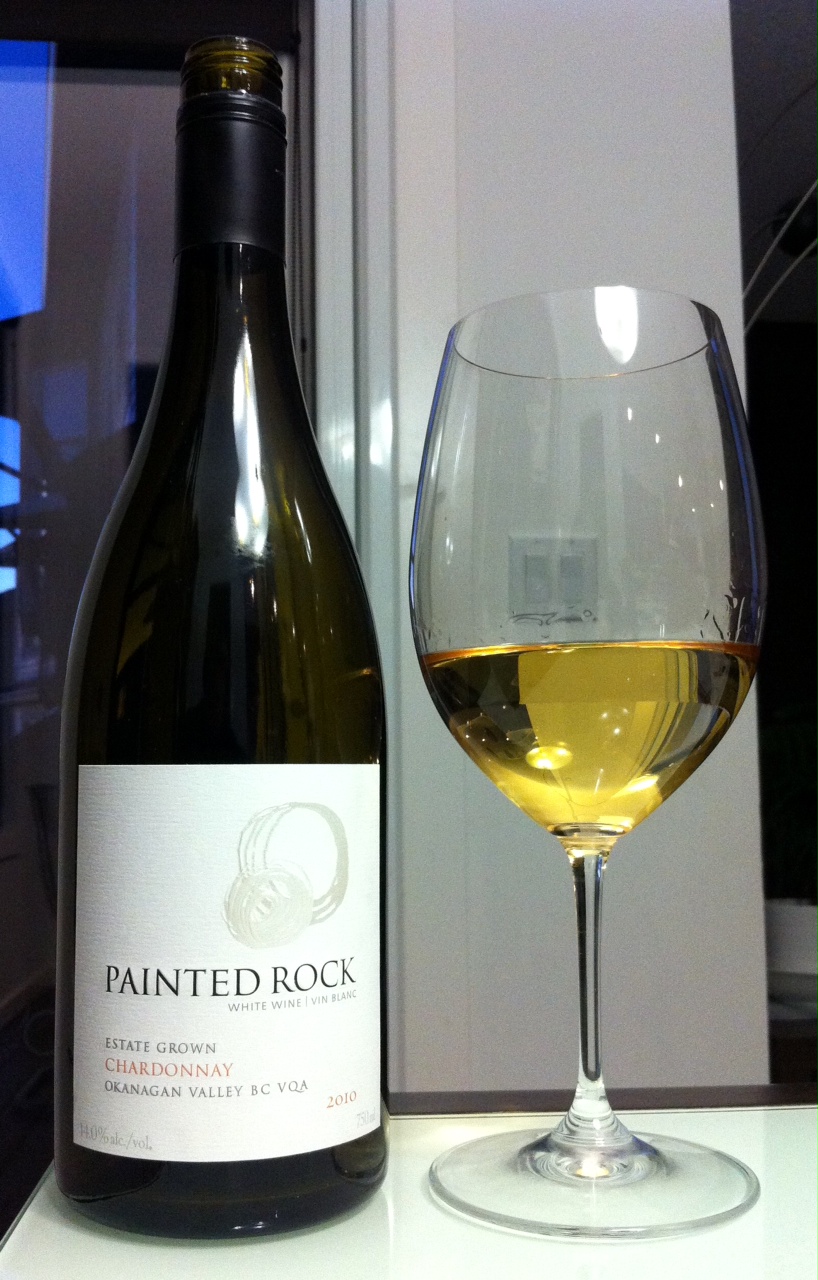
Although a newer vintage than the 2009, it's still like going back in time.

The coolest thing about this blog having been around awhile, other than the fact that I’ve miraculously managed to regularly publish an Internet wine blog for the better part of a year, is that I’m starting to come across second vintages in the bottles I open:  current vintage wines whose predecessors I have previously featured on PnP.  Case in point:  the 2010 Painted Rock Chardonnay from the Okanagan Valley, which is probably already facing an uphill battle in this review due to monstrously high expectations because I totally loved the 2009 PR Chard back in September.  I think Painted Rock is a producer on the forefront of the Canadian wine scene, one that is starting to show that we don’t have to settle for local wines that only measure up as against their neighbours, but that can also stand tall on the international market.  While PR focuses primarily on red wine, their lone white is a testament to the wonders of cool-climate Chardonnay, and I thought enough about the ’09 vintage that I absolutely loaded up on the 2010 as soon as it became available.

Read the rest of this entry »


Wine Review: 2009 Laughing Stock Blind Trust (Red)

19 01 2012

With this seamless a marketing pitch, this wine should always be in demand.

“Assets of the Blind Trust are kept under wrap and seal”, says the neck of Laughing Stock Vineyards’ “just trust us” bottle.  And so they are:  while at first glance you will not find any mention of what grape varieties make up this wine, and while the bottle tells you that the grapes in the blend change every year and never remain consistent, if you make good use of your corkscrew and fully remove the foil covering the top of the bottle, the mystery blend is revealed.  Since this is absolute genius marketing (and most of the fun involved in buying this bottle), I’m not going to spoil the surprise for you, other than to say that (1) the grapes involved are three of the five that go into Bordeaux wines in France (Cabernet Sauvignon, Merlot, Cabernet Franc, Malbec, Petit Verdot) and (2) the ’09 Blind Trust mix is heavily weighted in favour of one of the five.  And it ain’t Petit Verdot.

Read the rest of this entry »


Wine Review: 2009 Laughing Stock Syrah

28 09 2011

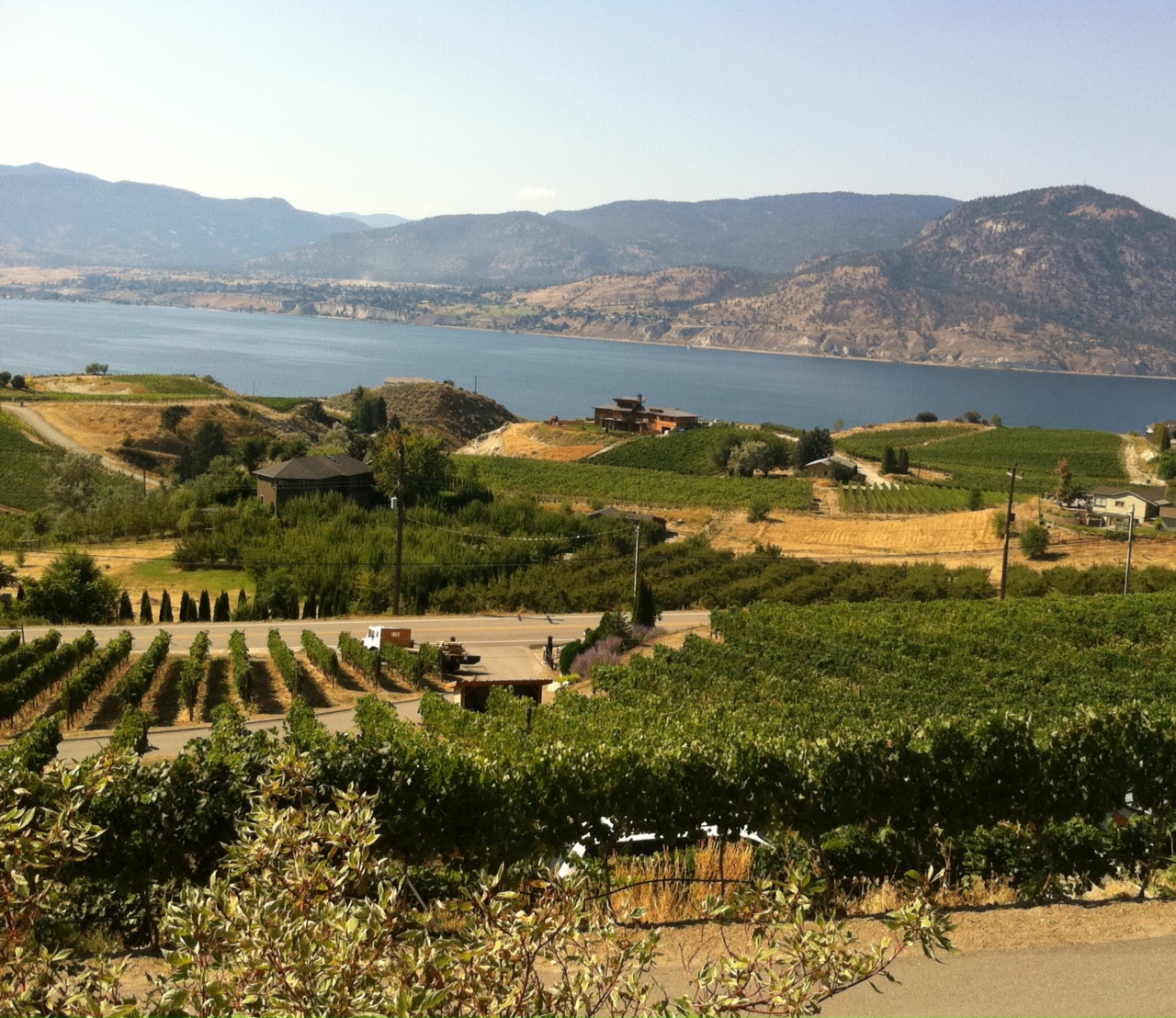
View from the parking lot: I could get used to looking at this every day.

On my trip to the Okanagan earlier this month, one of the things I was most looking forward to was my visit to Laughing Stock Vineyards, producer of my favourite Canadian red wine of all time and restorer of my faith in (at least some of) my homeland’s wine industry.  We made the trek out to Naramata, located just northeast of Penticton along the shoreline of Lake Okanagan, on a gorgeous late summer day and I was lucky enough to meet LS owner/vineyard manager Cynthia Enns and get a guided tour of the property, which sits on a west-facing slope with an incredible view overlooking the Lake.  I was even luckier that the tasting room still had some of the 2009 Laughing Stock Syrah in stock, which I’d been dying to try, partly because LS had made me think that good Canadian reds were an actual possibility, partly because I generally just love Syrah, and partly because I had never seen this particular wine anywhere in Alberta, giving me (in my head, anyway) a chance at a provincial exclusive.  I bought a couple bottles to take home, and tonight was the first taste trial.  Since the last Canadian Syrah I had before this one smelled and tasted like tomato soup, this had nowhere to go but up. Read the rest of this entry »


Wine Review: 2009 Laughing Stock Chardonnay

11 07 2011

In case my constant compulsive pumping of Riesling didn’t already tell you this about me, I’m not much of a Chardonnay guy.  I’m not an active hater, but I can generally take it or leave it, and it’s definitely not where my eyes go on a white wine list.  I find most oak-aged Chardonnays to be a bit of a blunt instrument, tasering the taste buds into submission with a lumberyard of wood (often accompanied by crazy high alcohol) and overwhelming the sense of delicacy that I think the best white wines possess.  Conversely, I find most unoaked Chardonnays to be, well, extraordinarily boring:  Chardonnay is a fairly neutral grape by itself, without any intense flavours, and with no oak providing backup vocals it can lack the layer of intrigue that it sorely needs.  Of course, this dreary portrait doesn’t apply to all Chards out there (Burgundy fans, put down your pitchforks — I can’t afford your wines anyway), but it covers more of them than it should.

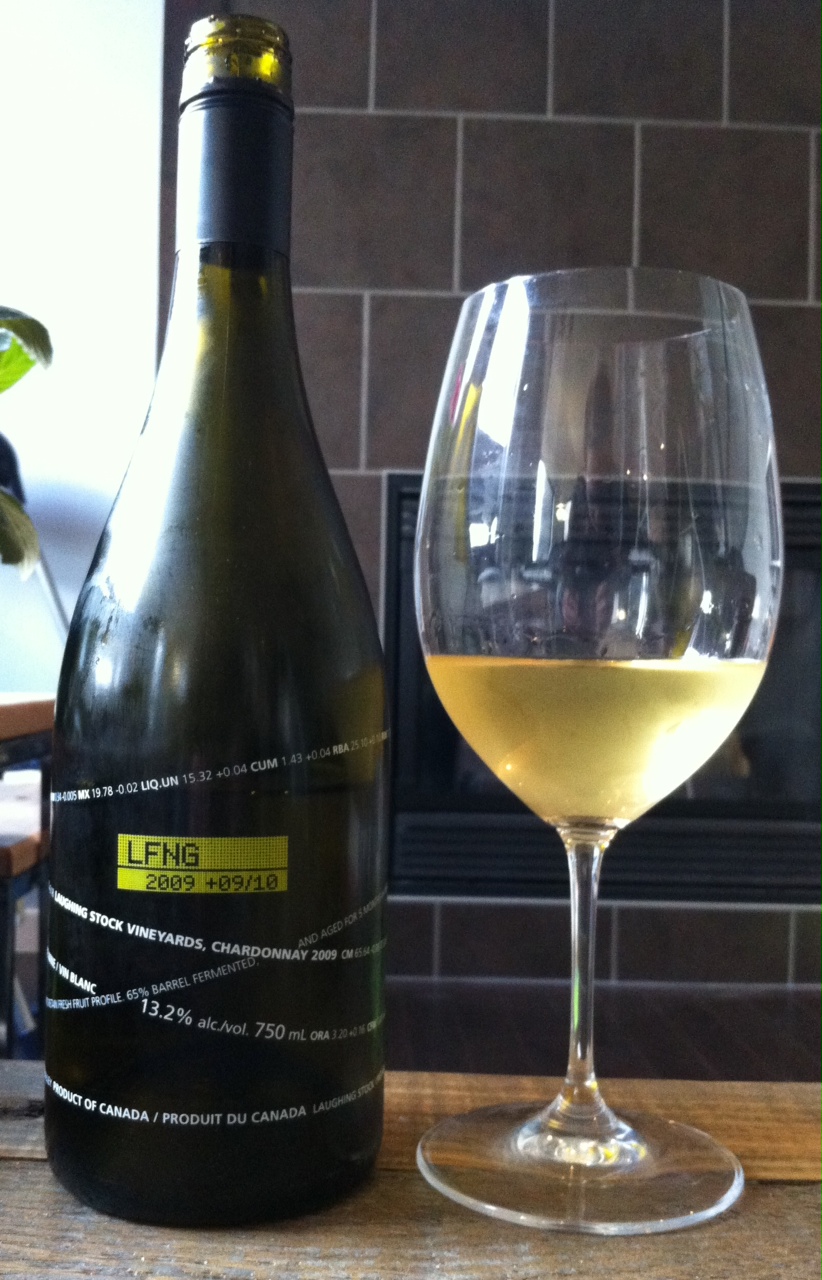
Great bottle, great marketing, great wine.

But leave it to my (now official) favourite Canadian producer to walk that difficult middle ground between extreme oakiness and mind-numbing neutrality.  Coming off the extremely strong showing of their signature red blend Portfolio back in May, the Okanagan’s Laughing Stock Vineyards kept the PnP love fest going with their 2009 Chardonnay, which struck a perfect balance.  The LS label info alone gave me high hopes, for two reasons.  First, the alcohol level was only 13.2%, not a percent and a half higher like some New World Chardonnays; since all the alcohol in wine comes from the sugars in ripe grapes, this non-astronomical alcohol level means that the grapes weren’t crazily overripe when they were fermented, which in turn means that the resulting wine likely won’t be overly full and will likely retain some much-needed acidity.  Second, instead of being aged in small oak barrels for a long period of time (usually a year or more), the LS Chardonnay was actually fermented in oak and then aged in larger oak barrels called puncheons (the bigger the barrel, the less surface area contact with the wine and the less flavour imparted) for only 5 months.  As compared to strictly aging in oak, barrel fermentation generally results in more controlled, better integrated and softer oak flavours being imparted into the wine, all good things for someone easing their way into oaky whites.  This is why more information on wine labels is always better than less! Read the rest of this entry »


Wine Review: 2007 Laughing Stock Portfolio

12 05 2011

Attention-grabbing headline:  This is the best bottle of Canadian red wine I’ve ever had.

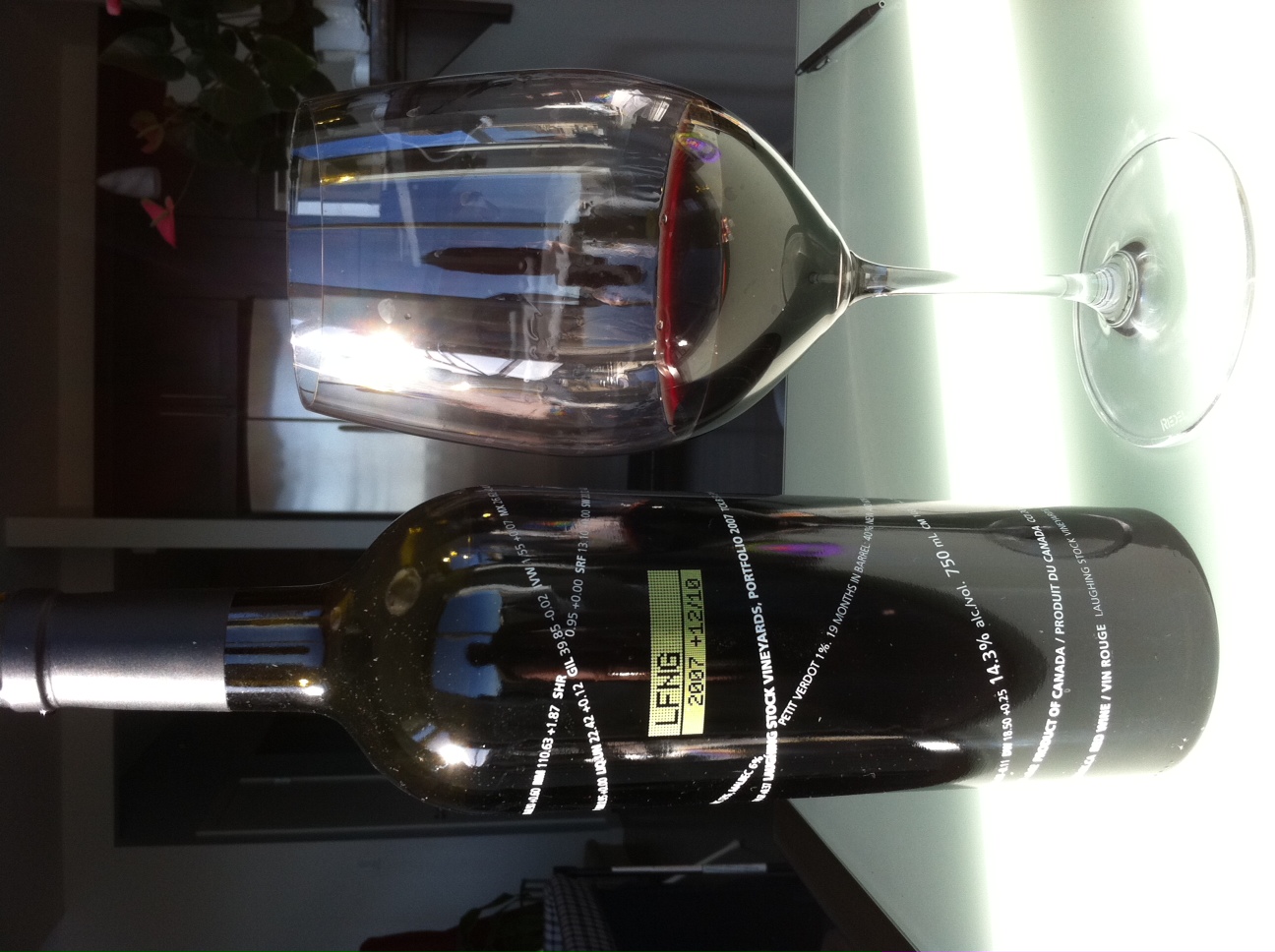
Charter member of my Canadian Wine Hall of Fame.

This wine has everything going for it:  great back story, great marketing, great product.  Laughing Stock Vineyards is located in (on?) the Naramata Bench, one of the most prestigious and quality-driven areas of British Columbia’s Okanagan Valley wine region.  The winery’s name comes from the fact that its two proprietors both once had successful careers in the financial/investment sector before giving them up to pursue their vinicultural dreams, thus opening themselves up to failure and ridicule if things didn’t go well (note: if you want to win my heart, make your winery name a pun).  Their cleverly-designed bottles reflect their past lives, and they’re not just empty packaging for what’s inside — the juice lives up to the allure of its container. Read the rest of this entry »