[These bottles were provided as samples for review purposes.]
One of the things I love seeing most in Canadian wine nowadays is a renewed sense of focus on locating, separating and promoting quality subregions within an overall wine area, those special geological or climatic zones that yield wines with a distinct character and personality. Anyone reading this in Europe right now may be incredulous at any such modern quest for discrete sub-terroir, as this process took place in many Old World growing regions up to a millennium ago. We have a bit of catching up to do, and now we’re doing it.

This is critical for regions like British Columbia’s Okanagan Valley, which currently sees almost all wines coming out of it released under that general appellation name. If you’ve ever stood in the breeze by the lake in Kelowna in August, and then stood in raging parched inferno of the Osoyoos desert two hours later, you’ll understand why “Okanagan Valley” doesn’t exactly capture any of the nuance of those two highly individual experiences. Last year saw big news on the BC subregion front, as the Golden Mile Bench, a stretch of slope just west of the highway running from Oliver south to Osoyoos, became the province’s first ever recognized sub-geographical indication, meaning you’ll start seeing that name on bottles released this year in place of (or in addition to) the broader Okanagan designation.
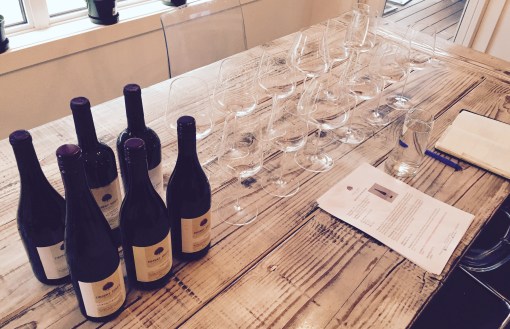
If you walk east from the Golden Mile Bench and cross the highway, on the other side of the road you’ll find another slope, angled west, with extremely hot days and surprisingly cool nights, where vines grow on highly sandy soils that run hundreds of feet deep and require irrigation to retain hydration. This is the Black Sage Bench, another obvious BC candidate for subregional distinction and home to some of Canada’s top wineries. On the southern end of the Bench, nestled between Okanagan luminaries Black Hills and Burrowing Owl, is Desert Hills Estate Winery, a family-run producer founded by the three Toor brothers and focused largely on wines made from their aptly named estate vineyard, the Three Boys Vineyard, purchased in 1989. The first released production from the vineyard was in 1996, and now, 20 years later, Desert Hills is solidly entrenched in the Okanagan wine world and making a renewed push into the Alberta market. Read the rest of this entry »


 cabernetdialectic (Raymond Lamontagne)
 Dan Steeves
 Peter Vetsch
 tylerderksen
 pop & pour