Whisky Advent Calendar 2015: Day 10

10 12 2015

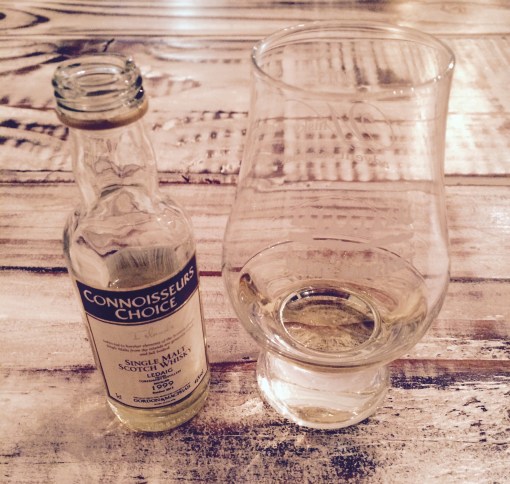
My immediate thought upon pulling out tonight’s whisky was:  “Again?”  Hadn’t I just seen this bottle before?  Well, yes and no.  Day 4 featured another scotch from independent bottler Gordon & Macphail’s Connoisseurs Choice range, the 1999 Ledaig.  Tonight’s bottle, six days and five whiskies later, featuring a slightly differently shaded but otherwise identical label, was the 1996 Auchroisk, at 18 years the oldest whisky of the calendar to date (quick tangent: the age figure on a whisky denotes its period of maturation and ends at bottling, so this whisky, bottled in 2014, is an 18-year rather than a 19-year in whisky-speak).  As this is a totally different scotch from a totally different distillery and region (the Ledaig was from the Isle of Mull, while the Auchroisk is from Speyside), I suppose I have no grounds to have felt a twinge of disappointment at seeing the familiar label come out of the box, but I think I would try to keep any and all similar bottlings as far apart from each other in the Advent order as possible.  That said, don’t think the presence of both the Ledaig and the Auchroisk in the Connoisseurs Choice lineup makes them kindred spirits or anything; the Gordon & Macphail website lists 152 different CC whiskies, so it’s not exactly an exclusive club.

FullSizeRender-184

Auchroisk (actually pronounced “oth-rusk”) was built rather recently in distillery terms, in 1974, and is found in the northeast of Speyside, which itself is in the northern part of Scotland.  This bottle states that whiskies from Speyside “are known as the ‘Premier Cru’ of Single Malt Scotch”, which I have literally never heard anyone say, and which might well cause a revolt in the other regions, but who am I to doubt a label slogan?  The ’96 oth-rusk was a pale watery lemon colour and went through an instant metamorphosis on each sip from nose to palate.  It smelled flowery, like potpourri, and soapy, like Thrills gum, with clear vegetal notes, sharp salinity and a lingering Brie cheese aroma (the latter two of which made me write down:  “sherry casks?”  Answer:  yes.).  But it was much more approachable, comforting and pleasurable once you tasted it, sweet and spicy, balancing cornbread, orange and tangerine fruit flavours with charred oak, smoke and pepper, but finishing deft and pure rather than bitter.  I can’t decide if the two-faced nature of the whisky made it more interesting or more annoying or both, but at $140 even that uncertainty is a problem.  Quite happy to have it in 50 mL form, however.  40% done the spirit blogging marathon!


Whisky Advent Calendar: Day 9

9 12 2015

Compass Box!!  I was quite excited to pop open door #9 and find one of my favourite value plays staring back at me.  This blended scotch whisky clocks in at a scant $53, making it the cheapest bottle in this year’s Advent lineup to date by a wide margin, yet it has the substance and dexterity to become the weeknight warrior whisky of your dreams.  Don’t like blends, you say?  Get over yourself.  Our collective manic obsession over single malts (whiskies made only from malted barley made from a single distillery) has turned well-made blended whiskies (made from a mix of malted barley whisky and grain whisky from multiple distilleries) into the prime values of the spirit world, and Compass Box does blends up right.  CB is a boutique blender that obtains spirits from a variety of top distilleries and crafts its own distinctive lineup of bottlings, known to me for sporting some of the best labels in the industry.  This bottle, the Glasgow Blend from their Great King St. line of whiskies, uses a high proportion of malt whisky and ages all of the grain whisky it uses in first-fill American oak barrels, which beefs up the body of the grain spirit and adds fullness and sweetness to it.  I defy anyone to try this and say that it deserves to be priced at half the cost of an equivalent single malt.

FullSizeRender-183

The Glasgow Blend is a peated and sherry cask-aged scotch, but each of these potentially powerful flavour influences is held carefully in check.  There is brine (sherry) and iodine (peat) on the nose, but as supporting players to an otherwise bright and friendly aroma set of beeswax, baked apple, golden raisin, Cinnamon Toast Crunch and maple walnut.  Smooth yet zesty, it livens up the tongue with sweet honeycomb and lemon meringue balanced by ocean spray and a smoky, burnt-wax note like blown out birthday candles.  The sweetness lingers on the finish along with a subtle warmth from the 43% alcohol.  This isn’t the most complex and esoteric whisky on the market and it isn’t trying to be, but it is a highly satisfying dram, carefully made, and it costs a shade over $50.  Sign me up.


Whisky Advent Calendar 2015: Day 8

8 12 2015

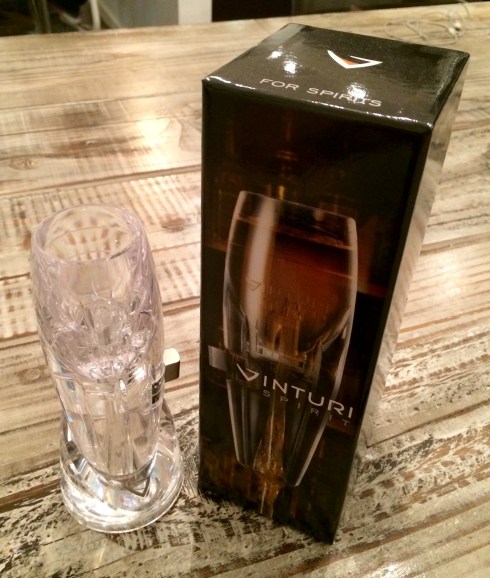
Time for a twist to start Week 2 of whisky Advent.  I was recently asked if I did whisky reviews, responded something to the effect of “um, sort of” and was given a spirit aerator from Vinturi for use with this year’s calendar.  You may know the Vinturi from the wine side:  it’s that intricate hard plastic funnel that insta-aerates any liquid that passes through it and into your glass, a sort of hyper-decant to open up tight wines in seconds rather than hours.  It’s one of the few wine gadgets that I actually use semi-regularly, not for the special occasion good stuff (which I like to see unfurl gradually), but for weeknight bottles that seem closed off when I first crack them.  I get why it works for wine, a drink that is highly susceptible to, and highly influenced by, oxygen from the second it is first exposed to it, at first in a good way (some air time softens and opens wine and releases packed-in flavours) and then in a very not-good way (too much air flattens and oxidizes wine and ultimately ruins it).  But spirits?  Once something is distilled and cranked up to 50% alcohol like tonight’s scotch, wouldn’t oxygen exposure cease to matter to it?  Once its maturation is done and it is freed from barrel and bottled, isn’t its flavour development over?  You never protect your whisky bottles from oxygen once you open them, and they never seem change even after months or years in an unstoppered bottle, so I was unsure how the wine-based premise of the Vinturi would carry over.

FullSizeRender-182
The guinea pig whisky for this aeration experiment was the Glenglassaugh Evolution, a Highland Single Malt from a distillery that was shut down and mothballed in 1986, only to be surprisingly salvaged and re-opened in 2008.  For the second day in a row we have a repeat producer from last year’s calendar; Day 7 of 2014 featured the Glenglassaugh Revival, the first scotch released after the distillery’s (literal) renaissance.  Weirdly, the 2015 offering from yesterday’s first repeat calendar producer, GlenDronach (Day 7 of 2015!), was also called Revival.  I’m hoping that was intentional.  Tonight’s Glenglassaugh is the SECOND scotch released after the distillery re-opened its doors, called Evolution, which holds the distinction of being the first whisky I’ve tried that was matured in ex-Tennessee Whisky barrels.  Seeing “Tennessee” displayed on a bottle of scotch takes some getting used to.

Read the rest of this entry »


Whisky Advent Calendar 2015: Day 7

7 12 2015

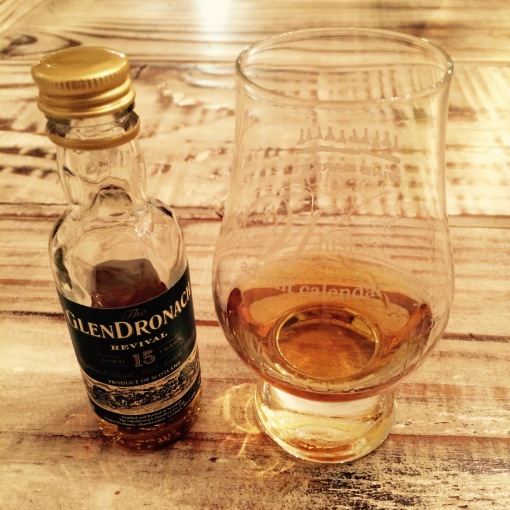
Fresh off a tasting of 13 Austrian and other Gruner Veltliners in 2 hours, I am doing an alcoholic 180 and re-centering on scotch, at least far enough to get 400 words out.  Ah, the trials and tribulations of a booze geek.  I believe tonight’s Advent scotch marks the first time that the 2015 Kensington Wine Market Advent Calendar has repeated distillers from the 2014 Advent Calendar.  Last year featured two different whiskies from the GlenDronach distillery:  the 18 Year Allardice, which I didn’t like too much, and the 21 Year Parliament, which was my favourite whisky of the whole calendar and which I promptly went out and bought after Christmas.  (You should too – it’s obscenely good.)  This is the younger brother of those two, the 15 Year Revival, and its relative youth is reflected in its sticker price, an impressively affordable $102.  GlenDronach is a Highland distillery that has been owned by BenRiach since 2008 and is known, at least according to itself on its website, for richly sherried malts.  You may or may not remember this from last year, but the 2014 calendar was so overloaded with Oloroso sherry cask-aged whiskies that it almost drove me to violence and left me with a massive case of Oloroso fatigue (until the Parliament came along and all was forgiven).  I think this is the first Oloroso-aged whisky of 2015; one a week is fine, so consider the allotment filled for Week 1.

FullSizeRender-180

This might be the most singularly delicious whisky I have ever tasted.  It’s not necessarily the most complex (although it does still have layers to it), but it is just so, so fantastically tasty, like every treat you love in the holidays packed together.  It is an incredible deep burnt amber colour — an Oloroso trait — and just radiates sweet treacle, gingerbread, cabane a sucre, brown sugar and clove, all Christmas baking all the time.  Weighty and soft on the palate, with alcohol that gently warms instead of obliterates, it rounds out the alluring flavour parade with orange zest, nectarine, toffee and coffee beans added to the warm embrace of sweet caramel glory.  There is just no reason not to buy this scotch; I want more right now.  KWM, save me some!


Whisky Advent Calendar: Day 6

6 12 2015

OK, fair warning.  I was out until 4 in the morning at an office Christmas party last night.  There was wine involved.  If there was ever a night to question the integrity of my palate and the quality of my insights, this is it; however, I felt bound by advent duty to forge onward with my whisky calendar mission and not be steamrolled by circumstance in week 1.  I just hoped I would open the little cardboard door and find a nice, mild, demure whisky to let my system off easy.  I got Ardbeg Ten instead.  F***.

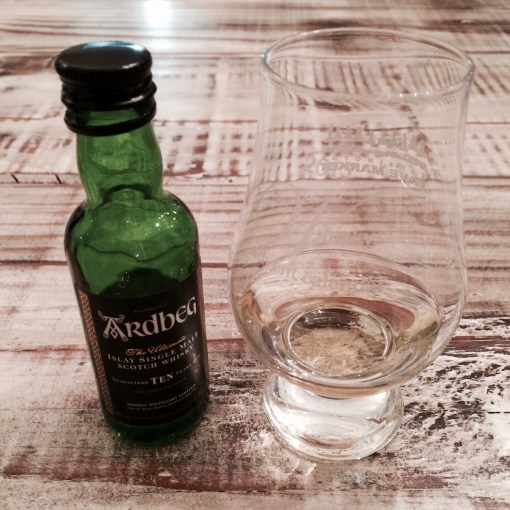
I believe this is the 2015 calendar’s first visit to the notorious island of Islay, world Mecca of peated whisky and home to many distilleries unafraid to unleash it.  Ardbeg may be the most brazen of the lot, a producer that does not lack for confidence (their website says they are “unquestionably the greatest distillery on earth”) and has been accelerating the recent arms race to develop peatier and peatier whiskies with their borderline absurd Supernova.  Even this base 10 Year bottling (which goes for $80 and which the label calls “The Ultimate Islay Single Malt Scotch Whisky”, so again with the self-belief) is peated to between 55 and 65 parts per million, which is a whole hell of a lot; see here for a peat concentration scale for various distilleries, and you will note Ardbeg at the very top.

FullSizeRender-179

You can smell the peat leaching out of the Ten Year as you’re pouring it into the glass.  It is a rather nondescript light straw colour but radiates powerful, greasy, non-nondescript (descript?) aromas of leather, moss, shoe polish, sesame oil and seaweed, with a hint of citrus peeking through underneath.  There is a surprisingly sweet honey-maple attack on every sip that lasts for a millisecond before the peat hammer drops and layers on iodine, liniment, campfire, tar and struck matches, one after another after another.  At the end of that crescendo you get some baked apple and lemon curd fruit and anise and cinnamon spice, but they’re in the chorus line and not fronting the cast.  I will say that this isn’t the total blunt instrument that I partly expected and feared, holding back a bit on the brute force in approach and demonstrating some level of dexterity with how the peat is presented.  That said, there’s basically no way that people who dislike this style of whisky will enjoy this scotch; there’s really no unwinding peat from Ardbeg.  Please have some pity on me tomorrow, calendar.


Whisky Advent Calendar 2015: Day 5

5 12 2015

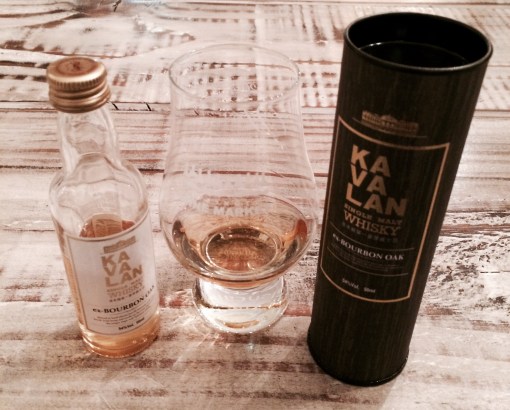
I have to head out of town overnight so I’m posting early, which means that I may be one of the first to alert you that Day 5 of the KWM Whisky Advent Calendar is a showstopper.  When it was first announced that this year’s calendar would contain an offering from Taiwan, I knew that could (literally) only mean one thing:  Kavalan, the first and only distillery in this small Asian nation.  Kavalan has only been around for 10 years, since 2005, but in that short span of time it has basically set the whisky world on fire and danced on the smouldering ruins, culminating in this year’s announcement that its Vinho Barrique malt (which I own and is spectacular) had been named the world’s best single malt whisky by the World Whisky Awards.  How can a distillery that just hit the decade mark be churning out world elite scotches so quickly?  (Remember, single malt whiskies have to be distilled solely by their producer.)  Don’t top whiskies usually need a long time to mature and develop their complex flavours?  Not in Taiwan.  Like the roasting hot Bourbon aging warehouses in Kentucky on warp speed, Kavalan gets extreme flavour transference and development during maturation in record time due to the heat and humidity almost always prevalent in the country, which speeds up both water evaporation and the reaction between spirit and barrel wood, resulting in concentrated, deeply coloured, layered whiskies after only a few years.  That sounds too good to be true for the distillery, but it’s real.  You have to taste it to believe it.

FullSizeRender-178

This is a cask-strength (54% abv) rendition of the Kavalan ex-Bourbon Oak Single Malt Whisky.  I have to start by noting that the (stunning) packaging tube for this whisky identifies its colour as “Cattle egret”.  Cow heron!  I would have said “deep golden”, but sure.  You almost have to add water to drink this dram pleasurably, lest it otherwise Novocaine your entire tongue and eradicate your stomach lining.  This is one of those whiskies you can smell all day, due less to incredible complexity than to an immediate and easy, almost languid appeal:  brown sugar, white flowers, honey, Amaretto, fresh peach, kettle corn.  You feel like you should be floating down the Mississippi on a raft in the summer sniffing it.  That emotion only elevates when you taste it, as the unabashed sweetness from the bourbon barrels lend instant pleasure to the downright delicious flavours of coconut, baked apple, Corn Pops, vanilla bean and what I’ll call “caramel macchiato”, part burnt sugar, part creamy steamed milk, part roasted coffee.  This is pure joy in a (cask-strength) bottle.  We’re treading into premium territory now in the $140 range, but damned if you don’t get premium results for the price tag.  This is just achingly good.


Whisky Advent Calendar 2015: Day 4

4 12 2015

It’s times like this that I sympathize with people who think whisky is confusing.  The full title of tonight’s scotch is:  Gordon & Macphail Connoisseurs Choice 1999 Ledaig (from Tobermory Distillery) Single Malt Scotch Whisky.  Good luck with that.  Let’s unpack.  Remember when I said yesterday that whisky from any particular distillery in Scotland gets around and how some companies act as negociants sourcing pre-made whisky from elsewhere and then bottling it themselves?  The Ubermensch version of those companies are the independent bottlers, whisky brokers extraordinaire, who release from dozens to hundreds of different whiskies under their own labels, but who (unlike the artisan blenders like Wemyss from yesterday) also provide the details of the source distillery on the label.  So you might be able to get a 12 Year malt from a certain distillery’s own label but then also get a 12 Year malt from that same distillery under an independent bottler’s label.  It’s weird.  Gordon & Macphail is one of the pre-eminent independent bottlers of scotch whisky, with over 300 single malts in its lineup, and its Connoisseurs Choice portfolio is an array of rare single malt whiskies from various distilleries, many of which would not otherwise offer a single malt expression.  This particular bottle comes from the lesser-known Ledaig distillery, which changed its name to Tobermory Distillery a few decades back.  So the label name above reads [Independent Bottler] [Portfolio Name] [Vintage Date] [Old Distillery Name] [Current Distillery Name] Single Malt Scotch Whisky.  Good thing it’s tasty.

FullSizeRender-177

This is the first unabashedly peaty scotch in the calendar, to the point where you might think it comes from the peat haven of Islay, but Tobermory is in fact located on another island just north called the Isle of Mull (which I’m secretly hoping is where mulled wine comes from).  The label just says “Islands”, possibly because the Isle of Mull isn’t trendy enough to get its own mention.  The Ledaig was a disarmingly pale greenish colour that displayed no visual hints of the power to come.  However, the first sniff brought an immediate blast of peat-induced scents:  mechanic’s shop, diesel oil, catcher’s mitt, shoe polish, funk, but also hints of sweet tropical fruit that kept the whisky from coming across as harsh or dirty.  The taste was both beautiful and old school; charred, smoky and medicinal, reminiscent of cigars and old leather armchairs, but also bright and spicy, with candied pineapple, crystallized ginger and Bananas Foster.  There’s almost some furriness to the texture too (from the wood tannin of the aging barrels, I would guess), which adds to the whole sensory experience.  The priciest whisky to date at $120, it’s worth every penny.  Currently in the calendar pole position, without question.


Whisky Advent Calendar 2015: Day 3

3 12 2015

Third day of the calendar, second whisky I have never heard of, first blended malt.  You may remember from yesterday that a single malt scotch means one whose component spirits have been distilled in a single distillery; it may therefore not come as a surprise to learn that blended whiskies are those whose component spirits hail from different distilleries and are blended together.  Blended malt whiskies are blends whose components are entirely whiskies made from malted barley as opposed to other grains and are generally seen (not always rightly) as superior to “blended whiskies”, which can be a mix of malt and grain whisky.  Phew.  Some producers, like tonight’s, don’t make their own spirits at all, but instead act sort of like wine negociants, sourcing whiskies made from various distilleries and then using them to create and bottle their own custom blends.  As whiskies seem to transfer and flow across producers much more often in the scotch world than in the wine world, this is neither a bad nor an uncommon idea, and many of these blending specialists create killer drams at highly reasonable prices.  A bottle of the Wemyss (pronounced “Weems”) Malts The Hive 12 Year Blended Malt Scotch Whisky will set you back $77 at KWM; not too shabby for a scotch of that age.

FullSizeRender-176

Wemyss Malts have a trio of blended malts in their profile which they have set up to meet three different flavour profiles:  Spicy, Peaty, and Honeyed.  Guess which one The Hive is meant to represent?  The bee on the label pretty much says it all.  Yes, this is the Honeyed Malt, made from a variety of malts from Speyside, and apart from a questionable dalliance with sherry casks (who tastes sherry and thinks “honey”?), it accomplishes its flavour mission fairly well.  It is a gorgeously dark, burnished amber colour and smells immediately of honeycomb (natch, though I swear I wrote that note before reading about the whole Honeyed Malt thing), salt lick, Brie cheese (thanks, sherry) and cedar, with a hint of leafiness on the fringes.  Despite being by far the lowest abv whisky in the calendar so far at 40% the alcohol flares almost immediately on the palate, somewhat obscuring the viscous, almost oily texture and sweet flavours of the scotch; I’m not sure why it can’t keep itself in check better or if the balance is off somehow.  Once you get past the boozy heat there’s a pleasing confectionary array of maple, butterscotch ripple, cream soda and, yes, honey, with layers of celery salt, mesquite and tree bark lurking underneath.  It’s unquestionably tasty, but due to its inability to successfully harness the lowest alcohol level you will commonly see in a whisky, I have to think it’s a bit of a step down in quality from the last two days.  Rocking label though.


Whisky Advent Calendar 2015: Day 2

2 12 2015

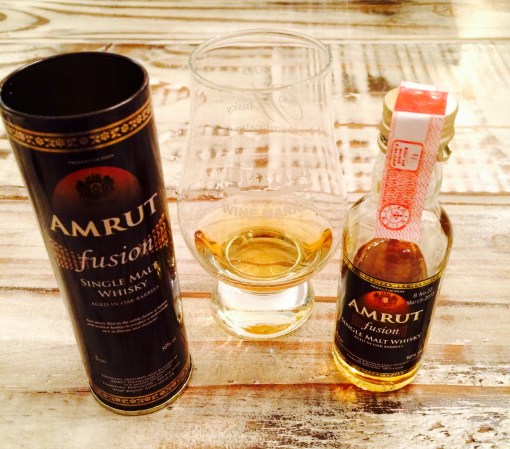
Yesssssss!!!  I have literally been waiting a year for this day.  In my closing comments about the 2014 KWM Whisky Advent Calendar, I humbly suggested that the 2015 edition include more international whiskies:  “I’d love to see Japan, Taiwan, and even India show up in next year’s edition.”  Day 2, 2015?  Bam.  Amrut.  That’s what I’m talking about.  Amrut is a brand (basically THE brand) of single malt whisky from India, home of the very first malt whisky ever made in that country.  The name Amrut comes from a Sanskrit word meaning “nectar of the gods”, which, I mean, exactly, right?  This particular bottling from Amrut, called Fusion, is the first intercontinental whisky I have ever come across:  it’s made from a mixture of barley from India and peated barley from Scotland, which is separately distilled in Amrut’s facilities in Bangalore, aged in American oak barrels and then blended for bottling.  If you’re wondering, it can still be called a single malt whisky despite its multinational origins because the “single” in “single malt” refers to a single distillery rather than a single site, grain or production year.  The “west west west” and “east east east” emanating out of opposite sides of the word “fusion” on the label and tube is just priceless.

FullSizeRender-175

Amrut Fusion gained some fame and notoriety in 2010 when Jim Murray’s Whisky Bible named it the 3rd best whisky in the world.  Of course, that same publication just named Crown Royal Northern Harvest Rye the best whisky in the world this year, so do with that as you will.  There is something to be said for this Fusion, however.  It is a beautifully deep, lush golden colour and smells undeniably pleasant, mixing honey, wheat, blood orange, apple crisp and toffee beneath a slight whiff of mossiness.  At 50% abv, it is immediately fiery on the palate and needs a few drops of water to open it up, after which it comes out rich, round and spicy, even peppery, but bursting with vanilla, lemon drop, pineapple and almonds.  I didn’t get as much peat as I was expecting from the Scottish half of the Fusion equation, just a lingering sense of smoke after I swallowed.  At a bargain $76, I could definitely see myself buying this.  Cross Amrut off the bucket list!


Whisky Advent Calendar 2015: Day 1

1 12 2015

Alright team, let’s do this.  December 1st has arrived, and that means a daily invasion of whisky on this blog until Christmas.  For those of you who frequent Pop & Pour for wine reviews and insights, (1) thank you!, and (2) I am so, so sorry…it’s about to get a little spirit-y up in here for most of the rest of 2015.  Yes, it’s KWM Whisky Advent Calendar time, my second year in a row partaking in the magnificent scotch-soaked creation of Kensington Wine Market and its resident whisky guru (and now owner!) Andrew Ferguson.  Every night you count one more day closer to Christmas, open a little cardboard door, pull out a new and exciting mini-bottle of distilled glory (all different from last year’s calendar, I might add), and turn to drink – the true essence of the holidays.

Bring on December.

Bring on December.

This year’s calendar starts on a note of intrigue:  a scotch I have never heard of before.  Balblair Distillery, based in the Highlands, was established in 1790 but has successfully escaped my notice for 225 years.  Their signature move appears to be releasing vintage-dated scotches, so instead of seeing a more general age designation on the bottle (10 Year, 12 Year, etc., which number indicates the age of the youngest whisky in the bottle’s multi-vintage blend) you get wine-style labels with single calendar years on them, presumably meaning that all of the whisky in the bottle was distilled in that same year.  Tonight’s lead-off bottle is the Balblair 2003 Highland Single Malt Scotch Whisky, a 12 year old malt that Balblair’s distiller released concurrently with the 1990 and 1993 – no whisky goes out to market until he says it’s ready.

FullSizeRender-174

I would call this highly pleasant (I just finished my glass and I immediately want more) without being highly memorable (I just finished my glass and if I hadn’t written tasting notes I wouldn’t be able to tell you what this tasted like).  It’s an interesting greenish lemon-straw colour, not overly deep, and initially smelled predominantly of spice — and not just cinnamon and baking spice, but cayenne and other savoury spices — before calming down and opening up to more approachable salted caramel, vanilla bean and candy corn peeking through the grainy, mealy, grassy surface.  This same contrast of restraint and generosity continued on the palate, which starts out green celery and spearmint before blooming to melon, orange peel and honey and finishing soft and sweet.  At $88, I could see this being somebody’s house scotch.  Not sure I’ll remember much about it come Day 7 or 8 though.  Onward!


Multi-Wine Review: Calliope/Burrowing Owl Octet

24 11 2015

[These wines were provided as samples for review purposes.]

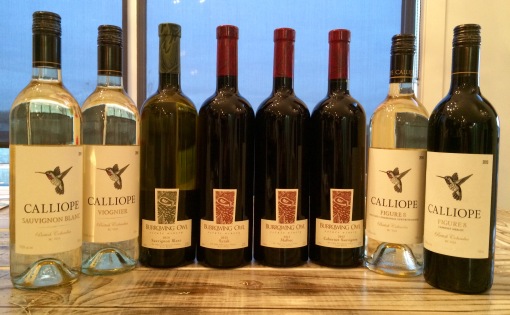
No time to spare for a huge intro tonight, as we have a whole whack of impressive Canadian wines to assess in what is sure to be a super-sized review.  I was fortunate enough to get the chance to taste through a series of recent releases from Okanagan stalwart Burrowing Owl, which is based in the scorching deep south of the Valley, near the US border in Oliver, British Columbia.  The tasting pack included a quartet of bottles from the parent winery and a quartet from its new offspring, Burrowing Owl’s second label Calliope Wines.  In keeping with the main estate’s unusual-bird-based theme, Calliope is named after a tiny hummingbird (Canada’s smallest bird) found in southern BC (not to be confused with the Greek muse or the steam organ of the same name).  According to its website, Calliope “is a full line of easy sipping, fruit-forward wines, designed to pair with casual lunches on the patio, or with contemporary cuisine”.  According to the pictures on the website, the wines also appear to pair with unnaturally beautiful Photoshopped women and neck beards.  Polite suggestion to Calliope:  Your wines are solid.  Your website is trying too hard.  It needs to relax.

FullSizeRender-169

I had often heard strong praise about the Burrowing Owl lineup from Wine People Who Know Things but hadn’t previously gotten around to experiencing it for myself, so getting to dive into a sizeable chunk of the portfolio all at once was an amazing way to get caught up on one of the brightest lights in Canadian wine.  Without further ado, here are eight mini wine reviews, starting with the second label and finishing with the main house (all prices based on Alberta retail).

Read the rest of this entry »


Rioja Quality Ladder: Bodegas Montecillo

11 11 2015

[These bottles were provided as samples for review purposes.]

Crianza vs. Reserva.  And one of the hardest sets of labels to photograph well.

Crianza vs. Reserva. And one of the hardest sets of labels to photograph well.

If I had to pick one European red wine region that was my Old Faithful, that always delivered quality and intrigue, regularly delighted and rarely disappointed, it would be Rioja.  Something about the wines coming out of Spain’s original star region just speak to me, offering up traditional character and depth and a unique voice at often-amazing prices.  Rioja is perched at altitude in north-central Spain, closer to Bordeaux (a 4 hour drive north) than Barcelona (5.5 hours east), and has long been the king of the Spanish wine world:  it was the first D.O. (Denominacion de Origen, or classified geographical quality region) in the country to be granted super-elite D.O. Calificada status in 1991, the highest quality category in Spanish wine law.  Only one other region, Priorat, has been awarded the designation since.  There are always challengers for Rioja’s crown in a country with soils, grapes, styles and traditions as rich and varied as Spain, but at its best, there is nothing quite like it. Read the rest of this entry »


Bargain Bubbles: Prosecco Showdown

7 11 2015

[These bottles were provided as samples for review purposes.]

Bring on the bubbles!

Bring on the bubbles!

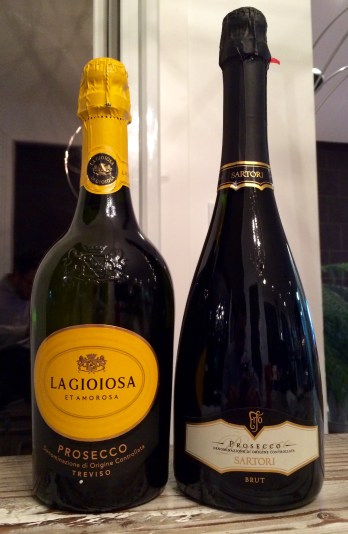
Sparkling wine is instantly celebratory — unless you’re opening two bottles simultaneously, by yourself, at your kitchen table, on a weeknight, like I did.  Even then, the brisk pops of the corks out of the bottles lightened my mood and made my analytical tasting exercise a little more festive.  You almost can’t drink Prosecco and be in a bad mood.

Prosecco is very, very hot right now.  Global sales of this Italian sparkler have increased by double digit percentages every year since 1998 (!), and last year they were up an astonishing 32% (!!) over the year before, five times the sales growth of sparkling wine overall (!!!).  In 2013, global Prosecco sales actually overtook global Champagne sales at over 300 million bottles.  Suffice to say it is on trend, buoyed by its general approachability, fruit-centered flavours and highly attractive price tag.  And yet, before now, Prosecco had never featured on Pop & Pour:

Screen Shot 2015-11-06 at 8.44.02 PM

So since this is uncharted blog territory, allow me to toss out a bit of a primer before we get into the bubbles themselves.  Prosecco is made in the Veneto and Fruili regions of northeast Italy; the Prosecco DOC quality region actually spans and overlaps most of both.  The wine is named after the village of Prosecco (which may have been its birthplace) near Trieste on Italy’s eastern border at the top of the boot.  Its made primary from a grape that used to also be called Prosecco, but as of 2009 is now known as Glera, primarily to annoy you and make it harder for you to remember it.  Just like all quality sparkling wine, it is created by first making a low-alcohol still base wine and then starting a second fermentation of that wine (by adding extra yeast and unfermented juice to it) in an airtight container, such that the carbon dioxide created as a byproduct of the fermentation cannot escape and becomes trapped in the wine, making it bubbly. Read the rest of this entry »


Whisky (!) Review: Glenmorangie Tusail

3 11 2015

[This bottle was provided as a sample for review purposes.]

A little PnP history.  Bring on the whisky.

A little PnP history. Bring on the whisky.

Let me bask in this one for a minute.  Last December, I got a whisky advent calendar for Christmas and on a lark decided to blog about it on a daily basis (which seemed like a great idea until about Day 9, although I’m doing it again this year, so call me a glutton for punishment).  It was my first experience writing about whisky and was a highly rewarding, if difficult, extension of my wine-soaked senses.  I was happy enough not to embarrass myself, happier still to get some positive feedback on the experiment, and now happiest of all to receive my very first sample bottle of whisky to write up on Pop & Pour.  Let’s make this happen.

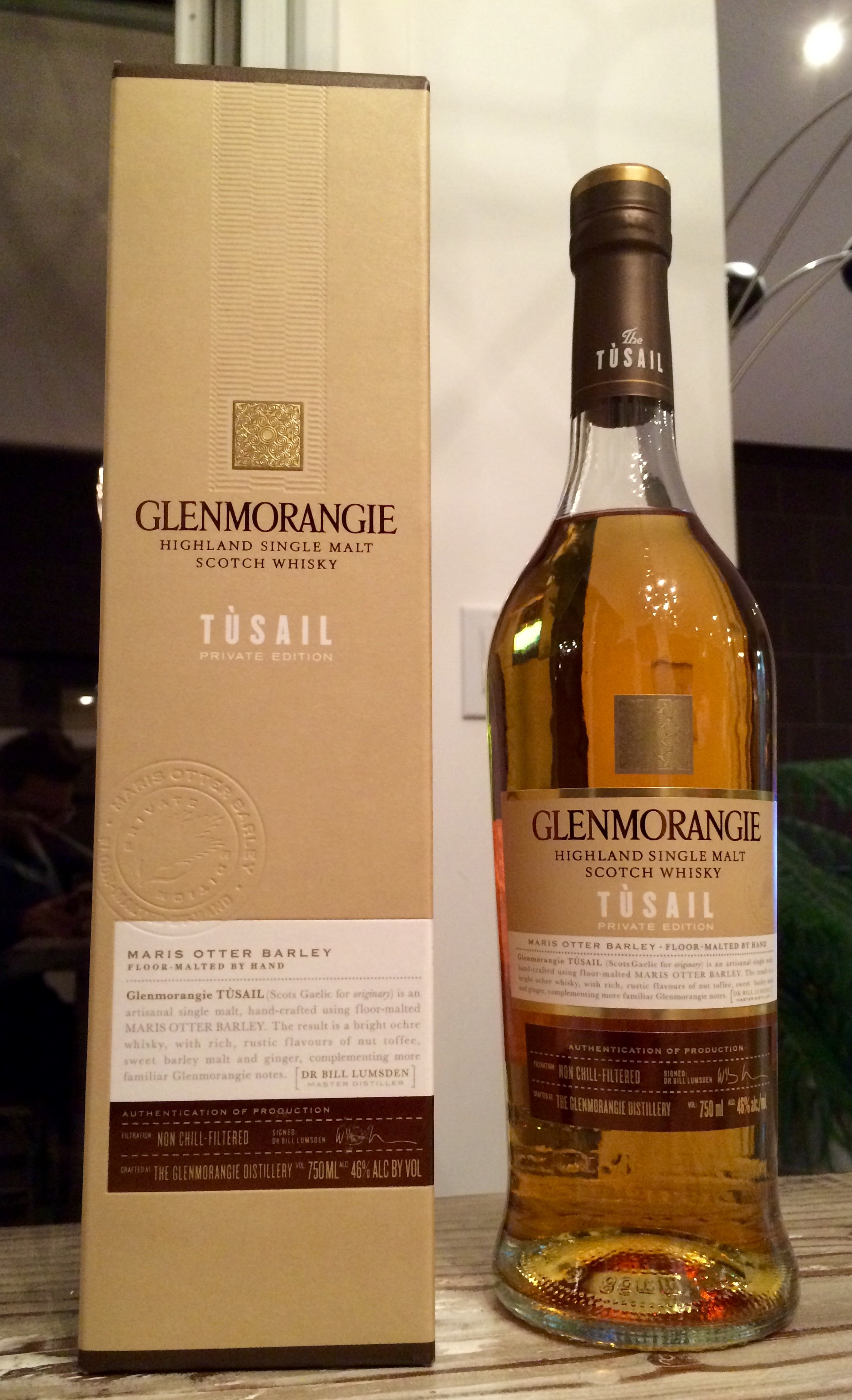
This is the sixth version of Glenmorangie’s annual Private Edition release, a unique and special malt released in addition to the established Glenmorangie lineup.  Each rendition of the Private Edition is completely different from the one that preceded it, and many of the prior PEs focused on a particular type of maturation vessel to enhance the flavour and colour of the finished product, but this one is a new kind of mousetrap entirely.  It might be the world’s first single varietal malt whisky, made entirely from a rare and vanishing strain of barley called Maris Otter, a high-quality, low-yielding winter barley known for its wild rusticity and deep, rich flavour profile.  (I am as surprised as you are that there are top-end varietals of grain just like grapes.  Booze is so cool.)  Maris Otter barley fell out of favour with whisky distillers over the years due to higher-yielding strains coming available, but it was carefully kept alive by a few quality-conscious supporters.  After it came to the attention of Glenmorangie’s Whisky Director, he set out to secure a parcel of Maris Otter to make this one-off Private Edition spirit. Read the rest of this entry »


Border Crossing: Kaiken Ultra Wines

28 10 2015

[These bottles were provided as samples for review purposes.]

From Chile to Argentina with love.

From Chile to Argentina with love.

It’s not uncommon to see producers from other countries head to Argentina to create a second label or side project.  There’s lots to like about the South American nation as a startup hub, from truly unique altitude-induced terroir to surprising access to old-vine plantings to ultra-low input costs. What is unusual is for the immigrating winery to come from right next door:  Argentina’s skinny western neighbour Chile offers many of the same producer advantages and is often similarly sought after by wineries off the continent for new ventures, but you rarely see a producer from one of these countries set foot in the other to make wine.  That’s what makes these bottles interesting.

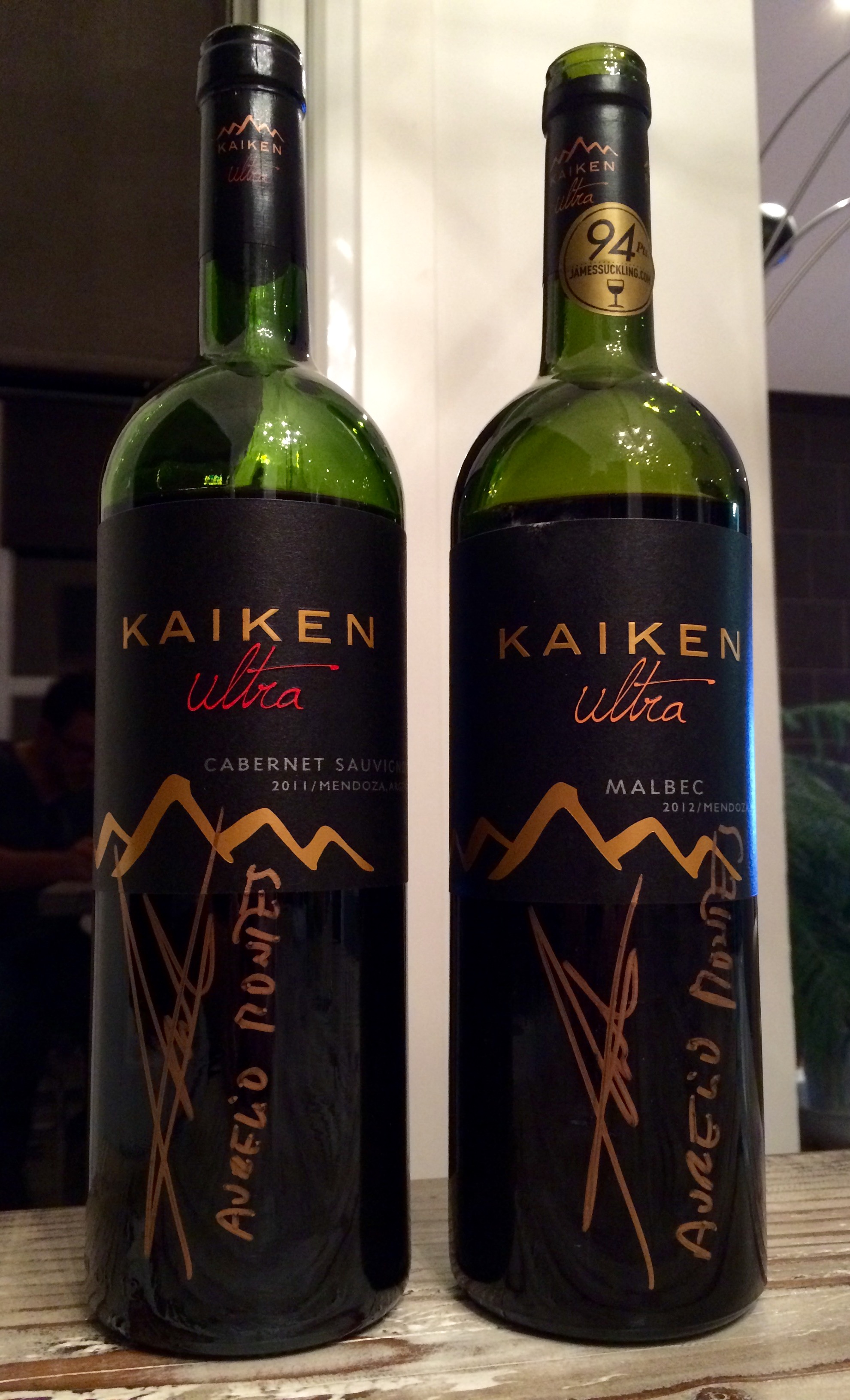
The Montes family is one of Chile’s pioneering wine clans, and its Vina Montes may be the country’s best known winery, churning out everything from weeknight wine champions to top-end stunners like Montes Folly, an unprecedented Syrah from Apalta that’s one of my favourite wines of all time.  Patriarch Aurelio Montes Sr. visited Argentina in 2001 and was immediately intrigued by the Andes-hugging Mendoza region; he wasted no time in deciding to expand operations there, starting up the Kaiken label in 2002.  The word “Kaiken” is an anglicized version of “Caiquen”, a type of wild goose that regularly travels over the Andes Mountains from Chile to Argentina, just like Montes himself.  Once the winery was up and running, he made the call to keep the winemaking in the family, recently naming his son Aurelio Montes Jr. as winemaker.  Kaiken owns three vineyards in Mendoza, two in and around the Lujan de Cuyo region near the town of Mendoza itself and one in the Uco Valley further south; one of the vineyards is fully biodynamic, a set of principles Kaiken is working to embrace. Read the rest of this entry »