The Ultimate Wine & Chip Pairing Showdown

26 11 2018

By Peter Vetsch

The event was almost a year in the making:  a one-versus-all challenge for pairing supremacy, putting the food-matching skills of eight local wine enthusiasts to the test against a backdrop of one of the more ubiquitous (and delicious) foodstuffs to grace a pantry.  Through extensive research and experimentation, and more than a little trial and error, we sought to answer the question: what wines pair best with the most common flavours of potato chips?  And who could best elevate a chip flavour with a pairing match that ticked all the right boxes?
IMG_6899 2

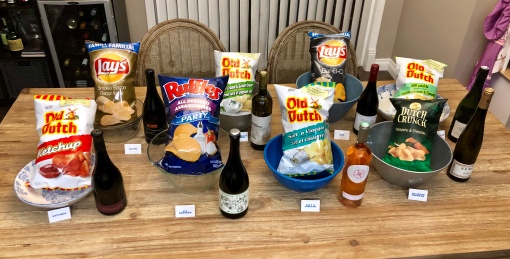
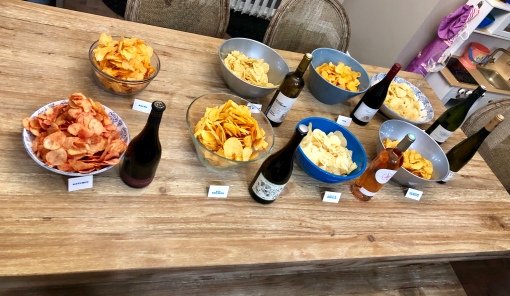
Here’s how our game was played.  After some market research, we first agreed on the top chip flavours that would participate in the competition:  BBQ, Salt & Vinegar, All Dressed, Sour Cream & Onion, Dill Pickle, Ketchup, Jalapeño Cheddar, and Bacon.  (A couple notes on these flavours:  1. “Plain” is not a flavour.  It has to HAVE a flavour to BE a flavour.  2. Americans, I don’t want to hear any complaining about All Dressed – it is a pantheon chip and no chip-based contest is complete without it.)  We were then each randomly assigned a chip flavour as our pairing muse and were tasked with finding the perfect pairing for that chip.  When we gathered together, we tasted through each flavour one at a time (again in randomly drawn order) and graded each potato chip/wine duo out of 10 on the strength of the pairing only:  the individual merit of each wine and each chip were disregarded, and the only question was how well they meshed together.  The top average score out of 10 took home the prize (which was nothing, other than eternal bragging rights and a pervasive sense of wellbeing).
IMG_3242

I should add before diving into the results that potato chip and wine pairing is WAY harder than you might think (and that the bulk of the articles that you can Google on this point almost surely did not go as far as to actually taste their recommended pairings with their chips), as once you put glass to lips with a bowl of chips you realize it does not quite unfold as expected.  With very limited exceptions, potato chips are crammed full of bold, potent, concentrated flavours meant to pack a punch, which can lead to them overwhelming many a potential pairing match that might otherwise be complimentary from a flavour perspective.  Chips also contain an array of particularly exaggerated spicy, sour, sweet and/or salty notes that can pose pairing challenges on their own, let alone in combination (or, in the case of All Dressed, which features ALL of these flavours at once, in accumulation).  A successful chip pairing wine is either one that has the firepower to match the lab-tested amplitude of Old Dutch’s natural and artificial flavours, or one that can do enough to comfortably neutralize them and provide some palate relief without getting lost itself.  Neither are easy targets to hit.

Below I will set out (in the order that the tasting took place) each brave contestant in this inaugural PnP Wine & Chip Pairing Showdown (complete with Twitter handle), their assigned bag of fried potato destiny and their vinous gladiator.  Then I will include a brief explanation of basis for the pairing and the thought process behind it in each competitor’s own words, before assessing how it all worked out in practice.  Finally, I will reveal the outcome of the pairing in question, both on my personal ballot and in the overall official group tally.  You will see that my scores tend to be lower than the group’s across the board, which is more a personal reaffirmation of the difficulty of the mission on my end, a confirmation that a perfect processed potato pairing can be elusive.  Without further ado — let’s eat some chips. Read the rest of this entry »


Spain, Old and New: The Wines of Cune

20 11 2018

By Peter Vetsch

[These bottles were provided as samples for review purposes.]

IMG_9251

Welcome to Cune. Er, CUNE. Er, CVNE.

My love affair with the wines of Spain’s premier wine region of Rioja goes back almost to the time when I first started taking the contents of bottles seriously.  The area, located in north-central Spain and without question the spiritual homeland of the Tempranillo grape, is somewhat unique among the classic regions of the world for producing two very distinct types of wines, depending on the producer in question.  The traditional take on Rioja is more old-school than almost anywhere else, where both reds and whites spend near-shocking lengths of time maturing in flavour-heavy American oak barrels and even more time in bottle before release, leading to a mellowed-out, oxidative, nutty expression of regional identity.  The modern Riojas reduce barrel time (or even eliminate it for whites), focus more on riper, purer fruit and aim for immediate impact as opposed to patient complexity.  I admit to being a total sucker for the former style, largely because it’s unlike anything else produced in the entire world, a whole era unto itself, frozen in time.  That said, it is easy to see how browned, decade-aged, air-exposed wines don’t attract a universal following in this age of pristine winemaking and carefully controlled everything.  Sometimes it can be hard to reconcile the two different sides of this same regional coin.

Cune does the best job of simultaneously representing both the traditional and the modern epochs of Rioja of any winery I’ve ever come across.  Their wines harken back to the old soul of the area and feature many of its wizened delicate characteristics, while still retaining some of the vibrancy and primacy displayed by the region’s vanguard.  They are themselves part of both the history and the new blood of Rioja, founded in 1879 and now run by the fifth generation of the founding brothers.  Cune’s cellars were designed by a famed French architect by the name of Eiffel…perhaps you are familiar with other taller Parisian works of his.  The name “Cune” is more accurately “CUNE” (an acronym), which itself is more accurately “CVNE”:  Compania Vinicola del Norte de Espana, or “the Northern Spanish Wine Company”…calling it Cune (Coo-nay) for short (and giving yourself a nickname) is borderline questionable, but they make it work.

IMG_9267

The Cune universe is actually comprised of 3 different brands, each of which has its own winery and winemaker.  The Cune brand is based in the Rioja Alta subregion and also encompasses the higher-level Imperial bottlings, made only in very good years; the Vina Real label is based in nearby Rioja Alavesa, as is the Contino bodega, which makes wines only from its own estate vineyards.  Tonight’s Cune introduction is focused on a trio of bottlings from the original label’s portfolio, each of which gives a hint of the heights that this marvellous producer can reach. Read the rest of this entry »


National Zinfandel Day: An Interview With Ravenswood Founder Joel Peterson

15 11 2018

By Raymond Lamontagne

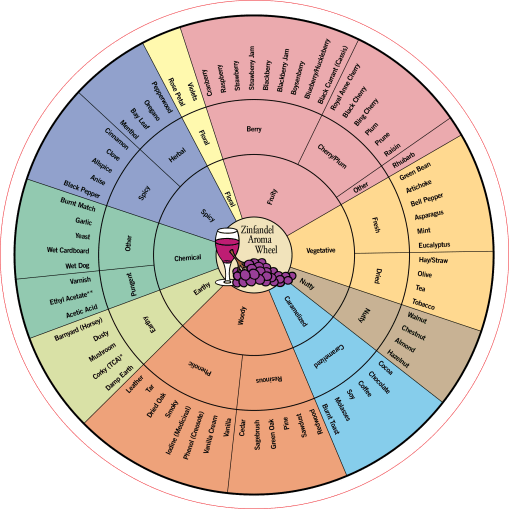
Happy National Zinfandel Day! Although we do not feature many interviews on Pop & Pour, we felt that the chance to publish a Q & A correspondence that I recently had with Joel Peterson of Ravenswood, commonly described as California’s “godfather of Zin”, would be a consummate way to celebrate, especially when paired with tasting notes for one of Ravenswood’s most iconic wines. To me, Zin embodies a key dialectic at play within wine appreciation: that between elegance, austerity and grace on the one hand, and sheer hedonism, richness and bold frivolity on the other. As an avowed disciple of Pinot Noir, you can deduce which pole of the dialectic I might ultimately prefer. However, wine is so immensely enjoyable precisely because there is ample diversity, so many different experiences to chase down and absorb. And I do like having my mind blown by huge flavours as much as the next bon vivant. If I am being honest with myself, a well-crafted Zinfandel may do a better job of resolving this particular dialectical dilemma than almost any other black grape:

Aroma-Wheel

There are some very specific cherry varieties listed here. I approve. (https://zinfandel.org/resources/zinfandel-aroma-wheel/)

The best Zins feature succulent, approachable berry fruit in lockstep with robust secondary flavours of smoke and spice, all festooned on a moderately formidable structure of fresh acidity and fine ripe tannins. They are fun and serious in equal measure: light yet dark, carefree yet intense, simple yet complex. Joel Peterson masterminds just this sort of Zin. Read the rest of this entry »


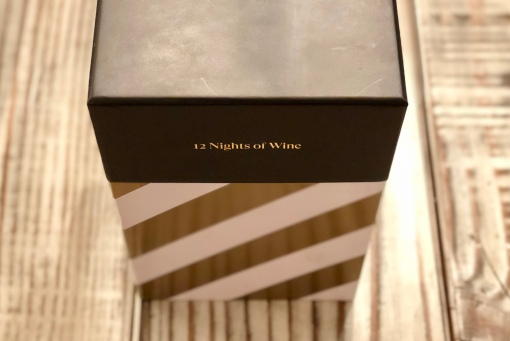
The Vinebox Cometh: 12 Nights of Wine

14 11 2018

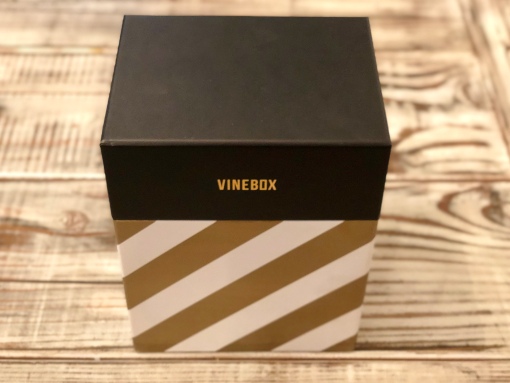
After 7+ years of blogging about and immersing myself in wine, I am in many ways an open book about what I like and don’t like, vinously speaking — there are now over 450 posts on this site, and other musings elsewhere, that spell out exactly what gets me pumped about a new product or wine experience.  Three of the things that rank high on the good side of my ledger, backed up emphatically by past history, are (1) savvy labelling and branding (my love of which is the basis for every Cork Rating I’ve ever done), (2) clever alternative packaging (bring me your wines in cans, your 1L bottles, and everything in between), and (3) Advent calendars.  If you rolled your eyes about the last one, feel free to consult PnP’s 125+ December postings over the past four years and then get back to me…if I’m not a boozy Advent authority by now, I never will be.  As we approach another holiday season, little did I expect to be dumbfounded by a sleek, shiny, downright sexy combination of all three of these things.  Meet Vinebox:

IMG_9197

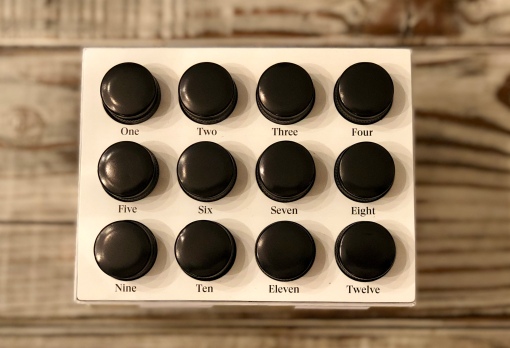
Oh yes.  It gets better.  Take a look inside:

IMG_9200

OH YES.  Bring it.  That’s what I’m talking about.

Vinebox is a San Francisco-based company that, up until right this minute, was a US-only subscription service for by-the-glass-sized portions of new, interesting, high-quality wines.  This special holiday release box marks their first foray into the Canadian market, and luckily for us locals, it is exclusive to Richmond Hill Wines and a select few other boutiques right here in Calgary.  Given my prior history of Advent proselytizing, I would be remiss if I did not point out that Vinebox’s 12 Nights of Wine holiday kit is not technically an Advent calendar, as it offers 12 different holiday wine offerings instead of the classic Advent 24-day December countdown to Christmas.  It is instead intended to mirror the 12 days of Christmas (which, I was shocked to discover, all actually occur AFTER Christmas — they run from December 25th through January 5th, marking the time in Christian lore that it took the three wise men to arrive and visit the newborn Jesus…mind formally blown).  Practically speaking, this means that you can either crack a glass on every even day in December as a sort of quasi-Advent replacement (or get two and create your very own full-scale Advent calendar, with a critical revisit of each offering every second day) or get the coolest Christmas gift ever for somebody to enjoy on Christmas Day and the next eleven following.

IMG_9198

In recent years, because the progress of the species is a real and abiding thing, we have seen a proliferation of wine, beer and spirits-based Advent and holiday calendars in a variety of shapes and sizes.  What sets the Vinebox addition to this growing December lineup apart is the unique and patented way the wines are delivered, in Stelvin-enclosed, test tube-like — yet still amazingly labelled and producer-branded! — 100 mL glass cylinders that make a stunning visual impression. Read the rest of this entry »
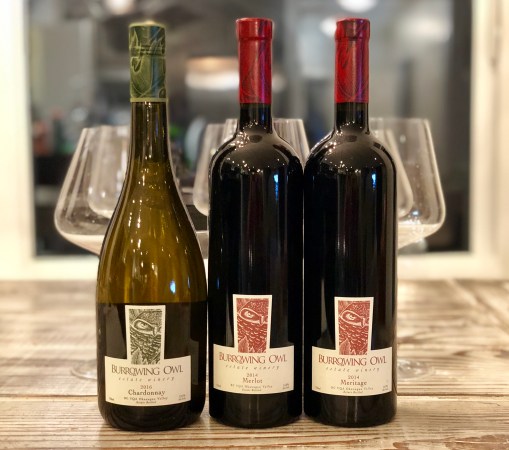


Burrowing Owl Fall Release Trio

8 11 2018

By Peter Vetsch

[These wines were provided as samples for review purposes.]

I have now been receiving and reviewing Burrowing Owl releases since 2015, and in addition to some minor shock about my blogging longevity, this has also given me enough familiarity and enough reps with the wines to truly help me understand the winery’s house style.  The whites tend to be creamy and generous, often buoyed and propelled by oak but not at the expense of the underlying fruit.  The reds are bold and ripe yet not overdone, a strong reflection of the scorching desert-like climate of the estate’s Oliver, BC home.

IMG_9158

Year over year, the releases and the winemaking choices behind them come across as impressively consistent, part of the reason why Burrowing Owl has long been on the short list of top quality wineries in the Okanagan Valley.  Now that the snow on the ground here in Calgary seems permanently settled in until April, it feels like there’s no better time to tuck into this trilogy of warm, rich, classic bottles, which always seem to be best enjoyed with a notable chill in the air, starting with a wine that just might be setting a new PnP record. Read the rest of this entry »


Calgary Wine Life: Maison Sichel Masterclass with James Sichel

3 11 2018
IMG_2336

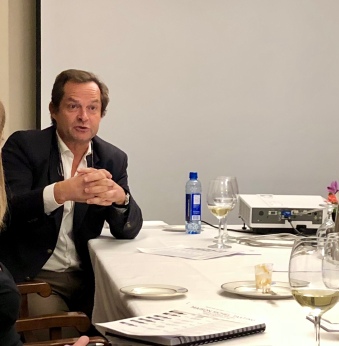
James Sichel of Maison Sichel

James Sichel is on a mission.  One of five brothers who comprise the sixth generation running the family-operated Maison Sichel, born in Margaux to English parents, James grew up among the history and legacy of Bordeaux and is now charged with connecting a whole new generation of wine drinkers with the fruits of his family’s labour, and rekindling the passion of those who think Bordeaux has passed them by.  There is a view among some modern drinkers that the region has ossified, become beholden to ancient classifications and over-reliant on score-chasing, stratospherically priced speculative investment bottles that are detached from the land and the soil and everything human and natural that goes into making great wine.  There are parts of such a criticism that may stick, but there is so much more to Bordeaux than four-figure futures bottlings and producer tiers; it is a massively prolific producing region and has somehow become an under-the-radar source of superb Tuesday night offerings (particularly, in my opinion, on the white side of the ledger) and sub-$100 luxury splurges.  James’ quest is to bring value Bordeaux back to the rest of the world, to steer the focus away from the elitism that can accompany 1st growth price tags and to allow a fresh audience to rediscover the true beating heart of Bordeaux.  The audience seems to be responding:  Bordeaux sales in Alberta are up 24% this year as compared to last.

IMG_9305

Maison Sichel is a complex entity.  Based in Bordeaux since 1883, they are part estate producer (they own over 350 hectares of vineyards in various different appellations), part winemaking negociant (they work with and source grapes from a series of smaller growers in southern Bordeaux then make wine, including their value flagship Sirius, from the fruit) and part discerning merchant (they sell other hand-selected partner estates’ wines other those estates’ own labels).  On the whole, if you search for the whole Sichel range on its website, you end up with 189 producer results, from straightforward cheap and cheerful offerings all the way up to Chateau Palmer, one of the premier wine estates in the world.  The Sichel family’s pride and joy, however, and James’ current home, is Chateau Angludet, a Margaux estate that is now highly regarded but was on the verge of ruin when the family purchased it in 1961.  It is now their hub and the pinnacle family pursuit.  Aside from Angludet (and a highly savvy prior investment in Palmer in the 1930s), the Sichels own Chateau Argadens in Bordeaux Superieur and Chateau Trillol down in Corbieres.  James’ brother Benjamin Sichel is the winemaker for all three family-owned estates.

IMG_2601

Foreshadowing.

James was on day 10 of a Canadian tour when he took the time (ahead of a sold-out black tie dinner) to lead his Alberta import agent through a portfolio tasting of many of the Maison Sichel offerings available in the province.  I was fortunate enough to sit in on the session and experience my own reacquaintance with a region that too often bypasses my attention.  There were ELEVEN wines poured, so from here on out I will try to be brief.  [Editor’s Note:  I did not succeed.] Read the rest of this entry »