In case my constant compulsive pumping of Riesling didn’t already tell you this about me, I’m not much of a Chardonnay guy. I’m not an active hater, but I can generally take it or leave it, and it’s definitely not where my eyes go on a white wine list. I find most oak-aged Chardonnays to be a bit of a blunt instrument, tasering the taste buds into submission with a lumberyard of wood (often accompanied by crazy high alcohol) and overwhelming the sense of delicacy that I think the best white wines possess. Conversely, I find most unoaked Chardonnays to be, well, extraordinarily boring: Chardonnay is a fairly neutral grape by itself, without any intense flavours, and with no oak providing backup vocals it can lack the layer of intrigue that it sorely needs. Of course, this dreary portrait doesn’t apply to all Chards out there (Burgundy fans, put down your pitchforks — I can’t afford your wines anyway), but it covers more of them than it should.

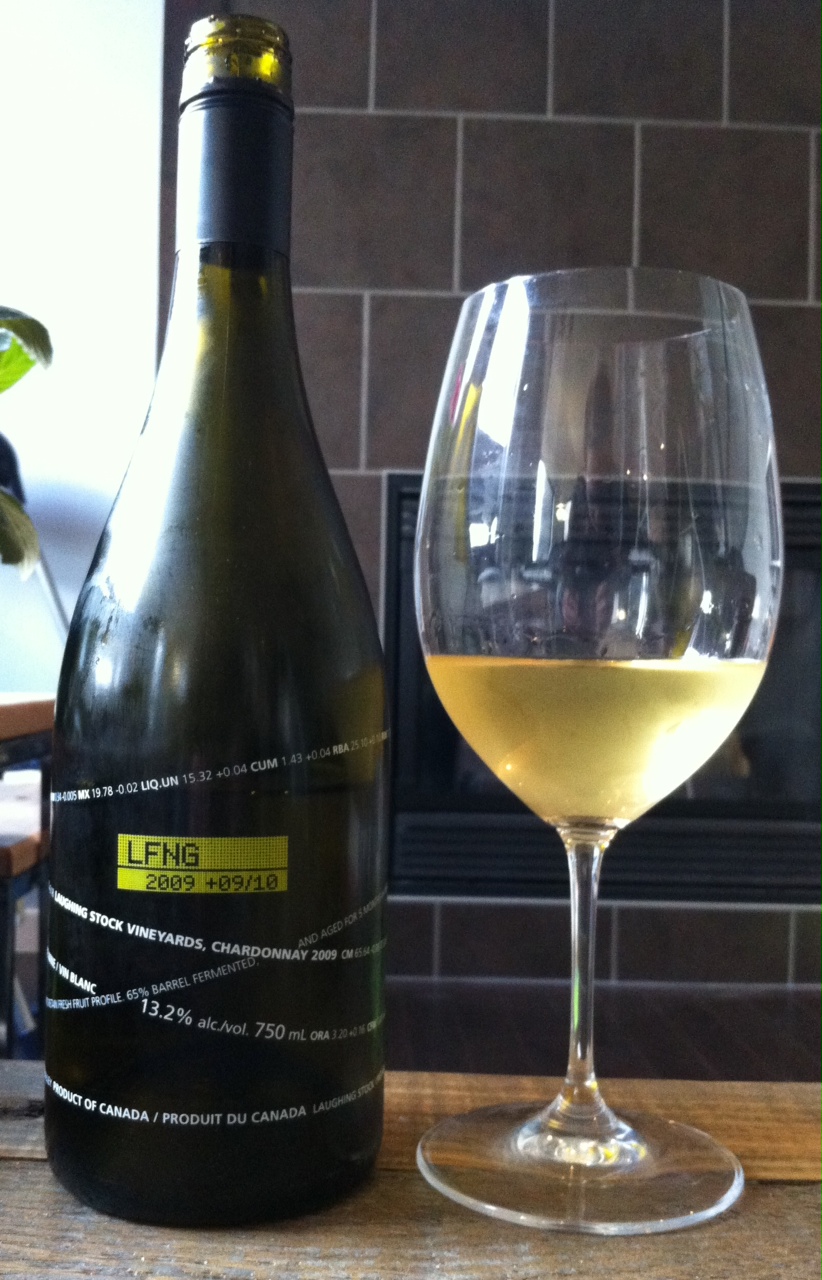
Great bottle, great marketing, great wine.
But leave it to my (now official) favourite Canadian producer to walk that difficult middle ground between extreme oakiness and mind-numbing neutrality. Coming off the extremely strong showing of their signature red blend Portfolio back in May, the Okanagan’s Laughing Stock Vineyards kept the PnP love fest going with their 2009 Chardonnay, which struck a perfect balance. The LS label info alone gave me high hopes, for two reasons. First, the alcohol level was only 13.2%, not a percent and a half higher like some New World Chardonnays; since all the alcohol in wine comes from the sugars in ripe grapes, this non-astronomical alcohol level means that the grapes weren’t crazily overripe when they were fermented, which in turn means that the resulting wine likely won’t be overly full and will likely retain some much-needed acidity. Second, instead of being aged in small oak barrels for a long period of time (usually a year or more), the LS Chardonnay was actually fermented in oak and then aged in larger oak barrels called puncheons (the bigger the barrel, the less surface area contact with the wine and the less flavour imparted) for only 5 months. As compared to strictly aging in oak, barrel fermentation generally results in more controlled, better integrated and softer oak flavours being imparted into the wine, all good things for someone easing their way into oaky whites. This is why more information on wine labels is always better than less! Read the rest of this entry »
Like What You Read? Please Share and Spread the Word - It Helps!









 cabernetdialectic (Raymond Lamontagne)
 Dan Steeves
 Peter Vetsch
 tylerderksen
 pop & pour