Whisky Advent Calendar: Day 20

20 12 2014

Well, whisky friends (and long-suffering wine readers who are just dying for Advent to be over – hang in there), we’ve reached Day 20 of the KWM Whisky Advent Calendar.  Only 4 more whiskies left until Christmas, which means we’re on the home stretch, gaining momentum to go out with a bang…right?  Maybe not so fast.  When I opened tonight’s calendar window and saw a familiar black cardboard box staring back at me, my thoughts could entirely be summed up with:  “Again?”

Not the little black box again.  (Sorry Campbeltown.)

Not the little black box again. (Sorry Campbeltown.)

Yep, it’s scotch #3 from the Springbank distillery in Campbeltown, completing the collector’s set of whiskies from the producer’s 3 sub-labels:  first came the Hazelburn 12 on Day 13, then came the Springbank 10 two freaking days ago, and now we get the Longrow N.V. Peated Single Malt, a whisky with no age designation at all (meaning that at least a chunk of it was made from quite young malts).  If you’re wondering how many whiskies from one producer is too many in a 24-day calendar, the answer is 3.  The Longrow retails for $64 and is a solid value for that price, but I can’t see myself coming back to it. Read the rest of this entry »



Whisky Advent Calendar: Day 19

19 12 2014

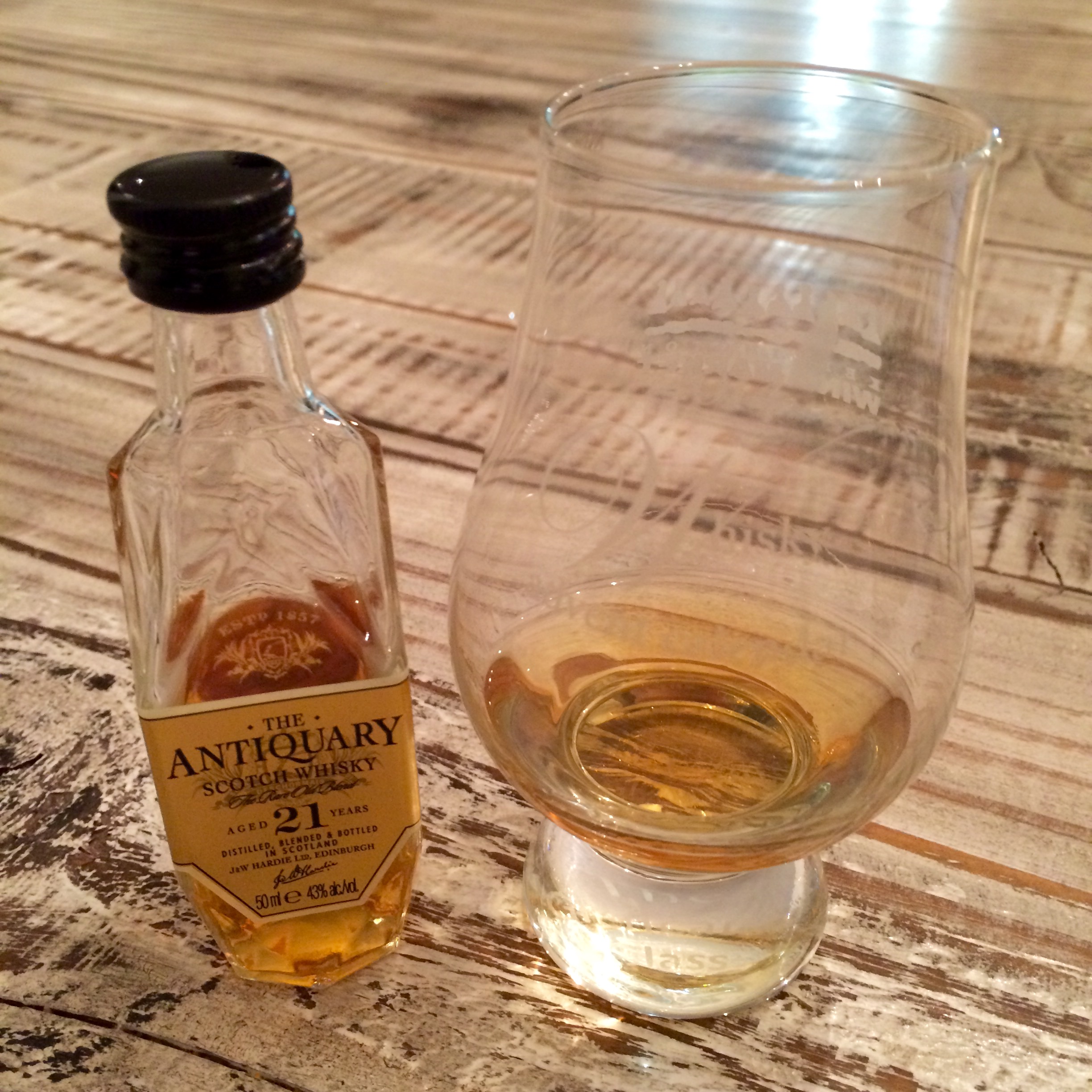
With a scant five days left until the last calendar door swings open, we’re setting a new age record today with a whisky whose name is about as hilariously British as they come:  The Antiquary 21 Year Rare Old Blend.  (And Scotland:  you voted to stay in the UK, so you can’t get mad at me when I say “British”.)  The Antiquary is a sub-label of the Tomatin distillery which was featured here back on Day 12 — if you start researching scotch you’ll realize just how much a seeming multiplicity of brands and labels are consolidated under a very limited number of owners.

Did Jane Austen come up with this name?

Did Jane Austen come up with this name?

“Rare Old Blend” is an accurate description for this calendar, as I believe this is is just the 4th blend out of 18 scotch whiskies so far; it’s a single malt world out there in terms of consumer demand, although high-quality blends are probably the place to look for near-equal character and complexity at a way better price.  This 21 year old blend comes in at $115, extremely reasonable for a whisky of that age.  It’s a mixture of whiskies from all over Scotland, primarily Speyside and Highland but with a “splash” of Islay and Lowland scotch thrown in.  Campbeltown apparently failed to make the cut. Read the rest of this entry »


Whisky Advent Calendar: Day 18

18 12 2014

Deja vu all over again?  I did a bit of a double take as I pulled the black box surrounding this whisky out of the calendar tonight.  Day 18 of the KWM Whisky Advent Calendar is located right beside Day 13, and Day 13 was home to an identical little black box, belonging to Springbank distillery’s Hazelburn 12 Year Single Malt.  Tonight’s neighbour box decided to forego the sister label and stick to the heart of the core brand, containing Springbank’s “benchmark whisky” (as KWM puts it), the 10 Year Single Malt.  As you already know if you tuned in 5 days ago, Springbank is interesting because it’s one of only three distilleries left in the scotch region of Campbeltown, and by far the best known of the three.  The Hazelburn label’s distinguishing features was that it was unpeated and triple-distilled; I don’t think either of those factors apply to the Springbank 10, which seemed to me to contain a bit of peat and which does not feature the hyper-literal three stills on its label like its sibling does.

Should sister labels look identical in the package?  My vote is "no".

Should sister labels look identical in the package? My vote is “no”.

My big issue with the Hazelburn was that I came out of it not really knowing how I was supposed to feel about it.  It’s a little bit easier to align myself with the Springbank, which seems to have more of a confident identity to it, although the two whiskies are quite alike in many ways in terms of smell and taste.  I wrote the tasting notes below for the Springbank 10 without going back and re-reading my Hazelburn writeup first — go back and cross-compare and the similarities will jump right out at you. Read the rest of this entry »


Whisky Advent Calendar: Day 17

17 12 2014

Ask and ye shall receive.  I was lagging a bit yesterday, coming off two uninspiring calendar whiskies in a row, when I formally wished for better things to come today.  BAM – Bowmore 18 Year Single Malt, thank you very much.  This is Bowmore’s second appearance in the calendar, having previously impressed me quite a bit with their 15 Year offering The Darkest back on Day 8.  The 18 Year is the graduate level version of its predecessor whisky, retailing for $114 and worth every cent of that price.  This specific age of scotch has only been available from Bowmore since 2007, when it replaced the bizarrely prime-number-matured 17 Year in the distiller’s collection.  I find it amusing that Bowmore has been around for 235 years (it’s Islay’s oldest distillery, having opened in 1779) but didn’t have an 18 Year in their lineup until I was 27.

Talk about a whisky rebound.  Wow.

Talk about a whisky rebound. Wow.

I admit I was slightly nervous to try this whisky when I was price-checking it and saw one shop commenting that it tasted like “salty kippers and coal smoke”.  Mmmm.  Luckily my tasting experience evoked less fish.  First, the deep, coppery amber colour on the 18 is a beautiful thing to behold – it’s probably the best-looking scotch I’ve had so far.  Second, as with the Bowmore 15, even though this is an Islay whisky, the peat levels are fully in control and perfectly balanced with the other flavours:  I definitely got some potent smoke and mossiness on the nose, but it melded seamlessly with sweeter, bolder aromas, marmalade and pineapple and caramel.  And it got even better once I had a taste. Read the rest of this entry »


Whisky Advent Calendar: Day 15

15 12 2014

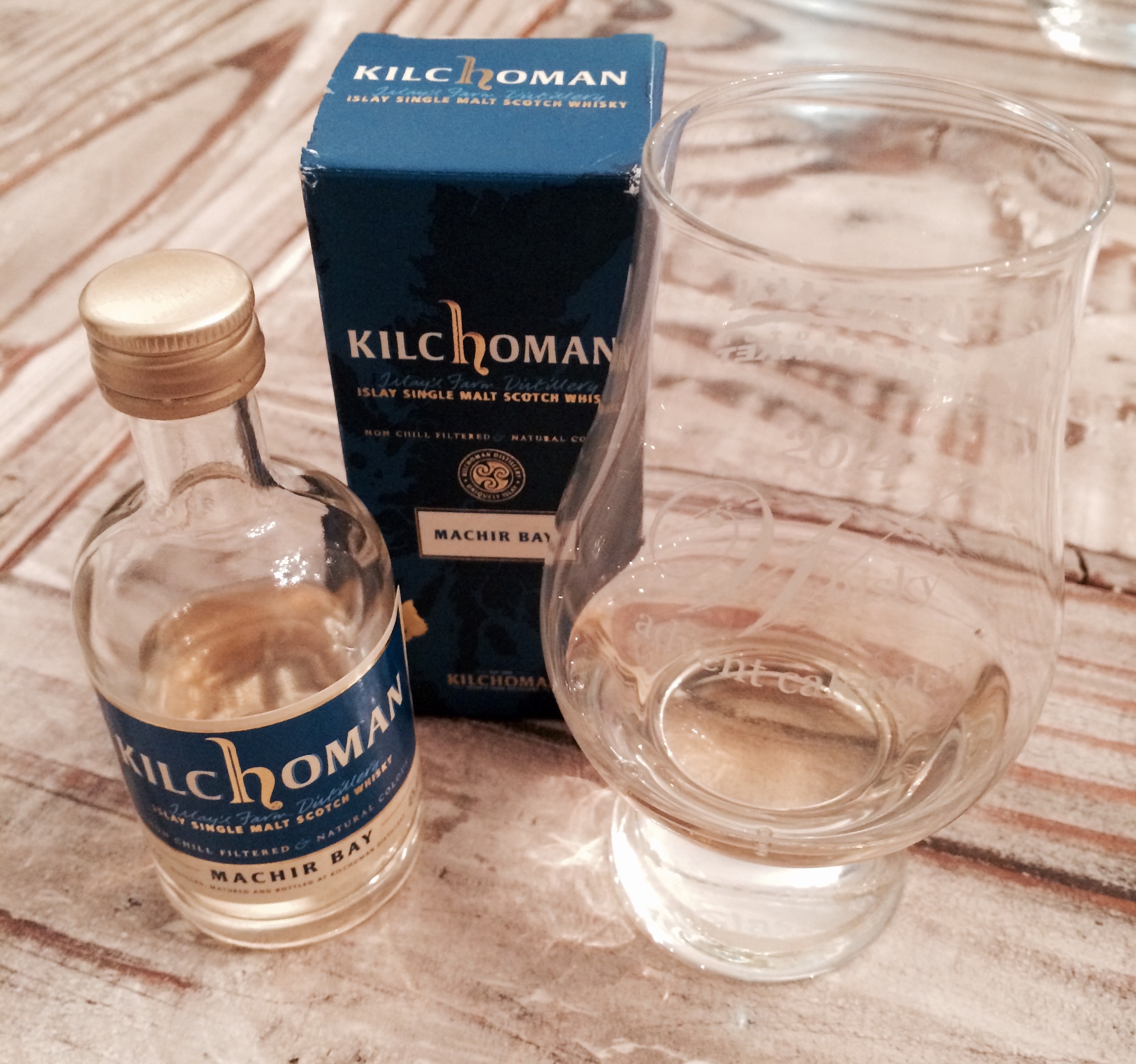
Two cool factoids about the producer of tonight’s daily Advent whisky:  (1) it is the first new distillery on the isle of Islay in 120 years, having opened its doors in 2005, and (2) it is a farm distillery, meaning that it actually grows and harvests some of the barley that it then malts, ferments, distills and matures into scotch.  Very cool on both fronts, and hopefully the start of a trend of some newer names in Scotland’s whisky field (ideally not starting with “Glen”).  The distillery in question is Kilchoman, and the feature whisky is their workhorse label Machir Bay, a blend that is bottled once per year using the distillery’s own whisky reserves, such that the components of the blend get older with time as the distillery does.  Machir Bay used to be a blend of 3 and 5 year scotches, but it’s now up to 5 and 6 years.  Interestingly, despite being a mixture of different whiskies, this bottle can still be called a “single malt”, as the “single” in this designation refers to the fact that all of the whisky comes from a single distillery as opposed to a single batch or year.

By FAR the hardest bottle to get out of the calendar yet.  Damn box.

By FAR the hardest bottle to get out of the calendar yet. Damn box.

The Machir Bay was initially matured in first-fill bourbon barrels, but then transferred to my most dreaded of aging vessels, Oloroso sherry casks, for finishing — that makes at least 8 out of 15 whiskies in this calendar so far that have had the Oloroso treatment.  This one is by far the weirdest.

Read the rest of this entry »


Whisky Advent Calendar: Day 14

14 12 2014

Two straight weeks of blogging and drinking the hard stuff – I’m so caught up in this calendar that I barely noticed Christmas is a week and a half away.  What am I going to do without 50 mL of whisky before bed every night?  Ten more days!

Lovely scotch; worst label of the 14 to date by far.

Lovely scotch; worst label of the 14 to date by far.

The KWM Whisky Advent Calendar seemed to be gradually scaling upward as the days went along, both in terms of the pedigree and age of the whisky and in terms of the bottle price, but tonight represents a bit of a reset on both fronts.  The showcase whisky is probably both the youngest and the cheapest single malt of the bunch so far:  the Benromach 10 Year Single Malt scotch from Speyside, clocking in at a mere $68 for a full bottle.  This whisky aged for 9 of its 10 years in 80% bourbon and 20% sherry hogshead casks before being finished in its final year in – wait for it – first fill Oloroso sherry casks.  Sigh.  Benromach has the interesting distinction of being the smallest distillery in Speyside, which is basically the core region of scotch production. Read the rest of this entry »


Whisky Advent Calendar: Day 13

13 12 2014

I have a Christmas party to attend tonight, so for the first time this Advent it’s afternoon whisky time!  Today’s whisky closes the loop on the scotch-producing regions of Scotland:  we’ve already had whiskies from 4 of the 5 regions (Speyside, Highland, Lowland, Islay), and this one hails from the lone remaining region, Campbeltown, a peninsula found on Scotland’s southwest coast.  This used to be a high-production area for scotch, but it has gradually fallen from prominence, to the point now where only three distilleries remain:  Springbank, Glengyle and Glen Scotia.  Springbank is by far the best known of the three and produces whiskies under three different labels, one of which is today’s feature scotch.  The Hazelburn Campbeltown 12 Year Single Malt is unpeated and triple-distilled, a production method common in Irish whiskies but rarely seen in scotch.  It spends its aging time in sherry casks (unclear whether they’re Oloroso or not, so I can’t get righteously indignant) and retails for $98.

I need some feedback on this one - have you had it?  What do you think?

I need some feedback on this one – have you had it? What do you think?

I can’t decide whether I like this whisky or not.  On the one hand, it has a beautiful straw-golden colour and a sense of individuality that sets it apart from the other drams in the calendar.  On the other hand, it doesn’t seem to handle its 46% alcohol as well as most of the other whiskies, coming across slightly fiery and harsh at the edges and remaining steadfastly gut-warming on the finish.  The nose, though restrained, has a bit of everything, from spice, celery and copper to apple juice, sulphur and dried grass.  Each sip is initially predominated by alcohol, roasted oak and mesquite, but somewhere in the midpalate more interesting notes of anise, dried citrus, coffee and honey emerge.  I hate to leave a post ambivalent about anything, but I really don’t know how I feel about this scotch, other than happy to add some Campbeltown to my repertoire.  Until tomorrow!


Whisky Advent Calendar: Day 12

12 12 2014

Well, I am officially halfway through the Kensington Wine Market Whisky Advent Calendar, and half of my whisky drinking experience so far has been through the lens of the Oloroso sherry cask.  I didn’t even have to research whether tonight’s whisky made it 6 out of 12, as the Tomatin 18 Year Highland Single Malt advertised on its mini-label that it was finished in what seems to be every distiller’s container of choice.  Turns out the scotch only spent the last 2.5 out of its 18 years in Oloroso, with the previous 15.5 ex-bourbon casks, but that’s not enough to allay my wrath.  I am done with you, Oloroso.  Stop being an aging vessel.

OLOROSOOOOOOO!!!!

OLOROSOOOOOOO!!!!

The Tomatin 18 retails for $115, quite a reasonable price for such an old single malt, but I can’t quite get behind it.  The nose is slightly sour-tinged, mealy, malty and briny, with a weird sweat and cigarettes aroma lurking behind a chemically/vegetally citrus, Pine Sol-esque note.  There is some bold spice and hickory on the palate, with the sherry influence shining through loud and clear in the secondary flavours of parchment, old library, dried blood and salt.  The finish is surprisingly pleasant, with lingering cinnamon hearts and fresh bread lurking long after you swallow, but it doesn’t quite redeem what came before.  It might just be my mood, my preference for something different at the end of a big week, my annoyance at being Oloroso-ed again, but I’d put this one in the bottom quartile of the 12 to date.  Fully expecting a rock star tomorrow!


Whisky Advent Calendar: Day 10

10 12 2014

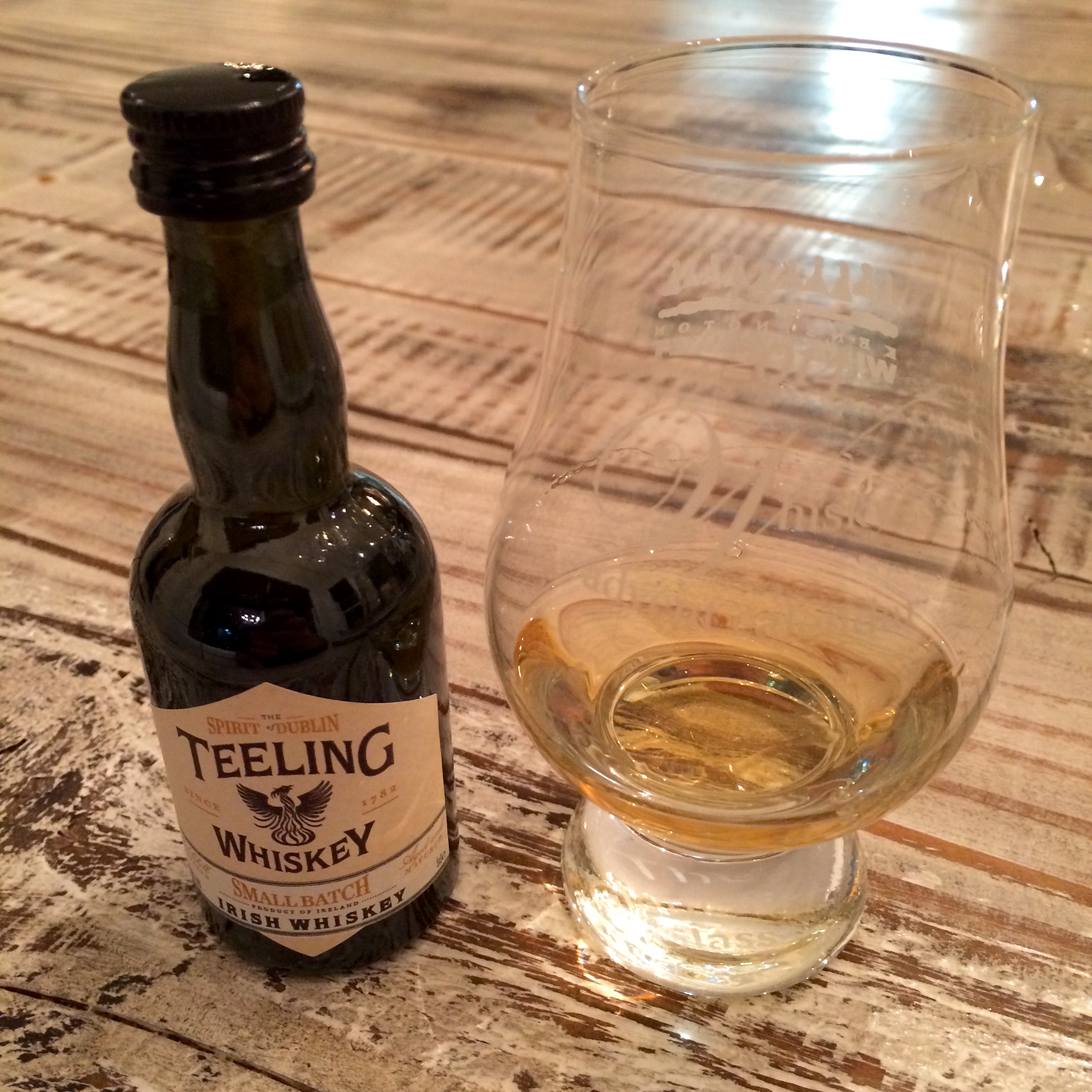
Here come the internationals!  After 9 consecutive days of scotch whisky, the KWM finally departed Scotland’s shores and ventured all the way to…well, Ireland for Day 10.  But a short hop is better than no hop at all!  I’m delighted to start checking out the other whiskies of the free world, and almost as delighted to finally get to spell it as I’m naturally inclined to:  “whiskey”.  The bottle told me I could.  I read recently that a handy guide for how you should spell the word “whisky” with respect to a given bottle is to look at where it’s from:  if it’s from a country without an “E” in its name (like Scotland, or Japan), don’t put an E in “whisky”, but if there is an “E” in its name (like Ireland, or the United States), put an E in “whiskey”.  Not sure if that holds up across the board, but it works here.

Stellar looking bottle plus an E in "whiskey" to boot. I'm happy.

Stellar looking bottle plus an E in “whiskey” to boot. I’m happy.

Tonight’s whiskEy is a small batch Irish Whiskey from Teeling distillery, which is a high-malt blend finished for 6 months in ex-rum barrels (take that, Oloroso sherry casks!) and bottled at 46%.  There’s not much that legally differentiates Irish whiskey from scotch whisky apart from their country of origin, although Irish whiskies are almost never peated, are usually distilled three times in a pot still and tend to be less regulated in terms of contents.

Read the rest of this entry »


Whisky Advent Calendar: Day 9

9 12 2014

A series of firsts in today’s KWM Advent Calendar offering:  first whisky over $100 for a full bottle ($118); first whisky over 16 years of barrel age (18 Year); first whisky aged in Oloroso sherry casks…no, just kidding, it seems that EVERY whisky nowadays ages in Oloroso sherry casks.  It’s just the cool thing to do.  If I owned a distillery I’d age all my whisky in Amontillado sherry casks just to be a rebel.  The GlenDronach Allardice (named after the founder of the distillery) 18 Year Highland Single Malt at least commits fully to the trendy Oloroso path by aging 100% in Oloroso sherry casks for the entirety of the scotch’s aging period — none of this wishy-washy “finishing” stuff.  As a result, it does not mess around with nutty, mealy, maple-y oxidized sherry flavour, but dives in headfirst.

If I hear the word "Oloroso" again this Advent I'm going to scream.

If I hear the word “Oloroso” again this Advent I’m going to scream.

The first thing to note is the colour of this whisky, which almost looks like oversteeped tea as opposed to barrel-aged spirit.  Then the Oloroso aromatic brigade starts, carrying with it a series of grimy kernel- and nut-inspired flavours that would make a barroom floor proud:  salt, stale beer, peanut shells, cold coffee, pretzels.  Things get malty and lively on the palate, all ginger ale, coffee beans, fig, cloves and dark chocolate, leading into a finish that’s a dead ringer for a cappuccino.  Yes, I know that’s weird.  Maybe it’s just Oloroso cask fatigue, but nothing about this whisky really moved me, although I can appreciate the additional complexity and flavour commitment that goes along with the extended aging process.  Sorry GlenDronach:  wrong year, wrong calendar.


Whisky Advent Calendar: Day 8

8 12 2014

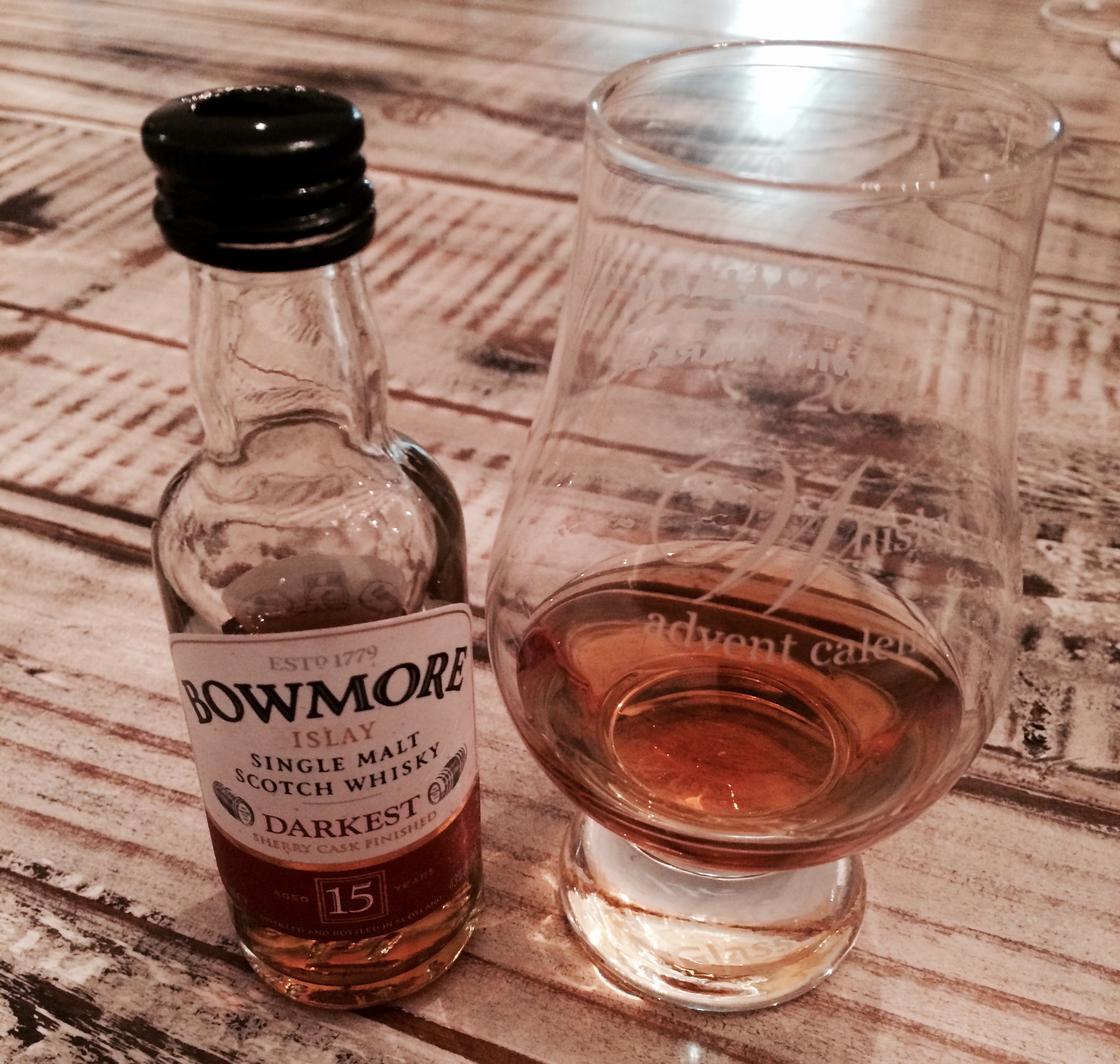
Week two begins!  Tonight’s whisky is the first single malt on the Advent docket from Islay, even though it’s the second time we’ve run into this distillery on our mini-alcoholic Christmas tour of Scotland.  Bowmore was a component of the multi-distillery blend in Day 5’s excellent Big Peat; now it’s on its own on Day 8, which showcases its 15 Year “Darkest” Single Malt.  This is, rather insanely, the 4th out of 8 Advent whiskies to date that has spent some time aging in Oloroso sherry casks.  This surge of barrel popularity makes sense when you think of the long, slow, oxidative process that goes into making dark, treacly Olorosos, a procedure that would leave plenty of colour and flavour imbued into the barrels ready to pass along to the next thing that filled them.  This Bowmore spent the last 3 of its 15 years in Oloroso casks (largely for the colour enhancement which gave the Darkest its name), with the prior dozen in a mixture of bourbon and (other) sherry casks.

Quick - guess which barrels?

Quick – guess which barrels?

I believe this is the most expensive scotch of the bunch so far, although it’s still comfortably under triple digits retail at $88.  I was a massive fan of the Darkest:  its deep bronze colour lived up to its title, and its nose was impeccably balanced between the dirtier, grimier Islay scents of moss, tar, rubber and oil and warmer, prettier notes of baked apple, cinnamon and incense.  Once you took a sip the symphony of flavours was amplified to include celery, saddle leather, moccasins and iron, but nothing ever stood out as overpowering, and everything was tied seamlessly together with the soft kiss of oak and even a hint of tannin on the finish.  If it wasn’t for my joy over the whimsy and constituent elements of Big Peat, this might have been my new favourite of the calendar, but a silver medal position this far into the race isn’t bad.  Internal probability when I first got this calendar that I’d be ranking Islay whiskies 1-2 after 8 days:  0%.


Whisky Advent Calendar: Day 7

7 12 2014

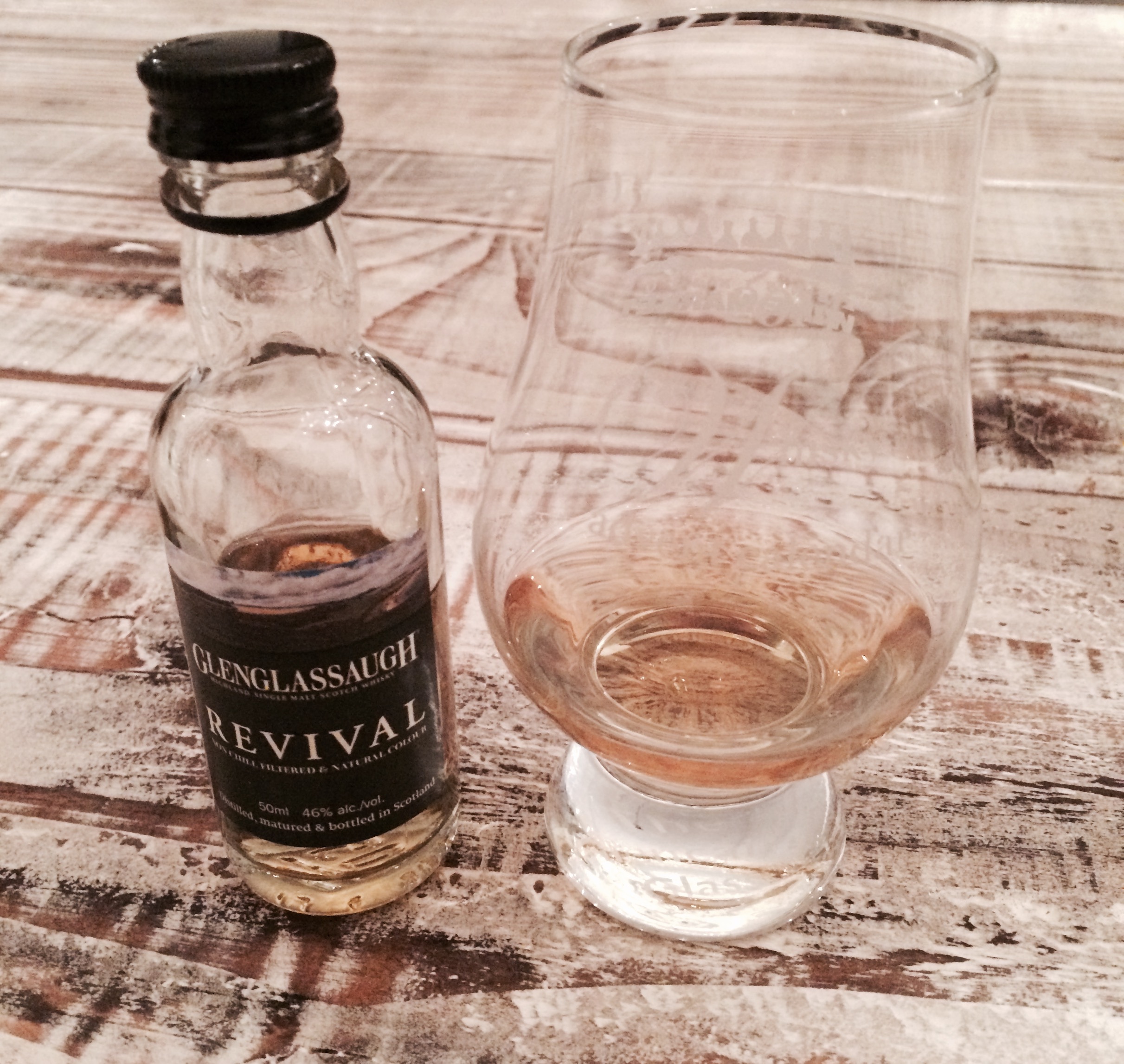
I’m not sure what’s more impressive, one straight week of blog posts or one straight week of whiskies.  More impressive than either might be the story behind tonight’s scotch, the Revival from Glenglassaugh distillery in the Scottish Highlands.  If you’ve never heard of that distillery (I hadn’t), don’t feel bad:  it was mothballed in 1986, much like my favourite distillery Port Ellen was in 1983.  However, unlike Port Ellen, Glenglassaugh wasn’t destroyed, but just sat unused…until 2008, when it amazingly reopened and started producing whisky again.  This bottle (whose name now takes on extra significance) was the first release of Glenglassaugh, version 2.0.

Revival - what's old is new again.

Revival – what’s old is new again.

This is the least expensive of the whiskies in the calendar to date, clocking in at $58 retail, and we’re back into the stratosphere on alcohol levels at 46%.  The Revival was legitimately weird on the nose, featuring an assertive layer of fermented, briny, barnacle-y, almost cheesy sherried notes on top of apple and citrus fruit — unsurprisingly, after aging first in old red wine and bourbon casks, it was finished in first-fill oloroso sherry butts.  Thankfully, the palate was both more generous and less funky than the nose, as maple and honey mingled with saltwater, hot coals and sweet soap, finishing in a potpourri-tinged flourish.  Not sure if it’s quite my whisky of choice, but I do love a good tale of redemption, and I wish more of the shuttered distilleries of the 1980s got the same chance at redemption.


Whisky Advent Calendar: Day 6

6 12 2014

Whatever your views on whether or not adding water to whisky helps unlock and open up its flavours, we can probably all get together on the fact that when a whisky clocks in at 60% ABV it’s probably a good idea to hydrate that bad boy, right?  I made a big deal previously when the Advent scotch lineup jumped from 43% to 46% from one day to the next; in contrast to that jump, today’s almost seems like sensory obliteration.  Day 6’s whisky is the Glenfarclas 105 Cask Strength (no kidding) Highland Single Malt Scotch.  Any whisky labelled as “cask strength” means that the finished whisky was not diluted with water down to a set alcohol level after barrel aging is complete.  The aging process results in varying levels of evaporation and concentration of the distilled liquid in cask, which is how you can end up with substantially advanced levels of alcohol, although 60% is close to the highest I’ve seen.  The Glenfarclas website suggests that “the smoothness makes the 105 drinkable at cask strength”, but the smoothness I got pre-dilution was somewhere between motor oil and fire, so in went the water.  Obviously not quite a scotch drinker’s palate yet…maybe on Day 24.

Day Six…ty?  Percent?

Day Six…ty? Percent?

Once I got the booze in check to a point where it didn’t feel like pure ethanol, I was able to appreciate the deep burnished gold colour and the vegetal nuance of this scotch.  There isn’t a whole ton going on, and the flavours are fairly laid back and mellow, but I coaxed out notes of grain/barley and brine, with an herbal undertone and a touch of honey lemon Halls on the nose.  The green, grassy undercurrent continued on the palate, shot through with vanilla, honey, toast and a notable hit of spiciness to go with a pleasant heat that lingered long after the scotch was gone.  Probably a middle-of-the-pack calendar whisky at the end of the day, one that I didn’t dislike but won’t remember much about in three days.


Whisky Advent Calendar: Day 5

5 12 2014

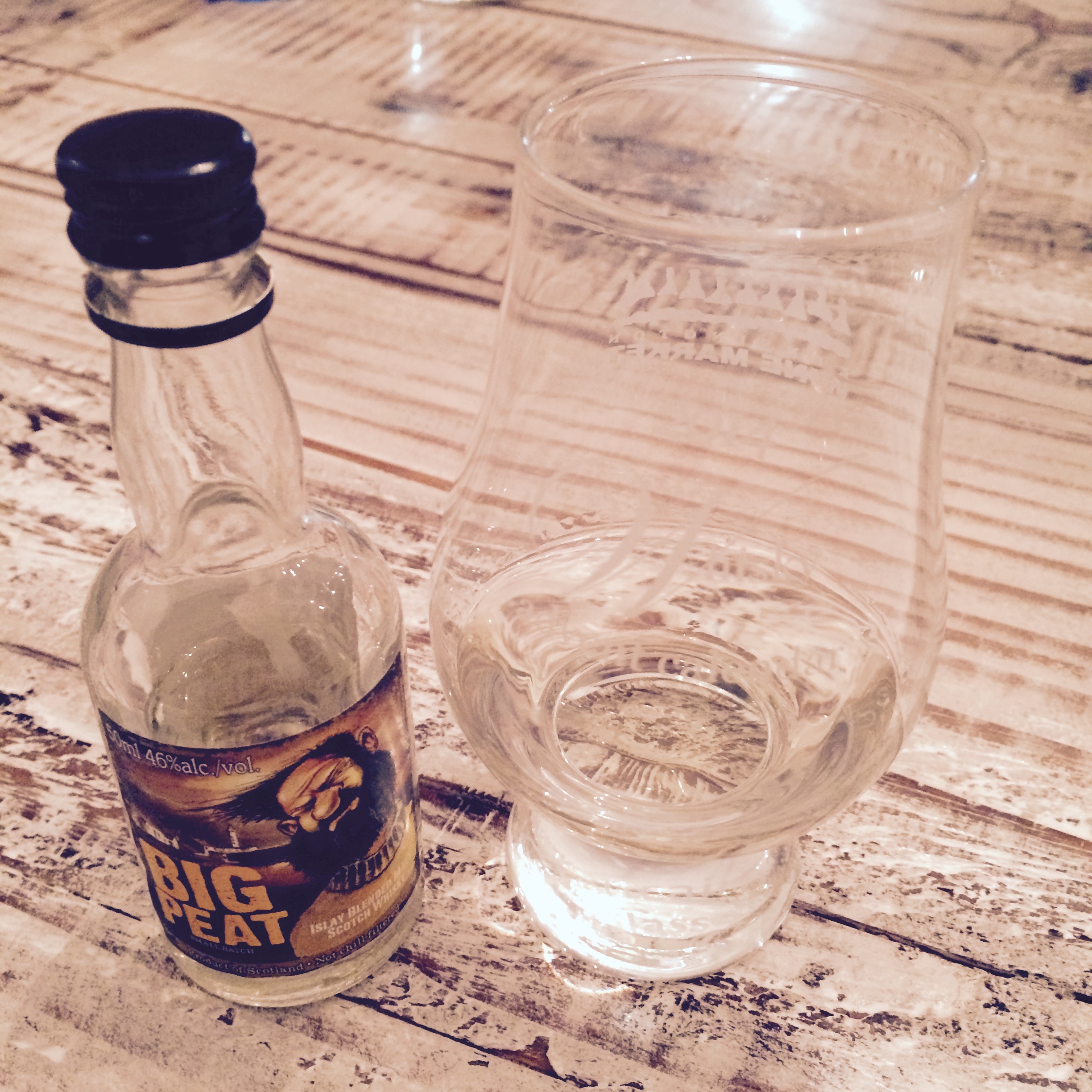
I sort of thought so. I sort of suspected that, after 4 days of relatively innocuous and conservative whiskies, Andrew Ferguson of Kensington Wine Market might pack a punch on day 5 of Whisky Advent.  I sort of expected that it was Islay’s time to shine.  And I was right, in a big way.  Islay (pronounced “eye-lah”) is a small island on the southwestern coast of Scotland that is known in the scotch world for peated whiskies, a distinctive style where drying the barley grain over a peat-fuelled fire leads to an eye- (and nose-) popping whirlwind of smoky, savoury, briny flavours.  I would say that peat has such a powerful and irrevocable influence over a whisky that you either love it or hate it, but I actually stand right in the middle:  I like both peated and unpeated whiskies and can certainly appreciate what peat brings to the table, but I don’t necessarily miss it if it’s not there.  As with wine, it’s all about balance.

Funny label.  Serious scotch.  Big peat!

Funny label. Serious scotch. Big peat!

You have probably suspected given all this talk about peat that peat plays a big role in tonight’s scotch.  You may not have suspected that it makes up most of its name.  Day 5’s whisky is the Douglas Laing blended bottling of Islay Malt Whiskies simply called Big Peat.

Read the rest of this entry »


Whisky Advent Calendar: Day 4

4 12 2014

I had to work late tonight and just got home, so this will be a short one even for this abridged series of posts, but I wasn’t about to let Whisky Advent get derailed that quickly.  Tonight’s (well-deserved) post-work whisky is the Edradour Caledonia, a special 12 year old Highland single malt whisky aged in Oloroso Sherry casks (which are apparently obscenely popular in the whisky world) which was hand-selected by Scottish folk legend Dougie MacLean (who I admit I’ve never heard of) and named after his song Caledonia (which I admit I’ve never heard).  It was supposed to be a one-off release, but everyone liked it so much that Edradour kept it going.  I particularly like it for the fact that a 50 mL bottle of whisky gets its own mini cardboard tube.  It’s the little things.

Day 4.   You should see Dougie MacLean's picture on the back of this tube.

Day 4. You should see Dougie MacLean’s picture on the back of this tube.

This one was deep bronze in colour but fairly muted on the nose, apple juice and linament and not a ton else.  The slightly higher degree of alcohol — 46%, as compared to 43% in the last three whiskies in this holiday lineup — makes itself known as soon as you take a sip and thickens the texture of the whisky, warming the flavours of golden raisins, figs, caramel and charcoal.  It’s big and pleasant and fruity, but not overly complex as far as single malts go; definitely enjoyable after a 12+ billable hour day, but not necessarily a bottle for which I’d line up to pay its $85 retail price.  Still goes down easy right now though.  8 minute review complete!  See you tomorrow!