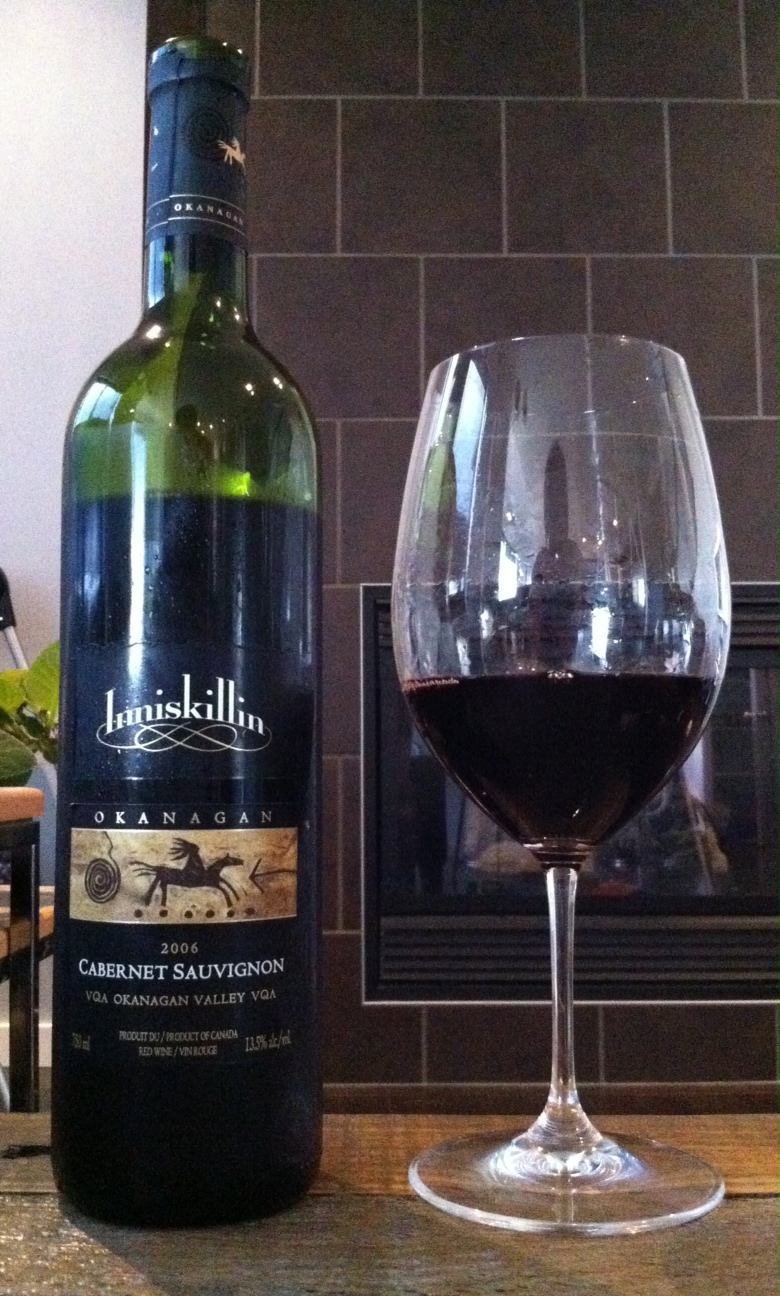
Wine Review: 2006 Inniskillin Cabernet Sauvignon

5 08 2011

$15 Canadian Cab...don't get me started.

Oh, Canada…I had been starting to feel a glimmer of optimism about red wines from my home and native land after positive recent experiences with producers like Laughing Stock (Okanagan) and Tawse (Niagara), but just as I began to forget why Canadian reds have until recently been an endless source of frustration for me, tonight happened.  My consternation isn’t that these wines are terrible (though some are); it’s that too much of the wine industry here seems locked in to grapes and wines that we are hard pressed to make better than many other regions around the world.  Cabernet Sauvignon is a case in point.  Why take one of the most heat-loving, slow-ripening, warm-weather grapes out there and try to specialize in making single-varietal wines out of it north of the 49th parallel?  Why especially would you try to target the sub-$20 price range with your Cabs when better-situated producers with hotter weather and cheaper land from Chile, Argentina, Australia and California basically have that market covered?  Where is the global competitive advantage in that approach?  We need a new business plan. Read the rest of this entry »


Wine Review: 2009 Laughing Stock Chardonnay

11 07 2011

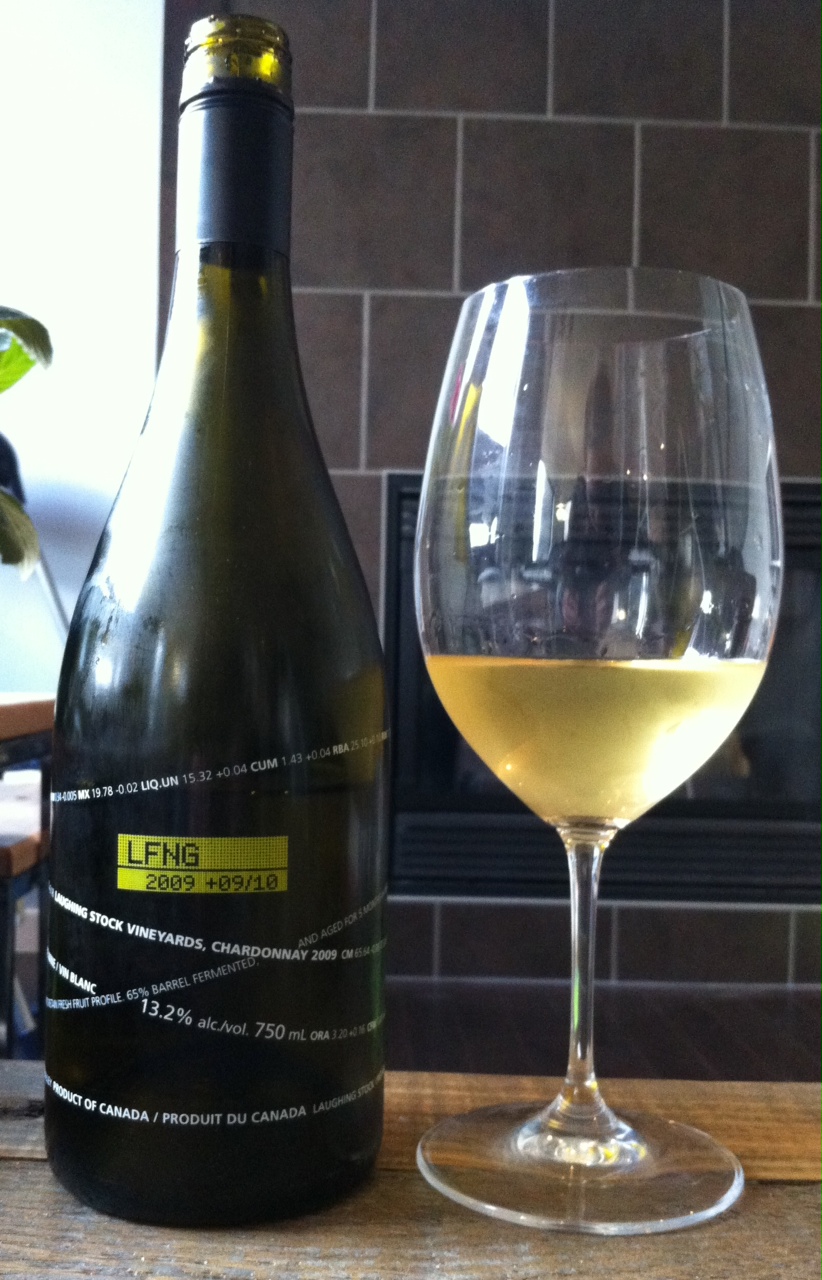
In case my constant compulsive pumping of Riesling didn’t already tell you this about me, I’m not much of a Chardonnay guy.  I’m not an active hater, but I can generally take it or leave it, and it’s definitely not where my eyes go on a white wine list.  I find most oak-aged Chardonnays to be a bit of a blunt instrument, tasering the taste buds into submission with a lumberyard of wood (often accompanied by crazy high alcohol) and overwhelming the sense of delicacy that I think the best white wines possess.  Conversely, I find most unoaked Chardonnays to be, well, extraordinarily boring:  Chardonnay is a fairly neutral grape by itself, without any intense flavours, and with no oak providing backup vocals it can lack the layer of intrigue that it sorely needs.  Of course, this dreary portrait doesn’t apply to all Chards out there (Burgundy fans, put down your pitchforks — I can’t afford your wines anyway), but it covers more of them than it should.

Great bottle, great marketing, great wine.

But leave it to my (now official) favourite Canadian producer to walk that difficult middle ground between extreme oakiness and mind-numbing neutrality.  Coming off the extremely strong showing of their signature red blend Portfolio back in May, the Okanagan’s Laughing Stock Vineyards kept the PnP love fest going with their 2009 Chardonnay, which struck a perfect balance.  The LS label info alone gave me high hopes, for two reasons.  First, the alcohol level was only 13.2%, not a percent and a half higher like some New World Chardonnays; since all the alcohol in wine comes from the sugars in ripe grapes, this non-astronomical alcohol level means that the grapes weren’t crazily overripe when they were fermented, which in turn means that the resulting wine likely won’t be overly full and will likely retain some much-needed acidity.  Second, instead of being aged in small oak barrels for a long period of time (usually a year or more), the LS Chardonnay was actually fermented in oak and then aged in larger oak barrels called puncheons (the bigger the barrel, the less surface area contact with the wine and the less flavour imparted) for only 5 months.  As compared to strictly aging in oak, barrel fermentation generally results in more controlled, better integrated and softer oak flavours being imparted into the wine, all good things for someone easing their way into oaky whites.  This is why more information on wine labels is always better than less! Read the rest of this entry »


Wine Review: 2007 Laughing Stock Portfolio

12 05 2011

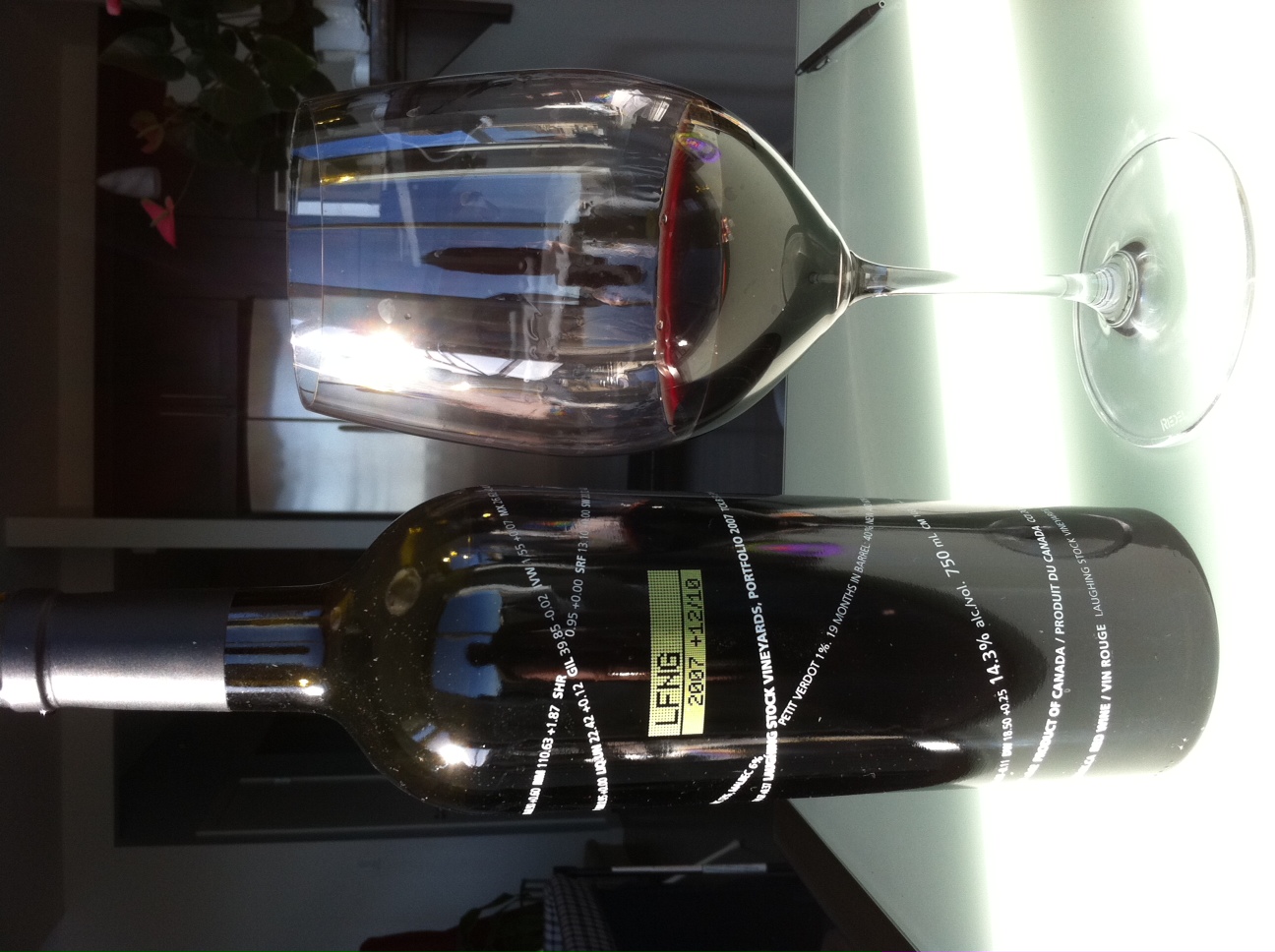
Attention-grabbing headline:  This is the best bottle of Canadian red wine I’ve ever had.

Charter member of my Canadian Wine Hall of Fame.

This wine has everything going for it:  great back story, great marketing, great product.  Laughing Stock Vineyards is located in (on?) the Naramata Bench, one of the most prestigious and quality-driven areas of British Columbia’s Okanagan Valley wine region.  The winery’s name comes from the fact that its two proprietors both once had successful careers in the financial/investment sector before giving them up to pursue their vinicultural dreams, thus opening themselves up to failure and ridicule if things didn’t go well (note: if you want to win my heart, make your winery name a pun).  Their cleverly-designed bottles reflect their past lives, and they’re not just empty packaging for what’s inside — the juice lives up to the allure of its container. Read the rest of this entry »


Wine Review: 2007 Tawse Wismer Vineyard Cabernet Franc

14 04 2011

Tonight’s wine review is (very mildly) historic:  the first Canadian wine featured in this Canadian wine blog.  I have probably picked a good inaugural selection, since the Tawse Winery in Ontario’s Niagara region won the  2010 Canadian Winery of the Year Award from Wine Access Magazine.  I picked up this particular wine from Highlander in Marda Loop after being advised that it would “blow my mind”…them’s drinking words!

O Canada!

Despite living in Canada my entire life, I don’t drink a lot of Canadian wine, particularly Canadian red wine, so I approached this one with some degree of trepidation.  But I was excited to open any bottle of Cabernet Franc, which is an underused and underappreciated grape, especially in marginal wine climates like Canada.  Some interesting facts about Cab Franc:  (1) it is believed to be the genetic parent of the much-more-renowned-and-ubiquitous Cabernet Sauvignon (with the white grape Sauvignon Blanc strangely the other parent, as strange a love match as that seems); and (2) it ripens earlier and grows better in cooler areas than Cabernet Sauvignon, which makes Cab Franc an intelligent choice for Canadian winemakers faced with a short growing season (did I mention it snowed in Calgary yesterday?), colder temperatures and a latitude right at the tip of where grapevines can actually grow (they don’t grow much above 50 degrees Latitude, and the northern tip of the Great Lakes in Ontario is at 49 degrees).  Cabernet Franc is commonly found to have some greener herbaceous or vegetal flavours mixed in with its fruit, anything from grass or leaves to olives, asparagus or green peppers, which notes set its flavour profile apart from the riper, lusher Cab Sauvignon.

…But not so much in this case:  this was a plush, silky take on the varietal that almost came across like its warmer-weather cousin. Read the rest of this entry »