Aaaaaand we’re back. I am almost flabbergasted to say that this is the FOURTH straight year I will be live-blogging through Whisky Advent, all thanks to the near-superhuman efforts of Andrew Ferguson and the Kensington Wine Market, whose Whisky Advent Calendar has quickly gone from quirky daily education and liver damage to can’t-miss holiday imbibing and has sucked me further into the world of whisky than I could have expected. By the end of Advent there will be over 100 whisky reviews on Pop & Pour, which is not something I had envisioned when the site first started up, but an experience I will never forget (especially on Advent Day 17 when I’m ready to die). One big change this year is that I’m sadistic enough to have also acquired a Wine Advent Calendar this year (which you’ll hear much more about in a couple of hours) and will thus be calling on expert whisky assistance to help me traverse the Advent trail: frequent PnP tasting collaborator and awesome spirit aficionado Tyler Derksen will be contributing his first whisky reviews on the site over the course of these 25 days. Give him a Twitter follow so as not to miss his posts!

Take 4. Bring it.
After opening 74-odd little cardboard doors and drinking 74-odd KWM calendar whiskies, you wouldn’t think there would be much room left for surprise, let alone confusion, but tonight there was plenty of both. The first thing I saw on the whisky label was “Campbeltown”, a once-happening but now nearly abandoned distilling region (something I know due to Past Calendar Knowledge) currently home to only 3 distilleries. The thing is, the names on this label were none of those three. It turns out, as far as I can tell, that this is a release from an independent bottler called WM Cadenhead’s, who acquires pre-made whisky from distilleries and releases it under its own branding, a common Scottish practice. The bottler is based in Campbeltown; the distillery from which the whisky came, not so much. It is the extraordinarily unknown Dailuaine-Glenlivet Distillery in Speyside, founded back in 1853 and now, like so many others, part of the Diageo empire. Despite its significant annual production, it doesn’t even have its own website and only the tiniest fraction of its creations get released under the D-G label — most of it ends up as part of the Johnnie Walker blend. I’m not sure how Cadenhead’s got this, but it may be as much a peek behind the Dailuaine curtain as we ever get.
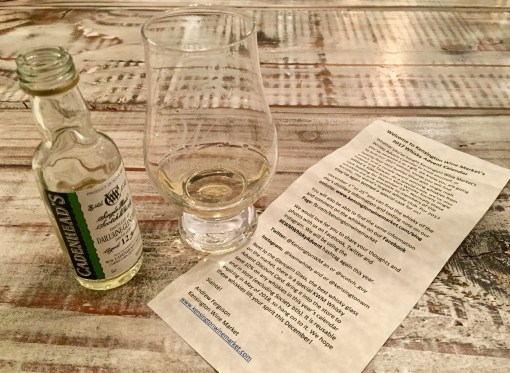
First impressions: this is 55.9% alcohol. Welcome to Advent. It is an almost eerily pale straw colour, and even with water added it still emits crusty cheese-rind and dried shoe polish aromas layered over hard toffee candy and smacks of salt sea air. As you might expect of something of this concentration, it is both explosively fiery and pleasantly gut-warming, starting almost gritty but leaving glowing embers of contentment after you swallow. It reminds me of an old abandoned log cabin on the beach, powered by kerosene, with bear pelt rugs and traces of fish skins lingering, matchsticks and Neo Citran. It’s rustic, rough around the edges, but full of soul, and the more I had the more I enjoyed. But again, 55.9%. Onward!








 Arran is a traditional distillery with modern foresight, which releases a wide array of scotches aged in practically everything possible — current highlights include a Sauternes cask, a Port barrel and (!!!) an Amarone cask bottling. I love it. If you’re so inclined, you can also
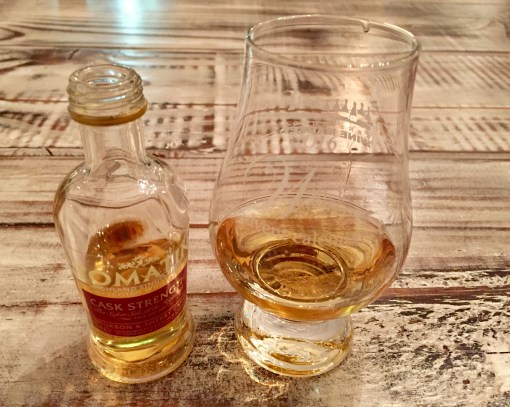
 And it is, in spades, if you’re a fan of the Islay style of peated whisky. The Cask Islay contains 35 ppm of peat phenols, chemicals released in the smoke of burning peat moss used in the distillery’s kilns while drying malted barley which are absorbed by the barley itself. 35 ppm is not overly high as far as peated scotch goes; the peat bombs that push the issue can get all the way up to 200 ppm (at which point they basically taste like solid charcoal). But even the lower figure is enough to establish peaty dominance in the Cask Islay’s nose, all oily smoke, seawater brine, clamshells, beach fire pits, iodine and (weirdly) Comet cleaning powder. Happily, it is more personable to taste than to smell, adding warm peach cobbler and baked apple fruitiness to the swirling peat mass of shoe polish, diesel, sulphur and topsoil, finishing hearty and rich. This is a great fireside malt, although it would certainly not make a good pick for a whisky neophyte’s scotch initiation. Frankly a spectacular buy for any Islay lover at this price point. I’m in.



 cabernetdialectic (Raymond Lamontagne)
 Dan Steeves
 Peter Vetsch
 tylerderksen
 pop & pour