KWM Whisky Advent Calendar 2016: Day 20

20 12 2016

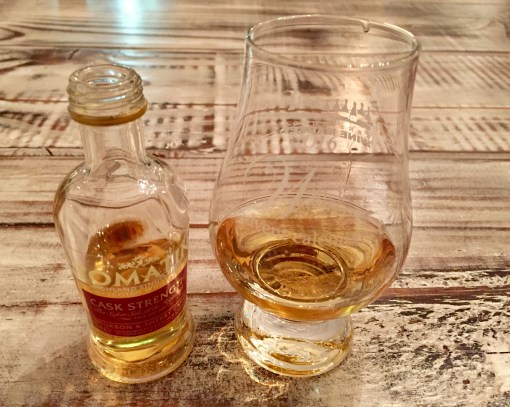
As we near the finish line of 2016 Whisky Advent, we’re coming a bit full circle, back to the distillery (if not the bottler) that brought us Day 1.  We started off Advent with Gordon & MacPhail’s take on a Tomatin whisky, and tonight we let the distillery speak for itself, continuing the calendar’s now-three-year streak of Tomatin releases, after 2014’s blasé 18 Year on Day 12 and 2015’s awesome Port-aged 14 Year on Day 17.  The difference between those bottles and this one is twofold:  this one is cask strength, as the largest capitalized letters on the front label tell you, and it also has no age designation whatsoever, suggesting that it’s probably too young to market as a number.  The $73 price tag would go along with that theory.  (Incidentally, if you’re a whisky spendthrift, you should probably focus your scotch dollars on cask strength whiskies — you get the same volume of whisky at up to 50% higher alcohol, without a price premium in many cases, and when you pour yourself a serving you have to add water to it, something the distillery does itself to get its non-cask strength releases down to 40% or 46%.  In other words, you often pay the same price for post-dilution bottles as for pre-dilution bottles which you then dilute yourself, giving you way more whisky concentrate for your money at cask strength.)
fullsizerender-513

This bottle’s packaging is an exercise in earnest oxymorons:  lilting italic script informs you that this whisky represents “The Softer Side of the Highlands”, immediately below the double-sized block letters stating “CASK STRENGTH” and immediately above the 57.5% abv listing.  I could describe this whisky in many different ways and it would not end up on the softer side of anything.

This is Tomatin’s first cask strength bottling in its core range of whiskies and saw (an unknown amount of) time in a combination of Bourbon and Oloroso Sherry casks before being bottled.  It was a fairly eye-catching dark golden wheat colour for a bottle coy about its age, yet unlike most whiskies which are aromatically the sum of its parts, this one just smelled like the parts, like barley and barrel and fermentation:  malt, grain, yeast, spice, salt, seawater.  You then completely forget about that, and everything else, once this Tomatin hits your tongue and your brain starts bubbling like it’s on a griddle.  The whisky is massive, overwhelmingly lush and nearly gelatinous in texture, to the point where it almost doesn’t even feel like a liquid.  A strange mixture of honey, baby oil, firewood, shortbread, spackle, flaxseed and rye bread, it is a raging beast of decidedly cautious flavours, a meek monster.  On an oddly bitter yet sweet-tinged finish, it leaves me with no other concluding thought than:  this is just so weird.


KWM Whisky Advent Calendar 2016: Day 19

19 12 2016

To say that things are heating up in the last week of Advent would be a massive understatement.  Yesterday we hit upon my favourite calendar whisky distiller in GlenDronach, and today we meet up with the only other producer that has managed to reach similar Advent highs, Taiwan’s Kavalan, which took second AND third place in last year’s calendar for me and which seems to do nothing but produce show-stopping whiskies in what on its face seems like one of the least likely locations on Earth.  But here’s the secret:  Taiwan is much, much hotter year-round than Scotland is, and massively more humid.  So?  So when you’re freshly distilled whisky spirit, sitting in a barrel and waiting for maturation magic to happen, those climatic conditions make the aging dance between cask and liquid go into hyperdrive, accelerating evaporation (which speeds up oxidation) and allowing the wood grain to penetrate into and flavour the whisky much more quickly.  The result:  a distillery that’s barely 10 years old with products on the shelf that you would taste blind and swear they’ve been aging for well over 20.  In the whisky world, you can’t ask for a better and more distinct advantage than that.

fullsizerender-512

This is a particularly interesting bottling because it is ALMOST, but not quite, identical to the Kavalan from Day 5 of 2015.  Like this one, that was also an ex-Bourbon cask bottling, but it was a cask-strength offering (like most of Kavalan’s lineup), whereas this is the first Kavalan whisky I’ve had that isn’t, bottled at 46% to give Kavalan a sort of “entry-level” whisky in its lineup.  Those words are in scare quotes because the bottle still costs $140, but I am here to tell you that it’s worth it.  It was bottled in mid-2015 (at 11:16 a.m., according to the hyper-specific back label info) and likely only spent a few years in Bourbon barrels, but the Taiwan time warp effect made it deep and rich and gold in the glass, albeit more yellow than amber.  It smells like the most delicious confection you could ever come up with:  part toasted marshmallow and vanilla bean, part wafer cookie and whipped cream, with some Corn Pops and hickory on the edges for good measure.  It then beams out the most outrageously tropical set of fruit flavours I have seen in a whisky.  Cantaloupe?  OK.  But guava?  Papaya?  WATERMELON?  What is happening??  Coconut flakes and Rice Krispie squares round out an absurdly delicious six-days-till-Christmas whisky:  exotic and playful, complex but oh so hedonistic.  I sense another podium finish, Kavalan.


KWM Whisky Advent Calendar 2016: Day 18

18 12 2016

PSA:  I am told that not everybody will be receiving the same whisky in their calendars tonight.  Some, like me, will end up with the intended calendar whisky, the GlenDronach 8 Year The Hielan Single Malt, but due to unexpected shipping issues, there wasn’t enough of it available when the calendar had to be finalized, so the remaining calendars were filled with BenRiach’s 10 Year Curiositas, the Day 16 whisky from 2015.  The shipping problems have now been rectified and the full supply of The Hielan has now arrived in town, so if you ended up with the Curiositas, you can come by KWM anytime and pick up a complementary mini-bottle of The Hielan as a bonus 26th Day whisky – they have a list of everyone affected.  Now back your regularly scheduled whisky programming.

One more week!  It is Day 18 and there are only seven more days until Christmas and until the end of another string of marathon blogging.  Man was I happy to open the calendar today and see a GlenDronach starting back at me – I was starting to wonder if one was going to be included in Whisky Advent this year, or if KWM felt that two straight years of utter calendar dominance from this distillery was enough and that somebody else deserved a fair shake.  My top whisky from the 2014 calendar was the unspeakably excellent GlenDronach Parliament 21 Year, which is close to my favourite scotch ever; my top whisky from 2015 was the nearly-as-good GlenDronach Revival 15 Year, which officially crowned this producer as the only atomic superpower of the Whisky Advent scene.  This year it may be a bit much to ask for GlenDronach to complete the trifecta, as its representative for 2016 was the $64 8 Year The Hielan, the youngest and most entry-level whisky in its core lineup.  But if I was going to believe in miracles from anybody…

fullsizerender-511

It’s hard to believe this scotch is less than a decade old; by eye, it looks like one of the older whiskies in the calendar, coming out of the bottle a gorgeous deep orange-gold.  Whatever they did with the mixture of bourbon and sherry casks to mature this worked fast, and its magic extended aromatically as well, creating a symphony of oxidative notes streaked with citrus, toffee and Caramilk bars and marzipan and lemon peel that weaved together beautifully.  But The Hielan was a little forward and impetuous on the palate, its flavours a touch jumpy and its alcohol slightly jagged without the benefit of time to settle in.  Burnt sugar, carrot cake, butter tart and tonic water were cut short by sandpaper and a streak of woody tannin, although still carried a hint of the resonance of GlenDronachs past.  This doesn’t quite carry the same level of majesty as its predecessors, but it’s on its way somewhere, and the smell alone is well worth the sub-$65 price tag.


KWM Whisky Advent Calendar 2016: Day 17

17 12 2016

Balblair!  Immediately recognizable thanks to its awesome squat flask-shaped bottle (complete with etching, even in the mini version) and standout modern labels, these guys have their branding right on point.  This is the third Balblair whisky to grace the pages of the Advent Calendar (and the third one I’ve had an obscenely hard time getting out of the calendar), after 2015’s lead-off Day 1 and denouement Day 22.  The distillery’s path to the present was a windy and interesting one, reflective of how difficult it must have been to be a whisky producing facility in the 20th Century:  founded 1790, sold 1894, moved 1895, mothballed 1911, run totally dry 1934, OCCUPIED BY THE ARMY 1939, sold 1948 (to a lawyer from Banff, no less, though presumably the one in Scotland), sold 1970, sold 1996.  Thankfully it’s stayed steady for the last 20 years, and in 2007 it made the decision that has become its rallying cry in the marketplace:  to produce and release only vintage-dated whiskies.  I don’t mean “10 Year”, “12 Year”, “18 Year”, etc.; I mean 1990, 2003, and tonight’s 2005.  The difference is that the former age designation only indicates the youngest whisky in what can be a blend of multiple different production years (what in wine would be called “non-vintage”), whereas Balblair’s choice commits them to only using whisky distilled in a single specific year in every bottling, which is proudly displayed on the front label.  Is that better?  Not necessarily, but it’s different, and the whisky world needs some different.

fullsizerender-510

This bottle was distilled in 2005 and just bottled this year, making it an 11 year-old dram.  It was happily matured in ex-bourbon casks (w00t – sherry break), which explained its ludicrously friendly nose, overflowing with maple and brown sugar, crushed pecans, cinnamon sticks, nectarines and smoke.  I’ve noted that many whiskies in this year’s calendar start quieter aromatically but then are more exuberant to taste; well, this one is the opposite, not shutting down but taking on more sour lemon and bitters flavours, leathery tinges and chemical/petroleum notes (almost like Vaseline) on the tongue to go with the still-present vanilla and butterscotch sweetness.  Like a nice guy made more complex by a darker side – I like it.


KWM Whisky Advent Calendar 2016: Day 16

16 12 2016

I’m learning.  I half-pulled tonight’s mini-bottle out of its cardboard home, saw the uber-Scottish name of a distillery I had never previously seen or heard of, and immediately hunted for the tiny Gordon & MacPhail logo tucked discreetly on the bottom of the label.  Another Distillery Label G&M Whisky?  You betcha.  On Day 8 it was the gleefully Scottish Miltonduff that got its quasi-day in the sun, and 8 days later it’s the equally blue-and-white Glenburgie 10 Year Single Malt (another Glen for the roster!) that has its turn.  As mentioned a week or so ago, the Distillery Label series is Gordon & MacPhail’s collaborative effort with a series of lesser-known distilleries to bottle a whisky that’s as close as possible to the producer’s own release through the invisible hand of G&M’s independent bottling empire.  The effort goes right down to the packaging, which is made to look like it came right from the distillery’s own marketing department; you almost need a magnifying glass on these mini-bottles to see that Gordon & MacPhail had anything to do with them.

fullsizerender-509

Glenburgie is a Speyside-based distiller and yet another scotch producer that’s mainly used as feedstock for the Ballantine’s blend (a trait it shares with the last Distillery Label, Miltonduff, each of whom deserve a better fate).  This bottle was matured in multiple types of sherry casks and threw off some impressive depth of colour for a 10 Year whisky.  It began fairly understated, a careful combo of fruit, spice and herbaceous aromas:  peach iced tea, pepper, wood grain, celery root.  Then things ramped up on the palate, mostly thanks to the Glenburgie’s honeyed and almost waxy texture, mouth-coating even at 40% abv and bolstering more intense flavours of sweet orange Lifesavers, almond brittle, celery and peanut butter (together), sultana crackers and anise.  I don’t think this is a scotch I’m going to remember in two whisky days, but it’s definitely an enjoyable weeknight whisky.  It and Miltonduff are two peas in a pod that way; I could probably do without a third one in 8 more days, but we shall see.


KWM Whisky Advent Calendar 2016: Day 15

15 12 2016

A couple days ago I whined excessively in my daily whisky write-up that my family had gone through a particularly horrible run of consecutive sickness that was making the blog feel like a bit of a grind.  In the two days since, my son has gotten the flu and my wife has gotten a sinus infection for the fourth time in the last two months.  Far from dreading Whisky Advent anymore, I’m now starting to think it’s the only thing keeping me healthy, so let’s keep it going.

One fairly consistent theme of this year’s calendar posts has been me railing against the relative lack of originality employed by most distilleries in selecting their maturation vessels.  Like wineries and their coin flip of French vs. American oak, distilleries seem to make their choice dichotomous as well:  bourbon cask or sherry cask.  However, since (unlike wine) whisky gets many of its flavours not from the vessel itself but from what was previously aged in it, this opens up so many avenues of alchemy for distillers to coax new expressions out of the same duly processed malted barley.  Most appear either oblivious or uninterested in the challenge, but one distillery that has embraced the multiplicity of available aging options with élan is tonight’s calendar star:  the Arran distillery, named after the tiny round Isle of Arran sandwiched between the western shores of mainland Scotland and the peninsula housing the whisky region of Campbeltown, both due east of Islay.

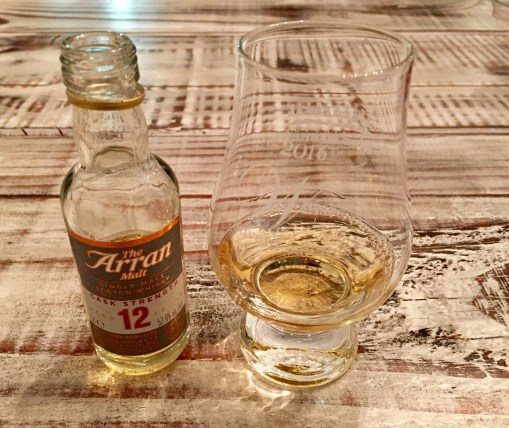
fullsizerender-508Arran is a traditional distillery with modern foresight, which releases a wide array of scotches aged in practically everything possible — current highlights include a Sauternes cask, a Port barrel and (!!!) an Amarone cask bottling.  I love it.  If you’re so inclined, you can also BUY YOUR OWN CASK OF SCOTCH and then come visit it while they mature it for you.  I’m not even kidding.  £1,850 for 200L of ex-Bourbon glory – who’s in with me?  Of course, now that I’ve raved about how cool Arran is, I have to report that tonight’s whisky, from the 5th batch release of their 12 Year Cask Strength Single Malt limited edition, is aged in the boring-est ever combo of first-fill sherry butts, refill sherry hogsheads and first-fill bourbon barrels.  At 52.9% and only $80, though, it’s a lot of scotch for the money.  It smelled exactly like a cereal I’d eaten as a kid but had to Google search to remember the name of (Corn Bran, it turns out), mixed with cantaloupe, barley, corn husks and spice, but then ramped up on the palate and tasted like something out of a Christmas catalogue:  Bailey’s and eggnog, gingerbread, canned peaches, whipped cream and coconut milk.  Super friendly for a cask-strength whisky, it brought the fun and the charm in spades even if it wasn’t an intellectual heavyweight.  Time to buy a cask.


KWM Whisky Advent Calendar 2016: Day 14

14 12 2016

Back-to-back Islay for the first time in Advent 2016, but this particular bottling is shrouded in mystery!  Day 14’s dram marked the biggest unknown for me coming out of the calendar to date, with a label that looked like a film noir movie poster and that did not contain any immediately identifying marks or distillery names, only the opaque moniker “Cask Islay”.  Cask Islay from where?  Whose casks?  A closer look revealed that this was a scotch released by independent bottler A.D. Rattray that intentionally does not reveal the distillery that made it — but we know that there’s only one and that this isn’t a blend, as it still states itself to be a single malt.  Rattray’s website advises that for each batch of Cask Islay, they hand-select a few casks (5 to 10 at most) from the stealth distiller; these are then matured in a combination of bourbon and sherry casks for somewhere less than 10 years before bottling.  KWM’s rumour is that the black box producer of this whisky is Laphroaig, but no one’s talking.  The benefit that you get from all the secrecy is that the bottle only costs $75, a massive value play if the quality is there.

fullsizerender-507And it is, in spades, if you’re a fan of the Islay style of peated whisky.  The Cask Islay contains 35 ppm of peat phenols, chemicals released in the smoke of burning peat moss used in the distillery’s kilns while drying malted barley which are absorbed by the barley itself.  35 ppm is not overly high as far as peated scotch goes; the peat bombs that push the issue can get all the way up to 200 ppm (at which point they basically taste like solid charcoal).  But even the lower figure is enough to establish peaty dominance in the Cask Islay’s nose, all oily smoke, seawater brine, clamshells, beach fire pits, iodine and (weirdly) Comet cleaning powder.  Happily, it is more personable to taste than to smell, adding warm peach cobbler and baked apple fruitiness to the swirling peat mass of shoe polish, diesel, sulphur and topsoil, finishing hearty and rich.  This is a great fireside malt, although it would certainly not make a good pick for a whisky neophyte’s scotch initiation.  Frankly a spectacular buy for any Islay lover at this price point.  I’m in.


KWM Whisky Advent Calendar 2016: Day 13

13 12 2016

We have now crested the summit of the 2016 Kensington Wine Market Whisky Advent calendar and are starting the long trek down the other side, and I don’t mind telling you all that I’m a little bit wiped.  Call it the pre-holiday doldrums, the end-of-year blues, the 13-days-blogging-in-a-row sanity implosion, whatever you like.  One or more members of my family has been continuously sick, on a rolling or parallel basis, for the better part of two months — nothing serious, just enough to make me question any and all extracurricular activities and hobbies.  As a reward for persevering through 50% of whisky Advent despite the biohazard zone that is my household, and particularly for powering through a less-than-likeable Day 12, I was hoping to open the window on Day 13 and pull out a nice little OH COME ON.

fullsizerender-506

I will not rehash my Kilchoman woes, covered off extensively in Day 2.  Suffice to say that it is a really cool new distillery on Islay that’s doing amazing things and that many people deeply enjoy, but that I just can’t bring myself to like despite multiple head-against-wall efforts.  I wish it nothing but success, but it was the last thing I wanted to see today.  However, there was some intrigue that snuck through my malaise with this particular bottling, especially thanks to the mini KWM logo proudly displayed on the front label, and in part also thanks to the almost-shocking 57.5% abv it recorded.  Yes, tonight’s Kilchoman is a Single Cask bottling (Cask 446/2011 to be exact) that Kensington Wine Market purchased and bottled exclusively for the store, which is admittedly awesome, as is the PX (Pedro Ximenez, the grape used for sweet dessert-based sherry) cask finish on the whisky.  While last night’s 18 Year was the oldest whisky in the calendar, this may well be the youngest, distilled in July 2011 and bottled just shy of five years later (and also only five months ago!) in July 2016.

I certainly got more of a sense of Islay on this Kilchoman than the others in calendars past and present, huge whiffs of bacon and sausage grease, rusty cast-iron pots, motor oil and seaweed, but that pervasive off-putting Parmesan cheese funk that has become unfortunately synonymous with the distillery for me was still there, lingering in the background.  This is as explosively fiery and alcoholic as you might expect for something that’s almost two-thirds pure spirit and absolutely requires water to soften and open, but once it’s hydrated it’s laced with butterscotch and molasses sweetness (thanks PX!) to go along with more transportive memory-based flavours:  freshly polished old leather boots, your favourite armchair with a wet dog on it, a log cabin in the woods with the fireplace crackling.  Concentrated and long-lasting, it leaves traces of oily peat lingering on the tongue for well over a minute after you swallow.  It’s still not my cup of tea, but I will say this:  best Kilchoman yet.  Maybe this is the ray of hope for the rest of December.  Bring on the next 12 days.


KWM Whisky Advent Calendar 2016: Day 12

12 12 2016

Nearly halfway through Whisky Advent, team; hang in there.  At this stage in the calendar, the whiskies inside the little cardboard doors, like all of us, get inexorably older.  Tonight’s 18 Year Glengoyne Single Malt is the oldest whisky to date, narrowly beating out Day 1’s boss Tomatin 17 Year.  It’s also another “Glen” whisky to add to calendar lore, joining (at least) Day 10’s Glenmorangie, Glenfarclas, personal favourite Glendronach and Glenglassaugh on the ever-growing list.  Glengoyne is located in the Highlands, a half hour out from Glasgow, has been around for almost 200 years, and prepares all its whiskies according to its six guiding principles:

  1. No Peat – All whiskies are unpeated, in part because there’s no peat in the soils around the distillery and in part because they don’t believe in “hiding” flavour or cask impurities behind peat (note to all Islay distillers:  these are their words, not mine).
  2. Slow Stills – Glengoyne repeatedly announces that they use the slowest distillation process in all of Scotland to coax complex flavours out of their whiskies.
  3. Sherry Casks – Sigh.  I will give the distillery credit for commitment, however, as they recently solved a potential supply problem by taking over their own barrel production at the forest stage.  They cut down the oaks, have them air-dried for THREE YEARS, send them to Jerez to be filled with sherry and then route them to Glasgow.
  4. Careful Maturation – All barrels are aged in temperature-controlled conditions and without overcrowding.
  5. No Added Colour – Part of the reason for air-drying the barrels for so long is that they’re ready and eager to suck up the sherry they’re then filled with, which after oxidative aging (in Oloroso’s case) can darken considerably, leaving the wood prepped for natural colour transfer to the whisky.  No caramel colour needed.
  6. Tradition – Because six principles sound better than five, I guess?  The sixth principle is that Glengoyle always follows its founding principles…but presumably they would still do this if this wasn’t its own standalone principle.  Not so sure I buy Principle 6.

fullsizerender-505

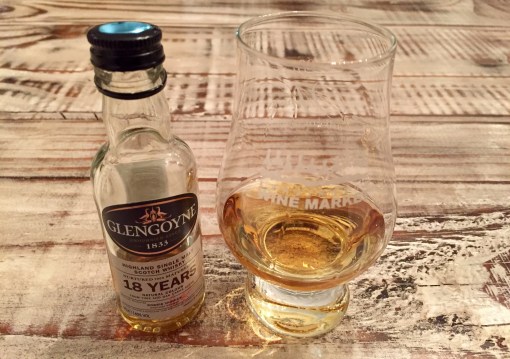
This 18 Year embodiment of the 6(ish) principles clocks in at $130 and a surprisingly low 43% abv – in the current whisky world, 46% seems to be the new 40%.  I spent a few minutes smelling this whisky trying to pull more out of a somewhat muted nose, which on paper comes across as impressive – toffee, candied pumpkin, fig, baked apple, leather, sandpaper – but which has the volume turned down to 4, making you have to work for it.  I was not prepared for the fiery alcoholic jolt that leads off the palate, especially at 43%, which makes the whisky start off sharp and sort of sour and mandates a generous dose of water to even it out.  Rhubarb, marmalade, matchsticks, burnt toast and pepper gradually emerge out of the booze, trailing into a lean, papery finish.  This tastes almost spiky or prickly, the opposite of what you’d expect of something that’s mellowed (in climate-managed spacious conditions, no less) for the better part of two decades.  With all apologies to Glengoyne, this was decidedly not my favourite; hopefully tomorrow’s halfway point will start steering us towards home on a slightly happier note.


KWM Whisky Advent Calendar 2016: Day 9

9 12 2016

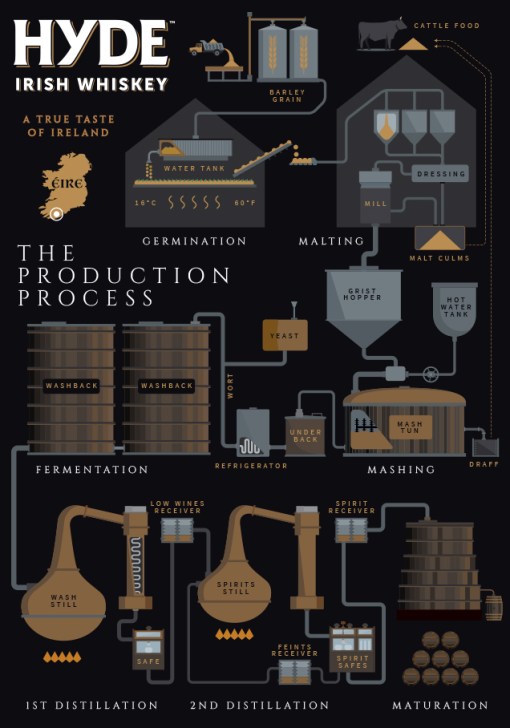
Woooo!!  Bring on the internationals!  One of my favourite Whisky Advent Calendar days is the first day a non-Scottish whisky (or in this case, whiskey) shows up; not that I have anything against scotch, of course, but I do enjoy the variety and fresh perspective that some of the interloper whisky nations bring to the table.  This particular nation didn’t have to interlope far — it’s an hour’s flight from Scotland to Ireland — but Irish whiskey still has its own distinct personality above and beyond its divergent spelling of what’s in the bottle.  There are fewer regulations surrounding whiskey in Ireland, but one thing that is generally required is triple distillation of the spirit, which results in a purer, cleaner, smoother whiskey, albeit perhaps at the expense of the character or flavour of the underlying grain that remains in the impurities.  Tonight’s Irish whiskey standard-bearer is a KWM calendar newcomer, Hyde distillery, whose website features the most fantastic graphic of the overall distillation process:

Wow.  It may be a traditional process, but it’s far from a simple one.  This 10 Year Presidents Cask Single Malt is not fooling around in the price department for a product of Ireland ($110) but sees its contents subject to two separate maturations after its triple-distillation, first a decade in small (200L), flame-charred, first-fill Bourbon casks from Kentucky selected for maximum flavour extraction, and then an additional 10 months of finishing in Oloroso sherry casks…which it turns out cost TEN TIMES MORE than Bourbon casks do!  An Oloroso cask is around 800 Euros, while a Bourbon cask is only around 80 Euros.  I know which way I would go if I was a distillery, particularly given my general antipathy towards sherried flavours, but whisky isn’t always an economically savvy pursuit.

fullsizerender-502

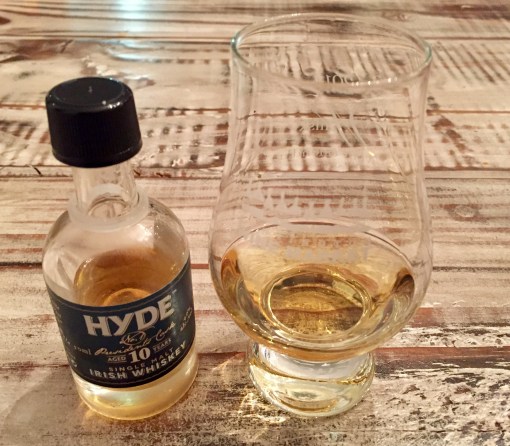
The Hyde 10 Year obviously made the most of its dual maturation, as it was one of the most eye-catching of all calendar whiskies to date, a gorgeous amber gold.  It is confectionary and delectable on the nose, warm vanilla and maple aromas mixed with black licorice and Coffee Crisp, Bourbon casks doing their thing.  Simultaneously lush yet sleek, the Hyde has an attractive roundness to its angel food cake, toasted pecan, bananas foster and burnt orange flavours without any corresponding heaviness, finishing feathery and bright and never weighing the palate down.  It is deft and almost delicate but without losing any power because of it.  A great effort from an unheralded whisky country.


KWM Whisky Advent Calendar 2016: Day 8

8 12 2016

Through 8 days of Whisky Advent, it’s Gordon & MacPhail 3, All Other Whiskies In The World 5.  You may remember Gordon & MacPhail from seven days and three days ago; they are basically everywhere.  However, I will forgive the repetition in this case because (1) this is NOT a Connoisseurs Choice whisky and is from the separate Distillery Label series, which is as close as an independent bottler like G&M can get to releasing a whisky as if the distiller itself bottled it, and (2) the distillery in question is named Miltonduff, which might be the Scottish-ist word I’ve ever seen.  You hear “Miltonduff” out of context and you know it’s either a whisky distillery or a Braveheart extra.  Of course, you almost never hear “Miltonduff” at all, because the distillery doesn’t often get a turn in the spotlight, mainly reduced to being a core component of the Ballantine’s blend (with which I am all too familiar thanks to some law school whisky-regret purchases).  This bottle, inexpensive at $80, may be the closest thing to a distillery release of Miltonduff we ever see in our neck of the woods.

fullsizerender-500

And it’s…fine.  Paler and less forward in colour, it also smells somewhat muted, delivering bold aromas like peaches and cream and carrot cake (with icing) laced with breezy florals, but all in a subtle, sepia-toned kind of way.  It is bigger on the palate, but not necessarily brighter, meandering and expansive, casually melding creme brûlée, honey and applesauce with graham crackers and a slight celeriac vegetal tinge, not in any hurry to get anywhere.  Mellow and chill, it is pleasant but likely not memorable; if I was writing a wine review I’d call it “quaffable”, but I don’t want to think about the personal health consequences of quaffing scotch.  To the next.


KWM Whisky Advent Calendar 2016: Day 7

7 12 2016

Oh snap.  Let’s get greasy.  Ardbeg is in the house.  When a distillery can scarcely be described without the use of the word “notorious” (in this case, for its well-known bone-crushing use of peat, like most other Islay distilleries but times ten), you know you’re in for some fun.  And when you can’t pronounce the name of the whisky even before you down its cask-strength madness (54.2%, the first bottle out of the 40s to date), all the more so.  It turns out Ardbeg’s Uigeadail, named for the lake that acts as the distillery’s water source, is pronounced “OOG-a-dal”, a suitable caveman name for a pretty caveman whisky.  That’s not necessarily a put-down — this is a $110 bottle, and one that Ardbeg’s 120,000-person-strong fan club voted their favourite out of the distillery’s whole lineup — but more a recognition that this sherried expression of Islay’s most ferocious peat bomb gets to something primal.

fullsizerender-499

It starts before your nose even gets close to the glass.  The massive alcohol content is apparent from the glass-coating syrupy way the Oog comes out of the bottle, shining sullenly like burnished gold.  The aromas are unsurprisingly filled with nostril-tinging peat, which lingers in the sinuses with a slight alcoholic burn after the other smells fade away:  dirty rags, kerosene, mechanic shop floor, moss, burnt cinnamon and spice.  Even with a fair dollop of water, this is still rich and lush and radiating power, honeyed maple-bacon sweetness offering a beat of relief before the oily smoke and swampy peat flavours, charcoal briquettes and skidding tires, ashtrays and latex gloves, take over and run wild.  Oog is not a whisky that sounds good when reduced to flavour descriptors, but it does hit you on an emotional as well as an intellectual level, something I don’t always get with scotch, as much as I enjoy it.  There is some bass and some soul to this liquid fire and brimstone, an oozy gravitas that I can’t help but admire.


KWM Whisky Advent Calendar 2016: Day 6

6 12 2016

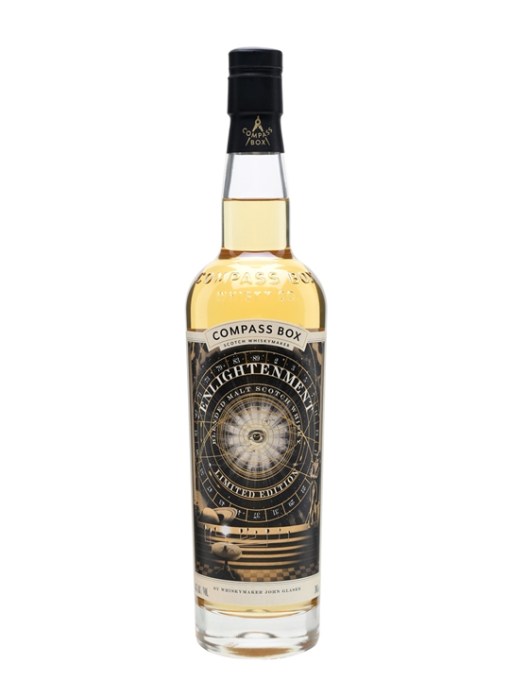
Tonight’s whisky is of interest for a number of reasons.  It’s the first blended whisky in the 2016 calendar (quick refresher:  a single malt whisky is one made from malted barley from a single distillery; a blended whisky is one made from a blend of malt whisky and grain whisky from multiple distilleries).  It’s by far the cheapest of the offerings to date, at $60.  And it comes from the garagiste negociant of the scotch world, Compass Box, a producer that doesn’t own a distillery or make its own whisky, but instead sources both selected whiskies from top distilleries AND selected oak barrels from top cooperages, then creates custom whisky blends that it runs through its own bespoke wood program.  Since single malt whiskies get the Bordeaux/Burgundy treatment in the whisky world while blended whiskies are lucky to get the Languedoc-Roussillon treatment, there can be obscene value to be found in an artisan blender who cares enough to do things right.  Compass Box not only brings the quality and the interest factor that is often missing from the bigger blends, but it also pushes the envelope on everything from whisky transparency rules (more on that below) to labelling, where they laughably outstrip anyone else in the UK.  Check out this bad boy:

vatted_enl1

Photo Credit:  The Whisky Exchange.  Pure artistry.

That’s what I’m talking about, although it’s not the bottle on tap tonight.  Instead we were treated to the other half of Compass Box’s entry-level Great King St. line:  in Day 9 last year we had the peated Great King Glasgow Blend, whereas this year we have the unpeated Artist’s Blend, a mixture of four different whiskies from four different distilleries, first aged separately and then combined for a secondary maturation in Compass Box’s own French oak barrels.  Most blends would give you absolutely no information about the identity and makeup of the underlying whiskies in the bottle; Compass Box gives you as much information as it possibly can.  The four whiskies are:

  • 46% Girvan, a Lowland grain whisky matured in American Bourbon casks
  • 29% Clynelish, a Highland single malt matured in American Bourbon casks
  • 17% a mystery Highland single malt matured in new French oak
  • 8% Teaninich, a Speyside malt matured in sherry butts

How cool is that?  One thing Compass Box is not legally permitted to do is reveal the ages of the various component whiskies, which for some arcane reason cannot be done except in response to a direct inquiry.  So they did the next best thing and actually put an automatic request button on the Artist’s Blend website where you can get the info via email.  Naturally I had to make a request, and when I did the mystery was solved via instantaneous mail arrival in my inbox.  I’m not supposed to publish the results of the inquiry, so click the link above and go do it yourself – the components may be further along than you think!

fullsizerender-498

The Artist’s Blend was certainly paler, fresher and cleaner than its peated cousin, sort of making me want to do some housekeeping with aromas of Mr. Clean, tonic water, Honey Lemon Halls and wet quartz.  However, my attention was then drawn away from my kid-encrusted home by a jolt of verve and energy on the palate, where vanilla, woodsmoke and gingery spice wrapped around a centre of citrus-infused Bourbon (a tasting note I wrote before finding out about the 75% Bourbon cask aging this went through, by the way).  It’s a touch straightforward but plenty delicious for its minuscule price tag.  If you want a house whisky, this is calling your name.


KWM Whisky Advent Calendar 2016: Day 5

5 12 2016

It was an immediate case of double whisky deja vu tonight, as another Gordon & MacPhail Connoisseurs Choice whisky emerged from the calendar, the second in five days following Day 1’s ultra-exuberant dram.  But the recall did not stop there:  rewind 10 Whisky Days to Day 20 of 2015, where the Connoisseurs Choice in question was a single malt from the little-known Inchgower distillery.  Now jump back to the present, where the Connoisseurs Choice in question is…a single malt from the little-known Inchgower distillery.  Um.  The cool thing about the 2016 version of Inchgower is that it was bottled this year and isn’t even available for purchase yet in Calgary; you can pre-order it at KWM now for $100.  While last calendar’s Inchgower was a 14-year malt, this one may be the first ever 11-year single malt I have ever seen, distilled in 2005 and bottled in 2016; whisky in prime numbers, I guess.

fullsizerender-496

A familiar face, a familiar result.

Inchgower is the type of distillery that the Connoisseurs Choice lineup was created to showcase, a hardworking but under-the-radar producer that almost never sees its whisky bottled under its own name.  To paraphrase myself from 10 whisky blog entries ago in order to avoid unnecessary work, less than 1% of Inchgower’s production is labelled and sold as an Inchgower malt:  most of the fruits of its labour anonymously form part of the backbone of big-time Diageo blends like Bell’s, Johnny Walker and White Horse.  It’s located in Speyside, which the label of this bottle optimistically refers to as “the Premier Cru of single malt scotch” (inadvertently leaving open the question of who the Grand Cru is…I’ll let the Highlands and Islay fight it out).

fullsizerender-497

They’re known as the WHAT??

This 11 year-old bottling is somehow darker than its 14 year-old older brother, despite both being matured in refill sherry casks.  A slightly grungy nose blends shoe polish, leather, salt lick, pinecones and almonds, and isn’t helped much by the addition of water.  Things thankfully get somewhat more pleasing once the Inchgower hits your lips, where you try to decipher a strange but interesting mix of peanut shells, apricot, pennies and celery salt, all of which hang around cautiously after you swallow like high school kids in a new social situation.  It’s fun to meet a new distillery once, no matter how the whisky is; with Inchgower, I think twice is enough.  Onward.


KWM Whisky Advent Calendar 2016: Day 4

4 12 2016

Usually I crave new finds and tasting experiences in these calendars, but today I was pleased to open the little cardboard door and find a familiar face.  BenRiach distillery has been sort of my anti-Kilchoman through 2.2 years of KWM Whisky Advent:  this will be my fifth whisky pulled out of a calendar, and all of the previous four (2014’s trio from Day 2, Day 11 and Day 21 and 2015’s Day 16) have easily exceeded expectations.  Like many distilleries that stumbled their way through the 20th century, BenRiach’s origin story is so crazy that it’s almost unbelievable it’s still around.  It first started producing back in 1898, but a near-immediate industry crash led to it being shuttered a scant two years later, in 1900…and it stayed closed for another SIXTY-FIVE YEARS before coming out of mothballs.  That is some kind of business model.  Most distilleries nowadays are being consolidated under the umbrellas of a few giant global beverage companies, but BenRiach skewed the other way in 2004, purchased from Seagrams by three individual entrepreneurs after another stint in mothballs in 2002.  Thankfully it has stayed open since, and is churning out some beauties.

fullsizerender-495

BenRiach: quickly becoming my Old Faithful. A going concern for 118 years, but closed for over half that time.

Tonight’s BenRiach is the 12 Year from the distillery’s Wood Finishes collection, which highlights the effect of different types of aging vessels on the glorious liquid inside.  It is an eye-catching amber colour, very deep for a 12 Year (which, according to the KWM website, may be because it’s secretly a fair bit older than that).  The BenRiach 12 Year is the Sherry Cask expression, which shows itself in the sea breeze aromas lightly lingering over friendlier notes of coffee, salted caramel, clove, tangerine and Cabane a Sucre; the added approachability and sweetness associated with these smells as compared to sherry casks past comes from the partial use of dessert wine Pedro Ximenez sherry casks alongside the more rote Oloroso sherry casks.  It makes a massive difference.  The palate is rich yet focused, full of maple and fruitcake, chocolate-covered cherries and raisin, chalk and peach iced tea, all rolling up into a sweetly drying finish.  The whisky ramps up and crescendoes quickly on the tongue, then slooooooowly glides back down over at least a minute, letting you enjoy the lingering ride.  Beautiful work for $80, and another check mark in BenRiach’s PnP column.  16% done!!